
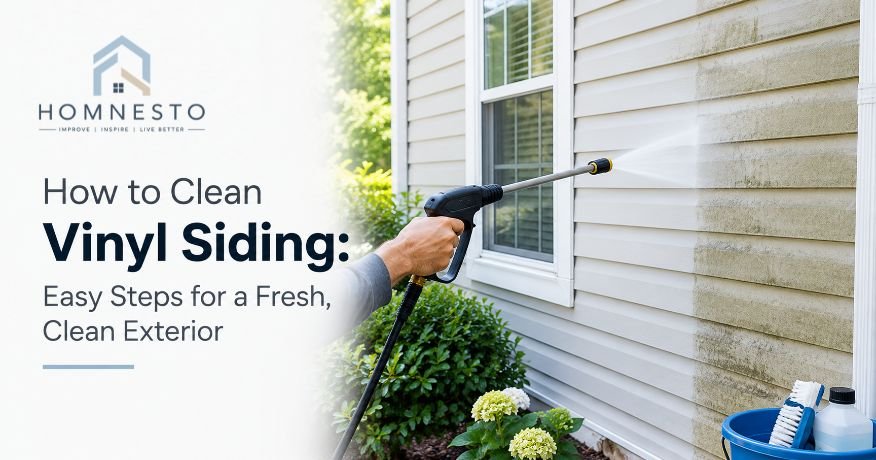

Vinyl siding can make a house look fresh for years, but outdoor surfaces take plenty of abuse from the weather. Dust, pollen, rainwater, mud, mildew, algae, and airborne grime gradually collect on the panels. Areas that stay shaded or damp often develop green or dark patches faster than sunny sections. Regular cleaning removes this buildup before it becomes harder to treat and helps preserve the siding’s original appearance.
Learning how to clean vinyl siding does not usually require expensive equipment. A garden hose, suitable cleaner, bucket, and soft brush can handle most routine jobs. The best approach depends on the siding’s condition, the type of stain, the weather, and whether you are dealing with ordinary dirt or biological growth. With the right technique, cleaning vinyl siding can be straightforward without damaging the surface.
How Often Should You Clean Vinyl Siding?
Most vinyl siding benefits from a thorough cleaning about once a year, although some homes need attention more often. A house surrounded by trees, exposed to heavy rain, or located in a humid climate can collect grime faster. You may also notice more mildew or algae on walls that receive little direct sunlight.
Weather and moisture are two major factors. Humid conditions allow organic growth to develop, while wind can carry dust and debris onto exposed walls. Trees can also leave pollen, sap, leaves, and other material against the siding. If you notice visible dirt, mold, mildew, or algae before your normal cleaning date, it is better to address it early.
Good vinyl siding maintenance is less about following a rigid calendar and more about watching the surface. Maintaining vinyl siding becomes easier when small areas of buildup are cleaned before they spread. Regular vinyl siding care can also reduce the need for aggressive scrubbing later.
What You Need to Clean Vinyl Siding
You do not need a complicated collection of equipment for routine cleaning. The basic supplies should let you rinse loose dirt, apply a siding-safe solution, gently remove stubborn buildup, and rinse the wall completely afterward.
Cleaning Supplies and Tools
A garden hose is usually enough for rinsing and handling ordinary exterior grime. You will also need a bucket, a vinyl siding cleaner that is appropriate for your particular siding, and a soft-bristle brush. A long-handled extension brush helps reach upper sections without repeatedly climbing a ladder.
Choose a soft-bristle brush for cleaning vinyl siding rather than a stiff scrub brush. The best vinyl siding cleaning brush should remove grime without aggressively scratching or scuffing the panels. Gloves can protect your hands from cleaning products, while eye protection is useful when spraying or working overhead.
Before starting, keep the manufacturer’s care instructions available if possible. Some siding products have specific recommendations about cleaners, pressure, and chemicals.
How to Clean Vinyl Siding Step by Step
The safest cleaning process starts gently and becomes more targeted only when necessary. Do not begin by attacking the dirtiest areas with a strong chemical or high-pressure spray. Removing loose debris first makes the rest of the job easier and reduces the chance of scratching the siding.
1. Inspect the Siding and Prepare the Area
Walk around the house before you begin. Look for cracked panels, loose sections, damaged seams, holes, heavy stains, and areas with significant mold or algae. Damaged siding needs extra care because water or cleaning solution may reach places that should remain protected.
Move outdoor furniture, decorations, planters, and other objects away from the walls. Close windows and doors, and protect delicate plants when necessary. If you plan to use a cleaning solution, check the weather first. A cool, overcast day can be easier to work in than a hot afternoon when the solution may dry quickly.
2. Rinse Away Loose Dirt and Debris
Start at the top and rinse downward with a garden hose. This allows loosened dirt to flow toward the ground instead of settling on areas you have already cleaned.
A thorough first rinse removes dust, cobwebs, loose soil, pollen, and other surface debris. Avoid directing water upward underneath the edges of the siding. Vinyl panels overlap, so spraying upward can push water behind them.
This simple step is important whether you plan to wash the siding by hand or use another cleaning method. It also gives you a clearer idea of which areas actually need scrubbing.
3. Prepare and Apply the Cleaning Solution
Choose a cleaner designed for exterior siding or one specifically identified as safe for vinyl. Follow the product’s dilution and application instructions rather than assuming a stronger mixture will clean better.
Apply the solution in manageable sections. Working from the bottom upward can help reduce visible streaking during some cleaning methods, while the final rinse should move from the top downward. Keep the surface wet enough that the cleaner does not dry before you rinse it.
For ordinary grime, a mild cleaning solution may be enough. Heavier organic growth or stains may require a product designed for that particular problem.
4. Gently Scrub Stubborn Areas
Use a soft-bristle brush to work on areas that remain dirty after the cleaning solution has had time to loosen the buildup. Use controlled strokes instead of aggressive pressure.
Pay particular attention to textured sections, corners, shaded areas, and places where water tends to collect. A long-handled brush can make high sections easier to reach, but do not use the handle as leverage against the siding.
If a stain does not respond to gentle cleaning, identify what caused it before escalating your approach. More pressure is not automatically the answer. Harsh chemicals and aggressive scrubbing can create a bigger problem than the original stain.
5. Rinse the Siding Thoroughly
Rinse the siding from top to bottom until the water runs clear and no visible cleaning residue remains. Make several passes if necessary, especially around seams, corners, trim, and textured surfaces.
Do not allow cleaner to remain on the siding after the job. Residue can leave a dull appearance and may interact with dirt later. Keep the hose aimed across the surface rather than upward into panel joints.
A complete rinse is one of the simplest ways to improve the final result. It also prevents leftover cleaner from drying into streaks.
6. Inspect the Results and Repeat if Necessary
Once the wall has been rinsed, step back and inspect it in natural light. Some areas may look clean while wet but reveal remaining grime after they dry.
If heavily soiled sections still need attention, repeat the cleaning process locally rather than immediately treating the entire house again. A second gentle pass is usually preferable to increasing chemical strength or scrubbing harder.
If the same stain remains after repeated cleaning, it may not be ordinary dirt. Mold, algae, oxidation, paint, wood stain, and other substances require different approaches.
What is the Best Cleaner for Vinyl Siding?
The best vinyl siding cleaner is one that removes the specific buildup you are dealing with while remaining compatible with the siding. Routine dirt generally does not require an aggressive chemical. A mild household solution or commercial siding cleaner may be sufficient.
Avoid choosing a product simply because it is marketed as powerful. The best cleaner for vinyl siding should match the manufacturer’s recommendations and the type of contamination. Always read the label before applying a siding cleaner to the entire wall.
Commercial Vinyl Siding Cleaners
Commercial products are convenient because they are formulated for exterior surfaces and often include directions for dilution and application. Some are designed for general dirt, while others target mold, mildew, algae, or other organic buildup.
When comparing products, look for one that specifically states it is suitable for vinyl siding. An exterior siding cleaner should also provide clear instructions about application, dwell time, dilution, and rinsing.
Mild Household Cleaning Solutions
Mild household solutions can work well for routine dirt when they are compatible with the siding manufacturer’s recommendations. They are particularly useful when the siding needs a simple wash rather than specialized stain treatment.
The goal is to loosen dirt, not chemically attack the surface. Avoid mixing different cleaning chemicals because unexpected reactions can produce dangerous fumes or damage the siding.
How to Choose a Siding-Safe Cleaner
Start by identifying the problem. Ordinary dust needs a different treatment from mildew, algae, oxidation, or an oil-based stain. Then check the cleaner’s label for vinyl compatibility and follow the recommended concentration.
Test an inconspicuous area when you are unsure how the siding will respond. Never assume that a product safe for one exterior material is automatically suitable for vinyl.
How to Remove Mold, Mildew, and Algae From Vinyl Siding
Mold, mildew, and algae tend to appear where moisture remains on the siding for extended periods. Shaded walls, damp landscaping, clogged gutters, and poor airflow can all contribute to the problem.
The first step is to remove the growth without unnecessarily damaging the vinyl. Cleaning should then be followed by moisture control, because repeatedly removing the growth without addressing its cause can lead to the same problem returning.
How to Remove Mold and Mildew From Vinyl Siding
When removing mold from vinyl siding, start with a siding-safe cleaner and gentle agitation. Apply the product according to its instructions, allow it to work for the recommended time, and use a soft brush where needed.
If you are wondering how to clean mold off vinyl siding, avoid attacking dark patches with a stiff brush. The goal is to lift the growth from the surface while keeping the siding intact. The same approach applies when removing mold from vinyl siding in shaded areas.
For mildew, focus on both removal and prevention. To get mildew off vinyl siding, clean the affected area thoroughly and then improve drainage, airflow, or sunlight where possible. If you need to remove mildew from vinyl siding repeatedly, look for the moisture source rather than treating the symptom alone.
How to Remove Algae and Green Growth
Green buildup is often algae, especially on damp or shaded sections. To remove algae from siding, use a cleaner suitable for vinyl and follow its instructions. Give the solution enough time to loosen the growth before gently brushing stubborn areas.
If you are deciding how to clean algae off siding, avoid relying solely on force. The right cleaner can reduce the amount of physical scrubbing required. For larger areas, work in sections and rinse thoroughly.
Once clean, prevent algae on vinyl siding by improving drainage, trimming vegetation, reducing unnecessary shade, and keeping the surface from remaining damp for long periods.
How to Prevent Mold, Mildew, and Algae
Prevention starts around the siding rather than on it. Keep gutters and downspouts working correctly so water does not repeatedly splash against the walls. Trim branches and dense plants that block airflow or keep sections permanently shaded.
Regular cleaning also helps. If a small patch of biological growth appears, address it before it spreads across a larger section. Good airflow and proper drainage can make a noticeable difference in long-term vinyl siding care.
Can You Use Bleach on Vinyl Siding?
Bleach can be used for certain vinyl siding cleaning situations, but it should never be treated as a universal solution. The correct concentration, application method, surrounding conditions, and manufacturer’s instructions all matter.
If you use a bleach solution for vinyl siding, follow the product directions carefully and protect nearby plants, landscaping, finished surfaces, and outdoor furniture. Never mix bleach with ammonia, acids, or other household chemicals.
When Using Bleach May Make Sense
A properly diluted bleach solution may help with stubborn organic growth such as mildew or algae. However, routine dirt usually does not justify reaching for a strong chemical treatment.
Before cleaning vinyl siding with bleach, check the siding manufacturer’s recommendations. Some manufacturers may specify acceptable products or concentrations, while others may recommend different approaches.
How to Use Bleach Safely
If bleach is permitted for your siding, dilute it exactly as directed. Wet nearby plants before application and rinse them afterward if appropriate. Work in manageable sections and do not allow the solution to dry on the siding.
Wear appropriate gloves and eye protection, and maintain good ventilation. Thoroughly rinse the siding once cleaning is complete.
Does Bleach Damage Vinyl Siding?
Bleach can damage surrounding materials and may cause problems when used at excessive concentrations or left on surfaces too long. Asking does bleach damage vinyl siding? therefore requires more than a simple yes or no.
Proper dilution and careful application can reduce risk, but manufacturer instructions should take priority. Oxygen bleach vinyl siding products may provide an alternative for some cleaning situations, but they should also be used according to their labels.
Can You Pressure Wash Vinyl Siding?
Pressure washing can be appropriate for some vinyl siding, but excessive pressure can force water behind the panels or damage surfaces. The fact that vinyl can tolerate outdoor weather does not mean it should be blasted with maximum pressure.
For many homes, a garden hose and soft brush provide enough cleaning power. Pressure washing makes more sense when large areas have substantial buildup and the equipment can be controlled carefully.
When Pressure Washing Makes Sense
Pressure washing may save time on large exterior surfaces with loose dirt and grime. It can be useful when the siding is in good condition and the operator understands how to control the equipment.
Avoid pressure washing damaged, loose, cracked, or poorly secured siding. If water is already getting behind the panels, high-pressure cleaning can make the situation worse.
How to Pressure Wash Vinyl Siding Safely
Use a lower-pressure setting appropriate for vinyl rather than automatically choosing the strongest setting. Select a suitable nozzle and maintain a safe distance from the surface.
Keep the spray directed downward or in a direction that does not drive water underneath overlapping panels. Work gradually instead of holding the spray against one spot.
Never use pressure to compensate for the wrong cleaner or poor technique. If a stain requires excessive force, stop and identify the stain before continuing.
How to Clean Vinyl Siding Without a Pressure Washer
You can clean vinyl siding effectively without specialized equipment. A garden hose, appropriate cleaning solution, bucket, and soft-bristle brush are enough for many homes.
If you are searching for how to clean siding without a pressure washer, start by rinsing away loose debris. Apply your chosen cleaner in sections, gently brush stubborn areas, and rinse thoroughly. The same method works when learning how to clean vinyl siding without a pressure washer.
For people looking for how to clean siding without pressure washer equipment, this approach also offers better control around windows, doors, plants, and delicate exterior features.
If you want to know how to clean vinyl siding without scrubbing, light dirt may come away after soaking with an appropriate cleaner followed by thorough rinsing. Stubborn buildup usually needs some gentle agitation. Avoid interpreting “without scrubbing” as a reason to use stronger chemicals.
How to Remove Stubborn Stains From Vinyl Siding
Stains should be identified before you choose a treatment. A mark caused by wood stain is different from algae, oxidation, grease, rust, or ordinary dirt. Using the wrong chemical can discolor the siding or damage its finish.
Start with the least aggressive approach that could reasonably remove the stain. If it does not work, move to a product specifically intended for that type of contamination.
How to Remove Deck or Wood Stain From Vinyl Siding
If you need to know how to remove deck stain from vinyl siding, first determine whether the stain is water-based or oil-based if that information is available. The appropriate cleaner can vary depending on the product.
Do not immediately attack the mark with abrasive tools. Follow the cleaner manufacturer’s instructions and test the method on an inconspicuous area first.
The same principle applies when you need to remove stain from vinyl siding caused by nearby woodworking or staining projects. Protect the surrounding siding and landscaping while treating only the affected area.
How to Treat Other Stubborn Stains
For general stain removal from vinyl siding, identify the source whenever possible. Dirt may respond to ordinary washing, while organic growth may need a specialized cleaner. Paint, grease, rust, and other substances can require completely different treatments.
If you cannot identify a stain, start with gentle cleaning and avoid combining chemicals. Persistent discoloration may be caused by oxidation rather than removable surface dirt.
When to Avoid Aggressive Scrubbing
Excessive scrubbing can create scratches, dull patches, or uneven-looking areas. Vinyl does not become cleaner simply because you apply more force.
Use a soft-bristle brush and allow the cleaning solution to do much of the work. If repeated gentle cleaning does not remove the stain, investigate the material instead of increasing pressure indefinitely.
How to Remove Oxidation From Vinyl Siding
Oxidation is different from ordinary dirt. It can create a chalky, faded, or powdery appearance as the siding’s surface reacts with long-term exposure to sunlight and weather.
Cleaning alone may not remove oxidation because the discoloration is associated with surface degradation rather than a simple layer of dirt. A vinyl siding oxidation remover may be necessary for affected surfaces.
Identifying Oxidized Vinyl Siding
Run a clean finger gently across an inconspicuous area. A chalky residue can indicate oxidation, although other conditions can create similar symptoms. The appearance may also become more noticeable on older siding exposed to strong sunlight.
Do not assume every faded section needs an oxidation remover for vinyl siding. Test ordinary cleaning first if you are unsure whether the problem is surface grime or oxidation.
How to Remove Oxidation From Vinyl Siding
When learning how to remove oxidation from vinyl siding, choose a product specifically designed for vinyl or follow the siding manufacturer’s recommendations. Apply it carefully because oxidation removal can involve more surface agitation than routine cleaning.
Vinyl siding oxidation removal should be approached gradually. Test a small area before treating an entire wall and follow the product’s directions regarding application, dwell time, brushing, and rinsing.
How to Clean Oxidized Vinyl Siding
If ordinary cleaning does not restore the appearance, the siding may need specialized treatment. Knowing how to clean oxidized vinyl siding helps prevent you from repeatedly washing a problem that washing alone cannot solve.
Use the appropriate oxidation treatment rather than increasingly harsh household chemicals. If the surface remains severely faded or damaged after treatment, replacement may be more practical than continued cleaning.
Common Mistakes to Avoid When Cleaning Vinyl Siding
One of the biggest mistakes is assuming stronger cleaning always produces better results. Excessive pressure, harsh chemicals, and aggressive scrubbing can damage siding or surrounding materials.
Do not allow cleaning solutions to dry on the surface. Work in manageable sections and rinse thoroughly before moving on. Never ignore loose or damaged siding because cleaning can worsen an existing problem.
Weather also matters. Extremely hot, windy, or sunny conditions can cause solutions to dry too quickly. Heavy rain can dilute cleaning products before they work properly. Choose conditions that give you enough time to clean and rinse each section properly.
How to Keep Vinyl Siding Clean for Longer
Good maintenance does not mean washing the entire house every few weeks. Small habits can reduce the amount of buildup that accumulates between major cleanings.
Pay attention to gutters, downspouts, vegetation, drainage, and shaded areas. These surrounding conditions often influence siding cleanliness as much as the siding itself.
Rinse Away Dirt Regularly
A quick rinse can remove loose dust, pollen, and other debris before it bonds to the surface. This is particularly useful after periods of heavy pollen or dusty weather.
You do not need to perform a full vinyl siding wash every time. Occasional rinsing can reduce the amount of deep cleaning required later.
Address Mold, Mildew, and Algae Early
Do not wait for a small green or dark patch to cover an entire wall. Early treatment usually requires less effort and less aggressive cleaning.
If growth keeps returning to the same area, investigate the cause. Persistent moisture, shade, poor drainage, or vegetation may need attention.
Manage Moisture, Plants, and Shade
Keep vegetation trimmed away from exterior walls where practical. Make sure downspouts move water away from the foundation and siding.
Improving airflow can help shaded areas dry faster. These simple changes support long-term vinyl siding maintenance and make maintaining vinyl siding easier between washes.
Follow a Regular Cleaning Schedule
A practical cleaning schedule depends on your climate and surroundings. Inspect the siding periodically and plan a deeper cleaning when buildup becomes visible.
Regular vinyl siding care is more effective when you treat the entire exterior as a system. Clean gutters, controlled vegetation, proper drainage, and periodic siding cleaning all work together.
FAQs
What Is the Best Thing to Clean Vinyl Siding With?
For routine dirt, a siding-safe cleaner, water, and a soft-bristle brush are usually practical choices. The best thing to clean vinyl siding with depends on the type of buildup, so mold, algae, oxidation, and stains may require specialized products.
Can You Use Bleach on Vinyl Siding?
Bleach may be suitable for certain vinyl siding cleaning jobs when properly diluted and approved by the siding manufacturer. Protect nearby plants and surfaces, never mix bleach with other chemicals, and rinse the siding thoroughly afterward.
Can You Pressure Wash Vinyl Siding?
Yes, pressure washing can be used carefully on suitable vinyl siding. Use appropriate pressure, maintain distance, choose the correct nozzle, and direct water so it does not get forced behind the panels.
How Often Should Vinyl Siding Be Cleaned?
Many homes benefit from a thorough cleaning about once a year. Homes exposed to humidity, shade, trees, heavy rainfall, or visible algae and mildew may need cleaning more frequently.
How Do You Remove Mold and Mildew From Vinyl Siding?
Use a vinyl-compatible cleaner and gentle brushing to remove mold and mildew. Rinse thoroughly, then address moisture, shade, vegetation, and drainage problems that could encourage the growth to return.
Can You Clean Vinyl Siding Without a Pressure Washer?
Yes. A garden hose, suitable cleaner, bucket, and soft-bristle brush can handle many vinyl siding cleaning jobs. Light dirt may rinse away with soaking and water, while stubborn buildup usually benefits from gentle brushing.
Final Thoughts
Learning how to clean vinyl siding is less about using the strongest cleaner or most powerful equipment and more about using the right method for the problem. Start with a thorough inspection, remove loose dirt, use a siding-safe cleaning solution, brush stubborn areas gently, and rinse the surface completely.
For long-term results, look beyond the siding itself. Control moisture, trim nearby vegetation, improve drainage, and deal with mold, mildew, algae, stains, and oxidation before they become widespread. With consistent vinyl siding maintenance and sensible cleaning habits, your home’s exterior can stay cleaner and look well cared for without unnecessary wear.