
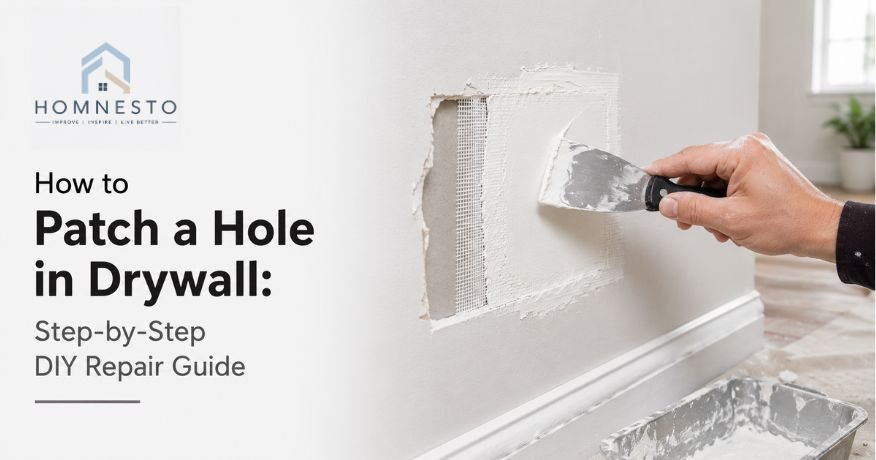

A hole in drywall does not always mean you need to replace an entire section of the wall. Most small damage, from a nail hole left by a picture frame to a dent caused by moving furniture, can be repaired with a few basic tools and the right technique.
The key is to match the repair method to the size and condition of the hole. Small nail and screw holes usually need only a little spackle, while larger openings may require a mesh patch or a new piece of drywall.
This guide explains how to patch a hole in drywall, how to choose the right materials, and how to finish the repair so it blends into the surrounding wall. You will also learn when a simple patch is enough and when damaged drywall should be replaced instead.
Quick Drywall Repair Guide at a Glance
| Hole Size | Recommended Repair Method | Tools and Materials |
| Tiny nail or screw hole | Fill with spackle or joint compound | Spackle, putty knife, sanding sponge |
| Small hole or dent | Fill with spackle or joint compound | Putty knife, sandpaper, primer, paint |
| Medium hole | Cover with a self-adhesive mesh patch | Mesh patch, joint compound, drywall knife, sandpaper |
| Large hole | Cut out damaged area and install a new drywall patch | Utility knife, drywall, screws, joint compound, tape, drywall knife |
| Water-damaged or moldy drywall | Remove and replace affected material | Utility knife, replacement drywall, protective gear, appropriate moisture or mold treatment |
The measurements are only a general guide. The condition of the drywall around the hole also matters. A small hole with crumbling edges may need more preparation than a clean, slightly larger opening.
How to Patch a Hole in Drywall
Before you start drywall hole repair, take a close look at the damage. The size of the hole tells you which method to use, but the location and condition of the wall can change the repair.
Identify the Size of the Drywall Hole
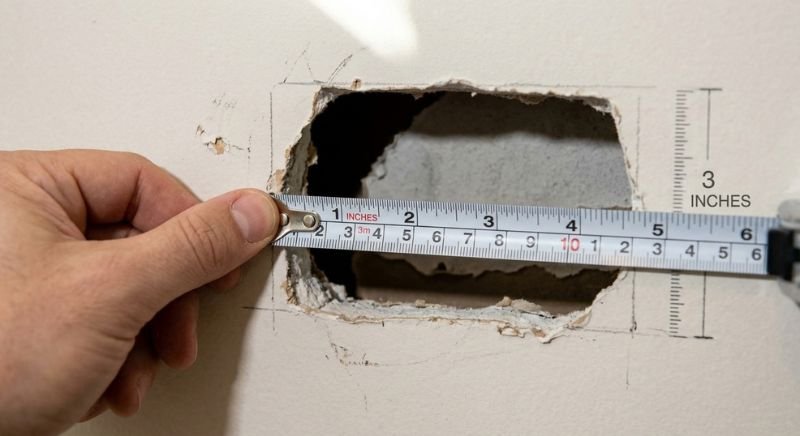
Start by measuring the opening from edge to edge. If the drywall is cracked, soft, or crumbling around the hole, include the damaged area when deciding how large the repair needs to be.
A tiny nail hole can usually be filled directly. A medium opening may need a mesh patch, while a large hole often requires cutting away the damaged section and fitting in a new piece of drywall.
If the hole was caused by an impact, check the surrounding wall for loose paper or cracks. Do not simply cover unstable drywall with compound. The repair will be more durable if you remove anything that is loose first.
Choose the Right Drywall Repair Method
The simplest way to think about how to patch drywall is to match the material to the damage.
For a clean nail or screw hole, spackle is usually the quickest choice. For a wider hole, joint compound used over a mesh patch provides a broader surface to rebuild. Large openings are usually repaired with a piece of new drywall secured to the wall framing or backing.
If you are repairing a hole near a corner, outlet, or other tricky area, take extra care when cutting. Before making a larger opening, make sure you know what is behind the drywall.
Gather the Tools and Materials You’ll Need
Having everything ready before you begin makes drywall patching much easier. You may need a putty knife for small repairs or a wider drywall knife for larger patches.
For most jobs, gather the appropriate filler or joint compound, sandpaper or a sanding sponge, primer, and matching paint. Larger repairs may also require a utility knife, replacement drywall, drywall screws, drywall tape, and a mesh patch.
What You’ll Need to Repair a Drywall Hole
The tools you need depend on the size of the damage. A small wall repair may take only a few minutes and require three or four items. A larger repair calls for more preparation.
Essential Drywall Repair Tools
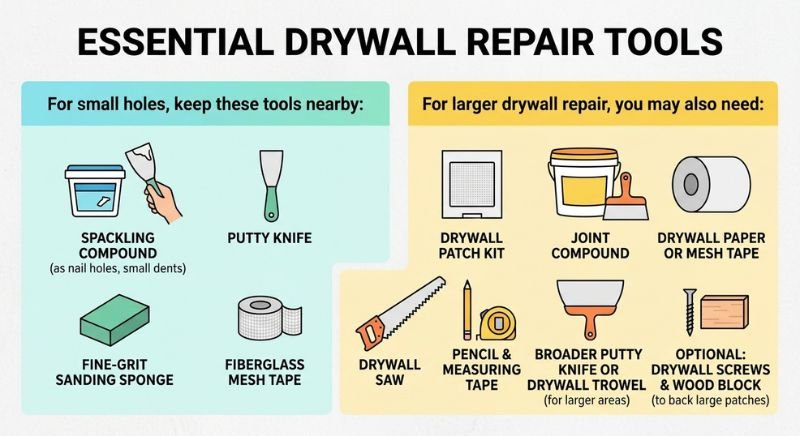
For small holes, keep these tools nearby:
- Putty knife
- Sanding sponge or fine-grit sandpaper
- Clean cloth
- Primer
- Matching paint
For larger drywall repair, you may also need:
- Drywall knife
- Utility knife
- Measuring tape
- Straightedge
- Drill or screwdriver
- Drywall screws
- Replacement drywall
- Drywall tape
A sanding sponge is particularly useful for small repairs because it is easy to control and helps you avoid sanding too aggressively around the patch.
Best Fillers and Patch Materials
Spackle works well for small nail holes, screw holes, and minor dents. It is easy to spread and is designed for small surface repairs.
Joint compound is more useful when you need to cover a larger area or build up several thin layers over a patch. It can also be used to cover mesh tape and smooth the transition between new and existing drywall.
For medium-sized holes, a self-adhesive mesh patch can provide a stable surface for the joint compound. Larger holes generally need a solid piece of drywall rather than a simple surface patch.
Safety Tips Before You Start
Before cutting into a wall, consider what may be behind it. Avoid cutting near electrical outlets, switches, plumbing fixtures, or other areas where hidden wires and pipes may be present unless you know their location.
Wear eye protection when cutting and sanding drywall. If you are creating a lot of dust, use suitable respiratory protection and keep the work area ventilated.
How to Repair a Small Hole in Drywall
Learning how to patch small holes in drywall is one of the easiest DIY wall repairs. Most small holes can be filled without cutting out any drywall.
Filling Nail and Screw Holes
For a small nail hole or screw hole, remove any loose material around the opening. Use a putty knife to press a small amount of spackle into the hole.
Do not leave a thick mound of filler on the wall. Apply enough to fill the opening and leave a slight amount above the surface. Once it dries, sand it lightly until the repair is level with the surrounding wall.
This simple method works well for how to fill holes in drywall when the damage is small and the surrounding drywall is still solid.
Repairing Small Dents and Cracks
For a shallow dent, spread a thin layer of spackle over the damaged area. If the dent is deeper, you may need more than one thin coat.
Small cracks need a little more attention. If the crack is caused by loose or damaged drywall, filling it without addressing the underlying movement may cause it to return.
For a basic surface crack, remove loose material, apply a thin layer of compound, let it dry, and sand it smooth. Wider or recurring cracks may need a different repair approach.
Sanding, Priming, and Painting
Once the filler is completely dry, use a sanding sponge or fine-grit sandpaper to smooth the repair. Run your hand lightly over the area to check for ridges or a noticeable edge.
Wipe away the dust before applying primer. A small amount of primer helps seal the repaired area and creates a more even surface for the final paint.
After the primer dries, apply matching paint for the paint touch-up. Use thin coats and blend the paint slightly beyond the repaired area when needed.
How to Patch a Medium Hole in Drywall
A medium hole is too large to fill with a single layer of spackle. If you simply pack a large amount of filler into the opening, it may shrink, crack, or take a long time to dry.
A better approach is to cover the opening with a patch that gives the joint compound something stable to adhere to.
Using a Self-Adhesive Mesh Patch
Clean away loose drywall around the opening. Choose a mesh patch large enough to cover the hole and extend onto solid drywall around all sides.
Center the drywall patch over the opening and press it firmly into place. The surrounding drywall should be clean and free of loose dust so the adhesive can hold properly.
Check that the patch sits flat. Any raised edges can make the finished repair harder to hide.
Applying Joint Compound
Use a drywall knife to spread a thin layer of joint compound over the mesh patch. Extend the compound beyond the edges of the patch so the repair transitions gradually into the existing wall.
Let the first coat dry completely before adding another. Building the repair with several thin coats is usually easier to control than applying one thick layer.
Each coat should extend a little farther than the previous one. This helps create a gradual transition rather than leaving a raised patch in the middle of the wall.
Sanding for a Smooth Finish
Once the final coat is dry, sand the repair gently with fine-grit sandpaper or a sanding sponge.
Avoid sanding through the mesh. If you expose the patch or create a low spot, apply another thin coat of joint compound and allow it to dry before sanding again.
The finished surface should feel smooth when you run your hand across it.
How to Repair a Large Hole in Drywall
Large holes require more preparation because the damaged section may no longer have enough solid material to support filler.
If the hole is near wiring or plumbing, take extra care before cutting. When you are unsure what is behind the wall, professional help may be safer than guessing.
Cut Out the Damaged Section
Remove loose, damaged drywall and create a clean opening with straight edges. A neat opening makes it easier to measure and fit the replacement piece.
Avoid cutting deeper or wider than necessary. Before removing a larger section, check for electrical wires, pipes, and other hidden obstacles.
The replacement drywall should fit the opening closely without being forced into place.
Install a New Drywall Patch
Measure the opening and cut a matching piece of drywall. If the existing wall does not provide enough support around the edges, install suitable backing behind the opening.
Secure the replacement piece with drywall screws. The patch should sit flush with the existing wall rather than sticking out.
Do not drive screws too deeply. The goal is to secure the drywall without breaking through the paper surface.
Tape, Mud, Sand, and Paint
Cover the joints around the new drywall with drywall tape and joint compound. Apply the compound in thin layers, allowing each layer to dry before adding more.
Gradually widen the compound around the repair to create a smooth transition. Once the surface is dry, sand it carefully.
Finish with primer and matching paint. Larger repairs may require painting a broader section of the wall to make the new surface blend with the surrounding finish.
Best Way to Patch a Hole in Drywall
The best way to patch a hole in drywall depends on the size of the opening and the condition of the surrounding wall.
A tiny hole does not need the same repair method as a damaged section several inches wide. Using too much material on a small repair can create unnecessary sanding, while using too little on a large hole can lead to cracking or an uneven surface.
When to Use Spackle
Spackle is a good choice for small surface repairs. Use it for nail holes, screw holes, and shallow dents where the surrounding drywall is firm.
It is easy to apply with a putty knife and can usually be sanded and painted once dry.
If you are looking for a simple drywall hole filler for a few small holes left by wall decor, spackle is often the most convenient option.
When to Use Joint Compound
Joint compound is better suited to larger repairs and areas where you need to build up several thin layers.
It works well over drywall tape and mesh patches and can be feathered over a wider area. This makes it useful for creating a smooth transition between the repair and the existing wall.
When a Drywall Patch Kit Is the Best Option
A drywall patch kit can be convenient when you need to repair a medium-sized hole but do not want to buy every material separately.
Many kits include a mesh patch and other materials needed for the repair. Check the recommended hole size before buying, since a kit designed for small or medium damage may not be suitable for a large opening.
Common Drywall Repair Mistakes to Avoid
Even a small repair drywall hole job can look obvious if the filler is applied poorly or the surface is not finished correctly.
Applying Too Much Joint Compound
Thick layers of joint compound take longer to dry and are more difficult to sand.
They may also shrink as they dry, leaving an uneven surface. Several thin coats are easier to control and usually produce a cleaner result.
Skipping Sanding
A patch can look smooth while the compound is wet but show ridges and edges once it dries.
Light sanding removes those imperfections and helps the repair blend into the surrounding wall. Do not over-sand, though. Excessive sanding can damage the drywall paper or create a depression.
Painting Without Primer
Fresh joint compound and spackle can absorb paint differently from the surrounding wall.
If you paint directly over the repair, the patched area may look dull or show through as a different sheen. Applying primer first helps create a more consistent surface for the final coat.
How to Make the Repair Invisible
A good patch should not draw attention to itself once the wall is painted. The goal is not just to cover the hole but to make the transition between old and new surfaces difficult to see.
Feather the Edges Properly
Do not stop the joint compound exactly at the edge of the hole.
Instead, spread the compound farther out and gradually thin the edges. This process, called feathering, creates a gentle transition that is easier to hide after sanding and painting.
Match Wall Texture
A smooth patch can stand out on a textured wall even when the repair itself is perfectly flat.
Look at the existing texture before you begin. Depending on the wall, you may need to recreate the pattern with a suitable texture product or tool after the patch has been primed.
Blend the Paint Finish
Matching the paint color is only part of the job. The paint’s sheen also matters.
A patched area can remain visible if the new paint has a different finish from the existing wall. For the best result, use leftover paint from the original job if available. If the repair is large or the paint has faded, painting the entire wall section may create a more even appearance.
Can You Repair Drywall Without Replacing It?
Yes, many drywall problems can be repaired without replacing the entire sheet. The right method depends on how large the damage is and whether the drywall itself is still sound.
Repairs That Don’t Need Replacement
You can usually repair drywall without replacing it when the damage is limited to:
- Nail and screw holes
- Small dents
- Minor surface cracks
- Small clean holes
- Medium holes that can be covered with a suitable mesh patch
In these cases, the existing drywall remains in place while the damaged area is filled, covered, or reinforced.
When Replacement Is the Better Choice
Replacement becomes more practical when the drywall is badly damaged, soft from water exposure, contaminated with mold, or missing a large section.
If the surrounding material cannot hold a patch securely, replacing the affected section will usually provide a stronger and more lasting repair.
When Should You Replace Drywall Instead of Patching It?
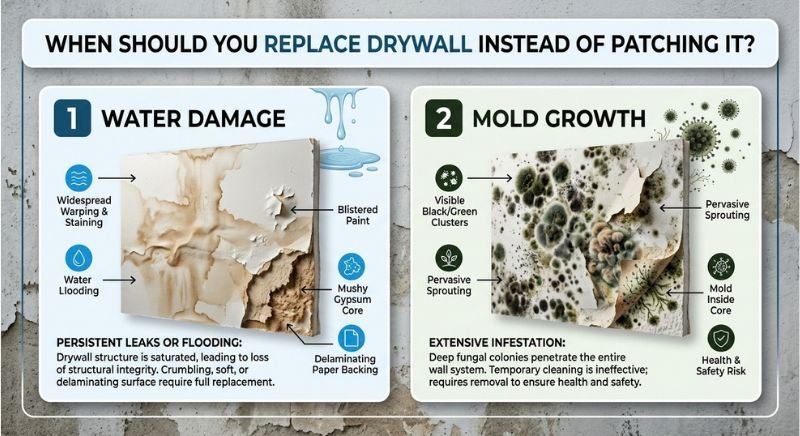
Not every hole should be patched. Sometimes the hole is only a symptom of a larger problem affecting the wall.
Water Damage
Water-damaged drywall can become soft, swollen, or weakened. Covering it with joint compound does not fix the source of the moisture or restore the damaged material.
Find and fix the source of the water first. If the drywall has lost its strength, the affected section may need to be removed and replaced.
Mold Growth
If mold is growing on or inside damaged drywall, a simple surface patch is not the right solution.
The source of the moisture must be addressed, and affected materials may need to be removed following appropriate safety practices. For significant mold contamination, professional assessment may be appropriate.
Large Structural Damage
A large hole with damaged edges or compromised framing needs more than surface filler.
If the wall has suffered major impact damage, the framing behind it is damaged, or the drywall cannot support a patch, replacing the affected section is the better approach.
How to Prevent Drywall Damage
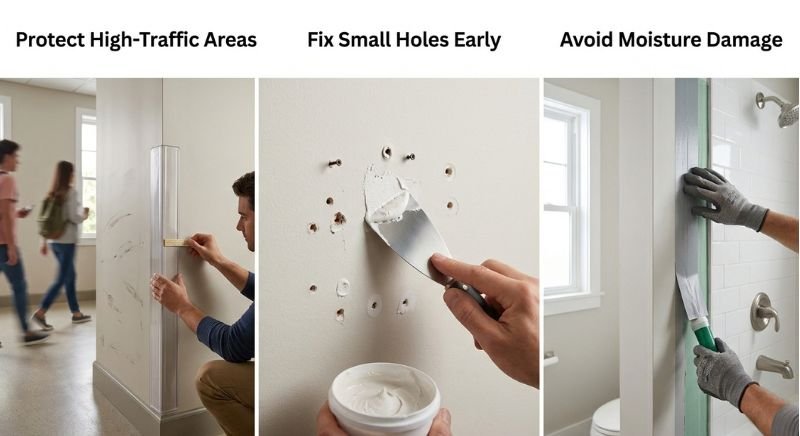
Once you know how to patch a hole in drywall, it is still worth preventing the next repair. A few simple habits can reduce the number of dents, holes, and cracks your walls develop.
Protect High-Traffic Areas
Corners and narrow hallways often take the most abuse from furniture, moving boxes, and everyday activity.
Use corner guards where appropriate and take care when moving large items through tight spaces. A little prevention can save you from repairing repeated dents in the same area.
Fix Small Holes Early
Small holes are easier to repair before they become surrounded by cracks or loose drywall.
When you remove a picture frame, shelf, or wall-mounted item, fill the remaining holes instead of leaving them exposed. Keeping a small container of spackle and a sanding sponge on hand makes these quick repairs easy.
Avoid Moisture Damage
Keep water away from standard drywall whenever possible. Repair leaks quickly and address plumbing problems before moisture spreads into the wall.
In areas that regularly experience moisture, use materials designed for the conditions rather than relying on standard drywall.
Conclusion
Learning how to patch a hole in drywall is a useful DIY skill, especially when the damage is limited to a few nail holes, dents, or small openings. If you’re figuring out how to repair small drywall holes, most repairs need little more than spackle or joint compound, light sanding, primer, and a careful paint touch-up. The trick is not to overwork a simple repair or use a large patch when a small amount of filler will do.
When you need to repair small hole in drywall, start by checking the edges. If the drywall around the opening is firm, you can usually fill it directly. For anyone learning how to fix a small hole in drywall, patience matters more than force. Let the filler dry fully before sanding, and use thin coats when the repair needs more than one application.
For a wider opening, knowing how to patch drywall hole properly means choosing the right patch and giving the joint compound enough time to dry. If you’re learning how to patch a drywall hole in the wall, remember that the final result depends just as much on feathering, priming, and matching the paint as it does on filling the hole itself.
If the drywall has serious water damage, mold, or major structural problems, patching may only hide the real issue. In those cases, fix the source of the damage and replace the affected section when necessary.
FAQs
How do you patch a hole in drywall?
Start by looking at the size of the hole and the condition of the drywall around it. A small nail or screw hole can usually be filled with spackle, while a medium opening may need a mesh patch covered with joint compound. A large hole typically requires a replacement piece of drywall.
For small repairs, press the filler firmly into the opening with a putty knife, then scrape away the excess. Once it dries, sand it smooth. Larger repairs may need several thin coats of joint compound, with drying time between each coat. Finish with primer and matching paint.
What is the best way to patch a drywall hole?
The best method depends on what you’re repairing, not simply how big the hole looks. Spackle is a practical choice for small nail holes, screw holes, and shallow dents. A mesh patch works well for many medium-sized openings because it gives the joint compound a stable surface to cover.
Large holes are a different job. They usually need a piece of new drywall fitted into the opening and secured properly before the seams are taped and covered with joint compound.
Can you repair drywall without replacing it?
Yes, and for many small repairs, replacing the drywall would be unnecessary. Nail holes, screw holes, shallow dents, minor cracks, and many medium-sized holes can be repaired while leaving the existing sheet in place.
Replacement becomes the better option when the drywall is soft from water damage, contaminated with mold, badly cracked, or missing a large section. In those situations, adding filler over the damage does not solve the underlying problem.
What is the best filler for drywall holes?
For small holes, spackle is often the easiest option. It spreads easily, fills shallow openings, and works well for quick repairs around the home.
Joint compound is more useful when the repair covers a larger area or involves a mesh patch or drywall tape. It can be spread in thin layers and feathered outward, which helps create a smoother transition between the repair and the existing wall.
The best drywall hole filler is ultimately the one suited to the size and depth of the damage.
Do I need a drywall patch kit for a small hole?
Usually, no. If you’re dealing with a small nail hole or screw hole, buying a full patch kit may be unnecessary. A small container of spackle, a putty knife, and fine-grit sandpaper or a sanding sponge are often enough.
A patch kit becomes more useful when the hole is too wide to fill directly or when you want the mesh patch and other repair materials together. Before buying one, check the size range listed on the package.
How long does drywall repair take?
The actual work on a small hole may take only a few minutes. The part that slows the job down is waiting for the filler or joint compound to dry before sanding.
A small repair may be finished in one day if the filler dries quickly. Medium and large repairs can take longer because they often require several coats of compound, drying time between coats, sanding, priming, and painting.
Can I paint over a drywall patch immediately?
It’s better to wait until the spackle or joint compound is completely dry. Painting over damp filler can leave you with an uneven surface and may make the repair more noticeable once the paint dries.
After the repair has dried, sand it smooth and remove the dust. Applying primer before the final paint helps prevent the patched area from absorbing paint differently from the surrounding wall.
Should I use spackle or joint compound?
Use spackle when you’re dealing with small holes, shallow dents, and minor surface damage. It’s convenient for quick repairs and is easy to apply with a putty knife.
Choose joint compound when you’re working on a larger repair, covering a mesh patch, or building up the surface in several thin coats. For basic patching holes in drywall, either can work well when matched to the size and type of damage.