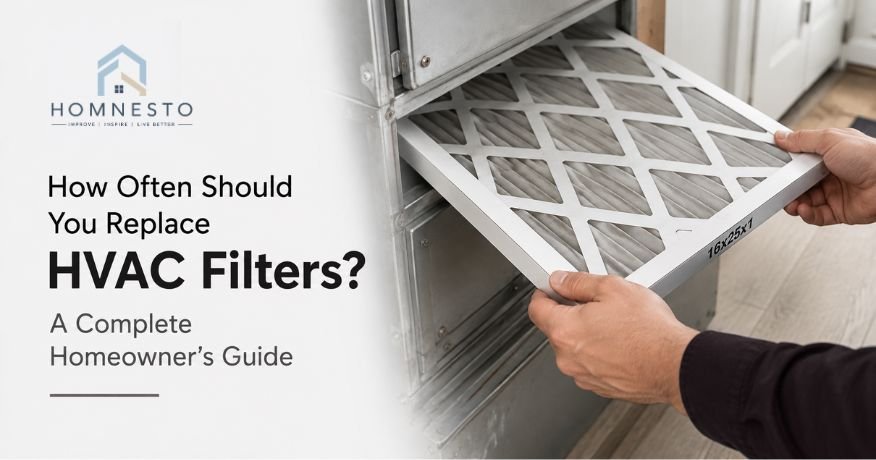

Your HVAC filter is one of the easiest parts of your heating and cooling system to forget. You usually cannot see it, and when everything is working normally, there is little reason to think about it. But that small filter is constantly catching dust, pollen, pet hair, and other particles moving through your home’s air.
That is why knowing how often to change HVAC filter matters. A filter that is left in place too long can become packed with dust and restrict airflow. Your furnace or air conditioner may then have to work harder and run longer to keep your home comfortable.
For many homes, a standard disposable filter should be checked every month and replaced about every 1 to 3 months. That is only a general starting point. A home with several pets, indoor smoking, allergies, construction dust, or heavy heating and cooling use may need more frequent filter replacement. A deeper filter may last much longer.
Introduction
Why replacing HVAC filters is important
An HVAC filter has two basic jobs. It helps keep particles from moving through the heating and cooling system, and it helps protect equipment from dust buildup.
A clean filter allows air to move through the system with less resistance. Once the filter becomes clogged, airflow can drop. That can affect how well your rooms heat or cool and may put extra strain on parts such as the blower motor.
Regular filter replacement is a simple part of HVAC maintenance. It does not solve every heating or cooling problem, but it helps prevent one common and avoidable source of airflow restriction.
How dirty filters affect your HVAC system
A dirty filter does not suddenly stop working on a particular day. Dust slowly builds up until the filter becomes harder for air to pass through.
That restriction can make the HVAC system run longer. In a furnace, reduced airflow can affect heating performance. During air conditioning, poor airflow can contribute to problems such as a frozen evaporator coil.
The longer a clogged air filter remains in place, the more likely you are to notice changes in airflow, comfort, or system operation.
Benefits of replacing filters on time
Changing a filter before it becomes heavily clogged helps maintain airflow and allows the HVAC system to operate under more normal conditions.
It can also help reduce the amount of dust moving through the system. However, a filter is not a complete indoor air cleaning solution. Cleaning, ventilation, moisture control, and reducing pollution sources are also important for good indoor air quality.
What you’ll learn in this guide
This guide explains how often to change HVAC filter based on filter thickness, household conditions, and HVAC use. You will also learn when a filter needs replacing, how to install one correctly, what MERV ratings mean, and what can happen when a dirty filter is ignored.
How Often Should You Replace HVAC Filters?
For many homeowners, the simplest answer to how often should you change your HVAC filter is every 1 to 3 months for a standard disposable filter. However, you should check it at least once a month because your home may require a different schedule.
A small household without pets may not load a filter as quickly as a busy home with several animals. Seasonal pollen, construction work, indoor smoking, and long periods of heating or cooling can also shorten filter life.
So, if you are asking how often should HVAC filters be changed, start with the manufacturer’s instructions and then pay attention to the condition of your actual filter.
A filter that is visibly covered with dust should not be kept in service simply because it has not reached the end of an estimated replacement period.
Recommended HVAC Filter Replacement Schedule
There is no single schedule for every HVAC filter, but this table gives homeowners a useful starting point:
| Filter type | General replacement range |
| 1-inch disposable | About every 1–3 months |
| 2-inch disposable | About every 1–3 months, depending on use |
| 4-inch filter | Often around 6–12 months |
| 5-inch filter | Often around 6–12 months |
| Washable filter | Clean and inspect according to manufacturer instructions |
These are general ranges, not guarantees. A deeper filter may last longer because it contains more filter material, but heavy dust, pet hair, smoke, or constant HVAC use can still shorten its service life.
If you are researching how often do HVAC filters need to be changed, check three things: the manufacturer’s recommendation, the type and depth of the filter, and how dirty it looks.
How Often Should You Change Your Furnace Filter?
If you are searching how often to change furnace filter, a typical 1-inch disposable furnace filter often needs replacement every 1 to 3 months.
That schedule can become shorter during a cold season when the furnace runs for many hours each day. A filter that looked clean when winter started may be heavily loaded several weeks later.
If you keep asking yourself, how often should I change my furnace filter, make a monthly inspection part of your routine. You may not need a new filter every month, but checking it gives you a chance to catch a problem early.
The same rule applies to how often to replace furnace filter and how often should you change your furnace filter. Do not rely only on a date. Look at the filter and consider how much work your furnace has been doing.
How Often Should You Change Your Home Air Filter?
If you want to know how often should you change your air filter, start by checking it every month. Many standard disposable home filters are replaced every 1 to 3 months.
Homes with pets, smokers, allergies, construction dust, or a large number of occupants may need more frequent replacement.
For anyone wondering how often to change air filter in house, a monthly inspection is more useful than assuming every household needs the exact same replacement date.
How Often Should Different HVAC Filters Be Changed?
Filter thickness can affect how much dust a filter can hold before airflow becomes restricted. That is why how often to replace HVAC filter depends partly on whether you have a thin 1-inch filter or a deeper media filter.
The filter’s design and efficiency rating matter too. Two filters with the same physical size can have different construction and different recommended replacement periods.
1-Inch HVAC Filters
A 1-inch HVAC filter is common in residential systems. Because it is relatively thin, it has less filter material available to collect dust.
Many 1-inch disposable filters are changed every 1 to 3 months. If your home has pets, lots of dust, indoor smoke, or heavy HVAC use, inspect the filter more often.
If you are unsure how often should you replace your HVAC filter, look at the size printed on the existing filter and check the manufacturer’s recommendation.
2-Inch HVAC Filters
A 2-inch filter has more depth than a 1-inch filter and may hold more dust before becoming restrictive.
That does not mean every 2-inch filter should automatically last six months. The actual replacement time depends on the filter design and conditions inside the home.
If the filter is visibly loaded with dust, replace it even if the expected service period has not ended.
4-Inch and 5-Inch HVAC Filters
Deep 4-inch and 5-inch filters are often designed for longer service periods. Some may last around 6 to 12 months, depending on the equipment and filter.
Because these filters can last much longer, it is easy to forget about them. Mark the installation date on the frame so you remember when to replace HVAC filter.
A deep filter still needs inspection. If your home has pets, high dust levels, or unusual indoor air quality problems, it may need replacement sooner than expected.
5-Washable and Reusable HVAC Filters
A washable or reusable air filter is cleaned rather than thrown away. The cleaning schedule depends on the product, so follow the manufacturer’s instructions.
Do not put a washable filter back into the HVAC system while it is wet. Let it dry completely before reinstalling it.
Reusable filters are not maintenance-free. They need regular cleaning and inspection, and they should be replaced if they become damaged or no longer fit correctly.
What Affects How Often You Should Change HVAC Filters?
The question how often should HVAC air filters be changed has a different answer for different households. The more particles your home produces or brings indoors, the faster the filter can become loaded.
Pets in the Home
Pet hair and dander can build up on a filter surprisingly quickly.
If you have one or more shedding pets, inspect the filter every few weeks during heavy shedding periods. You may find that your replacement schedule needs to be shorter than the standard 1-to-3-month range.
Regular vacuuming and grooming can also reduce the amount of pet hair that reaches the return air vent.
Allergies or Asthma
If someone in your household has allergies or asthma, filter choice deserves extra attention.
A higher-efficiency filter may capture more airborne particles, but it must be suitable for your HVAC system. A filter that is too restrictive can reduce airflow.
Look at the MERV rating and your equipment manufacturer’s recommendations before choosing a more restrictive filter.
Number of People Living in the House
A larger household can produce more dust and airborne particles through normal daily activity.
More people also means more doors opening, more movement, and often more frequent HVAC use. This can cause a filter to load faster than it would in a smaller household.
That is one reason how often do you change HVAC filters cannot be answered with one number for every home.
Smoking Indoors
Indoor smoking adds fine particles and other pollutants to the air. These particles can collect on the HVAC filter and shorten its useful life.
If smoking takes place indoors, inspect the filter more frequently. Changing the filter can help with particles moving through the HVAC system, but it does not remove every pollutant created by indoor smoking.
Home Renovation or Construction Dust
Renovation dust can overwhelm an air filter quickly.
Drywall dust, sawdust, insulation particles, and other fine debris can become trapped in the filter. If you have recently remodeled a room, check the filter after the work is complete.
If it looks heavily loaded, replace it. Do not assume a recently installed filter is still clean simply because it has only been in place for a short time.
Local Climate and Air Quality
Your local environment can also affect filter life. Pollen, outdoor dust, wildfire smoke, and poor outdoor air quality can increase the number of airborne particles entering your home.
During high-pollen or smoky periods, check the filter more frequently.
How to Know When Your HVAC Filter Needs to Be Replaced
Sometimes the best answer to when to change HVAC filter is sitting right in front of you. A visual check and a few changes around the house can tell you that the filter needs attention.
Reduced Airflow
Weak airflow from supply vents can be a sign of a clogged air filter.
If the airflow feels weaker than normal, check the filter first. A dirty filter is an easy problem to identify and fix.
If airflow remains weak after replacing the filter, the cause may be elsewhere, such as a blocked duct, blower problem, or another HVAC issue.
Higher Energy Bills
A restricted filter can cause the heating and cooling system to run longer.
Longer run times can increase energy use, but a high energy bill has many possible causes. Weather, thermostat settings, utility rates, duct problems, and equipment condition can all play a role.
More Dust Around the House
More dust on furniture does not automatically mean the filter has failed, but it is worth checking.
Look at the filter and inspect the return air vent. If the filter is heavily covered with dust, replacing it may help restore normal filtration.
Poor Indoor Air Quality
A dirty, damaged, or poorly fitted filter may affect the HVAC system’s ability to capture particles.
Still, indoor air quality depends on much more than the HVAC filter. Cooking, cleaning products, outdoor air, pets, moisture, and indoor smoking can all affect the air inside your home.
HVAC System Running Longer Than Normal
If your furnace or AC seems to run continuously, inspect the filter.
A clogged filter can restrict airflow and make the system work harder. If replacing the filter does not change the problem, there may be another reason for the long run times.
What Happens If You Don’t Change Your HVAC Filter?
If you are wondering what happens if you don’t change your AC filter, the main concern is restricted airflow.
The same is true when homeowners ask what happens if you don’t clean AC filter. A disposable filter should normally be replaced rather than cleaned unless it is specifically designed to be washable.
Reduced HVAC Efficiency
A clogged filter makes it harder for air to move through the HVAC system.
Your equipment may have to run longer to move enough conditioned air through the house. Over time, that can affect how efficiently the system operates.
Higher Energy Costs
When the system runs longer, energy use can increase.
Replacing a dirty filter is not a guaranteed way to reduce your utility bill, but it removes one simple source of unnecessary airflow restriction.
Poor Heating and Cooling Performance
Restricted airflow can make your home feel less comfortable.
You may notice that rooms take longer to heat or cool, or that the temperature near the thermostat is comfortable while other rooms are not.
Frozen Evaporator Coil
During cooling, poor airflow can contribute to an evaporator coil freezing.
If you see ice on the indoor coil or refrigerant line, turn the system off and arrange for proper diagnosis. A dirty filter may be part of the problem, but other HVAC faults can also cause freezing.
Damage to the Blower Motor
The blower motor moves air through the system. Severe airflow restriction can make its job harder.
A dirty filter does not mean the blower motor will automatically fail. However, regularly operating the HVAC system with poor airflow can place unnecessary stress on equipment.
Shorter HVAC System Lifespan
A filter alone does not determine how long an HVAC system will last.
However, repeated airflow problems and neglected maintenance can contribute to extra wear. Regular filter replacement is one small way to keep the system operating under better conditions.
How to Change an HVAC Filter
Knowing how often to change HVAC air filter is only useful if the filter is installed correctly. A poorly fitted or backward filter can cause problems even when it is brand new.
Turn Off the HVAC System
Set the thermostat to the off position before removing the filter.
This stops the blower from running while you work and reduces the chance of loose dust being pulled into the system.
Locate the Air Filter
The filter may be inside a return air vent, near the furnace, or inside a filter cabinet.
If you cannot find it, check the HVAC owner’s manual. Some systems have more than one filter, so confirm whether your equipment requires multiple filters.
Remove the Old Filter
Pull the old filter out carefully.
If it is very dusty, avoid shaking it. You do not want the collected dust falling into the return opening.
Check the size printed on the frame before throwing it away.
Install the New Filter Correctly
Use the same required size unless your HVAC manufacturer specifies another option.
The filter should sit securely in its slot. Do not bend, crush, or force it into place.
Check the Airflow Direction
Most disposable filters have an arrow on the frame.
The arrow should point in the direction the air travels, usually toward the furnace or air handler.
If you are unsure, check the old filter before removing it or look at your equipment manual.
Restart and Test the System
Turn the HVAC system back on and let it run.
Check the vents for normal airflow. If airflow seems weak or you hear an unusual sound, turn the system off and check that the filter is installed correctly.
How to Choose the Right HVAC Filter
The best filter is not necessarily the most expensive one. You need a filter that fits your system, meets your home’s needs, and allows suitable airflow.
Understanding MERV Ratings
The MERV rating tells you how effectively a filter captures certain airborne particles.
A higher MERV rating generally means greater particle filtration. However, a higher-rated filter can also create more resistance to airflow, depending on the filter.
Before choosing a higher MERV filter, check whether your HVAC system is designed to use it. If you are uncertain, ask an HVAC professional rather than guessing.
Fiberglass vs Pleated Filters
A fiberglass filter is usually a basic option designed largely to catch larger particles and protect HVAC equipment.
A pleated air filter has folded filter material that provides more surface area for capturing particles. Pleated filters are available at different efficiency levels.
For many homes, a pleated filter can offer a practical balance between filtration and airflow, but the correct choice depends on the equipment.
Disposable vs Reusable Filters
A disposable air filter is removed and replaced once it becomes dirty.
A reusable air filter is cleaned and installed again. It can be a good option for homeowners who are willing to keep up with regular cleaning.
Whichever type you choose, make sure it is approved for your HVAC system and installed correctly.
Choosing the Correct Filter Size
Never guess the filter size.
Check the dimensions printed on your current filter. If the filter does not fit tightly in the slot, confirm the required size in your equipment documentation.
A filter that is too small can leave gaps. A filter that is too large may not sit properly.
HVAC Filter vs Furnace Filter: What’s the Difference?
Homeowners often use several names for the same filter. You may hear HVAC filter, furnace filter, AC filter, heater filter, or home air filter.
Are They the Same Thing?
In many central systems, yes.
The same central air filter can protect the furnace during heating and filter air when the air conditioner is running. The name changes depending on which part of the heating and cooling system you are talking about.
That is why how often should you change the filter in your furnace and how often should you change your air filter often lead to the same replacement schedule.
When Should Each Be Replaced?
If one filter serves both the furnace and AC, you generally do not need to replace it separately for heating and cooling.
Replace it according to its condition and the manufacturer’s recommended schedule.
If your system has separate filters, follow the instructions for each filter location.
Can You Change an HVAC Filter While the System Is Running?
It is better to turn the HVAC system off before removing the filter.
Is It Safe?
Homeowners often ask, can you change an HVAC filter while the AC is running?
The better practice is to turn the system off first. With the blower running, removing the filter can allow dust and debris to move through the return opening.
Turning the system off also prevents the blower from starting while you have your hands near the filter opening.
Best Practices Before Replacing the Filter
Before replacement, turn off the thermostat, wait for the blower to stop, and have the correct filter ready.
Check the filter size and airflow arrow. After installation, make sure the filter and access panel are secure before turning the system back on.
Tips to Make HVAC Filters Last Longer
A filter will eventually need to be replaced, but you can reduce the amount of debris reaching it.
Keep Vents Clean
Dust around return vents can be pulled toward the filter.
Vacuum the visible surface of return grilles regularly. Also make sure furniture, curtains, or other objects are not blocking the return.
Schedule Regular HVAC Maintenance
Routine HVAC maintenance can help identify airflow problems, dirty equipment, worn parts, and other issues.
Filter replacement is important, but it is only one part of taking care of a heating and cooling system.
Reduce Dust and Pet Hair
Regular vacuuming can reduce dust in the home.
If you have pets, regular grooming can also reduce loose pet hair. Keeping dust and hair under control can help the filter stay cleaner for longer.
Check Filters Every Month
A monthly check takes only a few minutes.
Write the installation date on the filter. Then check it each month and decide whether it still looks usable.
This habit makes HVAC filter replacement how often a much easier question to answer because you are using your actual filter as the guide.
Common HVAC Filter Replacement Mistakes
A new filter can still cause problems if it is the wrong type, size, or orientation.
Waiting Too Long to Replace the Filter
One of the most common mistakes is waiting until airflow becomes noticeably weak.
If the filter is already packed with dust, waiting longer gives the HVAC system no benefit.
Installing the Filter Backward
The arrow on the filter is there for a reason.
Point it toward the furnace, air handler, or blower. Take a second to check the direction before closing the filter compartment.
Choosing the Wrong MERV Rating
Do not automatically choose the highest MERV rating available.
A filter that is too restrictive for your system can reduce airflow. Check your equipment specifications before upgrading.
Using the Wrong Filter Size
A filter should fit the opening correctly without large gaps or excessive force.
If you are unsure which size to buy, use the size printed on the existing filter and confirm it with the HVAC manufacturer’s specifications.
Final Takeaway
For homeowners asking how often to change HVAC filter, the best answer is not simply “every 30 days” or “every three months.” The right schedule depends on your filter, your HVAC system, and what is happening inside your home.
For many standard disposable filters, checking once a month and replacing every 1 to 3 months is a good starting point. A deeper 4-inch or 5-inch filter may last longer, while a home with pets, smoke, allergies, renovation dust, or heavy system use may need more frequent changes.
Pay attention to the filter itself. If it is covered with dust, airflow is weaker, or the system is running longer than usual, it may be time for filter replacement.
And if you’re still asking how often should I change my HVAC filter, make one habit non-negotiable: check it every month. That small task takes only a few minutes and can help you catch airflow problems before they become bigger HVAC maintenance issues.
FAQs
How often should you replace HVAC filters?
For many standard disposable filters, replacement every 1 to 3 months is a reasonable starting point. Check the filter monthly and replace it sooner if it is heavily dirty. Pets, smoke, dust, allergies, and heavy HVAC use can shorten filter life.
How often should you change your furnace filter?
A standard 1-inch furnace filter commonly needs replacement every 1 to 3 months. If your furnace runs frequently or your home has pets, smoke, or high dust levels, inspect it more often.
How often should air filters be changed?
Most standard disposable air filters are checked monthly and changed every 1 to 3 months, but the correct interval depends on the filter type, HVAC system, and conditions inside the home.
How often should an AC filter be changed?
If the AC and furnace use the same filter, follow the same replacement schedule. For many standard filters, that means checking monthly and replacing every 1 to 3 months.
When should you replace your HVAC filter?
A filter should be replaced when it is heavily dirty, airflow is becoming restricted, or the manufacturer’s recommended replacement interval has arrived. If you are asking when should air filter be changed, inspect the filter rather than relying only on the calendar.
How long do furnace filters last?
Standard disposable furnace filters often last about 1 to 3 months. Deeper filters may last longer. Heavy HVAC use, pets, dust, and indoor air conditions can shorten the interval.
What happens if you don’t change your furnace filter?
If you want to know what happens if you don’t change your furnace filter, the main concern is restricted airflow. A clogged filter can make the furnace run longer, reduce heating performance, increase energy use, and place extra stress on system components.
Does changing the air filter improve AC performance?
If the old filter is dirty enough to restrict airflow, replacing it can help restore normal airflow. So, does changing air filter improve ac? It can when the dirty filter is contributing to the problem. It will not fix refrigerant, electrical, duct, or mechanical faults.
Can you change an HVAC filter while the AC is running?
It is better to turn the AC or HVAC system off first. This stops the blower and reduces the chance of dust being pulled through the return opening while the filter is removed.
How often should you change your home air filter?
Check the home air filter every month. Many standard disposable filters are replaced every 1 to 3 months, but homes with pets, smokers, allergies, construction dust, or heavy HVAC use may need more frequent replacement.