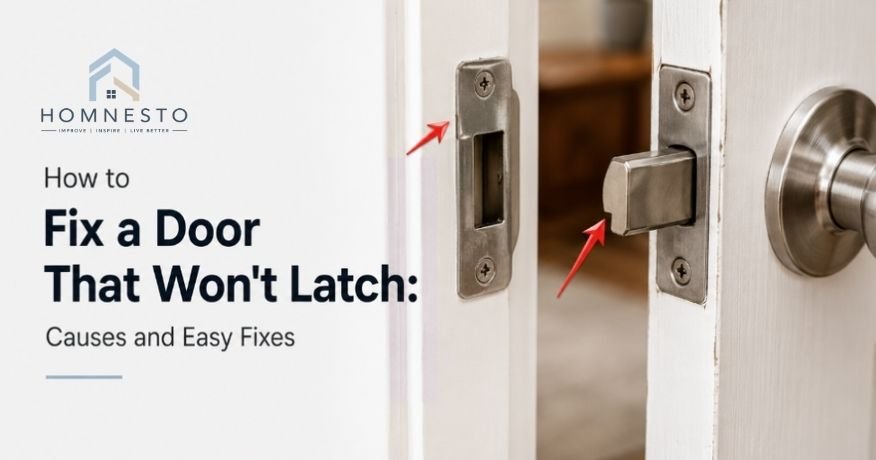

A door that won’t latch can be frustrating, especially when you have to push, pull, or lift the door just to keep it closed. If you’re wondering how to fix a door that won’t latch, the good news is that the problem is often straightforward to diagnose. Door not latching is commonly caused by misalignment between the door and strike plate, loose or sagging hinges, a dirty or sticky latch, or a problem with the latch mechanism itself.
Before replacing anything, check where the latch is contacting the frame and whether the door sits evenly in the opening. The right door latch repair depends on what is causing the problem.
Why Won’t My Door Latch?
When a door won’t latch, the latch usually cannot reach or properly engage the strike plate. In other cases, the latch may reach the opening but fail to retract, spring back, or move smoothly.
Common causes include a misaligned door, loose hinges, a shifted frame, buildup inside the latch, or worn hardware. Identifying the cause first makes fixing a door latch easier and helps prevent unnecessary replacement.
The Door or Strike Plate Is Misaligned
Misalignment is one of the most common reasons a door latch not catching problem develops. The latch may hit above, below, or beside the strike plate opening instead of entering it.
Look at the latch and strike plate while slowly closing the door. If the latch touches the edge of the plate, the door latch alignment may need adjustment.
Loose or Sagging Door Hinges
Loose hinge screws can allow the door to drop or shift toward one side of the frame. A sagging door may rub against the frame and cause the latch to miss the strike plate.
This is especially common when a heavy door has been used for years. Checking the hinges should be one of the first steps when a door will not latch properly.
The Latch Is Dirty or Sticking
Dust, grime, paint, or corrosion can prevent a latch from moving smoothly. A sticky door latch may extend slowly, fail to spring back, or remain partially retracted.
Cleaning the exposed latch and applying an appropriate lubricant can often improve movement.
The Door Latch Is Not Retracting Properly
A latch that does not move fully when you turn the knob or handle can prevent the door from opening and closing normally. You may notice that the door latch won’t retract, the latch feels stiff, or the handle turns without fully moving the latch.
This can indicate worn internal components rather than a simple alignment issue.
The Door Frame Has Shifted
A door frame can move slightly over time because of building movement, moisture, settling, or repeated stress. Even a small change can affect where the latch meets the strike plate.
If the door and hinges appear correctly positioned but the latch still misses, inspect the frame and strike plate for signs of movement.
How to Fix a Door That Won’t Latch
If you’re looking for how to fix door that won’t latch, start with alignment and work through the simplest repairs first. You may be able to fix a door that won’t latch without replacing the latch or other hardware.
1. Check the Door and Strike Plate Alignment
Close the door slowly and watch where the latch meets the strike plate. If the door latch not catching strike plate issue is caused by vertical or horizontal misalignment, identify the direction of the gap before making adjustments.
Check whether the latch sits too high, too low, too far inward, or too far outward. This helps determine whether the hinges, strike plate, or latch position needs attention.
2. Tighten the Door Hinges
Inspect each hinge and tighten loose screws using the correct screwdriver. Pay particular attention to the top hinge because it carries significant load and can contribute to door sagging.
If the screws no longer grip the wood, the hinge may need a more substantial repair rather than simply tightening the existing screws.
3. Adjust the Strike Plate
If the latch consistently misses the opening, fixing the door strike plate may solve the problem. Loosen the strike plate screws slightly and reposition the plate so the latch enters the opening cleanly.
If you need to know how to adjust a door strike plate, make small changes and test the door after each adjustment. Avoid moving the plate farther than necessary.
4. Clean and Lubricate the Door Latch
If the latch is dirty or stiff, clean around the mechanism and remove visible debris. Then apply a suitable lubricant according to the hardware manufacturer’s recommendations.
This can help when repairing door latch movement problems caused by friction or buildup. Do not flood the mechanism with lubricant because excess product can attract dust.
5. Check the Door Knob or Handle
Turn the knob or handle while watching the latch. It should retract smoothly and return fully when released.
If the door knob won’t latch, door knob not latching, or door handle won’t latch, the issue may be inside the handle or latch assembly. A loose connection, damaged spindle, or worn mechanism can prevent proper operation.
6. Replace a Damaged Door Latch
If cleaning, alignment, hinge adjustments, and lubrication do not solve the problem, inspect the latch for damage. A bent latch, broken spring, or worn mechanism may require replacement.
Use a compatible replacement that matches the existing door hardware. When in doubt, remove the old latch only after confirming how it is secured.
How to Fix a Door Latch That Isn’t Catching the Strike Plate
A door latch won’t catch when the latch and strike plate do not line up correctly or the latch cannot extend far enough into the opening.
Start by closing the door slowly and watching the point where the latch meets the strike plate. This shows whether the latch sits too high, too low, or too far from the opening.
If the door latch not engaging strike plate problem is caused by alignment, adjust the hinges or strike plate rather than forcing the door. After each adjustment, open and close the door several times to confirm the latch catches securely.
When the Latch Sits Too High or Too Low
A latch that hits the top or bottom edge of the strike plate usually indicates vertical misalignment. Check the hinges first because a sagging door can shift the latch position.
If the hinges are secure, the strike plate may need to be repositioned. Small adjustments are usually preferable to moving the plate significantly.
When the Latch Is Too Far From the Strike Plate
If the latch reaches the frame but sits too far inward or outward to enter the strike plate, check how the door sits when closed. The door latch is too far from strike plate issue may result from hinge position, frame movement, or incorrect strike-plate placement.
Make a small adjustment, then test the latch. The goal is for the latch to enter the strike plate opening without rubbing or requiring pressure on the door.
How to Fix a Door That Won’t Close Properly
A door won’t close properly when something prevents the door from reaching its normal closed position. The cause may be a sagging door, loose hinges, an obstruction, or a door that is no longer sitting flush.
Check for a Sagging Door
A sagging door may scrape the frame, create uneven gaps, or cause the latch to sit below the strike plate. Look at the gap around the door and compare the top and bottom corners.
If the door has dropped, correcting the hinge problem may restore proper alignment.
Tighten Loose Hinge Screws
Loose hinge screws can change the position of the door. Tighten them carefully and test the door after each hinge adjustment.
If you are researching how to fix hinges on a door, begin by checking for loose screws, damaged hinge leaves, or movement around the mounting points.
Check for Obstructions
Look for objects, debris, thick weatherstripping, paint buildup, or other material preventing the door from closing. Even a small obstruction can cause a door not closing properly problem.
Remove only material that is clearly interfering with normal operation.
Make Sure the Door Sits Flush in the Frame
A properly positioned door should sit evenly within the frame without excessive gaps on one side. If the door not closing flush issue persists, inspect the hinges, frame, and stop for movement or damage.
A door that does not sit correctly may need adjustment before the latch can engage properly.
How to Fix a Sticky Door Latch
A sticky door latch can make a door difficult to close, open, or keep latched. Before replacing the hardware, check whether dirt, corrosion, or friction is preventing the latch from moving normally.
Clean the Latch Mechanism
Extend the latch and inspect it for dust, grime, paint, or other buildup. Wipe the accessible surfaces with a suitable cloth and remove loose debris.
Cleaning is often a simple first step when learning how to fix a sticky door latch.
Lubricate the Latch
Apply a small amount of lubricant appropriate for the latch mechanism. Operate the knob or handle several times so the lubricant can distribute through the moving parts.
Avoid excessive lubricant because it can collect dust and eventually make the mechanism sticky again.
Check Whether the Latch Retracts Fully
Turn the knob or handle and confirm that the latch disappears fully into the door. Release the handle and check whether it springs back to its normal position.
If the door latch not springing back remains a problem after cleaning and lubrication, the internal spring or latch mechanism may be worn.
What If the Door Latch Won’t Retract?
A door latch won’t retract when the handle or knob fails to pull the latch completely into the door. This can make the door difficult to open and may indicate a problem inside the latch assembly.
If the door latch not fully retracting or door latch not retracting continues after cleaning, inspect the knob, handle, spindle, and latch mechanism.
Check the Door Knob or Handle
Operate the knob or handle slowly while watching the latch. If the handle turns but the latch barely moves, the connection between the handle and latch may be damaged or loose.
Problems such as a door knob latch not retracting or a door handle won’t latch condition can sometimes be traced to worn internal hardware.
Inspect the Latch Mechanism
Remove the latch only if you are comfortable working with the door hardware and can identify how it is installed. Look for a broken spring, bent component, corrosion, or other visible damage.
If the latch cannot move freely even when disconnected from the strike plate, the problem is likely within the mechanism itself.
Replace the Latch if It Is Broken
A broken latch generally needs replacement rather than adjustment. This is particularly true when the latch is bent, its spring has failed, or it cannot retract consistently.
Choose a replacement that matches the door thickness, backset, faceplate, and existing handle or knob configuration.
How to Fix a Bedroom or Interior Door That Won’t Latch
A bedroom door won’t latch problem is usually caused by the same alignment, hinge, strike plate, or latch issues found on other interior doors. Keep the repair focused on identifying the point of failure.
Check the Hinges and Door Alignment
Check whether the door is sagging or rubbing against the frame. Tighten loose hinge screws and make sure the door sits evenly in the opening.
For an interior door not latching, correct the alignment before making major changes to the hardware.
Adjust the Strike Plate
If the latch misses the strike plate, make a small adjustment to the plate so the latch can enter the opening. This can often solve how to fix a bedroom door that won’t latch without replacing the entire latch.
Inspect the Latch and Door Knob
Check that the latch retracts fully and springs back when the knob is released. A worn latch or loose knob can cause a bedroom door wont latch issue even when the alignment is correct.
How to Fix a Front Door That Won’t Latch
A front door won’t latch problem deserves prompt attention because the door may not remain securely closed. Check the alignment, hinges, strike plate, latch, and locking hardware.
Check for Door Sagging
Heavy exterior doors can develop hinge-related movement over time. Look for uneven gaps or a door that appears lower on the latch side.
Correcting the sag can restore the alignment between the latch and strike plate.
Check the Strike Plate and Latch Alignment
Close the front door slowly and see whether the latch enters the strike plate cleanly. A front door not closing properly may simply need a small alignment adjustment.
Make sure the latch is not hitting the edge of the strike plate or failing to reach the opening.
Check the Latch and Locking Hardware
Operate the handle, latch, and lock separately to identify unusual resistance. If the latch does not extend or retract normally, the locking hardware may need repair.
Because exterior doors are important for security, replace damaged or unreliable hardware rather than relying on temporary fixes.
When Should You Replace a Door Latch?
A latch should generally be replaced when it is broken, bent, badly worn, or unable to operate reliably after reasonable cleaning and adjustment.
Replacement is appropriate when the door latch won’t retract, the latch won’t spring back, or internal components are damaged. Repeated failure after alignment and strike-plate adjustments is another indication that the mechanism itself may be worn.
A door latch repair may be enough when the problem is caused by dirt, loose hardware, or minor alignment issues. However, replacing a severely damaged latch can be safer and more reliable than repeatedly adjusting it.
FAQs
Why won’t my door latch?
A door may not latch because the door or strike plate is misaligned, the hinges are loose, the latch is dirty or sticking, or the latch mechanism is damaged. Check alignment and hinges first, then inspect the latch and strike plate.
How do I fix a door that won’t stay closed?
To fix a door that won’t stay closed, check whether it is sagging, rubbing against the frame, or failing to engage the strike plate. Tighten loose hinges and adjust the strike plate if necessary. If the latch itself is damaged, it may need replacement.
Why is my door latch not catching the strike plate?
A door latch not catching strike plate problem usually means the latch and strike opening are misaligned. Check whether the latch is too high, too low, or too far from the strike plate. Adjust the hinges or strike plate in small increments and test the door after each change.
How do I adjust a door latch?
To adjust door latch position, first determine where the latch is contacting the strike plate. Depending on the problem, tighten the hinges, reposition the strike plate, or adjust compatible latch hardware. Make small changes and test the door frequently.
How do I fix a door latch that won’t retract?
If a door latch won’t retract, check the knob or handle for loose or damaged components and inspect the latch for dirt or corrosion. Clean and lubricate the mechanism if appropriate. If the latch still does not retract fully, replace the damaged mechanism.
Why won’t my door close all the way?
A door won’t close all the way when the frame, hinges, weatherstripping, latch, or another obstruction prevents the door from reaching its normal position. Check for rubbing, loose screws, debris, and misalignment before adjusting the hardware.
How do I fix a sticky door latch?
To fix a sticky door latch, clean away dirt and buildup, then apply a small amount of suitable lubricant. Operate the latch repeatedly to distribute the lubricant. If it remains sticky or does not spring back properly, inspect or replace the latch mechanism.
Final Thoughts
When a door will not latch, knowing how to fix a door that won’t latch starts with working through the problem in a logical order: check the alignment, tighten the hinges, inspect or adjust the strike plate, clean and lubricate the latch, check the knob or handle, and replace damaged hardware when necessary.
Most door not latching problems can be traced to one of these areas. Taking the time to identify the cause before making adjustments helps you fix door latch problems efficiently and avoid replacing hardware that is still in good condition.