
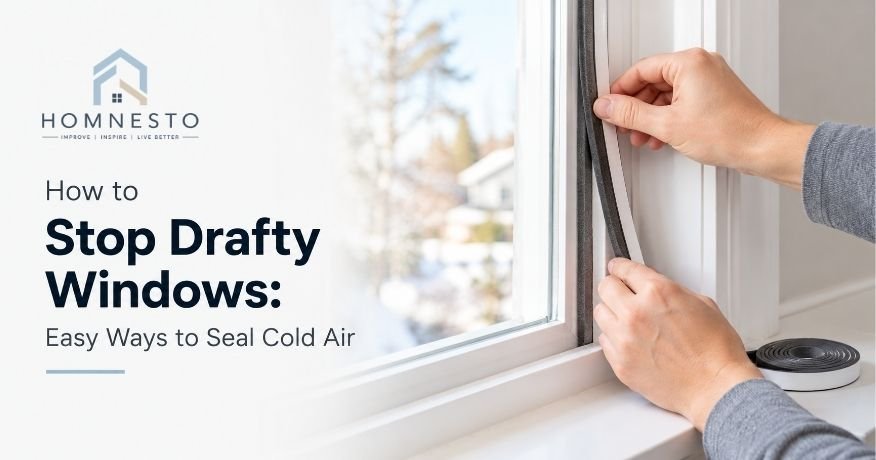

Learning how to stop drafty windows starts with finding where unwanted air is entering. Drafty windows can make a room uncomfortable, increase heating and cooling costs, and create noticeable window drafts around the frame or sash. If you feel cold air coming through windows, the problem may be easier to fix than it seems.
Drafts usually come from gaps around the frame, worn weatherstripping, damaged or missing caulk, poor seals, or older windows. Before choosing a solution, identify the source of the air leak. That makes it easier to choose the right repair, whether you need new weatherstripping, caulk, insulation film, or a more permanent repair.
Why are My Windows Drafty?
Several common problems can make a window feel cold or allow outside air into the room. Checking each area can help determine whether you need a simple seal or a more substantial repair.
Gaps Around the Window Frame
A draft around window frame areas often indicates a gap between the frame and surrounding wall or trim. As buildings settle, materials expand and contract, and existing sealant can deteriorate, small openings may develop.
If your window is drafty even when it is fully closed, run your hand slowly around the frame on a windy day. A noticeable stream of air can help pinpoint the location of the leak.
Worn or Damaged Weatherstripping
Weatherstripping seals the space between the moving window sash and frame. Over time, it can become compressed, cracked, loose, or brittle.
Damaged weatherstripping can allow a draft coming through window gaps even when the window appears properly closed. Replacing it is often one of the simplest ways to improve the seal.
Cracked or Missing Caulk
Caulk seals stationary joints around the window frame. If it has cracked, separated, or fallen away, outside air can enter through the opening.
Inspect both the interior and exterior perimeter where accessible. Missing sealant is a common reason for cold air window problems, especially around older installations.
Poor Window Seals
A window can also become drafty because its seals have deteriorated. With insulated glass, a failed seal can affect the unit’s insulating performance and may be accompanied by condensation or fogging between panes.
If sealing around the frame does not solve the problem, the window itself may have a damaged component or failed glass seal.
Old or Single-Pane Windows
Older single-pane windows generally provide less insulation than modern insulated units. The glass itself can become a major source of heat transfer, even when the frame is properly sealed.
For these drafty windows, insulation film, thermal curtains, weatherstripping, and other measures can improve comfort without immediately replacing the entire window.
How to Find Where a Window Draft Is Coming From
Before deciding how to stop drafty windows, find the exact source of the air leak. A diagnosis-first approach prevents you from sealing the wrong area.
Check Around the Window Frame
Inspect the perimeter of the window where the frame meets the wall, trim, or sill. Look for cracked caulk, visible openings, separated trim, or areas where the seal appears incomplete.
On a windy day, move your hand around the perimeter to feel for a draft from window gaps. Check both the top and bottom as well as the sides.
Check the Window Sash and Moving Parts
Open and close the window slowly. Pay attention to whether the sash moves smoothly and whether it presses firmly against the weatherstripping when closed.
A poorly fitting sash may leave a small opening that produces window drafts even though the lock is engaged.
Look for Visible Gaps and Cracks
Look closely at the frame, corners, joints, and surrounding caulk. A draft coming through window may be visible as a narrow gap, but some leaks are hidden beneath deteriorated sealant.
Also inspect weatherstripping for compression, cracks, missing sections, or separation from the frame.
Use a Simple Smoke or Tissue Test
On a windy day, hold a thin strip of tissue near suspected leak points. Movement can indicate air infiltration. A smoke source can also reveal air movement, but use caution around flames and combustible materials.
Mark the locations where air enters so you can address each leak systematically.
How to Stop Drafty Windows
Once you know where the air is entering, you can choose the appropriate repair. These methods explain how can I stop drafty windows and how do I stop drafty windows without automatically replacing the entire window.
1. Replace Worn Weatherstripping
Remove damaged weatherstripping and clean the surface before installing a compatible replacement. The new material should sit securely without preventing the sash from closing.
This is particularly effective for movable gaps and is one of the simplest ways to learn how to stop drafts from windows.
2. Caulk Gaps Around the Window Frame
Remove loose or deteriorated caulk and clean the surface. Apply an appropriate window and door caulk to stationary gaps around the frame.
Proper caulking drafty windows can stop air from entering through cracks that weatherstripping cannot address.
3. Seal Gaps Around the Window Sash
If the draft originates where the sash meets the frame, inspect the existing seal and weatherstripping. Replace worn sections rather than filling a moving joint with permanent caulk.
This approach can help how to stop window drafts while allowing the window to continue opening and closing normally.
4. Apply Window Insulation Film
Window insulation film creates an additional air barrier over the interior of the window. It can be especially useful for older or single-pane windows during cold weather.
Follow the manufacturer’s instructions so the film adheres properly and does not interfere with window operation.
5. Use Thermal Curtains or Temporary Draft Protection
Thermal curtains can reduce the amount of cold air movement and heat transfer felt inside a room. They work best as an additional layer rather than as a replacement for repairing an actual gap.
A removable window air blocker or other temporary barrier can also help when a permanent repair is not immediately possible.
6. Adjust the Window So It Closes Tightly
A sash that does not close firmly can leave gaps around the seal. Check the lock, hinges, rollers, or other adjustment points appropriate to the window type.
Improving the fit can help how to block drafty windows when the problem is caused by poor alignment rather than damaged materials.
7. Repair Damaged Window Seals
If the window has a failed seal, cracked component, or damaged frame, determine whether the affected part can be repaired or replaced individually.
Addressing the damaged component is an important part of learning how to fix drafts in windows rather than simply covering the symptom.
How to Seal Drafty Windows
Sealing is usually most effective when you match the material to the location of the leak. Stationary frame gaps generally need caulk, while movable sash gaps usually need weatherstripping.
How to Caulk Drafty Windows
Start by removing loose, cracked, or failed caulk. Clean and dry the surface, then apply a continuous bead of compatible caulk along the stationary joint.
Smooth the bead according to the product instructions and allow it to cure fully. This is the basic process for caulking drafty windows and can create a durable window draft seal.
How to Seal Gaps Around the Window Frame
Inspect the joint between the frame and surrounding wall or trim. Remove deteriorated sealant before applying new sealant so the replacement can adhere properly.
The best way to seal a drafty window depends on the size and location of the gap. Do not caulk over moving parts that need to remain operational.
How to Weatherproof Windows
To how to weather proof windows effectively, combine several measures when necessary: replace worn weatherstripping, repair damaged caulk, make sure the sash closes tightly, and address visible frame gaps.
Weatherproofing is more effective when you first identify the source of the air leak instead of applying one product everywhere.
How to Seal Windows From Cold Air
To learn how to seal windows from cold air, start with the frame and sash. Use caulk for stationary gaps and weatherstripping for moving gaps. For additional seasonal protection, add insulation film or thermal curtains.
A suitable window sealant for drafts can provide a longer-lasting solution when the leak is coming from a stationary joint.
How to Stop Cold Air From Coming Through Windows in Winter
Winter makes window air leaks especially noticeable. If you’re looking for how to stop cold air from windows, focus first on sealing the places where outside air can physically enter.
Add Window Insulation Film
Interior insulation film adds another barrier between the room and cold glass. It is particularly useful for older windows that lose heat through the glass.
Install Weatherstripping
Replace compressed or damaged weatherstripping around movable sashes. A properly fitted seal can reduce how to stop cold air coming through windows without preventing normal operation.
Seal Exterior Gaps With Caulk
If exterior frame joints have cracks or missing sealant, repair them with an appropriate exterior-rated caulk. This can help with how to stop cold from coming through windows and reduce air infiltration.
Use Temporary Window Insulation
Removable film, temporary sealing products, and insulated coverings can provide seasonal protection. These options are useful when a permanent repair cannot be completed immediately.
Add Extra Insulation to Single-Pane Windows
Single-pane glass can feel significantly colder during winter. Combining film, curtains, and properly fitted weatherstripping can improve comfort.
These steps are useful for how to stop drafty windows in winter and how to seal drafty windows for winter without immediately replacing the window.
How to Insulate Drafty Windows
Insulation can reduce heat transfer through glass and help make drafty windows more comfortable during colder months.
How to Insulate Single-Pane Windows
When learning how to insulate single-pane windows, consider removable insulation film, thermal curtains, and properly fitted weatherstripping. These methods add insulating layers without requiring immediate window replacement.
Use Plastic Window Insulation Film
Putting plastic over windows with purpose-made insulation film creates a sealed air layer over the glass. Apply it carefully according to the manufacturer’s directions for the best result.
Insulate Basement Windows
For how to insulate a basement window, first inspect the frame for gaps and moisture problems. Then consider weatherstripping, caulk, insulation film, or a suitable basement window insulation kit, depending on the window type.
A seal basement window project may also require exterior caulk where the frame meets the surrounding wall. Choose a suitable basement window sealant for the specific surface and conditions.
Use Low-Cost Temporary Insulation
If you’re looking for an inexpensive way to insulate windows, removable film, temporary weatherstripping, and thermal curtains can provide useful seasonal protection.
These options are especially practical for renters or homeowners planning a permanent repair later.
How to Fix Drafty Windows Without Replacing Them
Many minor leaks can be addressed without installing a new window. If the glass and frame are generally in good condition, a few targeted repairs can significantly reduce unwanted airflow. The key is identifying whether the problem is with the seal, frame, sash, or another component before choosing a solution.
Knowing how to fix drafty windows without replacing them can also save money when the issue is caused by worn weatherstripping, deteriorated caulk, or a small gap rather than a severely damaged window.
Replace Weatherstripping
If the window itself is sound but air enters around the sash, replacing worn weatherstripping can provide a practical drafty window fix. Weatherstripping creates a seal between the movable sash and frame, but it can become compressed, brittle, cracked, or detached over time.
First, inspect the existing material around the sash. If you can see gaps or feel air entering when the window is closed, remove the damaged section and clean the surface. Install compatible replacement weatherstripping according to the window manufacturer’s recommendations.
After installation, close and lock the window to make sure the sash seals evenly. If the window becomes difficult to close, the replacement material may be too thick or incorrectly positioned.
Re-Caulk the Window Frame
Damaged caulk is another common source of air leakage. Cracked or separated sealant can leave openings between the window frame and surrounding wall or trim, allowing a draft from window areas into the room.
To repair the problem, remove loose or deteriorated caulk and clean the joint thoroughly. Once the surface is clean and dry, apply a suitable sealant designed for the specific location and material.
This is a common form of drafty window repair when the frame itself is still in good condition. Make sure you use caulk only on stationary joints; do not permanently seal sections that need to move when the window opens.
Seal Small Gaps and Cracks
Small openings around the frame can often be sealed without replacing the entire unit. Inspect the corners, joints, sill, and perimeter for visible cracks or gaps.
For minor stationary gaps, apply an appropriate window sealant and ensure it fills the opening completely. If you’re trying to how to repair a drafty window, avoid simply covering up a large or deteriorating opening. Investigate why the gap developed first.
If the gap is caused by movement, damaged framing, or moisture-related deterioration, sealing it alone may only provide a temporary improvement. In those cases, the underlying problem needs to be repaired as well.
Repair Loose or Poorly Fitting Window Parts
Loose hardware or a poorly fitting sash can prevent the window from sealing correctly. A sash that does not sit squarely in the frame may leave uneven gaps that allow outside air to enter.
Check the window’s locks, hinges, rollers, or other adjustment points, depending on its design. Tighten loose hardware where appropriate and make sure the sash closes evenly against its seals.
A window that has become difficult to operate can sometimes be adjusted rather than replaced. Correcting the fit can improve the seal and help fix drafty windows caused by alignment problems.
Add Temporary Window Insulation
If a permanent repair is not practical immediately, insulation film, removable weatherstripping, or curtains can help fix drafty windows temporarily. These options are particularly useful during winter or when you’re waiting for a larger repair.
Window insulation film can create an additional air barrier over the glass, while removable weatherstripping can reduce airflow around the sash. Thermal curtains can provide another layer between the room and cold glass.
These measures are most useful when the window is otherwise structurally sound. If you continue to feel a strong draft coming through window areas after sealing and insulating, inspect the frame and window unit more closely. Persistent air leakage may indicate a failed seal, damaged frame, or another problem that cannot be solved with temporary insulation alone.
What Is the Best Way to Stop Window Drafts?
The best way to stop drafts from windows depends on where the leak occurs. Use this comparison as a starting point:
| Method | Best For | Cost | Long-Term? |
| Weatherstripping | Movable window gaps | Low | Yes |
| Caulking | Frame gaps | Low | Yes |
| Window film | Cold/single-pane windows | Low | Seasonal |
| Thermal curtains | Extra insulation | Low–Medium | Yes |
| Window replacement | Severe/old windows | High | Yes |
For many homes, weatherstripping and caulking are the most practical drafty window solutions. Window film is useful for seasonal insulation, while replacement makes more sense when the window or frame is seriously damaged.
The best way to seal a drafty window is therefore the method that addresses the actual source of the leak. Likewise, the best way to block drafty windows is not necessarily the same for a new double-pane unit and an old single-pane window.
Temporary Fixes for Drafty Windows
Temporary measures are useful for renters, seasonal repairs, or situations where a permanent window repair has to wait. They can help reduce uncomfortable window drafts, limit cold air entering a room, and improve comfort through the winter without requiring major changes to the window.
These options are best viewed as short-term drafty window solutions. If a window has a damaged frame, failed seal, or significant air leakage, temporary insulation should not replace a proper repair.
Use Plastic Window Film
Interior window insulation film is one of the easiest temporary ways to reduce drafts, especially on older or single-pane windows. The film creates a sealed layer of air between the glass and the room, adding another barrier against outdoor temperatures.
To install it, clean and dry the window area first, then apply the film around the interior perimeter according to the product instructions. Some kits use double-sided tape and require gentle heating with a hair dryer to tighten the film and remove wrinkles.
Putting plastic over windows can be particularly helpful when you need an inexpensive seasonal solution. However, use purpose-made window insulation film rather than ordinary plastic loosely attached to the window. Properly installed film is more likely to remain sealed and provide useful insulation.
Apply Removable Weatherstripping
Removable weatherstripping can reduce air leakage around a window sash without making a permanent alteration. It is particularly useful for renters or anyone waiting to complete a more permanent window draft repair.
Clean the surface before applying the material and place it where the movable sash meets the frame. The weatherstripping should create a light, continuous seal when the window is closed without preventing the sash from operating.
Check the window after installation. If the sash becomes difficult to close or the lock cannot engage normally, the weatherstripping may be too thick or incorrectly positioned.
Use Draft Blocking Curtains
Heavy or thermal curtains can provide another layer between the room and a cold window. They do not repair the source of a draft coming through window gaps, but they can reduce the amount of cold air movement and heat transfer you feel inside the room.
For the greatest benefit, choose curtains that cover the window area adequately and close them during the coldest periods. Keeping them closed at night can provide an additional insulating barrier.
Curtains work especially well when combined with other measures, such as weatherstripping or window film. They are therefore a useful option when you’re looking for how to cover drafty windows without permanently modifying the window.
Seal Small Gaps Temporarily
Small gaps around a window can sometimes be covered temporarily until a permanent repair is possible. Removable sealing tape, temporary weather-sealing products, or other compatible materials can help reduce air movement through minor openings.
Before applying anything, identify whether the gap is part of a stationary frame or a moving section. Temporary material should generally be used on stationary areas only. Avoid sealing moving parts in a way that prevents the window from opening when needed.
For renters, removable solutions can be preferable because they provide temporary window draft protection without permanently altering the property. However, if you repeatedly need to reseal the same area, investigate the underlying cause. Persistent leakage may indicate deteriorated caulk, worn weatherstripping, poor window alignment, or a damaged frame.
For a short-term winter solution, combining window film, removable weatherstripping, and draft-blocking curtains can provide better results than relying on one method alone. Once the season ends, remove temporary materials as directed and inspect the window so any permanent problems can be addressed.
When Should You Replace a Drafty Window?
Sealing is not always enough. Consider replacement when you have:
- Broken or failed window seals
- Rotting or significantly damaged frames
- Persistent drafts after weatherstripping and caulking
- Very old single-pane windows
- A window that doesn’t close tightly
- Condensation between glass panes
- Significant air leakage around the entire unit
If repeated fixing drafty windows only provides short-term improvement, the underlying window may have reached the point where replacement is more practical than continued repairs.
How to Prevent Window Drafts in the Future
Preventing drafts is easier when small problems are addressed before they become larger air leaks. Regular window maintenance can help preserve weatherstripping, caulk, seals, and moving components so your windows continue to close tightly. A quick inspection before colder weather can also reveal problems while they are still inexpensive to fix.
Inspect Weatherstripping Regularly
Check the weatherstripping around each movable window sash for cracks, flattening, brittleness, gaps, or areas that have pulled away from the frame. Weatherstripping can lose its ability to compress and create a tight seal as it ages, particularly on windows that are opened frequently.
Close the window and inspect whether the sash makes even contact with the seal. If you can see daylight, feel air movement, or notice that the weatherstripping no longer springs back into shape, replace it with a compatible product. Regular inspection is on e of the simplest ways of preventing drafts from windows before they become noticeable.
Re-Caulk Damaged Areas
Inspect the caulk around the stationary portions of the window frame at least once a year. Look for cracking, peeling, shrinking, gaps, or areas where the sealant has separated from the frame or surrounding wall.
When damaged caulk is found, remove loose material, clean the surface, and apply an appropriate replacement sealant. Do not simply cover badly deteriorated caulk with a new layer, because the new material may not adhere properly.
Pay particular attention to corners and joints, where small openings can develop over time. Keeping these areas sealed helps prevent draft around window frame problems and reduces the chance of moisture entering around the window.
Check Windows Before Winter
Before cold weather arrives, inspect your windows rather than waiting until you feel a cold draft from window areas inside the room. Close each window securely and check the perimeter for noticeable air movement.
A simple tissue test can help identify small leaks. Hold a lightweight strip of tissue near the frame and sash on a windy day and watch for movement. Check the corners, locks, weatherstripping, and areas where the frame meets the wall.
If you find a problem, repair it before temperatures drop. Replacing worn weatherstripping, repairing damaged caulk, and adding temporary insulation film can make a noticeable difference. Preparing ahead of time is one of the easiest ways to prevent draft from windows during winter.
Keep Window Tracks Clean
Dirt, dust, insects, and other debris can accumulate in window tracks and interfere with normal sash movement. When the window cannot move or close correctly, the sash may not press evenly against its seals, creating opportunities for air leakage.
Vacuum loose debris and wipe the tracks periodically. For windows with drainage channels, make sure those openings remain clear as well. Avoid packing the track with materials that could interfere with the sash or prevent proper drainage.
Keeping the tracks clean is particularly useful for older windows because it helps the moving parts operate correctly and makes it easier to notice developing problems.
Repair Small Gaps Before They Get Worse
Small cracks and gaps around a window may seem insignificant, but they can expand as building materials respond to temperature and moisture changes. A small opening can eventually become a noticeable source of window drafts.
During routine maintenance, inspect frame joints, corners, trim, caulk lines, and areas around the sill. If you find a small stationary gap, address it with an appropriate sealant before it becomes larger.
Also pay attention to changes in how the window operates. If a window suddenly becomes difficult to close, develops uneven gaps, or no longer seals as tightly as it once did, investigate the cause rather than ignoring it.
Regular maintenance, timely sealing, and proper operation can go a long way toward keeping drafts out of windows. By dealing with minor seal and alignment issues early, you can reduce the likelihood of needing a more extensive drafty window repair later.
FAQs
How can I stop drafty windows?
To stop drafty windows, first find the source of the air leak. Replace worn weatherstripping, re-caulk stationary frame gaps, repair poorly fitting components, and consider insulation film for older or single-pane windows.
How do I fix drafty windows?
To how to fix drafty windows, inspect the frame and sash, identify gaps, replace damaged weatherstripping, repair caulk, and check whether the window closes tightly. If the window itself is damaged, professional repair or replacement may be necessary.
What is the best way to stop drafts from windows?
The best approach depends on the source. Weatherstripping works well for movable sash gaps, while caulk is better for stationary frame gaps. Film and thermal curtains provide additional seasonal protection.
How do I stop cold air from coming through my windows?
Check for gaps around the frame and sash, then repair damaged caulk and weatherstripping. For older windows, insulation film and thermal curtains can provide additional protection.
How do you seal drafty windows?
To seal drafty windows, use compatible caulk on stationary frame gaps and weatherstripping around movable parts. Inspect the entire perimeter first so you do not seal the wrong area.
How can I insulate a single-pane window?
You can insulate a single-pane window with window insulation film, thermal curtains, and properly fitted weatherstripping. These options can improve comfort without immediately replacing the glass.
Can I fix drafty windows without replacing them?
Yes. Many drafty window solutions involve replacing weatherstripping, re-caulking the frame, sealing small gaps, adjusting window parts, or adding temporary insulation. Replacement may still be necessary if the frame or window unit is severely damaged.
Does putting plastic over windows stop drafts?
Yes, properly installed window insulation film can reduce air movement and create an additional insulating layer. It is a temporary or seasonal measure rather than a substitute for repairing significant frame gaps or failed window components.