
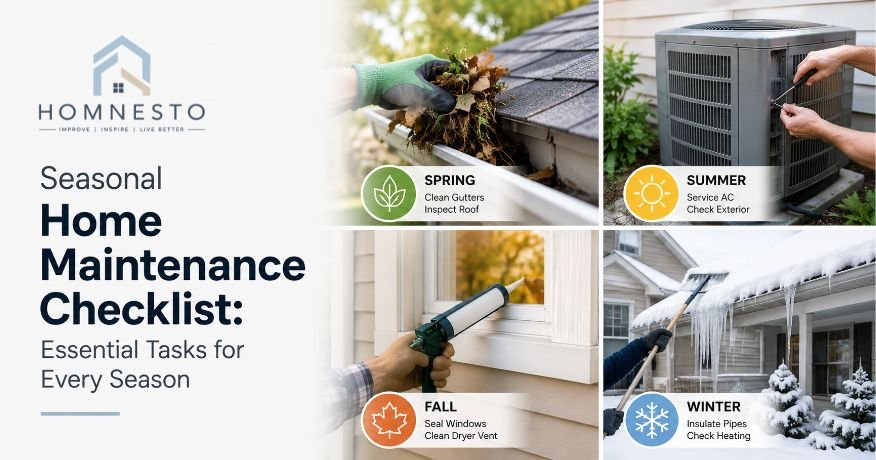

Regular home maintenance is one of the easiest ways to protect your property and avoid costly surprises. Small issues such as a clogged gutter, worn door seal, leaking faucet, or dirty HVAC filter can beco me expensive repairs when left unchecked.
A seasonal home maintenance checklist helps homeowners organize these tasks throughout the year. Instead of trying to remember everything at once, you can follow a simple home maintenance checklist based on the season, your home’s age, climate, and major systems.
A consistent house maintenance schedule can help you identify problems early, protect heating and cooling equipment, improve energy efficiency, and keep both the interior and exterior of your home in good condition.
How to Use a Seasonal Home Maintenance Checklist
A maintenance checklist works best when it becomes part of your normal household routine. At the beginning of each season, review the tasks that apply to your home and schedule repairs or professional inspections when necessary.
Not every home requires the same maintenance. A property in a cold climate may need more attention to pipes, insulation, and heating systems, while a home in a hot or humid area may require more frequent air-conditioning, drainage, and moisture checks.
Consider these factors when creating your home maintenance schedule:
- Climate: Adjust tasks for freezing temperatures, heavy rain, humidity, heat, or storms.
- Home age: Older homes may need more frequent inspections of plumbing, electrical systems, roofing, and structural components.
- Property condition: Pay closer attention to areas that have previously experienced leaks, pests, drainage problems, or other damage.
- Major systems: Keep track of HVAC equipment, water heaters, appliances, roofing, and other systems that require periodic servicing.
- Manufacturer recommendations: Follow the maintenance intervals provided for equipment and appliances.
- Professional inspections: Use qualified professionals for work involving electrical systems, gas appliances, roofing, structural problems, or other specialized repairs.
A practical homeowner maintenance schedule can combine seasonal inspections with monthly checks and annual servicing. This makes regular home maintenance easier to manage throughout the year.
Spring Home Maintenance Checklist
Spring is a good time to inspect your property for damage caused by winter weather and prepare outdoor areas and cooling equipment for warmer months.
Inspect the Roof, Gutters, and Downspouts
Winter storms can leave behind damaged shingles, loose flashing, clogged gutters, or disconnected downspouts.
Check the roof from a safe location for missing, cracked, or damaged shingles. Look for signs of water intrusion in the attic and ceilings as well.
Clean leaves, twigs, and other debris from gutters and make sure downspouts direct water away from the foundation.
If you notice significant roof damage or cannot safely access the roof, arrange a professional inspection.
Check Windows, Doors, and Exterior Walls
Inspect exterior walls for cracks, damaged siding, peeling finishes, or areas where water may have entered.
Check windows and doors for damaged weatherstripping and deteriorated caulk. Replacing worn seals can help prevent drafts and moisture intrusion while improving indoor comfort.
Pay particular attention to areas around window frames and doors where water stains or deterioration may indicate a larger problem.
Service the HVAC System and Replace Air Filters
Before relying heavily on air conditioning, have the cooling system inspected if it requires seasonal service.
Replace dirty HVAC filters according to the filter manufacturer’s recommendations. A clogged filter can restrict airflow and make the system work harder.
Also check vents and registers to ensure they are not blocked by furniture, dust, or other objects.
Inspect Plumbing and Outdoor Faucets
Check visible pipes, faucets, toilets, and under-sink areas for leaks. Turn on outdoor faucets and look for poor water pressure, leaks, or damage caused by freezing temperatures. If an outdoor faucet leaks when it is turned on, it may need repair.
Check Landscaping, Drainage, and the Foundation
Spring rain can reveal drainage problems that were not obvious during dry weather. Make sure soil slopes away from the foundation and that downspouts discharge water far enough away from the house.
Inspect the foundation and exterior walls for new cracks, standing water, or signs of moisture intrusion.
Trim vegetation that is touching the house and make sure plants are not blocking drainage areas.
Summer Home Maintenance Checklist
Summer maintenance focuses heavily on cooling systems, outdoor structures, exterior surfaces, and water use.
Maintain the Air Conditioning System
Replace or clean HVAC filters as recommended and keep outdoor AC equipment clear of grass, leaves, and other debris.
Make sure air can circulate freely around the outdoor unit. Check for unusual noises, poor cooling, unusual odors, or water accumulation.
If the system is struggling to cool the home, schedule professional service rather than allowing a small problem to develop into a major repair.
Inspect Siding, Roof, and Exterior Surfaces
Summer is a useful time to examine exterior surfaces in good weather. Look for cracked siding, peeling paint, damaged trim, loose flashing, or areas where water may be entering the structure. Also check the roof for visible damage, particularly after severe storms.
Check Decks, Patios, Fences, and Outdoor Structures
Inspect decks, porches, patios, fences, sheds, and other outdoor structures for deterioration. Look for loose boards, damaged railings, unstable posts, rusted hardware, or signs of rot.
Keep drainage areas around outdoor structures clear so rainwater does not collect against the house.
Inspect Windows, Screens, and Caulking
Check window screens for holes and inspect caulking around windows and doors. Damaged seals can allow conditioned air to escape and outside moisture to enter. Repair deteriorated caulk and replace damaged screens where necessary.
Check Irrigation and Outdoor Plumbing
Inspect irrigation lines, sprinkler heads, hoses, and outdoor faucets for leaks. Adjust sprinklers so they water landscaping rather than sidewalks, driveways, or exterior walls.
Regularly checking outdoor plumbing can reduce water waste and help prevent moisture-related problems around the foundation.
Fall Home Maintenance Checklist
Fall maintenance prepares your home for lower temperatures, shorter days, and winter weather.
Clean Gutters and Downspouts
Remove leaves and other debris before winter precipitation arrives. Confirm that gutters are securely attached and that downspouts direct water away from the foundation.
Clogged gutters can cause overflowing water, damaged landscaping, foundation problems, and leaks.
Prepare the Heating System
Have your heating system inspected or serviced according to the manufacturer’s recommendations.
Replace or clean the HVAC filter as appropriate and check that supply and return vents are unobstructed.
If your heating system produces unusual sounds or odors, arrange professional service before temperatures drop significantly.
Check Windows and Doors for Drafts
Inspect weatherstripping and caulking around windows and doors. On a windy day, check for noticeable drafts around frames. Damaged seals can increase heating costs and make rooms uncomfortable. Repair gaps and replace worn weatherstripping where needed.
Protect Outdoor Faucets and Exposed Pipes
Disconnect garden hoses and prepare exterior plumbing for freezing temperatures. Where appropriate, shut off and drain outdoor water lines according to your plumbing system’s design. Insulate vulnerable exposed pipes in areas where freezing is possible.
Inspect the Roof and Chimney
Check the roof for damaged shingles, flashing, vents, and other vulnerable areas. If your home has a chimney or fireplace, have it inspected and cleaned as recommended for your system and fuel type. Never ignore signs of water intrusion around the chimney or roof.
Prepare the Yard and Outdoor Equipment for Winter
Remove leaves and debris from important drainage areas. Store or protect outdoor furniture and equipment as appropriate. Drain or winterize irrigation systems if required by your climate.
Trim branches that could damage the roof, siding, or power lines during winter storms.
Winter Home Maintenance Checklist
Winter maintenance focuses on preventing freeze damage, monitoring heating equipment, and protecting the home from moisture and heat loss.
Protect Pipes From Freezing
When temperatures fall below freezing, protect exposed plumbing from cold air. Keep indoor temperatures at safe levels and take additional precautions for vulnerable pipes in unheated areas.
During severe cold, monitor faucets and plumbing areas for signs of freezing. A sudden drop in water pressure can be an early warning sign.
If a pipe freezes or bursts, shut off the water supply when safe to do so and contact a qualified plumber.
Monitor Heating and Ventilation Systems
Check that heating equipment is operating normally and that vents are unobstructed. Pay attention to unusual noises, odors, or changes in performance.
Never block heating vents with furniture or other objects, and follow the manufacturer’s safety and maintenance recommendations.
Watch for Ice Dams and Roof Problems
In snowy climates, ice dams can prevent melting snow from draining properly and may contribute to water entering the roof structure.
Watch for unusual accumulations of ice along roof edges, water stains on ceilings, or damp areas in the attic.
Do not climb onto an icy roof to investigate. Contact a qualified professional if you suspect a roofing or ice-dam problem.
Check Windows and Doors for Heat Loss
Inspect windows and doors for drafts, condensation, or damaged seals. Curtains and blinds can help with comfort, but damaged weatherstripping and failed seals should be repaired rather than simply covered.
Test Smoke and Carbon Monoxide Detectors
Test smoke and carbon monoxide detectors regularly according to manufacturer instructions. Replace batteries or detector units when required.
Keep detectors installed in the locations recommended by applicable safety guidance and never disable a detector because of nuisance alarms without addressing the underlying cause.
Monitor Indoor Humidity, Condensation, and Leaks
Cold weather can increase condensation on windows and other cold surfaces. Watch for persistent moisture, mold growth, water stains, or leaks around ceilings, walls, windows, plumbing fixtures, and appliances.
Controlling indoor humidity and fixing water problems early can help prevent more extensive damage.
Monthly Home Maintenance Checklist
Some basic maintenance tasks should be checked throughout the year rather than waiting for a seasonal inspection.
A monthly routine doesn’t have to take hours. A quick inspection can help you notice changes before they become expensive repairs.
Monthly Home Maintenance Tasks
- Test smoke and carbon monoxide detectors.
- Check HVAC filters and replace or clean them as recommended.
- Look for visible plumbing leaks.
- Inspect faucets and toilets for leaks or unusual operation.
- Check under sinks for moisture or water damage.
- Look for mold, condensation, or damp areas.
- Inspect doors and windows for damage or drafts.
- Check major appliances for unusual noises, odors, or performance changes.
- Inspect easily accessible exterior areas.
- Watch for unusual smells, sounds, water stains, or changes in system performance.
Keeping a simple household maintenance checklist nearby can make these quick inspections easier to remember.
Annual Home Maintenance Checklist
An annual home maintenance checklist covers tasks that generally deserve a yearly inspection, service, or review. Some systems may require more frequent attention, so always follow manufacturer recommendations and local requirements.
Annual Home Maintenance Tasks
- Schedule HVAC servicing when recommended.
- Inspect the roof for damage or deterioration.
- Inspect and service the chimney where applicable.
- Check the plumbing system for visible problems.
- Inspect the water heater.
- Have electrical systems evaluated when warning signs or other concerns are present.
- Look for signs of termites, rodents, or other pests.
- Inspect exterior walls, siding, trim, and other surfaces.
- Service major appliances according to manufacturer guidance.
- Review important maintenance records and home insurance information.
Keeping receipts, inspection reports, warranties, and service dates together can make your yearly house maintenance checklist much easier to manage.
Home Maintenance Tasks That Improve Energy Efficiency
Routine maintenance can reduce unnecessary energy waste and help heating and cooling systems operate more effectively.
A seasonal home energy efficiency maintenance checklist can include several simple inspections.
Check Insulation and Air Leaks
Inspect accessible insulation and look for gaps around windows, doors, vents, pipes, and other penetrations. Air leaks can allow heated or cooled air to escape, increasing the workload on HVAC equipment.
Maintain HVAC Filters and Equipment
Dirty filters can restrict airflow. Replace or clean filters according to the manufacturer’s recommendations. Keep outdoor equipment clear of debris and arrange professional servicing when necessary.
Inspect Window and Door Seals
Damaged weatherstripping and deteriorated caulk can create drafts. Sealing appropriate gaps can improve comfort and reduce unnecessary heating and cooling losses.
Check Water Heater Efficiency
Inspect the water heater for leaks, corrosion, or other visible problems. Follow the manufacturer’s maintenance recommendations and have the system professionally serviced when appropriate.
Use Your Thermostat Efficiently
Avoid unnecessarily extreme heating or cooling settings. A programmable or smart thermostat can help maintain appropriate temperatures based on when the home is occupied, provided it is compatible with your HVAC system.
These simple steps can form part of a broader home preventive maintenance checklist focused on reducing waste as well as preventing damage.
Exterior Home Maintenance Checklist
Exterior maintenance is an important part of seasonal maintenance because your home’s roof, siding, foundation, windows, and outdoor structures are exposed to sun, rain, wind, snow, humidity, and changing temperatures throughout the year. Regular inspections can help you identify water damage, deterioration, drainage problems, and safety hazards before they become expensive repairs.
Use this home maintenance checklist by season as a year-round reference, then adjust the frequency of each task based on your climate, property age, materials, and weather conditions. A practical home maintenance seasonal checklist should always give extra attention to exterior areas after severe storms or extreme weather.
Roof, Gutters, and Drainage
The roof and drainage system are among the most important areas to include in any checklist for home maintenance. A small roofing defect or blocked gutter can allow water to enter the home or collect around the foundation.
Inspect the roof from the ground or another safe location for missing, cracked, curled, or damaged shingles and other roofing materials. Look for damaged flashing around chimneys, vents, skylights, and other roof penetrations. If you notice significant damage or cannot safely inspect the roof yourself, arrange a professional inspection.
Gutters should be checked regularly for leaves, dirt, twigs, and other debris. Clogged gutters can cause rainwater to overflow against siding, windows, landscaping, and foundations. Make sure downspouts are securely connected and direct water away from the home’s foundation.
This is particularly important after heavy rainfall or storms. If you notice water pooling near the foundation, overflowing gutters, or stains on exterior walls, investigate the cause promptly.
Siding and Exterior Walls
Siding and exterior walls provide an important barrier against moisture and weather. Include them in your regular home maintenance checklist and inspect them several times throughout the year.
Look for cracks, holes, loose panels, damaged masonry, peeling paint, rotting wood, discoloration, or areas that appear swollen or warped. Pay particular attention to places where siding meets windows, doors, roofs, decks, and other structures.
Peeling paint or damaged exterior materials are not always cosmetic problems. They can expose underlying materials to moisture, accelerating deterioration. Repair damaged areas promptly and make sure replacement materials are properly sealed.
During your home upkeep checklist review, also look for signs of insects, nests, or other pests around siding, trim, vents, and exterior openings.
Windows and Doors
Windows and exterior doors should be inspected as part of a basic home maintenance checklist because damaged frames, worn weatherstripping, and deteriorated caulking can allow both air and moisture to enter.
Check window and door frames for cracks, rot, gaps, or visible water damage. Inspect the glass for cracks and make sure screens are intact. Test locks and handles to ensure they operate properly.
Examine caulking around window and door frames. If the caulk is cracked, separated, or deteriorated, replace it as appropriate. Also inspect weatherstripping around movable doors and windows for signs of wear.
Properly sealed windows and doors can improve indoor comfort and reduce unnecessary heating and cooling losses. They can also help prevent rainwater from entering the walls around openings.
Foundation and Grading
The foundation and surrounding soil deserve regular attention because poor drainage can allow water to collect against the structure.
Walk around the property and look for new or widening cracks, standing water, soil erosion, damp areas, or other changes around the foundation. Check whether the ground slopes away from the house or appears to direct water toward it.
Downspouts should discharge rainwater away from the foundation rather than directly against the wall. Landscaping should also be arranged so that irrigation and rainwater do not continually saturate the soil next to the house.
If you notice significant foundation cracks, persistent water intrusion, major settlement, or other structural concerns, have the issue evaluated by an appropriately qualified professional.
Decks, Patios, Fences, and Other Outdoor Structures
Decks, patios, fences, porches, sheds, and other outdoor structures should be included in your list of home maintenance tasks, particularly before and after periods of severe weather.
Inspect wooden components for rot, splitting, insect damage, or excessive deterioration. Check railings, stairs, posts, and other load-bearing components for movement or instability.
For metal structures, look for corrosion, loose fasteners, damaged connections, or weakened components. Patios and walkways should also be checked for significant cracks, uneven surfaces, or trip hazards.
Do not ignore loose railings, unstable stairs, or structural deterioration simply because the problem appears minor. Safety-related exterior repairs should take priority over cosmetic improvements.
Home Appliance Maintenance Checklist
Major appliances are an important part of overall household upkeep. Including them in your household maintenance schedule can help identify leaks, unusual operation, poor performance, and other problems before they result in damage or premature replacement.
Your appliance routine should combine simple homeowner checks with professional servicing when recommended by the manufacturer. Keep appliance manuals, warranties, service records, and replacement dates together as part of your household maintenance list.
HVAC Equipment
Heating and cooling equipment should receive regular attention because it directly affects comfort, indoor air quality, and energy use.
Check and replace HVAC filters according to the manufacturer’s recommendations and the type of filter being used. Keep supply and return vents clear of furniture, dust, and other obstructions.
Pay attention to changes in system performance. Unusual noises, strange odors, weak airflow, uneven temperatures, frequent cycling, or unexplained increases in energy use can indicate that the system needs inspection.
Schedule professional HVAC servicing when recommended. Include the service date and any repairs in your home maintenance checklist so you know when the system was last inspected.
Water Heater
The water heater should be part of your maintenance checklist for homes, particularly because leaks or corrosion can result in significant water damage.
Look around the unit for signs of leaking water, rust, corrosion, or unusual moisture. Pay attention to changes in hot-water availability, water temperature, or unusual noises coming from the unit.
Follow the manufacturer’s maintenance recommendations for your specific water heater. If you notice a significant leak, damaged components, unusual pressure-related symptoms, or other serious problems, contact a qualified professional.
Refrigerator and Freezer
Refrigerators and freezers can benefit from simple routine cleaning and inspection. Keep door seals clean and check them for cracks or deterioration. A damaged seal can allow warm air into the appliance and make it work harder.
Clean accessible coils when recommended by the manufacturer and maintain adequate airflow around the appliance. Keep interior compartments clean and remove expired food.
Monitor the refrigerator and freezer for unusual temperature changes, excessive frost, water leaks, or unusual noises. Changes in performance can indicate that the appliance needs attention.
Washing Machine and Dryer
Inspect washing machine hoses, connections, and valves regularly for signs of cracking, corrosion, or leaking. Check around the machine for unexplained moisture.
For dryers, clean the lint filter after every load. The dryer vent and exhaust system should also be kept clean and maintained according to manufacturer and safety recommendations.
Never ignore unusually long drying times, excessive heat, burning odors, or unusual noises. These can indicate that the appliance or ventilation system needs attention.
Adding these simple checks to your home maintenance to-do list can help reduce the likelihood of water damage and dryer-related safety problems.
Dishwasher and Other Major Appliances
Inspect dishwasher seals, connections, and the area beneath the appliance for leaks. Clean filters and removable components according to the manufacturer’s instructions.
Other major appliances should also be checked for unusual noises, odors, leaks, overheating, poor performance, or damaged electrical cords.
Rather than waiting for an appliance to fail completely, use your regular home maintenance checklist to monitor changes in performance. Early attention may allow a minor maintenance issue to be corrected before it becomes a larger repair.
Home Maintenance Checklist by Month
A home maintenance checklist by month provides a convenient way to divide larger maintenance jobs throughout the year. Instead of completing every task at once, homeowners can use a monthly routine to keep important systems and areas under observation.
The schedule below is a general guide. Your yearly home maintenance routine should be adjusted according to your climate, weather patterns, property age, and specific equipment.
| Month | Main Maintenance Priorities |
| January | Heating, pipes, detectors, drafts |
| February | HVAC, plumbing, winter damage |
| March | Roof, gutters, exterior inspection |
| April | Landscaping, drainage, HVAC |
| May | Cooling system, windows, outdoor areas |
| June | AC, irrigation, exterior maintenance |
| July | Cooling, plumbing, outdoor structures |
| August | AC, roof, exterior inspection |
| September | HVAC, gutters, roof, weatherproofing |
| October | Heating, pipes, windows, gutters |
| November | Winter preparation, heating, plumbing |
| December | Heating, frozen pipes, detectors, moisture |
January
Focus on heating performance, frozen-pipe prevention, and indoor safety. Check for drafts around windows and doors and make sure smoke and carbon monoxide detectors are functioning properly.
February
Continue monitoring heating and plumbing systems. Look for signs of frozen pipes, leaks, condensation, or winter weather damage. If your HVAC system is operating unusually, arrange service before the next season.
March
As winter begins to end, inspect the roof, gutters, downspouts, and exterior walls. Look for damage caused by storms, ice, wind, or heavy precipitation.
April
Spring is a good time to focus on landscaping, drainage, exterior inspections, and HVAC preparation. Make sure water drains away from the foundation and prepare cooling equipment for warmer weather.
May
Prepare for increasing temperatures by checking the cooling system, windows, screens, and outdoor living areas. Repair damaged seals and inspect decks, patios, and other structures.
June
Air conditioning and irrigation become important priorities. Check AC performance, outdoor plumbing, sprinkler systems, and exterior surfaces.
July
During the hottest part of the year, monitor cooling equipment and plumbing closely. Inspect outdoor structures and look for signs of heat, moisture, or storm damage.
August
Continue monitoring the AC system and inspect the roof and exterior after summer storms. Address damaged siding, roofing materials, windows, or drainage components.
September
Begin transitioning from summer to fall maintenance. Inspect the HVAC system, gutters, roof, and exterior seals before colder weather arrives.
October
Prepare heating equipment, inspect windows and doors for drafts, protect vulnerable pipes, and clean gutters before winter weather.
November
Complete winter preparation. Check heating systems, plumbing, outdoor faucets, and exposed pipes. Make sure important safety detectors are working.
December
Focus on heating, frozen-pipe prevention, detectors, moisture, and indoor leaks. During periods of freezing temperatures, monitor vulnerable plumbing areas closely.
This approach turns a large home maintenance list into smaller, manageable jobs. It can also make your household maintenance schedule easier to follow because each month has a clear focus.
Preventive Home Maintenance: What Should You Check Regularly?
Preventive maintenance means monitoring your home for early warning signs rather than waiting until something fails. A good home upkeep checklist should help you identify changes in performance, moisture, appearance, and safety.
You do not need to perform a complete property inspection every month. Instead, regularly look at the areas most likely to develop problems.
Early Leak Detection
Water damage can spread quickly, particularly when a leak occurs inside a wall, beneath a sink, or near an appliance.
Check under sinks, around toilets, near water heaters, and around washing machines and dishwashers. Look for moisture, stains, warped materials, musty odors, or unexplained increases in water use.
Finding a small leak early can be much less expensive than repairing extensive water damage later.
Roof and Gutter Condition
Your roof and drainage system protect the structure from rain and snow. Regularly look for missing or damaged roofing materials, deteriorated flashing, clogged gutters, and downspouts that have become disconnected or blocked.
You do not necessarily need to inspect the roof personally. If access is unsafe, use a qualified professional.
HVAC Performance
Your heating and cooling systems can provide early warning signs when something is wrong. Pay attention to unusual sounds, odors, weak airflow, inconsistent temperatures, frequent cycling, or unexplained changes in energy consumption.
Routine filter maintenance and professional servicing can help keep equipment operating properly.
Plumbing Problems
Add plumbing checks to your basic home maintenance checklist throughout the year. Watch for dripping faucets, slow drains, low water pressure, running toilets, unusual odors, damp cabinets, or water stains.
Not every plumbing issue is an emergency, but unexplained changes should be investigated before they develop into larger problems.
Electrical Warning Signs
Electrical problems deserve immediate attention when warning signs appear. Do not ignore burning smells, sparks, frequently tripped breakers, flickering lights, warm outlets, damaged cords, or signs of overheating.
Avoid attempting electrical repairs beyond your level of training. When a problem involves wiring, circuits, outlets, or other electrical components, use a qualified professional.
Moisture and Drainage
Moisture is one of the most common causes of deterioration around a home. Look for persistent condensation, damp walls, musty odors, standing water, water stains, mold growth, or moisture around the foundation.
Check that gutters, downspouts, grading, and drainage areas are working as intended. Address recurring water problems rather than repeatedly cleaning up the symptoms.
Appliance Condition
Appliances should also be part of your list of home maintenance tasks. Look for unusual noises, leaks, overheating, damaged seals, poor performance, or unexplained changes in energy consumption.
Follow manufacturer instructions for cleaning and maintenance, and keep records of professional service when applicable.
Exterior Deterioration
Walk around your property periodically and look at siding, trim, decks, fences, masonry, paint, windows, doors, and other exposed materials.
Early signs of deterioration are generally easier to address than extensive rot, corrosion, or water damage.
The purpose of preventive maintenance is not to repair every minor imperfection immediately. Instead, it is to notice early, determine their urgency, and take appropriate action before they become more expensive or hazardous.
What Home Maintenance Should You Do First?
When several maintenance issues appear at the same time, it can be difficult to know where to begin. A practical home maintenance checklist should prioritize problems based on safety, urgency, and the potential for additional damage.
Use this order as a general guide:
- Safety issues: Address problems that could immediately endanger people, pets, or the property. Electrical hazards, gas-related concerns, structural instability, and serious fire-safety problems should receive immediate attention.
- Active leaks and water damage: Stop active water intrusion as quickly as possible. A small leak can develop into extensive damage if water continues entering walls, ceilings, floors, or structural components.
- Heating and cooling problems: Address HVAC failures that affect safe operation, indoor comfort, or the ability to maintain appropriate temperatures.
- Roof and exterior damage: Repair openings, damaged roofing, broken windows, or other exterior defects that could allow additional water or weather damage.
- Plumbing problems: Prioritize significant leaks, sewer-related problems, blocked drains, or sudden changes in water pressure.
- Energy-efficiency issues: Once urgent problems are handled, address drafts, damaged weatherstripping, poor insulation, and equipment efficiency concerns.
- Cosmetic maintenance: Painting, decorative repairs, minor appearance issues, and other non-urgent improvements can generally wait until safety and damage-related concerns are resolved.
This priority system makes it easier to organize a checklist for home maintenance without becoming overwhelmed by the number of tasks.
If you are learning how to create a home maintenance checklist, start with the systems and areas that could cause the greatest safety risk or financial damage. Then divide the remaining tasks into monthly, seasonal, and annual categories.
For example, your annual house maintenance routine might include professional HVAC servicing, a roof inspection, plumbing checks, and water-heater maintenance. Your annual home maintenance list can then be combined with an annual house maintenance list tailored to the specific features of your property.
The result is a manageable maintenance system rather than a long list of tasks that are easy to forget.
A Simple Priority-Based Home Maintenance System
You can organize your maintenance into four levels:
- Immediate: Safety hazards, active leaks, major water damage, serious electrical concerns, or structural problems.
- Soon: HVAC problems, roof damage, plumbing issues, and exterior deterioration that could worsen.
- Routine: Filters, appliance checks, drainage inspections, weatherstripping, and other recurring tasks.
- As needed: Painting, cosmetic repairs, landscaping improvements, and other appearance-related work.
This structure allows homeowners to turn a large home maintenance to-do list into a practical routine that fits their time and budget.
Printable Seasonal Home Maintenance Checklist
Use this condensed checklist as a quick reference. You can save or print it and add property-specific tasks.
Spring
- Roof and gutters
- Exterior inspection
- HVAC service
- Plumbing
- Landscaping and drainage
Summer
- AC maintenance
- Exterior surfaces
- Deck and patio
- Windows and screens
- Irrigation
Fall
- Gutters
- Heating system
- Windows and doors
- Pipes and faucets
- Roof and chimney
- Yard preparation
Winter
- Frozen-pipe prevention
- Heating system
- Roof and ice problems
- Drafts
- Safety detectors
- Moisture and leaks
Monthly
- HVAC filters
- Plumbing leaks
- Detectors
- Appliances
- Moisture
Annual
- HVAC inspection
- Roof inspection
- Plumbing
- Water heater
- Electrical
- Pest inspection
Final Thoughts on Seasonal Home Maintenance
A well-organized maintenance routine does not have to be complicated. A combination of seasonal home maintenance, monthly inspections, and annual servicing can help homeowners catch problems early and protect major home systems.
Use the seasonal home maintenance checklist to prepare for changing weather, the monthly list for quick inspections, and the annual checklist for larger maintenance tasks and professional services.
Your home’s maintenance needs will depend on its age, condition, climate, materials, and equipment. Adjust the checklist accordingly, keep records of completed work, and address safety issues and active damage first.
A consistent home maintenance list can ultimately help you protect your investment, improve energy efficiency, reduce unexpected repairs, and keep your home comfortable and in good condition year-round.