
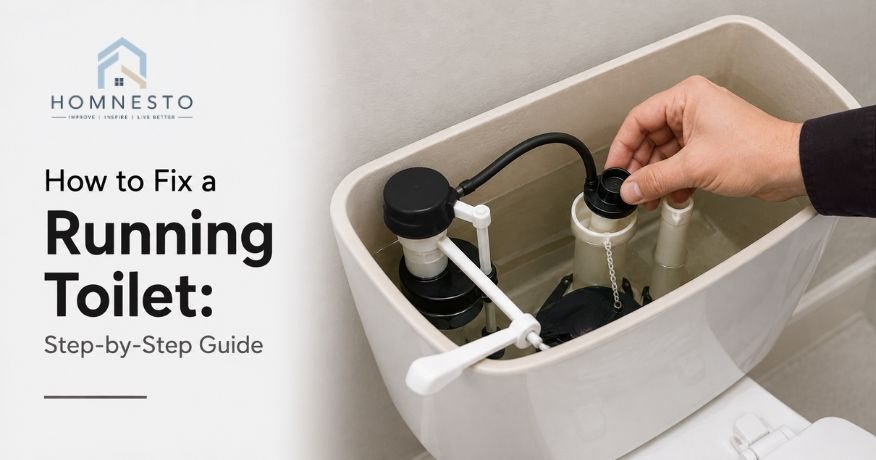

A toilet that keeps running after you flush may seem like a minor annoyance, but it can waste a surprising amount of water over time. The constant sound usually means water is escaping from the tank into the bowl, or the tank is failing to shut off properly.
The good news is that most running toilet problems come from a few common parts, such as the toilet flapper, fill valve, float, or lift chain. Many of these issues can be checked and repaired without replacing the entire toilet.
If you’re wondering how to fix a running toilet, this guide walks through the process step by step. You’ll learn how the toilet works, how to identify the cause, which parts may need replacement, and when a DIY repair is no longer the best option.
Why Is My Toilet Running?
A running toilet usually means the tank is not holding or controlling water correctly. The toilet may continue filling after a flush, refill randomly, or make a faint running sound even when nobody has used it.
Common Causes of a Running Toilet
The most common running toilet causes include a worn toilet flapper, incorrect water level, damaged flush valve, faulty fill valve, or a lift chain that is too loose or too tight.
A flapper that no longer creates a proper seal allows water to leak slowly from the toilet tank into the toilet bowl. The fill valve may then detect the lower water level and refill the tank, creating a cycle where the toilet keeps running.
Other problems can be easier to spot. If the water level is too high, water may enter the overflow tube. A damaged toilet handle or poorly adjusted lift chain can also prevent the flapper from closing properly.
Signs Your Toilet Needs Repair
You don’t always need to see water spilling over to know something is wrong. Common warning signs include:
- The toilet keeps running after flushing.
- You hear water moving when the toilet hasn’t been used.
- The toilet tank keeps filling repeatedly.
- The toilet runs every few minutes.
- The toilet keeps making noise after flushing.
- Water is visibly flowing into the bowl.
- The toilet won’t stop filling.
- The toilet keeps refilling by itself.
If you notice any of these signs, checking the tank early can prevent unnecessary water waste.
Why You Should Fix a Running Toilet Quickly
A toilet that runs for a few minutes after every flush may not seem serious, but a toilet running constantly can waste a significant amount of water.
That wasted water can increase your utility bill and put unnecessary strain on your plumbing system. A small worn seal is inexpensive to replace compared with the cost of ignoring the problem for weeks or months.
In most cases, how to stop a running toilet comes down to identifying where the water is escaping and correcting that specific problem.
How Does a Toilet Work?
Understanding the basic flush mechanism makes toilet troubleshooting much easier. A toilet uses gravity, water pressure, and a few mechanical components to fill the tank, release water into the bowl, and then refill itself.
Main Toilet Tank Components
Toilet tank: Holds the water needed for the next flush.
Toilet bowl: Receives water from the tank and carries waste through the drain.
Toilet flapper: A rubber or plastic seal that opens during flushing and closes afterward to keep water inside the tank.
Fill valve: Controls incoming water and shuts it off when the tank reaches the correct level.
Flush valve: The opening at the bottom of the tank that allows water to flow into the bowl.
Overflow tube: Prevents the tank from filling beyond a safe level by directing excess water into the bowl.
Lift chain: Connects the toilet handle to the flapper and lifts the flapper when you flush.
Float cup: Moves with the water level and signals the fill valve when to stop filling.
Toilet handle: Activates the flushing mechanism when pressed.
Water level: The amount of water maintained inside the tank. It needs to be high enough for a proper flush but low enough to stay below the overflow tube.
What Happens During a Flush Cycle
When you press the toilet handle, the lift chain raises the flapper. Water stored in the toilet tank flows through the flush valve and into the toilet bowl.
As the tank empties, the flapper eventually closes again. The fill valve then opens and allows fresh water into the tank.
The float cup rises with the incoming water. Once the water reaches the correct level, the float signals the fill valve to shut off.
If any part of this sequence fails, the toilet may continue running.
Tools and Supplies You’ll Need to Fix a Running Toilet
Most basic toilet repairs don’t require a large toolbox. You can usually inspect the problem with a few simple tools and replacement parts.
Essential Tools (IMAGE)
You may need:
- Adjustable wrench
- Screwdriver
- Pliers
- Small bucket or container
- Sponge or cloth
- Flashlight
- Rubber gloves
Keep a towel nearby as well. Even a simple DIY toilet repair can involve a small amount of spilled water.
Replacement Parts You May Need
Depending on the problem, you may need a:
- Toilet flapper
- Fill valve
- Lift chain
- Flush valve seal
- Float assembly
- Toilet handle
- Toilet repair kit
Take the old component with you when buying a replacement if you’re unsure about the correct model. Toilet parts aren’t always interchangeable.
How to Fix a Running Toilet Step by Step
These steps cover the most common causes of a running toilet. Work through them in order instead of replacing parts randomly.
Step 1 – Turn Off the Water Supply
Find the shut-off valve behind or beside the toilet, usually near the floor.
Turn it clockwise until the water stops. Flush the toilet once to drain most of the water from the toilet tank.
If the shut-off valve is difficult to turn, don’t force it aggressively. A seized valve may require professional attention.
Step 2 – Remove the Toilet Tank Lid
Carefully lift the lid from the top of the toilet tank and place it somewhere secure.
Look inside while the toilet is not being flushed. Check whether water is continuously entering the tank or flowing into the toilet bowl.
This quick inspection can often tell you whether you’re dealing with a flapper, fill valve, or water-level problem.
Step 3 – Check the Toilet Flapper
Inspect the toilet flapper at the bottom of the tank.
It should sit evenly over the flush valve opening. If it looks cracked, warped, brittle, or damaged, it may not be creating a proper seal.
You can also add a few drops of food coloring to the tank and wait without flushing. If colored water appears in the bowl, water is leaking past the flapper or flush seal.
A worn flapper is one of the most common reasons a toilet won’t stop running.
Step 4 – Inspect the Lift Chain
Check the chain connecting the toilet handle to the flapper.
It should have a small amount of slack. If it’s too tight, the flapper may remain slightly open. If it’s too loose, the handle may not lift the flapper properly.
Also check that the chain isn’t tangled around another component inside the tank.
Adjust it as needed and test the handle before moving on.
Step 5 – Adjust the Water Level
Look at the water level inside the tank.
The water should generally sit below the top of the overflow tube. If water is reaching or flowing into the overflow tube, the tank may be overfilled.
Adjust the float or fill valve according to the design of your toilet. Some models have an adjustment screw, while others allow you to reposition the float.
Correct toilet float adjustment can stop a toilet from running when excessive water is the problem.
Step 6 – Check the Overflow Tube
Watch the water level while the tank fills.
If water continues flowing into the overflow tube after the tank should have stopped filling, the fill valve or float may need adjustment or replacement.
Don’t simply lower the water level without finding out why it is too high. The goal is to make the fill valve shut off correctly.
Step 7 – Inspect the Fill Valve
The fill valve is responsible for stopping incoming water once the tank reaches its proper level.
If the valve is worn or damaged, the toilet tank keeps filling even when the float has reached its normal position.
Listen for hissing or running water around the valve. Check whether adjusting the float changes the problem.
If it doesn’t, the fill valve may need replacement.
Step 8 – Test the Flush System
Before completely closing everything up, slowly turn the water back on and allow the tank to fill.
Flush the toilet and watch the entire cycle.
The flapper should lift fully, water should enter the bowl correctly, the flapper should close completely, and the fill valve should stop running when the tank reaches the correct level.
Step 9 – Turn the Water Supply Back On
Open the shut-off valve fully but slowly.
Allow the tank to fill and listen carefully. The water should stop once the tank reaches the correct level.
If the toilet remains silent afterward, you’ve likely solved the problem. If it starts running again, continue with the troubleshooting sections below rather than repeatedly adjusting the same component.
How to Fix Common Running Toilet Problems
Different symptoms can point toward different causes. Identifying the exact behavior makes fixing a running toilet much easier.
Toilet Keeps Running After Flushing
If the toilet keeps running after flushing, start by checking the flapper and lift chain.
The flapper may not be sealing completely, or the chain may be holding it slightly open. Also check whether the water level is too high and flowing into the overflow tube.
Toilet Keeps Running After Flush
When the toilet keeps running after flush, listen to where the sound is coming from.
Water continuously entering the tank usually points toward the fill valve. Water moving quietly into the bowl often points toward a flapper or flush valve seal problem.
Toilet Keeps Running Without Flushing
If the toilet keeps running without flushing, you likely have a slow leak or a fill valve that isn’t shutting off correctly.
Check the flapper seal first. A small leak can lower the tank water level enough to trigger the fill valve repeatedly.
Toilet Runs Every Few Minutes
A toilet that runs every few minutes often has a slow leak from the tank into the bowl.
The flapper is a common suspect, but the flush valve seal or damaged toilet tank components can also be responsible.
Toilet Keeps Refilling by Itself
If the toilet keeps refilling by itself, water is probably leaving the tank when it shouldn’t.
Inspect the flapper and flush valve seal. If water is not leaking into the bowl, check whether the fill valve is turning on unnecessarily.
Toilet Keeps Filling With Water
When the toilet keeps filling with water, check whether the water reaches the correct level and then stops.
If it continues filling and enters the overflow tube, inspect the float and fill valve.
Toilet Won’t Stop Filling
If the toilet won’t stop filling, the fill valve may be faulty or incorrectly adjusted.
First check the float for obstruction. If the float moves freely but the water continues running, replacing the fill valve may be necessary.
Toilet Keeps Making Noise After Flushing
A toilet that keeps making noise after flushing may have a small leak, high water level, or fill valve problem.
Listen closely to determine whether the noise is coming from the fill valve or from water entering the bowl.
Toilet Running Constantly or Continuously
A toilet running constantly should be addressed rather than ignored.
A continuously running toilet is often caused by a failed flapper, faulty fill valve, or water entering the overflow tube. Start with these components before assuming the entire toilet needs replacement.
How to Fix a Toilet Flapper
The flapper is one of the first components to inspect when learning how to fix toilet flapper problems.
Signs of a Bad Toilet Flapper
A bad flapper may:
- Look cracked or warped.
- Feel brittle or deteriorated.
- Fail to sit flat.
- Allow water to leak into the bowl.
- Cause the toilet to refill every few minutes.
- Become discolored or covered with mineral buildup.
A simple dye test can help confirm a slow leak.
How to Replace a Toilet Flapper
Turn off the water supply and flush the toilet to empty the tank.
Disconnect the lift chain from the old flapper. Remove the flapper from its mounting points and clean the area around the flush valve.
Install the new flapper according to the manufacturer’s instructions. Reconnect the chain, leaving a small amount of slack.
Turn the water back on and allow the tank to fill. Flush several times and watch the flapper close.
When to Replace Instead of Adjusting the Flapper
Adjustment may solve a chain or positioning problem, but a damaged flapper should generally be replaced.
If the rubber is cracked, stiff, warped, or no longer seals correctly, continuing to adjust it won’t create a reliable repair.
A toilet flapper replacement is usually a simple and inexpensive fix.
How to Fix a Toilet Fill Valve
The fill valve controls how much fresh water enters the toilet tank after every flush. When it becomes worn, dirty, or incorrectly adjusted, the tank may keep filling long after it should have stopped. This is a common reason a toilet keeps refilling by itself or seems to toilet runs randomly throughout the day.
Before replacing anything, listen to where the water is coming from. If water continues entering the tank rather than quietly leaking into the bowl, the fill valve is a strong place to start. Knowing how to fix toilet fill valve problems can also help you avoid replacing a perfectly good flapper.
Signs of a Bad Fill Valve
A faulty fill valve doesn’t always fail completely. Sometimes it works inconsistently, making the problem seem random.
Watch for these signs:
- The toilet won’t stop filling after a flush.
- You hear hissing or running water from the tank.
- The tank takes unusually long to refill.
- Water continues flowing after the float reaches the normal level.
- The toilet keeps refilling by itself.
- Water rises high enough to enter the overflow tube.
- The toilet keeps running every few minutes even when nobody has flushed it.
- The tank water level changes without anyone using the toilet.
If the toilet keeps running but flushes fine, the flushing mechanism itself may be working correctly while the fill valve is failing to shut off. In that situation, replacing the flapper may not solve the problem.
How to Replace a Toilet Fill Valve
If adjusting the float doesn’t stop the water, you may need to replace fill valve components or install a new valve.
First, turn off the water supply valve behind the toilet. Flush the toilet to empty most of the water from the tank. Keep a towel or small bucket underneath the connection because a little water may remain in the supply line.
Disconnect the water supply line from the bottom of the tank. Then loosen the mounting nut underneath the tank that holds the old fill valve in place.
Remove the old valve and clean away any mineral buildup around the opening. Install the replacement valve according to the manufacturer’s instructions, making sure it sits straight and at the correct height.
Secure the mounting nut firmly, but don’t overtighten it. Reconnect the supply line, then slowly open the water supply valve.
Watch the connection while the tank fills. If you see water around the fitting, shut the supply off and check the connection before continuing.
Adjusting the Water Level After Replacement
Once the new valve is installed, the water level needs to be adjusted correctly. The exact adjustment method varies by valve, but most models use a screw, clip, or adjustable float.
Let the tank fill completely and check where the water stops. It should remain below the top of the overflow tube. If water continues entering the overflow tube, the float or valve needs further adjustment.
Flush the toilet several times and allow the tank to refill after each flush. The fill valve should shut off cleanly every time.
If the toilet still runs after a new fill valve is installed, don’t immediately assume the new part is defective. Check the flapper, flush valve seal, lift chain, and water level as well. A leaking toilet can have more than one worn component.
Running Toilet Troubleshooting Guide
Use the symptoms below to narrow down the problem before buying replacement parts.
| Problem | Possible Cause | Recommended Solution |
| Toilet keeps running | Worn flapper or faulty fill valve | Inspect the flapper and fill valve |
| Toilet won’t stop filling | Faulty or misadjusted fill valve | Adjust or replace the fill valve |
| Toilet runs every few minutes | Slow leak from tank to bowl | Inspect the flapper and flush seal |
| Toilet keeps making noise | High water level or fill valve issue | Adjust the float and inspect the valve |
| Toilet keeps refilling by itself | Water leaking into bowl | Check the flapper and flush valve |
| Toilet runs randomly | Small intermittent tank leak | Check the flapper seal and water level |
| Toilet running after replacing flapper | Fill valve or flush valve problem | Inspect the fill valve and flush valve |
| Toilet keeps running but flushes fine | Fill valve not shutting off | Check float adjustment and replace valve if needed |
This running toilet troubleshooting approach can save you from replacing parts that aren’t actually causing the problem.
Running Toilet Repair Costs
The cost of a running toilet repair depends on whether the problem needs a simple adjustment, a replacement part, or professional attention.
DIY Repair Costs
A basic DIY repair is usually inexpensive. If the problem is a loose chain or incorrect water level, you may not need to buy anything at all.
Replacing a worn flapper or fill valve generally costs much less than hiring a plumber, although the exact price depends on the toilet model and replacement part.
If you’re trying to fix running toilet in 5 minutes, a simple chain adjustment or float adjustment may be enough. More involved repairs should not be rushed just to meet a five-minute target.
Replacement Part Costs
Common replacement parts include flappers, fill valves, flush valve seals, chains, handles, and complete toilet repair kits.
Don’t choose a part based only on appearance. Two components can look almost identical while having different dimensions or mounting arrangements. Check the toilet manufacturer’s specifications or take the old part with you when shopping.
Professional Plumber Costs
Professional costs vary based on local labor rates and the complexity of the problem.
A straightforward valve replacement is usually less involved than repairing a damaged toilet connection, seized water supply valve, cracked tank, or hidden plumbing leak.
Professional service may be the better choice when you’ve already replaced the obvious parts and the toilet continues running.
Should You Repair or Replace Toilet Parts?
The right repair depends on where the water is escaping. Replacing every component at once isn’t always necessary.
When to Replace the Toilet Flapper
If the flapper is cracked, warped, brittle, or no longer sits flat against the flush valve, it’s time to replace toilet flapper.
A bad flapper is especially likely when the toilet is leaking into bowl even though the fill valve appears to shut off normally.
You can confirm a slow flapper leak with a simple food-coloring test. Add a few drops of food coloring to the tank without flushing. If the color appears in the bowl after several minutes, water is passing through the flush seal.
When to Replace the Fill Valve
Consider replacing the fill valve when it continues allowing water into the tank after the correct water level is reached.
It’s also worth replacing when adjustment no longer works, the valve makes persistent hissing noises, or the tank repeatedly refills without a flush.
If you’ve already replaced the flapper and you’re dealing with toilet running after replacing flapper, the fill valve is one of the next components to inspect.
When to Use a Complete Toilet Repair Kit
A toilet repair kit can be useful when several internal components are old or worn at the same time.
For example, if the flapper is deteriorating, the fill valve is noisy, and the handle mechanism is loose, replacing the main components together may make more sense than repairing them one by one.
A repair kit can also be practical for an older toilet tank repair when individual replacement parts are difficult to match.
Can You Fix a Running Toilet Without a Plumber?
Yes, many homeowners can learn how to repair a running toilet without a plumber when the problem is limited to an accessible tank component.
Simple jobs include adjusting the float, correcting the lift chain, replacing a flapper, or replacing a fill valve. These repairs usually require basic tools and can often be completed within an hour.
If you’re searching for how to stop a toilet from running, start with the easiest checks before buying replacement parts. Watch the water level, inspect the flapper, and listen to determine whether water is entering the tank or leaking into the bowl.
DIY repair is generally reasonable when the shut-off valve works properly, the tank isn’t cracked, and all components are easy to access.
However, don’t force a seized connection or a damaged valve. If water is leaking outside the toilet, the porcelain is cracked, or you cannot identify the source, professional help is safer.
How Much Water Does a Running Toilet Waste?
The amount of water a running toilet wastes depends on the size of the leak. A small flapper leak may go almost unnoticed, while a failed fill valve can allow water to run continuously.
A toilet that runs randomly or refills every few minutes can waste water even when it appears to work normally during flushing. That’s why a seemingly minor leak should not be ignored.
Over time, unnecessary water use can increase your utility bill. A continuously running toilet also wastes treated drinking water that serves no useful purpose.
If you’ve noticed a leaking toilet or heard water running when nobody has used the bathroom, repairing it early can prevent that waste from continuing day and night.
How to Prevent a Toilet From Running Again
Once you know how to fix a running toilet, a few simple maintenance habits can help keep the problem from returning.
Perform Regular Toilet Maintenance
Every few months, remove the tank lid and take a quick look inside.
Check the flapper, lift chain, fill valve, float, and water level. Look for mineral buildup, corrosion, deteriorating rubber, or anything that appears loose.
This takes only a few minutes and can catch a problem before it turns into a toilet that keeps running every few minutes situation.
Check the Water Level Regularly
The tank should fill to the manufacturer’s recommended level without overflowing into the overflow tube.
If the water level is consistently too high, adjust the float or inspect the fill valve. Don’t simply bend or force components into position.
Inspect the Flapper and Fill Valve
The flapper and fill valve are two of the most important components to check when troubleshooting a running toilet.
Look for a flapper that no longer seals evenly and a fill valve that doesn’t shut off cleanly. Replacing worn parts before they fail completely can prevent water waste.
Replace Worn Components Before They Fail
Rubber seals don’t last forever. Over time, heat, cleaning chemicals, mineral deposits, and repeated use can cause them to harden or deteriorate.
Replacing an aging flapper or fill valve early is usually easier than dealing with a toilet that suddenly won’t stop running.
Regular maintenance can also prevent the frustrating situation where the toilet keeps refilling by itself in the middle of the night.
When to Call a Plumber for a Running Toilet
Not every running toilet needs professional service, but there are situations where continuing a DIY repair can create a bigger problem.
Call a plumber if:
- The toilet continues running after the flapper and fill valve have been replaced.
- You have a toilet running after replacing the flapper and cannot identify another cause.
- Water is leaking around the toilet base or supply connection.
- The toilet tank or bowl is cracked.
- The water supply valve is seized, damaged, or leaking.
- You cannot remove a corroded or stuck component.
- Water is leaking outside the tank or bowl.
- Multiple plumbing fixtures are having water-related problems.
- The toilet runs continuously despite correct water levels and functioning internal parts.
A professional can determine whether you’re dealing with a tank problem, flush valve issue, supply-line leak, or a larger plumbing concern.
FAQs
Why does my toilet keep running?
A toilet usually keeps running because water is escaping from the tank or the fill valve isn’t shutting off properly. A worn flapper, incorrect water level, faulty fill valve, or loose lift chain are common causes.
Why is my toilet running?
If you’re asking why my toilet is running all the time, first check whether water is flowing into the bowl or continuing to enter the tank. Water entering the bowl points more toward a flapper or flush seal problem, while continuous tank filling often points toward the fill valve.
Why is my toilet running after I flush?
If you’re wondering why the toilet continues running after a flush, watch the entire refill cycle. The flapper should close completely, and the fill valve should shut off once the tank reaches its correct water level.
Can a bad flapper cause a running toilet?
Yes. A worn flapper may allow water to escape from the tank into the bowl. The fill valve then replaces the lost water, causing the toilet to run repeatedly.
How do I know if my toilet flapper is bad?
Look for cracks, warping, brittleness, mineral buildup, or a flapper that doesn’t sit evenly over the flush valve. A food-coloring test can also reveal a slow leak into the bowl.
Should I replace the flapper or the fill valve?
Check where the water is going. If water is toilet leaking into bowl, inspect the flapper first. If water continues entering the tank after it reaches the correct level, inspect the fill valve.
How much water does a running toilet waste?
The amount depends on the severity of the leak and the toilet design. Even a small leak can waste water continuously, so repairing it promptly helps prevent unnecessary water use and higher bills.
Can a running toilet increase my water bill?
Yes. A running toilet uses water even when nobody is flushing. If the problem continues for days or weeks, that extra usage can show up on your water bill.
Can I fix a running toilet myself?
Many common problems can be handled as DIY repairs. Flapper replacement, float adjustment, lift-chain adjustment, and fill valve replacement are generally straightforward when the components are accessible.
How long does it take to fix a running toilet?
A simple adjustment may take only a few minutes. Replacing a flapper can also be relatively quick, while a fill valve or more complicated toilet tank repair may take longer.
When should I replace the toilet fill valve?
Replace the fill valve when it won’t shut off properly after adjustment, continues making noise, repeatedly overfills the tank, or causes the toilet to refill without a flush.
Do I need a plumber to fix a running toilet?
Not always. If the issue is a worn flapper, float adjustment, or fill valve, you may be able to handle the repair yourself. Call a plumber if the toilet is cracked, the supply valve is damaged, or the leak extends beyond the tank.
Can a running toilet fix itself?
Usually not. A flapper may temporarily shift into a better position and make the sound stop, but the underlying wear or damage remains. If the toilet starts running again, the cause should be identified and repaired.
What causes a toilet to run continuously?
A toilet running continuously is commonly caused by a worn flapper, faulty fill valve, high water level, damaged flush valve seal, or incorrectly adjusted lift chain. Checking these components systematically is usually the fastest way to find the problem.