
Your home’s electrical system powers almost everything you use daily. From lights and refrigerators to chargers and washing machines, electricity makes modern living easier. However, electrical problems can disrupt your routine and create serious safety risks.
A flickering light, tripped circuit breaker, or warm electrical outlet may seem minor. Sometimes, these issues point to overloaded circuits, damaged wiring, or faulty electrical components. Knowing the warning signs helps you respond before a small problem becomes a bigger one.
This home electrical guide explains common electrical problems in homes, safe troubleshooting steps, routine maintenance, and electrical safety practices. You’ll also learn which basic checks you can perform and when you need a qualified electrician.
Important safety note: Homeowners can perform some basic visual checks and reset certain protective devices. Electrical wiring, panel repairs, outlet replacement, and other work involving energized conductors should be handled by a qualified electrician. Always follow local electrical codes and manufacturer instructions.
Understanding Your Home Electrical System
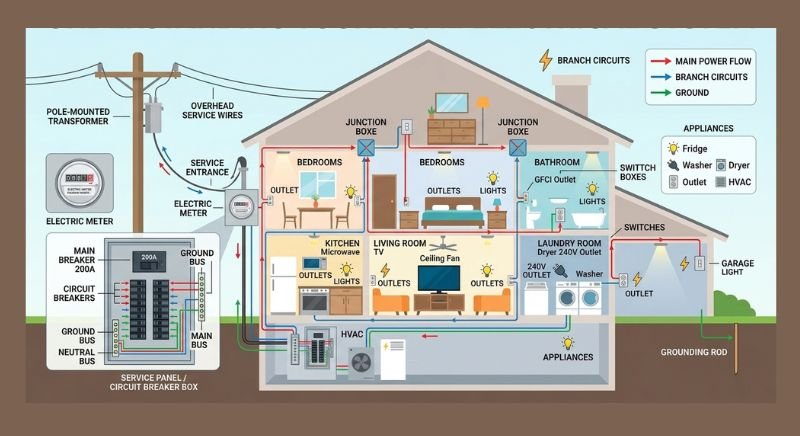
Your home electrical system distributes electricity from the main supply to lights, outlets, appliances, and other devices. It includes several connected parts that work together to deliver power and protect your home.
Understanding these parts makes it easier to recognize electrical problems at home. It also helps you explain issues clearly when contacting an electrician.
How Electricity Works in a Home
Electricity enters your home through the main service connection. It passes through the electrical meter and reaches the main electrical panel. From there, individual circuits distribute power to different rooms and appliances.
Each circuit uses electrical wiring to carry current to its connected devices. The circuit’s design, wire size, and protective devices determine how much electrical load it can safely handle.
When you plug in an appliance, electricity flows through the circuit to power it. If a fault or excessive current occurs, a protective device may interrupt the supply.
Never assume that turning off a wall switch makes all wiring safe. Some electrical components may remain energized, and electrical work requires proper isolation and verification.
Main Components of a Home Electrical System
A typical home electrical system includes:
- Electrical service: Brings electricity into the property.
- Electrical panel: Distributes power through individual circuits.
- Circuit breakers: Protect circuits from excessive current.
- Electrical wiring: Carries power between the panel, outlets, switches, and fixtures.
- Electrical outlets: Provide connection points for appliances and devices.
- Electrical switches: Control lights and other connected equipment.
- Grounding system: Helps provide a path for fault current under appropriate conditions.
- GFCI protection: Helps reduce electric shock risks from ground faults.
The exact equipment varies by property, age, location, and electrical code requirements. A qualified electrician can assess whether your system has suitable protection.
Electrical Panels, Circuits and Breakers
The electrical panel is the central distribution point for your home’s circuits. It contains circuit breakers or, in older installations, possibly fuses.
Each breaker protects a circuit against certain forms of excessive current. When a breaker trips, it interrupts power to help protect the circuit.
A tripped circuit breaker can result from an overloaded circuit, a short circuit, or another electrical fault. The breaker itself may also have a problem.
Do not repeatedly reset a breaker without understanding why it trips. Repeated trips can indicate a condition that requires professional inspection.
Outlets, Switches and GFCI Protection
Electrical outlets provide power to appliances and other devices. Switches control electrical equipment, such as lights or ceiling fans.
A GFCI outlet monitors the current flowing through a circuit. It is designed to disconnect power when it detects an imbalance that may indicate current flowing through an unintended path.
GFCI protection is especially important in locations where electricity may come into contact with water. Examples include bathrooms, kitchens, garages, and outdoor areas. The required protection depends on local codes and the installation.
GFCI protection and grounding serve different purposes. Neither makes unsafe wiring or damaged equipment safe to use.
Why Electrical Safety Matters
Electrical hazards can cause electric shock, burns, fires, and damage to appliances. Damaged cords, loose connections, overloaded circuits, and faulty equipment can increase these risks.
The U.S. Consumer Product Safety Commission recommends identifying and addressing home wiring hazards. Its home wiring guidance also distinguishes ground-fault protection from arc-fault protection, which addresses different risks.
Good electrical safety starts with awareness. Check visible signs of damage, avoid unsafe connections, and seek professional help when a problem goes beyond basic inspection.
Common Electrical Problems in Homes
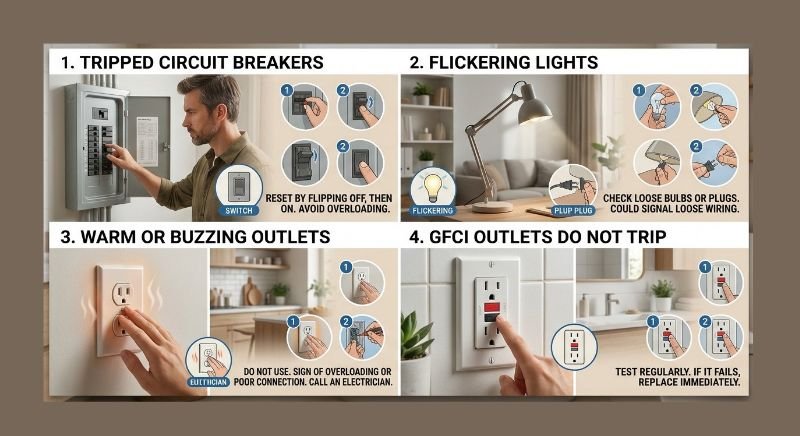
Many household electrical problems begin with everyday equipment. A circuit may become overloaded, an outlet may wear out, or an appliance may develop an internal fault.
Some issues have simple explanations. Others require testing by a qualified electrician. The key is to recognize the symptoms without making unsafe assumptions.
Circuit Breakers That Keep Tripping
A circuit breaker that keeps tripping indicates that something is interrupting the circuit. The cause may be excessive electrical load, a short circuit, damaged wiring, or a faulty appliance.
Start by noting what was operating when the breaker tripped. If the problem occurs whenever you use one appliance, that detail can help an electrician identify the cause.
Avoid repeatedly resetting the breaker. If it trips again, stop using the affected circuit and arrange an inspection.
Faulty or Damaged Electrical Outlets
A faulty electrical outlet may show signs such as looseness, discoloration, cracking, buzzing, or unusual warmth. A plug that falls out easily may also indicate a worn receptacle.
Do not use an outlet that smells burnt, sparks during normal use, or shows visible damage. Turn off power only if you can do so safely without approaching a hazardous condition, and contact an electrician.
Never attempt to repair a damaged outlet while it is energized. Outlet replacement and wiring checks require appropriate electrical knowledge and safety procedures.
Flickering Lights When Using Appliances
Flickering lights can occur because of a loose connection, a faulty light fixture, an appliance problem, or an issue with the electrical supply.
Brief changes may have a different cause from persistent flickering. Flickering that appears when a high-power appliance starts can be particularly useful information for troubleshooting.
If flickering is frequent, widespread, or accompanied by buzzing, burning smells, or heat, stop using the affected equipment and arrange professional inspection.
GFCI Outlets That Trip or Need Resetting
A GFCI outlet may trip when it detects a ground-fault condition. Moisture, a faulty appliance, damaged wiring, or a problem with the GFCI itself can contribute to repeated trips.
If a GFCI trips, unplug connected equipment if it is safe to do so. You can follow the manufacturer’s instructions to reset the device once the immediate cause has been addressed.
A GFCI that will not reset or repeatedly trips needs further investigation. Do not bypass the protection or replace it with an ordinary outlet without proper assessment.
Electrical Problems Caused by Overloaded Circuits
An overloaded circuit carries more electrical demand than its safe capacity. Connecting several high-power appliances to one circuit can create excessive load.
Common examples include using a space heater, microwave, kettle, or other high-power device on the same circuit. The actual load depends on each appliance’s rating and the circuit’s design.
Warning signs can include frequent breaker trips, warm outlets, and lights that dim when equipment operates. These symptoms should not be ignored.
Distribute electrical loads appropriately and ask an electrician to assess circuits that cannot support your needs.
When an Electrical Problem May Indicate a Wiring Issue
Some electrical problems point to wiring or connection defects. These include persistent flickering, burning odors, buzzing from outlets, unexplained breaker trips, and repeated power loss.
Older wiring systems may also require special attention. However, you cannot determine wiring safety from a home’s age alone.
Do not open walls, remove outlets, or inspect panel wiring yourself to investigate a suspected wiring issue. A qualified electrician can perform the necessary tests and recommend repairs.
How to Troubleshoot Common Electrical Problems Safely
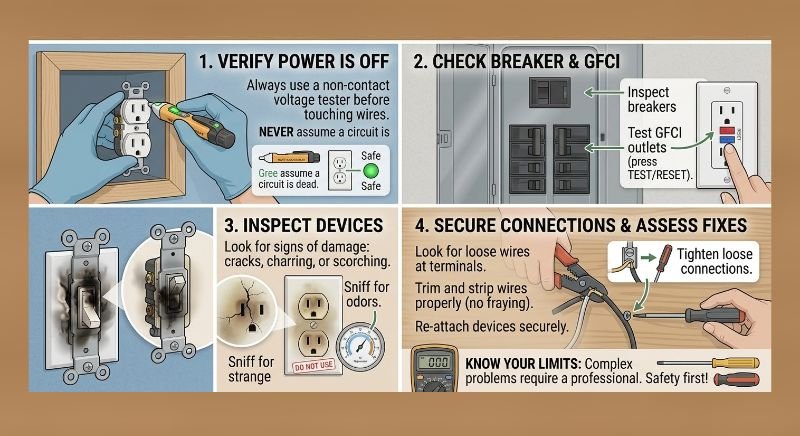
Electrical troubleshooting at home should begin with observation, not dismantling equipment. You can gather useful information without touching exposed wiring or opening electrical devices.
Use the following steps for basic checks. Stop immediately if you notice heat, smoke, sparks, damaged insulation, or other dangerous signs.
What to Check Before Troubleshooting
Before investigating an electrical problem, consider these questions:
- What device or room is affected?
- Did the problem start suddenly or develop over time?
- Did a breaker or GFCI trip?
- Were multiple appliances running?
- Is there visible damage, heat, or discoloration?
- Does the issue affect one outlet, one room, or the whole home?
Keep people away from damaged electrical equipment. Do not touch electrical devices with wet hands or while standing in water.
If you notice smoke, burning smells, or active sparking, stop troubleshooting and prioritize safety.
How to Identify a Tripped Circuit Breaker
A tripped circuit breaker may sit in a position different from the other breakers. Some breakers move to a middle position, while others may appear close to the ON position.
To identify a trip:
- Look at the panel from a safe position.
- Check whether a breaker appears out of alignment.
- Identify which area or equipment lost power.
- Follow the manufacturer’s instructions for any permitted reset.
- Stop if the breaker trips again.
Do not remove the panel cover or touch internal components. If the breaker is hot, damaged, or associated with burning odors, contact an electrician.
How to Check an Electrical Outlet Safely
Start with a visual inspection from outside the outlet. Look for cracks, discoloration, looseness, or signs of overheating.
Check whether the plug fits normally. Never force a plug into an outlet or use an outlet that cannot hold the plug securely.
You can also check whether other devices work elsewhere, but avoid using this as proof that a suspected outlet is safe. Do not insert tools, test leads, or other objects into outlet openings unless you are using an appropriate procedure and equipment with the required expertise.
A qualified electrician should investigate damaged outlets, suspected wiring faults, and unexplained power loss.
How to Determine Whether a GFCI Has Tripped
GFCI outlets commonly have TEST and RESET buttons. A trip may interrupt power to the outlet and possibly other outlets downstream.
If you suspect a GFCI trip:
- Unplug equipment if it is safe to do so.
- Identify the affected GFCI device.
- Follow the manufacturer’s instructions for resetting it.
- Check whether the reset holds.
- Stop if it trips again or will not reset.
Some GFCI protection may be located upstream from the outlet where you notice the power loss. An electrician can help identify the protected circuit.
When You Should Stop Troubleshooting
Stop electrical troubleshooting when you notice any of the following:
- Burning smell or smoke.
- Sparks or arcing.
- Hot outlets, switches, or plugs.
- Exposed or damaged wiring.
- Repeated circuit breaker trips.
- Water near electrical equipment.
- Electrical shocks or tingling sensations.
- A GFCI that repeatedly trips.
- A problem involving the electrical panel’s internal wiring.
These signs require more than basic home checks. Contact a qualified electrician, and seek emergency assistance when there is an immediate danger.
Understanding Electrical Outlets and Grounding
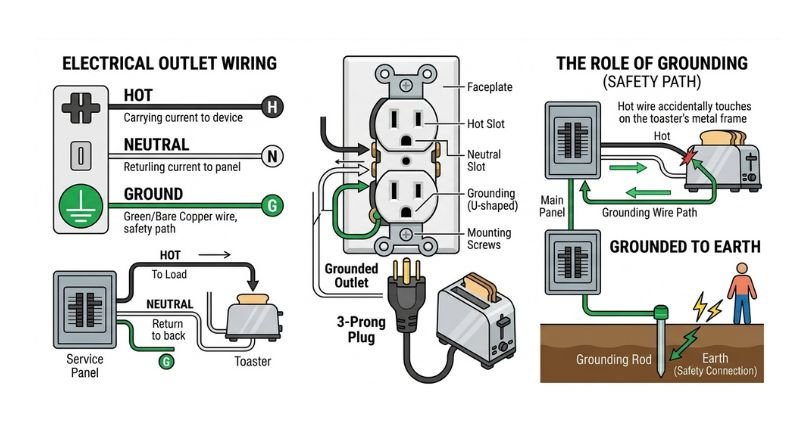
Grounding is an important part of electrical safety. It helps manage fault conditions by providing an intended path for electrical current under the right circumstances.
However, an outlet’s appearance does not prove that its grounding system works correctly. A three-slot outlet can still have wiring problems or an improperly connected grounding conductor.
Why Electrical Outlets Need Proper Grounding
Proper grounding helps reduce shock risks when certain electrical faults occur. It works with other protective devices and the design of the electrical system.
A grounded outlet is not the same as a GFCI outlet. A GFCI detects current imbalance, while grounding provides a path for fault current as part of the electrical system.
Never remove a grounding pin to make a plug fit a two-slot outlet. Do not assume that an adapter creates a proper grounding connection.
The Electrical Safety Foundation International explains the role of grounding and other components in a home electrical system.
How to Test if an Outlet Is Grounded
An electrician can test an outlet using appropriate equipment and procedures. Plug-in outlet testers may provide useful indications, but they cannot identify every wiring defect or confirm complete electrical safety.
Do not rely on a tester alone when an outlet shows damage, produces unusual symptoms, or is part of an older installation.
If you suspect improper grounding, arrange a professional inspection. Avoid removing the outlet cover or changing wiring without the necessary training.
Signs an Outlet May Not Be Properly Grounded
Certain signs may justify a grounding inspection:
- A three-slot outlet in an older installation.
- An outlet that produces unexpected shocks.
- Missing or damaged grounding components.
- Wiring modifications with unclear history.
- A tester that indicates a potential wiring fault.
- Electrical equipment behaves unusually when connected.
These signs do not prove a specific defect. A qualified electrician must verify the installation and determine the appropriate correction.
When an Outlet Should Be Inspected by an Electrician
Arrange an electrical inspection if an outlet is damaged, loose, warm, or associated with shocks. Professional assessment is also important when you are unsure whether an outlet is grounded.
Avoid using an outlet that shows signs of burning or electrical damage. Do not attempt to solve grounding problems by attaching wires to plumbing, exposed metal, or other improvised points.
A proper grounding system must follow the applicable electrical requirements for the property.
Circuit Breakers and Electrical Overloads
Circuit breakers protect electrical circuits by interrupting power under certain fault or overcurrent conditions. They are an important part of home electrical safety, but they do not eliminate every electrical hazard.
Understanding the difference between a breaker trip and a wiring problem helps you respond appropriately.
Why Circuit Breakers Trip
A breaker can trip when a circuit experiences excessive current. This may happen because of an overloaded circuit, a short circuit, or a fault in connected equipment.
The breaker may also have a mechanical or electrical problem. You should not assume that every trip means you simply plugged in too many devices.
When trips repeat, an electrician should investigate the circuit and connected equipment.
Common Causes of Electrical Overloads
Electrical overloads can occur when several appliances operate on the same circuit. High-power equipment may consume much of the circuit’s available capacity.
Common examples include:
- Space heaters.
- Electric kettles.
- Microwaves.
- Hair dryers.
- Irons.
- Portable cooking equipment.
The actual demand varies by appliance and voltage. Check the appliance rating and follow the circuit’s permitted capacity.
Avoid using multiple high-power appliances through one extension cord or power strip.
How Appliances Can Affect a Home Circuit
Appliances draw different amounts of electricity. A small charger usually places a much lower load on a circuit than a heater or cooking appliance.
Some equipment also draws a higher starting current when its motor or compressor begins operating. This can affect circuit behavior in certain installations.
If lights dim or breakers trip when an appliance starts, stop using the equipment if the issue persists. An electrician can determine whether the appliance, circuit, or connections are responsible.
When Repeated Breaker Trips Need Professional Inspection
Repeated breaker trips should not be treated as a normal inconvenience. They may indicate an electrical fault, an unsuitable load, or a problem with the protective device.
Stop resetting the breaker repeatedly. Disconnect equipment only when it is safe, and avoid touching damaged plugs or outlets.
A professional can inspect the circuit, identify the source of the trip, and recommend a safe solution.
Electrical Safety When Using Home Appliances
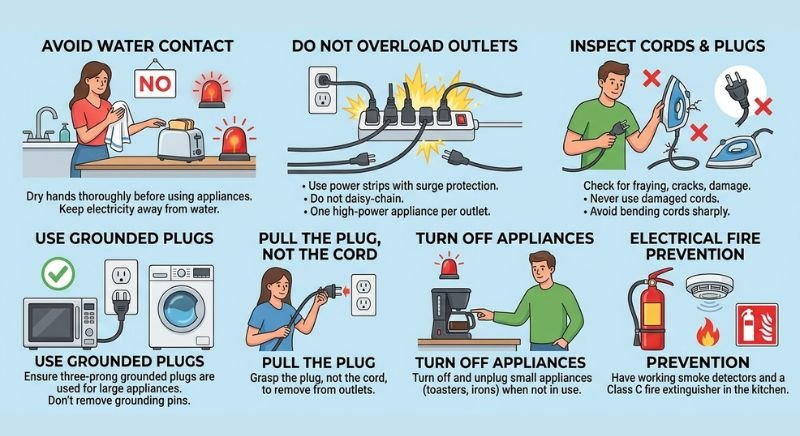
Home appliances make daily tasks easier, but incorrect use can increase electrical risks. Safe operation involves proper connections, suitable circuits, ventilation, and regular inspection.
Always follow the appliance manufacturer’s instructions and pay attention to warnings about power requirements.
How Much Electricity Do Common Appliances Use?
Appliance electricity use depends on its wattage, operating time, and operating cycle. A device with a higher wattage generally uses more power while running at that rating.
Examples of appliances with potentially high power demand include:
| Appliance | Electrical consideration |
| Refrigerator | Compressor startup and ongoing operation |
| Microwave | Relatively high power demand |
| Electric kettle | High power demand during heating |
| Space heater | High continuous load |
| Washing machine | Motor and heating functions vary |
| Laptop charger | Usually lower power demand |
| Ceiling fan | Depends on motor type and speed |
These are general comparisons, not fixed consumption values. Check the manufacturer’s label for accurate information.
Do not use an appliance’s typical wattage as proof that any outlet or circuit can safely support it.
How Many Amps Does a Refrigerator Use?
A refrigerator’s current draw depends on its voltage, model, efficiency, compressor, and operating conditions. Its starting current may be higher than its normal running current.
Check the appliance’s rating label or manufacturer’s documentation for the appropriate electrical requirements. Avoid relying on a general online estimate when planning a circuit.
If a refrigerator repeatedly trips a breaker or causes flickering lights, arrange an inspection. The issue may involve the appliance, its circuit, or the electrical installation.
Avoiding Overloaded Circuits
Avoid connecting too many high-power appliances to one circuit. Pay attention to circuit capacity and the electrical requirements of each device.
Do not use extension cords as a permanent substitute for suitable electrical outlets. If a room lacks enough outlets for normal use, ask an electrician about a safe installation.
If breakers trip often, identify the affected equipment and seek professional guidance rather than repeatedly resetting the circuit.
Safe Appliance Placement and Connections
Place appliances on stable surfaces with adequate ventilation. Keep electrical equipment away from water and avoid crushing or sharply bending power cords.
Use the plug and power supply specified by the manufacturer. Do not use damaged cords, loose plugs, or makeshift connections.
For appliances that produce heat, follow the required clearance from curtains, furniture, bedding, and other flammable materials.
Warning Signs of an Unsafe Appliance Connection
Look for these warning signs:
- Damaged power cords.
- Loose or hot plugs.
- Burn marks around outlets.
- Buzzing or crackling sounds.
- Repeated breaker trips.
- Unusual odors.
- Sparks during normal operation.
- Electrical tingling when touching equipment.
Stop using equipment that shows these signs. Unplug it only if doing so is safe, and arrange professional assessment when necessary.
Extension Cord and Power Safety
Extension cords provide temporary access to power when an outlet is not close enough. However, incorrect use can create electrical hazards.
The U.S. Consumer Product Safety Commission identifies important extension cord safety characteristics, including suitable wire size, proper continuity, polarity, and strain relief.
How to Use Extension Cords Safely
Choose an extension cord that matches the appliance’s electrical requirements. Inspect the cord before use and remove damaged cords from service.
Keep cords away from heat, water, sharp edges, and areas where they can be crushed. Never cover cords with rugs or place them where they may create a tripping hazard.
Do not connect extension cords end to end. Use outdoor-rated cords for outdoor applications and follow the manufacturer’s instructions.
Choosing the Right Extension Cord for an Appliance
Extension cord selection depends on the appliance’s current demand, cord length, wire gauge, and intended environment.
A longer cord may have different capacity limits than a shorter cord. The correct choice also depends on whether the appliance has a heating element, motor, or other specific requirements.
Check the cord’s rating before use. If you are unsure whether an extension cord can support an appliance, consult the manufacturer or a qualified electrician.
Common Extension Cord Mistakes to Avoid
Common mistakes include:
- Using damaged or frayed cords.
- Connecting multiple extension cords.
- Using indoor cords outdoors.
- Exceeding the cord’s rated load.
- Running cords under carpets.
- Using cords near water without appropriate protection.
- Treating extension cords as permanent wiring.
- Removing or modifying grounding components.
These practices can increase the risk of electric shock, overheating, or fire. Use the cord only within its intended rating.
When You Should Not Use an Extension Cord
Avoid using an extension cord when an appliance requires a dedicated or specially rated circuit, or when the manufacturer prohibits extension cord use.
High-power heating equipment and certain large appliances may require a specific electrical connection. Do not assume a heavy-duty-looking cord is suitable for every device.
If you need regular access to power in a particular location, consider having a qualified electrician install a suitable outlet.
Smoke Detector and Electrical Fire Safety
Smoke detectors help alert occupants when smoke is detected. They are an important part of a broader home fire safety plan.
Electrical fire prevention also requires attention to wiring, appliances, outlets, and other possible sources of overheating or ignition.
Why Smoke Detectors Are Important
A working smoke detector can provide an early warning during a fire. Early warning gives occupants more time to leave the property and contact emergency services.
Install smoke detectors according to local requirements and manufacturer instructions. Test them regularly and ensure household members understand the evacuation plan.
Smoke detectors do not prevent electrical faults. They provide an alert when their sensing system detects smoke or another condition covered by their design.
Signs Your Smoke Detector Needs Replacing
Smoke detectors may need replacement because of age, damage, persistent malfunction, or manufacturer guidance.
Common signs include:
- Repeated nuisance alarms.
- Failure during testing.
- Physical damage.
- Persistent chirping after battery checks.
- Expired or end-of-life warnings.
- Unreliable operation.
Follow the manufacturer’s replacement instructions. Do not disable a smoke detector simply because it produces nuisance alarms.
Common Electrical Fire Hazards in a Home
Electrical fire hazards can involve damaged wiring, loose connections, overloaded circuits, faulty appliances, and unsuitable extension cord use.
Some hazards remain hidden inside walls, outlets, or electrical equipment. This is why recurring electrical symptoms deserve attention, even when everything appears to work.
Avoid using electrical devices that show signs of overheating or damage. Seek professional help if you suspect an electrical fault.
How to Reduce Electrical Fire Risks
You can reduce electrical fire risks through regular checks and safe equipment use:
- Keep outlets and electrical equipment in good condition.
- Replace damaged cords.
- Avoid overloading circuits.
- Use the correct extension cords.
- Keep combustible materials away from heat-producing appliances.
- Test smoke detectors as directed.
- Arrange electrical inspections when problems recur.
Electrical safety depends on both safe daily habits and proper installation.
What to Do If You Notice Burning or Electrical Smoke
If you notice burning smells, smoke, or active electrical sparking, stop using the affected equipment if it is safe to do so. Keep people away from the hazard.
If a fire starts, leave the area and contact local emergency services. Do not use water on an energized electrical fire.
Do not return to the affected area until emergency personnel or qualified professionals confirm that it is safe.
Basic Home Electrical Repairs and Maintenance
Home electrical maintenance helps identify visible problems before they become more serious. However, maintenance does not mean every electrical repair is suitable for DIY work.
The safest approach is to distinguish between observation and work that requires electrical training.
Electrical Repairs Homeowners May Be Able to Handle
Some basic tasks may be appropriate for homeowners when they do not involve electrical wiring or exposure to energized parts.
Examples include:
- Replacing batteries in smoke detectors.
- Cleaning dust from accessible equipment according to manufacturer instructions.
- Replacing a damaged extension cord with a suitable new one.
- Unplugging faulty appliances.
- Resetting a GFCI according to instructions.
- Replacing compatible light bulbs when the power is off and the bulb is cool.
Do not attempt to repair wiring, replace outlets, or open electrical panels without the necessary qualifications.
Electrical Maintenance Tasks to Check Regularly
A home electrical maintenance checklist can include visible inspection of outlets, switches, power cords, and appliances.
Check for signs of wear, damage, unusual heat, and loose connections. Keep records of recurring electrical issues so an electrician can identify patterns.
Maintenance frequency depends on the age and condition of the home, its electrical load, and local requirements. An electrician can recommend an appropriate inspection schedule.
Inspecting Outlets, Cords and Switches
Inspect visible outlets and switches for cracks, discoloration, looseness, and other signs of damage. Check power cords for fraying, cuts, or exposed conductors.
Do not remove outlet covers or switch plates for a routine visual check. Avoid touching suspicious wiring or equipment.
If an outlet or switch feels hot, produces unusual sounds, or shows burn marks, stop using it and arrange professional inspection.
Checking for Signs of Electrical Damage
Electrical damage may appear as discoloration, melted plastic, damaged insulation, or unusual odors. Some issues may not be visible.
Do not ignore repeated trips, shocks, or flickering lights. These symptoms can indicate a problem that requires professional testing.
Avoid covering damage with tape or using improvised repairs. The underlying issue must be assessed and corrected properly.
Why Preventive Electrical Maintenance Matters
Preventive electrical maintenance helps you identify visible hazards and address recurring problems earlier. It can also improve your understanding of the home’s electrical system.
However, maintenance checks cannot guarantee that concealed wiring or electrical equipment is safe. Professional inspections remain important when symptoms, age, or installation conditions justify them.
Electrical Safety Checklist for Homeowners
A home electrical maintenance checklist helps you review common safety concerns regularly. Use this checklist for visual checks and simple actions that do not involve electrical wiring.
For repairs or uncertain conditions, contact a qualified electrician.
Check Electrical Outlets
- Look for cracks, burn marks, or discoloration.
- Check for loose plugs or damaged covers.
- Avoid using outlets that feel hot.
- Stop using outlets that produce sparks or unusual sounds.
Do not attempt to repair damaged outlets yourself. Arrange a professional inspection when you notice warning signs.
Check Circuit Breakers
- Identify whether breakers trip repeatedly.
- Note which appliances were running when a trip occurred.
- Avoid repeatedly resetting a tripped breaker.
- Arrange professional inspection for recurring problems.
Never remove the electrical panel cover to investigate a breaker issue.
Inspect Power Cords and Extension Cords
- Check cords for cuts, fraying, or exposed wiring.
- Replace damaged cords.
- Avoid placing cords under rugs or furniture.
- Use extension cords within their rated capacity.
- Keep cords away from heat and water.
Follow the manufacturer’s instructions for appliance and cord use.
Test GFCI Protection
- Locate GFCI outlets in relevant areas.
- Follow the manufacturer’s test instructions.
- Check whether the device resets correctly.
- Stop if the GFCI trips repeatedly or will not reset.
Do not bypass GFCI protection. Ask an electrician to investigate a device that does not operate as expected.
Check Smoke Detectors
- Test smoke detectors according to the manufacturer’s instructions.
- Replace batteries when required.
- Check for damage or end-of-life warnings.
- Keep detectors unobstructed.
- Follow the recommended replacement schedule.
Test and replace smoke detectors as directed by the manufacturer and local requirements.
Watch for Overloaded Circuits
- Avoid connecting several high-power appliances to one circuit.
- Check for frequent breaker trips.
- Avoid using extension cords as permanent wiring.
- Follow appliance and circuit requirements.
- Contact an electrician when a circuit cannot safely support your needs.
An overloaded circuit may need a professional assessment rather than a different extension cord.
Look for Signs of Electrical Damage
- Check for burning odors.
- Watch for sparks or unusual sounds.
- Look for damaged outlets and switches.
- Check visible cords for wear.
- Stop using equipment that becomes unusually hot.
If you find a serious electrical hazard, keep people away and seek professional assistance.
When Should You Call an Electrician?
Knowing when to call an electrician helps prevent unsafe repairs and delayed maintenance. A qualified electrician can inspect electrical components, test circuits, and perform work that requires specialized training.
When an issue involves exposed wiring, repeated faults, or electrical equipment damage, avoid experimenting with DIY solutions.
Signs of Serious Electrical Problems
Certain symptoms deserve prompt professional attention:
- Repeated circuit breaker trips.
- Burning smells from outlets or equipment.
- Persistent flickering lights.
- Buzzing or crackling sounds.
- Hot electrical outlets or switches.
- Visible wiring damage.
- Electrical shocks or tingling.
- Smoke or sparks from electrical equipment.
The urgency depends on the symptom and circumstances. Smoke, active sparking, or fire requires immediate safety action rather than routine appointment scheduling.
Problems You Should Not Repair Yourself
Some home electrical repairs require professional expertise. These include:
- Replacing or modifying electrical wiring.
- Repairing electrical panels.
- Installing or replacing circuit breakers.
- Repairing short circuits.
- Correcting grounding defects.
- Replacing damaged outlets or switches when wiring work is involved.
- Investigating concealed wiring faults.
- Installing dedicated circuits for high-power appliances.
The appropriate requirements depend on local law, electrical codes, and the work involved. Use a qualified electrician for tasks that exceed basic safe checks.
When Repeated Electrical Issues Need Professional Inspection
Recurring problems often require more than a temporary reset or replacement of a device. A breaker that repeatedly trips, a light that keeps flickering, or an outlet that becomes warm may indicate an underlying fault.
Record the symptoms, affected equipment, and frequency of the problem. This information can help the electrician investigate the issue.
Do not continue using equipment simply because the problem disappears temporarily.
Electrical Emergencies That Require Immediate Attention
Treat smoke, fire, active sparking, exposed energized wiring, and serious electrical shock hazards as emergencies.
If an electrical fire occurs, evacuate the area and contact local emergency services. Do not use water on an energized electrical fire.
If someone is receiving an electrical shock, do not touch the person while they remain in contact with an energized source. Disconnect power only if you can do so safely, and call emergency services.
Do not re-enter a dangerous area until emergency responders or qualified professionals confirm that it is safe.
Final Thoughts
A reliable home electrical system supports your daily routine, but it needs proper use, regular attention, and safe maintenance. Recognizing common electrical problems can help you respond early and avoid unsafe decisions.
You can perform certain basic checks, such as inspecting visible cords, following GFCI reset instructions, and checking smoke detector operation. However, electrical wiring, panel work, and persistent electrical faults require professional expertise.
Use this home electrical guide as a starting point for understanding your system. Follow the home electrical safety checklist, avoid overloaded circuits, and contact a qualified electrician when a problem exceeds safe troubleshooting.
Home Electrical Guide FAQs
What Are the Most Common Electrical Problems in a Home?
Common electrical problems in homes include tripped circuit breakers, faulty outlets, flickering lights, GFCI trips, overloaded circuits, and wiring faults. Understanding these issues supports electrical safety at home and helps homeowners recognize warning signs early. If a problem keeps returning, contact a qualified electrician for inspection.
What Electrical Repairs Can a Homeowner Safely Do?
Homeowners can handle basic tasks, such as replacing smoke detector batteries, changing compatible light bulbs, and resetting GFCI outlets according to manufacturer instructions. However, wiring, panel repairs, and outlet replacement require a qualified electrician. Following a home electrical guide helps homeowners understand safe limits and avoid unnecessary risks.
Why Does a Circuit Breaker Keep Tripping?
A circuit breaker may keep tripping because of an overloaded circuit, short circuit, faulty appliance, wiring problem, or defective breaker. Understanding common circuit breaker problems helps identify potential risks, but homeowners should not repeatedly reset a tripping breaker. Stop using the affected circuit and arrange a professional inspection.
How Do I Know if an Outlet Is Faulty?
Signs of a faulty electrical outlet include cracks, discoloration, unusual warmth, loose plugs, buzzing, burning odors, or sparks. Practicing outlet safety means stopping use immediately when these warning signs appear and contacting a qualified electrician. Avoid repairing or replacing outlets without the necessary qualifications.
How Can I Tell if an Outlet Is Grounded?
A three-slot outlet does not guarantee proper grounding. A qualified electrician can verify the grounding system through appropriate testing and identify potential wiring faults. Plug-in testers may provide useful indications but cannot detect every electrical problem.
When Should I Call an Electrician?
Call a qualified electrician if you notice repeated breaker trips, damaged outlets, burning odors, flickering lights, or suspected wiring problems. Keep children away from electrical hazards, avoid exposed wires, and follow basic electrical shock prevention practices. Seek emergency assistance for smoke, fire, active sparking, or serious electrical hazards.