
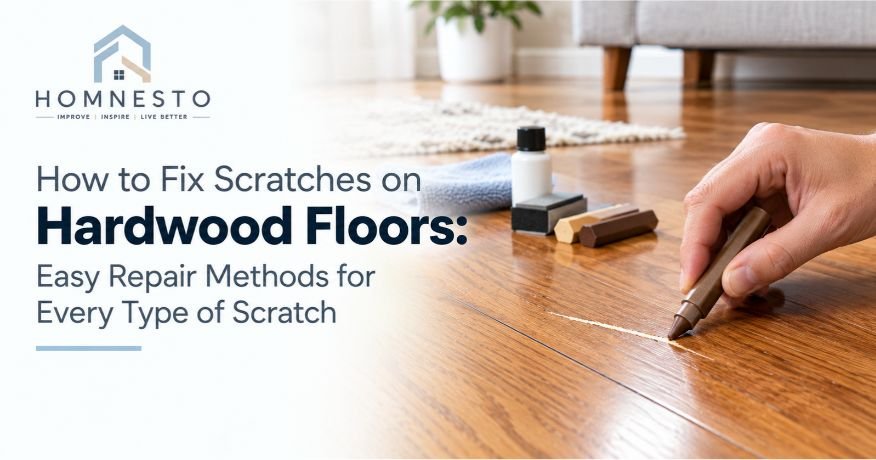

Hardwood floors can make a room look warm, clean, and finished. However, daily life can leave its mark. Shoes, furniture, pets, dropped items, dirt, and moving boxes can create anything from a light surface mark to a deep gouge. The good news is that many types of damage do not require replacing the entire floor. With the right hardwood floor scratch repair method, you can often improve the floor yourself.
The first step is knowing what you are dealing with. A light scratch may only affect the protective finish, while a deeper mark can reach the actual wood. Scuffs sit on the surface and often need simple cleaning. Gouges and chips remove part of the wood and need a more involved repair. That is why the best way to learn how to fix scratches on hardwood floors is to first check the depth and type of damage.
The finish also matters. A glossy polyurethane finish may react differently to a repair product than an oil-finished floor. Solid hardwood and engineered wood also have different limits. Good wood floor scratch repair starts with identifying the floor before you start rubbing, sanding, filling, or refinishing it.
This guide explains how to remove scratches from hardwood floors, how to deal with scuffs and gouges, and when a professional repair makes more sense. It also covers scratches on hardwood floors caused by pets, furniture, and normal traffic. Whether you have one small mark or a room full of damaged boards, you can use the steps below to choose a repair method that fits the damage.
How to Tell How Deep a Hardwood Floor Scratch Is
Before starting any hardwood floor scratch repair, look closely at the damaged area under good lighting. Run your finger gently across the scratch. Do not immediately sand it or apply a strong cleaner.
A useful test is to check whether the mark changes when the floor is cleaned. If it disappears after cleaning, you may be looking at a scuff rather than an actual scratch. If the mark remains but only affects the shine, it is likely a surface scratch. If you can see a different wood color inside the mark, the scratch may have gone through the finish.
Knowing the depth helps you avoid making the damage worse. A small surface mark does not need the same treatment as a deep cut in the wood.
Light Surface Scratches
Light scratches usually affect the finish rather than the wood underneath. They can appear as thin lines, dull spots, or small marks that become more visible when light hits the floor.
These scratches are common in busy homes. Moving a chair, walking with small pieces of grit under your shoes, or dragging a light object can create them. In many cases, simple cleaning followed by a compatible polish or finish can improve their appearance.
If you have a light scratch on hardwood floor, avoid aggressive sanding. Removing too much finish can create a larger dull patch that is harder to blend.
Scratches That Reach the Wood
A scratch that reaches the wood is easier to identify because the damaged area may look lighter, darker, or more sharply defined than the surrounding floor.
You may also notice a rough edge when you gently run a clean fingertip over it. At this stage, cleaning alone will not repair the damage. You may need a color-matched touch-up product, scratch filler, or a small finish repair.
This is where choosing the right hardwood floor scratch repair product becomes important. A product made for surface marks may not work on exposed wood.
Deep Scratches and Gouges
Deep scratches remove more of the finish and may cut into the wood itself. A gouge is more severe because part of the wood has been removed rather than simply marked.
A deep scratch in wood floor can have visible edges, exposed raw wood, or a noticeable change in depth. If the damage is large, sanding and refinishing may be necessary.
For deeper damage, hardwood floor deep scratch repair usually involves cleaning, filling, leveling, sanding, color matching, and restoring the finish. The exact steps depend on the flooring and finish.
Scratches vs. Scuff Marks vs. Gouges vs. Dents
Scratches are cuts or lines in the finish or wood. Scuff marks are usually surface transfers caused by rubber soles, furniture feet, or other materials. Gouges remove part of the wood. Dents push the wood inward without necessarily removing it.
This difference matters because each problem needs a different solution. Rubbing a deep gouge with cleaner will not replace missing wood. Likewise, sanding a simple scuff can damage a perfectly good finish.
A proper hardwood floor scratch repair begins by identifying the problem rather than treating every mark as a scratch.
How to Fix Scratches on Hardwood Floors
For ordinary light-to-moderate damage, start with the least aggressive repair method. You can always move to a stronger method if the first step does not solve the problem.
The goal of hardwood floor scratch repair is not simply to hide the line. A good repair should improve the appearance while protecting the exposed area from moisture, dirt, and further wear.
Clean the Floor Before Repairing the Scratch
Before trying to repair scratches, remove dust, hair, grit, and cleaning residue from the area. This is an important part of learning how to clean scratched wood floors because dirt can make a small scratch look much worse.
Use a cleaner that is safe for your specific hardwood finish. Apply it according to the product instructions and use a soft microfiber cloth. Avoid soaking the floor because excess water can damage wood.
If you are wondering how to clean scratches on wood floors, remember that cleaning can remove dirt sitting inside or around a mark. It cannot rebuild wood that has already been removed.
Allow the area to dry completely before applying a repair product. Here’s a complete home flooring maintenance guide.
Try a Hardwood Floor Cleaner for Surface Marks
A suitable cleaner can make superficial marks less visible. This is especially useful when the floor has a dull film, dirt buildup, or marks sitting on top of the finish.
A hardwood floor cleaner for scratches is useful when the problem is mostly surface residue. A wood floor cleaner for scratches can also help refresh the surrounding finish and make minor marks less noticeable.
However, cleaner does not actually repair a scratch that has cut through the finish. If the line remains after cleaning, you need another approach.
This simple test can save you time. Instead of immediately buying a filler or scratch remover, clean the area first and check what remains.
Use Polish or Finish for Light Scratches
For very light scratches, a compatible floor polish or finish may improve the appearance. A wood floor polish for scratches can help blend minor surface wear when the product is designed for your type of flooring.
Do not use furniture polish unless the floor manufacturer specifically allows it. Some household products can leave a slippery film or interfere with future refinishing.
For a small area, apply the product carefully and evenly. Avoid creating a shiny patch that looks different from the rest of the floor.
This approach works best when the scratch is shallow. If you can feel a cut in the wood, polishing alone will not provide a complete hardwood floor scratch repair.
Use a Hardwood Floor Scratch Remover
A dedicated hardwood floor scratch remover may work well for light surface scratches and small finish marks. These products are designed to improve the appearance of worn areas without requiring a full floor refinish.
When comparing options, look for a product made specifically for hardwood and for the finish on your floor. The best hardwood floor scratch remover is not automatically the strongest product. It is the one that matches the floor and the type of damage.
A wood floor scratch remover or scratch remover for wood floors can be useful for small areas, but always test the product in an inconspicuous spot first.
Follow the manufacturer’s instructions carefully. More product does not necessarily mean a better repair.
Use a Color-Matched Touch-Up Product
When a scratch reaches the wood, color matching becomes important. A wood floor touch up marker, stain, crayon, or similar product can disguise a small exposed area.
A touch up for hardwood floors should closely match the existing floor. Test the color somewhere hidden before applying it to the visible scratch.
Apply small amounts rather than covering the entire damaged area at once. It is easier to build color gradually than to remove too much color after it becomes too dark.
This method can help when you need to how to get scratches out of hardwood floors without sanding a whole board. It does not physically remove the scratch, but it can make the exposed wood much less noticeable.
Recoat the Damaged Area When Necessary
Sometimes the main problem is that the protective finish has been broken. In that case, restoring the finish may be more useful than simply covering the color.
After preparing the area, a compatible finish can help seal exposed wood and blend the repaired section. This step requires care because a different sheen can make the repair more visible.
If you are searching for how to repair scratches on wood floor, consider whether the finish needs repair before choosing a filler or stain.
For small damage, spot repair may be enough. Larger areas may need professional recoating or refinishing.
The same principle applies when deciding how to fix scratched hardwood floor or how to remove scratches from hardwood. First determine whether the damage is in the finish, the color layer, or the wood itself.
For people asking how to get scratches off wood floor, remove scratches from hardwood floor, or how to repair scratches on wood floor, the correct answer depends on that depth. A surface scratch can often be improved with cleaning and finish products, while deeper damage needs filling or sanding.
How to Fix Deep Scratches on Hardwood Floors
Deep damage needs more care than ordinary surface scratches. Trying to polish or rub a deep mark can waste time and may spread the finish around the damaged area.
If you are searching for how to fix a deep scratch on wood floor, begin by inspecting the exposed wood. Check whether the edges are raised, whether wood is missing, and whether the damage extends across one or more boards.
How to Tell if a Scratch Is Deep
A deep scratch usually remains clearly visible after cleaning. You may see raw wood inside the mark or feel a noticeable groove with your fingertip.
If the scratch catches on a soft cloth, that can also indicate a deeper cut. Do not press hard during this test because you do not want to create more damage.
Deep scratches often need more than a cosmetic hardwood floor scratch repair.
Can You Fix Deep Scratches Without Sanding?
It is possible to improve some deep scratches without sanding the entire floor. This is one reason people search for how to fix deep scratches on wood floor without sanding.
A suitable wood filler or repair wax can fill a narrow damaged area. A color-matched touch-up product can then help blend the repair.
However, avoiding sanding does not mean the repair will be invisible. If the finish is damaged across a large area, sanding and refinishing may provide a more consistent result.
Use Wood Filler for Deep Scratches
Wood filler is useful when part of the wood has been removed. A wood floor scratch filler can fill the depression and create a level surface.
For wood filler for hardwood floor scratches, choose a product suitable for the depth and type of floor. Press the filler into the damaged area rather than spreading a thick layer across the surrounding finish.
Once it cures, remove excess material according to the product instructions. The repaired area may then need light sanding and color matching.
This is a common approach for how to fix deep scratches in wood floor and how to repair deep scratches in wood floor when the damaged area is relatively small.
Sand and Refinish Deep Damage
For deeper cuts, sanding may be necessary. The damaged area can be leveled, repaired, and refinished to restore a smoother appearance.
If you are learning how to repair deep scratches in hardwood floors, do not start with aggressive sanding. Removing too much wood can create a low spot or expose more of the board than necessary.
For a localized repair, the goal is to remove only enough material to level the damage. Larger repairs may require blending into a wider section so the new finish does not look like an obvious patch.
When a Deep Scratch Needs Professional Repair
Professional help is useful when damage is deep, widespread, or difficult to color match. It is also worth considering when several boards are affected or when the floor has a specialty finish.
A professional can determine whether the floor needs filling, sanding, recoating, refinishing, or board replacement.
If you have deep scratches in hardwood floor across a large area, DIY work can sometimes make the final repair more noticeable. Professional hardwood floor deep scratch repair can provide a more consistent result.
How to Remove Scuff Marks from Hardwood Floors
Scuffs are different from scratches. They often come from rubber soles, furniture legs, toys, moving items, or other materials rubbing across the finish.
The good news is that many scuffs do not remove wood. That means you may not need a traditional hardwood floor scratch repair method.
What Causes Scuff Marks on Wood Floors?
Black and gray marks often come from shoe soles and rubber wheels. Furniture can also leave lines when it moves across the floor.
You may notice scuff marks on wood floor after moving a chair or using a vacuum with hard wheels. Similar scuff marks on hardwood floor can appear in busy hallways and entrances.
These marks often sit on the surface rather than cutting into the finish.
How to Get Scuff Marks Off Wood Floors
Start with a soft microfiber cloth and a hardwood-safe cleaner. Gently rub the mark rather than applying heavy pressure.
If you are searching for how to get scuff marks off wood floor, start with the least aggressive method. A clean microfiber cloth can remove some fresh marks without any special product.
Do not use rough scrubbers because they can turn a surface scuff into an actual scratch.
How to Remove Scuff Marks from Hardwood Floors
For stubborn marks, use a cleaner approved for your floor finish. Apply a small amount to a cloth rather than flooding the floor.
People often search for how to remove scuff marks from wood floors or how to remove scuffs from wood floors because scuffs can look like scratches. Always check whether the mark disappears during cleaning before attempting a scratch repair.
For removing scuff marks from hardwood floors, patience is usually safer than aggressive rubbing.
How to Remove Stubborn Scuffs Without Damaging the Finish
Avoid abrasive powders, steel wool, rough sponges, and harsh chemicals. They may remove the scuff while also removing the protective finish.
If a mark does not respond to gentle cleaning, stop before the surface becomes dull. A flooring professional can identify whether the mark is actually embedded in the finish.
This is especially important with older scuffed hardwood floors, where the finish may already be thin.
How to Prevent New Scuff Marks
Use felt pads under furniture and avoid dragging heavy objects. Place mats near entrances to catch grit and dirt before it reaches the floor.
If you notice repeated floor scuff marks in the same area, look for the object causing them. Fixing the source is more effective than repeatedly cleaning the marks.
How to Repair Gouges, Chips and Dents in Hardwood Floors
Not every damaged floor has a simple scratch. A gouge in hardwood floor means material has been removed or deeply cut. Chips and dents also need different repair methods.
Knowing how to fix hardwood floor damage correctly can prevent a small problem from becoming more visible.
How to Repair a Gouge in a Hardwood Floor
For a small gouge, clean the area first. Remove loose wood fibers without cutting into the surrounding board.
A suitable filler can then be pressed into the damaged section. Once cured, the area may need careful leveling, color matching, and finish repair.
If you are looking for how to repair gouge in hardwood floor, focus on rebuilding the missing material rather than simply coloring the surface.
How to Fix Gouges in Hardwood Floors
The process for how to repair gouges in hardwood floors depends on the size and depth of the gouge. Small gouges can sometimes be filled and touched up.
Larger gouges may require more sanding and refinishing. If the board has lost a significant amount of material, replacement may be more reliable.
For how to fix gouges in hardwood floors, avoid filling a deep hole with a thin cosmetic product. Use a repair material designed for the depth of the damage.
How to Fix a Chip in a Hardwood Floor
A chip can happen when an object hits the edge of a board or when something sharp pulls wood away.
If the original chip is still available and undamaged, it may sometimes be reattached. Otherwise, a compatible repair filler can replace the missing material.
People searching how to fix a chip in hardwood floor or repair chip in hardwood floor should also check the board edges. Damage near a tongue-and-groove connection may require more careful repair.
How to Fix Dents in Hardwood Floors
Dents push the wood downward instead of cutting away a section. Small dents in some unfinished or lightly finished wood may respond differently to moisture and controlled heat than finished flooring.
Do not apply steam or water directly to a finished floor without knowing that the floor and finish can tolerate it.
For fix dent in hardwood floor and fix dents in hardwood floors, the safest method depends on the flooring material and finish. A professional should handle deep dents or damaged boards when the repair could affect the finish.
When Hardwood Floor Damage Requires Board Replacement
Replacement may be necessary when a board has a large gouge, major chip, severe cracking, or extensive water damage.
It may also make sense when repair would leave a large visible patch. Matching older wood can be difficult because the existing floor may have changed color over time.
In these cases, replacing the damaged board can provide a cleaner long-term hardwood floor scratch repair than trying to rebuild a large missing section.
How to Fix Dog Scratches on Hardwood Floors
Pets can create repeated damage because their claws contact the floor many times each day. Dog scratches in hardwood floors often appear near doors, feeding areas, stairs, and places where dogs turn quickly.
The repair method depends on whether the marks are light surface scratches or deeper claw cuts.
Why Dogs Scratch Hardwood Floors
Dogs can scratch flooring while running, turning, jumping, playing, or getting up from a resting position. Long nails can increase the amount of contact with the finish.
Repeated dog scratches hardwood floor damage can create many small lines rather than one large mark.
How to Fix Dog Scratches on Wood Floors
Start by cleaning the area. For light claw marks, a compatible scratch remover or touch-up product may improve the appearance.
For deeper marks, use a filler and color-matching method appropriate for the flooring.
If you are searching for the best flooring for homes with pets to fix dog scratches on wood floors, do not treat every claw mark as a deep scratch. Check the finish first.
How to Repair Deep Dog Scratches
Deep pet damage may need filler, sanding, and refinishing. If several boards have been damaged, spot repairs can create multiple visible patches.
A professional can assess whether localized hardwood floor scratch repair or wider refinishing makes more sense.
How to Remove Dog Claw Marks
Small claw marks on wood can sometimes be improved with cleaning and a compatible touch-up product.
For marks caused by a dog dragging its claws or moving quickly across the floor, cleaning will not remove damage that has reached the wood.
If you are wondering how to remove drag marks on wood floor, first determine whether they are surface transfers or actual scratches.
How to Prevent Future Dog Scratches
Keep your dog’s nails trimmed and provide rugs or runners in areas where the dog turns frequently.
Use rugs with flooring-safe backing and keep them clean. Dirt trapped under a rug can also scratch the floor.
If your home has frequent pet traffic, consider flooring designed with durability in mind. You can also explore Best Flooring for Homes with Pets: Pet-Friendly, Durable & Waterproof Options when choosing a more pet-friendly flooring solution.
How to Fix Scratches on Engineered Wood Floors
Engineered wood looks similar to solid hardwood, but its construction is different. It has a real wood wear layer over a layered core.
That wear layer affects how much sanding and repair the floor can safely handle.
How to Fix Scratches on Engineered Wood Floors
For how to fix scratches on engineered wood floor, begin by checking the manufacturer’s instructions. Light scratches can often be treated with cleaning, touch-up products, or a compatible finish.
Do not assume that engineered wood can be sanded as many times as solid hardwood.
How to Repair Scratched Engineered Wood Floors
Small scratches on a scratched engineered wood floor can often be improved with a matching repair product.
For how to repair scratched engineered wood floors, the key is protecting the wear layer. Deep sanding can expose the core if the remaining wood layer is thin.
How to Fix Scratches on Engineered Hardwood
The process for engineered hardwood scratch repair depends on the depth of the scratch and thickness of the top wood layer.
A surface mark may only need cleaning or touch-up. A deeper mark may need filling and careful finishing.
When Engineered Wood Can Be Repaired Without Sanding
Many minor scratches can be handled without sanding. Touch-up markers, repair wax, fillers, and compatible finish products can improve small damaged areas.
This makes how to fix engineered hardwood floor scratches less aggressive than sanding when the damage is only cosmetic.
When Engineered Wood May Need Replacement
Replacement may be necessary when the wear layer is too thin for sanding or when the board has major structural damage.
For how to repair engineered hardwood floor scratches, always consider the board’s construction before using a sanding method.
This is particularly important with older scratches on engineered hardwood floors, where previous repairs may already have reduced the available wear layer.
Best Hardwood Floor Scratch Removers and Repair Products
The right product depends on the type of damage. There is no single best scratch remover for wood floors for every situation.
A surface scratch needs a different product from a deep gouge. Color, finish, sheen, and flooring type also matter.
Hardwood Floor Scratch Removers
A dedicated scratch remover can be useful for minor surface damage. Look for products that clearly state they are designed for hardwood floors.
The best hardwood floor scratch remover should match your floor’s finish and the type of scratch you are treating.
Wood Scratch Removers
A wood floor scratch remover can help reduce the appearance of light scratches and worn spots. Some products work by blending or restoring the finish rather than physically removing the scratch.
Always test the product first.
Wood Fillers for Hardwood Scratches
A wood floor scratch filler is better suited to scratches that create a noticeable depression.
When choosing wood filler for hardwood floor scratches, consider whether the filler can be sanded, stained, or finished after application.
Scratch Fillers and Concealers
A scratch filler for hardwood floors fills missing material, while a hardwood floor scratch concealer mainly disguises the mark.
A hardwood floor scratch filler is more appropriate when the scratch has depth. A wood floor scratch concealer can work for smaller cosmetic damage.
Hardwood Floor Touch-Up Products
Touch-up markers, pencils, crayons, and stain products can help match the color of exposed wood.
They are especially useful when the repair is structurally complete but the exposed area remains visually obvious.
How to Choose the Right Scratch Repair Product
Start with the flooring type. Then identify the finish and damage depth.
For a light mark, you may need a cleaner, polish, or surface scratch product. For exposed wood, consider a touch-up product. For missing wood, use a filler designed for the job.
A scratch cover for wood floors can help conceal minor damage, while a hardwood floor scratch cover may provide a color-matched cosmetic repair.
Do not choose a product simply because it promises to remove every scratch. The safest hardwood floor scratch repair product is one designed for your specific floor.
How to Hide or Cover Minor Scratches on Hardwood Floors
Sometimes the floor is structurally fine, but the scratch catches your eye. Cosmetic repair can be useful when the damage is too minor to justify sanding or refinishing.
How to Cover Scratches on Wood Floors
A color-matched marker, pencil, wax, or touch-up product can make a small scratch less visible.
When learning how to cover scratches on wood floor, match both the color and the finish. A dark repair on a light floor can be more noticeable than the original scratch.
How to Hide Scratches on Hardwood Floors
If you want to know how to hide scratches on hardwood floors, look at the scratch from normal standing height. The goal is to make it blend into the surrounding grain.
A touch-up product can help, especially when the scratch exposes a lighter wood color.
How to Match the Wood Color
Wood is rarely one solid color. It can contain several shades, grain lines, knots, and natural variations.
Test your repair product in a hidden area first. You may need to combine colors rather than using one dark marker.
This matters when learning how to cover scratches on hardwood floors because a perfect color match is rarely achieved by guessing from a small sample.
How to Cover Minor Scratches Without Refinishing
For small marks, cleaning followed by a compatible touch-up or finish product may be enough.
You can also rearrange rugs or furniture to reduce how visible a minor mark is, but cosmetic hiding should not replace a repair when wood is exposed.
If you only need to how to cover up scratches on hardwood floors, focus on matching color, sheen, and grain rather than applying a thick coating.
How to Repair Scratches on Parquet and Bamboo Floors
Parquet and bamboo floors require some extra care because their construction and grain patterns differ from standard hardwood boards.
How to Remove Scratches from Parquet Floors
Parquet has multiple wood pieces arranged in patterns. This can make sanding or spot repairs more visible if the color or finish does not match.
For how to remove scratches from parquet floor, start with cleaning and identify whether the scratch affects one small piece or several sections.
How to Repair Parquet Flooring Scratches
For how to repair parquet flooring scratches, a color-matched repair product may be enough for small marks.
Larger damage may require careful sanding and refinishing of the affected section. Matching the surrounding pattern is important because straight-line repairs can stand out on patterned flooring.
How to Repair Scratches in Bamboo Flooring
Bamboo is not technically a traditional hardwood, but it can still develop scratches from grit, furniture, shoes, and pets.
If you notice scratches in bamboo flooring, check the manufacturer’s care instructions before sanding or applying a repair product.
How to Handle Scratches on Bamboo Floors
Light bamboo floor scratches may respond to cleaning and a compatible touch-up product. Deep damage needs more care because bamboo flooring comes in different constructions and finishes.
Do not assume that a hardwood repair product is automatically suitable for bamboo.
How to Prevent Scratches on Hardwood Floors
Repairing damage is useful, but prevention can save much more time. Most everyday scratches come from a small number of repeat causes.
A few simple habits can reduce the need for frequent hardwood floor scratch repair.
Use Furniture Pads
Place felt pads under chairs, tables, sofas, beds, and other furniture that touches the floor.
Check the pads regularly. Dirt can collect underneath them and create new scratches on hardwood floors.
Keep Pet Nails Trimmed
Long pet nails can create repeated lines across the finish. Keeping nails trimmed can reduce scratching during normal movement.
This is especially helpful for homes where pets spend most of the day on hardwood.
Use Rugs and Mats in High-Traffic Areas
Place mats at entrances to catch grit before it reaches the floor. Rugs can also protect areas where people walk frequently.
Keep rugs clean because trapped dirt can cause scratching hardwood floors underneath.
Lift Furniture Instead of Dragging It
Never drag heavy furniture directly across hardwood. Lift it when possible or use appropriate moving equipment designed to protect flooring.
Even furniture that looks smooth can create deep marks when grit gets underneath it.
Clean Dirt and Grit Regularly
Small particles can act like sandpaper under shoes and furniture. Regular sweeping or vacuuming with a flooring-safe attachment can reduce wear.
This is one of the easiest ways to reduce scratches on hardwood floor over time.
Maintain the Hardwood Floor Finish
The finish protects the wood underneath. When it becomes thin or worn, the floor becomes more vulnerable to scratches and stains.
Regular maintenance can extend the useful life of the finish and reduce the need for frequent repairs.
Choose a Scratch-Resistant Finish
When refinishing a floor, ask about finishes designed to resist everyday wear.
A hardwood floor scratch resistant finish can help reduce visible damage, although no finish makes hardwood completely scratch-proof.
The right finish should also match the flooring, household use, and desired appearance.
When Should You Refinish or Replace a Hardwood Floor?
Not every floor needs full refinishing, specially not vinyl vs laminate flooring. Spot repairs are useful for small areas, but they become less practical when damage covers a large part of the room.
Not every floor needs full refinishing. Spot repairs are useful for small areas, but they become less practical when damage covers a large part of the room.
When Scratches Cover a Large Area
If scratches appear across most of the floor, repeated spot repairs may create uneven color and sheen.
A full or partial refinish can restore a more consistent appearance.
When the Finish Is Heavily Worn
If the finish is dull, thin, peeling, or worn through in many areas, repairing individual scratches may only provide a temporary improvement.
The floor may benefit more from professional refinishing.
When Scratches Reach Deep Into the Wood
Deep scratches expose the wood and can sometimes create uneven surfaces. Multiple deep marks may require sanding and refinishing rather than individual touch-ups.
When Boards Have Major Gouges or Damage
Large gouges, broken edges, severe dents, and structural damage can make board replacement more practical.
Trying to fill major damage may leave a visible repair that does not hold up well.
Repair vs. Refinishing vs. Board Replacement
Spot repair works best for small isolated damage. Refinishing makes more sense when the finish is worn across a wider area. Board replacement may be needed when individual boards have severe damage.
The right choice depends on the floor’s age, construction, finish, damage level, and availability of matching material.
If you are unsure, getting an assessment before starting major work can prevent unnecessary sanding or replacement.
FAQs About Hardwood Floor Scratches
How Do You Fix Scratched Wood Floors?
Start by cleaning the floor and identifying the scratch depth. Light scratches may improve with a compatible cleaner, polish, or touch-up product. Scratches that reach the wood may need color matching or filler. Deep damage may require sanding, refinishing, or board replacement.
This is the basic approach for how do you fix scratched wood floors without using an unnecessarily aggressive repair method.
How Do You Get Scratches Out of Hardwood Floors?
You cannot always physically remove a scratch without removing some finish or wood. For light marks, cleaning and a compatible finish product may make them disappear visually. Deeper scratches require filling, sanding, or refinishing.
For how to get scratches out of hardwood floors, the key is matching the repair to the depth.
How Do You Remove Scratches from Hardwood Floors?
Clean the area first. If the mark remains, determine whether it affects only the finish or reaches the wood.
Surface marks may respond to a hardwood-safe cleaner or scratch remover. Deeper marks may need filler and touch-up color.
This is also the basic process for how to remove scratches from hardwood floors safely.
How Do You Fix a Deep Scratch on a Wood Floor?
Clean the scratch, remove loose debris, and inspect how much wood is missing. A suitable filler can rebuild a small damaged area. After curing, the repair may need leveling, color matching, and a protective finish.
That is the usual approach for how to fix a deep scratch on wood floor when the damage is localized.
Can You Fix Deep Scratches Without Sanding?
Sometimes. A filler, repair wax, or touch-up product can improve some deep scratches without sanding the entire floor.
However, deep or widespread damage may still need sanding. If you are asking how to fix deep scratches on wood floor without sanding, understand that avoiding sanding may limit how seamless the final repair looks.
What Is the Best Hardwood Floor Scratch Remover?
There is no single product that works best for every floor. The right hardwood floor scratch remover should match the flooring type, finish, color, and scratch depth.
Always check the product instructions and test it in an inconspicuous area.
Can You Use Wood Filler for Hardwood Floor Scratches?
Yes, wood filler can be useful when a scratch has removed material and created a depression.
A wood filler for hardwood floor scratches is most useful for deeper damage. It should be followed by appropriate leveling, color matching, and finish repair when needed.
How Do You Remove Scuff Marks from Hardwood Floors?
Start with a microfiber cloth and a cleaner approved for your floor. Gently work on the mark without using abrasive materials.
If the mark does not disappear, it may be more than a scuff. This is the simplest approach for how to remove scuff marks from hardwood floors without damaging the finish.
How Do You Fix Dog Scratches on Hardwood Floors?
First determine whether the dog caused surface marks or deeper claw cuts. Light marks may need cleaning and touch-up. Deeper dog scratches in hardwood floors may require filler, color matching, and finish repair.
Keeping nails trimmed and using rugs in high-traffic pet areas can help prevent new damage.
Can Scratched Hardwood Floors Be Repaired?
Yes, many scratched hardwood floors can be repaired. The method depends on the finish, scratch depth, board condition, and size of the damaged area.
Light hardwood scratches may need only cosmetic treatment, while severe damage can require refinishing or board replacement.
How Do You Fix Scratches on Engineered Wood Floors?
Start by checking the manufacturer’s care instructions. Light scratches can often be treated with a compatible touch-up product or repair solution.
Deep sanding may not be suitable because engineered flooring has a limited real-wood wear layer. For how to fix scratches on engineered wood floors, always consider the thickness of that layer before sanding.
How Do You Prevent Scratches on Hardwood Floors?
Use furniture pads, keep pet nails trimmed, place mats near entrances, clean dirt regularly, and avoid dragging furniture.
Maintaining the protective finish also helps reduce everyday wear. These steps can greatly reduce new floor scratches and the need for repeated repairs.
Hardwood does not need to stay perfect to look good. Small marks are part of normal use, especially in busy homes. The important thing is knowing when a mark is only cosmetic and when the wood itself needs attention.
For light scratches on wood floor, start with cleaning and the least aggressive solution. For exposed wood, use a compatible touch-up or filler. For deep gouges, widespread damage, or badly worn finishes, consider professional repair or refinishing.
The best hardwood floor scratch repair is the one that matches the actual problem. Taking a few minutes to identify the damage first can help you avoid unnecessary sanding, mismatched products, and repairs that create a larger visible patch.