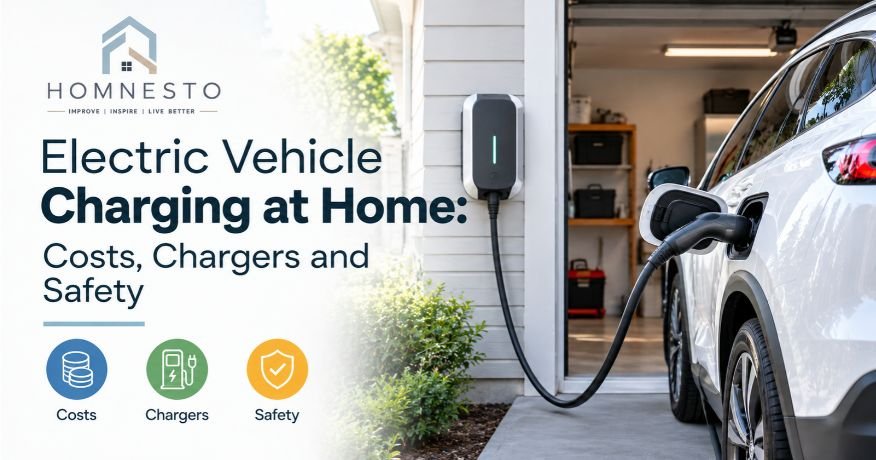

Most electric vehicles can be charged at home, and many drivers simply plug in overnight and start the next day with more range. The best setup depends on your vehicle, daily mileage, parking arrangement, and the electrical capacity available at your property. For some households, a compatible cable and regular outlet are enough; others benefit from a dedicated Level 2 charger. Before choosing, compare charging speed, electricity rates, equipment and installation costs, and safe-use requirements.
This guide to electric vehicle charging at home explains how the options work, how long charging may take, how to estimate your electricity bill, and when a professional installation may be needed. You do not automatically need the fastest charger available. The goal is a practical setup that fits your routine and can be used safely with your vehicle and home electrical system.
Can You Charge an Electric Car at Home?
Yes. Most battery-electric vehicles and plug-in hybrids can charge at home using compatible Level 1 or Level 2 equipment. The US Department of Energy’s Alternative Fuels Data Center explains that many drivers charge overnight at home, often using a vehicle-supplied Level 1 cordset or a separately installed Level 2 unit. Your vehicle’s charging port, included equipment, and manufacturer instructions determine which options are compatible.
For ev charging at home, you need a suitable power source, compatible charging equipment, a safe place to park, and an electrical setup that can support the load. A homeowner with modest daily driving may not need a permanent wall unit, while a driver who covers more miles may value faster charging. If you are unsure about the condition or capacity of the existing equipment, a qualified electrician can assess it.
How to Charge an Electric Car at Home
Park within safe reach of the charging cable, check the cable and connectors for visible damage, and connect the equipment according to the vehicle and charger manufacturer’s instructions. The vehicle and charger communicate during charging, and charging generally begins once the connection is accepted and any required settings are met. Follow the manufacturer’s directions for locking, releasing, and disconnecting the connector.
For anyone researching how to charge an electric car at home, the key is to use the right equipment rather than improvise with plugs or adapters. Check the vehicle manual for recommended charging practices and battery-care settings. If the outlet, cable, or charger becomes unusually hot, smells burnt, sparks, or shows damage, stop using it and seek professional help.
What Equipment Do You Need to Charge an EV at Home?
A Level 1 setup usually uses a compatible portable cordset and a suitable 120-volt household outlet. Level 2 charging uses compatible 240-volt equipment, which may be a plug-in unit connected to an appropriate outlet or a hardwired charging station. Both options require a compatible connector and a power supply suitable for the equipment’s electrical demand.
A home ev charging station may include smart features such as scheduled charging, energy monitoring, and app controls, but those features are optional. Choose equipment that is compatible with your vehicle and certified by a recognized safety testing organization. A cable that reaches the parking spot safely is important too; it should not be stretched across a walkway or positioned where it can be damaged.
Do Electric Cars Come With a Home Charger?
Before buying extra gear, check the vehicle’s delivery list and owner’s manual. This avoids paying twice for a cable you already have and helps confirm which connector and power levels your vehicle supports. The answer to do electric cars come with a charger is therefore vehicle-specific, not a universal yes or no.
The question can electric cars be charged at home is usually straightforward: yes, when the vehicle and the available equipment are compatible.
Phrases such as “home charging station car” or “home charging points for electric cars” when comparing home setups are important factors are compatibility, charging speed, and safe access to power.
Before purchasing, compare ev chargers for home with the equipment your vehicle supports; the included cable may already cover your needs.
Your vehicle manual or dealer can help identify a compatible electric vehicle home charger if the supplied cable is not suitable for your routine.
Understanding what is ev charging helps: the vehicle receives electrical energy through compatible equipment, while its onboard systems manage the charging process.
In simple terms, how does ev charging work depends on the supply, charging equipment, and the vehicle’s own charging limits.
If you are comparing a home charging station car arrangement with a portable cordset, consider where the vehicle parks and how often you need to recharge.
For readers asking how to charge electric car at home, the practical answer is to use compatible equipment and follow the manufacturer’s instructions.
The question how do you charge an electric car at home also depends on whether your car supports Level 1, Level 2, or both.
Which Home EV Charger Should You Choose?
Choose charging equipment around the amount of energy you typically need overnight, not only the maximum speed a charger advertises. The US Department of Energy lists Level 1 as typically adding around 2–5 miles of range per hour and Level 2 around 10–30 miles per hour, although actual results depend on the car and setup. Think about daily mileage, the time the car is parked, battery size, budget, and the electrical capacity of your home.
Level 1 Charging With a Regular Household Outlet
Level 1 charging uses a standard 120-volt household outlet and compatible cordset. It can be a sensible choice for plug-in hybrids, drivers with short commutes, or households whose car remains parked for long periods. It may also work for an all-electric vehicle if daily energy use is modest and the car has enough time to charge.
If you’re asking can you charge an ev with a regular outlet or can you plug an electric car into a regular outlet , the answer is often yes, provided the outlet and circuit are suitable and the manufacturer permits that setup. Charging is relatively slow, so it may not replace a large amount of range during a short overnight window. Avoid using an outlet that is damaged, loose, or shared with loads that could overload the circuit.
Level 2 EV Charging at Home
Level 2 equipment uses a 240-volt supply and can replenish more range in the same amount of time than Level 1. It is often convenient for households with longer commutes, larger batteries, or less time parked between trips. Some drivers can fully replenish their usual daily use overnight without needing to charge from nearly empty.
A level 2 charger at home may be a plug-in unit or hardwired station, depending on the equipment and installation. It generally requires a suitable circuit and professional assessment of electrical capacity. However, Level 2 is not essential for every household; compare your actual routine with the charging time available before deciding.
Can You Install a DC Fast Charger at Home?
Residential DC fast charging is technically more demanding and is generally associated with public or commercial charging locations. It requires specialized high-power equipment, compatible vehicle hardware, and substantial electrical infrastructure, making it impractical for most ordinary homes. The installation and equipment costs can be far beyond those of typical residential Level 2 charging.
If you wonder can i install a fast ev charger at home , ask a qualified electrical contractor and the utility to assess feasibility before considering equipment. Most households can meet their needs with Level 1 or Level 2 charging, especially when the vehicle is parked for several hours overnight.
Level 2 charging at home can reduce the time needed to replenish daily driving range, but the best choice still depends on your mileage and parking window.
How Long Does It Take to Charge an Electric Car at Home?
Charging time varies widely. A smaller battery that is only partly depleted may recharge in a few hours, while a large battery starting at a low state of charge can take much longer. The Department of Energy notes that charging times depend on battery capacity, state of charge, charging level, the vehicle’s onboard charger, and other equipment limits. Treat advertised estimates as examples rather than guarantees for every vehicle.
Level 1 vs. Level 2 Charging Time
Level 1 is the slower option and may add only a few miles of range for each hour plugged in. For example, eight hours of Level 1 charging may add roughly 16–40 miles based on the Department of Energy’s typical range estimate of 2–5 miles per hour. That can be enough for some daily routines, but not for everyone.
Level 2 often adds around 10–30 miles of range per hour according to the same federal resource. A vehicle that needs a substantial recharge may therefore recover more range during an overnight parking period. Actual charging time depends on the vehicle, the charger’s output, and the battery’s starting charge.
What Affects EV Charging Speed?
The main factors are battery size, how depleted the battery is, the charger’s power output, and the maximum AC charging rate supported by the vehicle. Charging can also slow under certain battery temperatures or when the vehicle’s battery-management system limits power. A charger with a higher advertised output cannot force a vehicle to accept more power than it supports.
Cable and connector compatibility, circuit limitations, and charging settings can also affect the result. If charging is consistently much slower than expected, check the vehicle display and manufacturer guidance first. If the equipment shows a fault or the electrical supply appears abnormal, contact the installer rather than opening equipment or attempting electrical repairs.
How Much Does It Cost to Charge an Electric Car at Home?
The cost of charging electric car at home is mainly the electricity used for charging multiplied by the rate you pay. It varies with the vehicle’s efficiency, driving distance, charging losses, and utility plan. The US Energy Information Administration reported a 2025 average residential electricity price of 17.3 cents per kilowatt-hour, while its 2026 outlook projected a higher annual average. Your actual bill may differ substantially by state, utility, and time of use.
What Affects the Cost of Home EV Charging?
Your electricity rate is the biggest direct factor, but the vehicle’s energy consumption and how much you drive matter too. Charging losses mean the electricity drawn from the grid is usually a little greater than the energy stored in the battery. Some utilities offer time-of-use plans with lower rates during selected hours, while others charge a flat rate.
For a useful estimate, use the rate shown on your bill rather than a national average whenever possible. A smart charger or vehicle schedule may help shift charging to cheaper hours if your utility offers them. Compare the full rate plan, including any fixed charges or peak-period rates, before switching tariffs.
H3: How Much Electricity Does an Electric Car Use?
Electricity use depends on the vehicle and how it is driven. A useful starting point is the vehicle’s efficiency rating, commonly expressed in kilowatt-hours per 100 miles, or the energy shown in the vehicle’s trip and charging records. A larger battery does not necessarily mean every charging session uses the full battery capacity; the amount depends on how far you drive and the starting charge.
If you are researching how much electricity to charge an electric car , estimate the energy needed for your normal mileage rather than assuming every session is a full recharge. For instance, a vehicle averaging 30 kWh per 100 miles would use about 90 kWh of battery energy to travel 300 miles under those assumed conditions, before accounting for charging losses.
How to Calculate Your Home EV Charging Cost
Use this simple formula: electricity drawn from the grid in kWh × your electricity rate per kWh = estimated charging cost. For example, assume the car needs 30 kWh stored in its battery and charging losses are 10%. The grid would supply about 33.3 kWh. At an illustrative US residential rate of $0.173 per kWh, the session would cost about $5.76 (33.3 × $0.173).
This is a worked example, not a prediction of your bill. The 10% loss assumption is illustrative, and the 17.3-cent rate is the EIA’s 2025 US residential average, not a current rate for every household. Use your own utility rate and vehicle energy data for a more accurate result. This method avoids confusing energy stored in the battery with the larger amount sometimes drawn from the grid.
How to Save Money on Home EV Charging
If your utility offers lower off-peak rates, schedule charging for those hours using the vehicle’s settings or a compatible smart charger. Some systems also let you set a departure time so the car is ready when needed. Confirm that the schedule matches your utility’s rate window and your daily routine.
To understand how to save on electricity costs when charging an ev , compare rates before switching plans and review charging history over time. Avoid assuming that overnight charging is always cheaper; the rate depends on the utility tariff. Efficient driving, limiting unnecessary charging, and using scheduled charging where supported can also help manage energy use.
If you are wondering how expensive is it to charge an electric car , use your actual utility rate and typical energy use rather than relying on a national average alone.
The question how much power does an ev charger use is best answered by checking the charger’s rated output and how long it operates; actual energy consumption is measured in kWh.
How Much Does a Home EV Charger and Installation Cost?
Equipment and installation are separate costs. EnergySage’s June 2026 guide, based on Qmerit data, reports installation costs of about 800–3,000 before charger equipment; it lists equipment at roughly 100–800 depending on type and features. Other national guides use different samples and definitions, so local estimates are more useful than treating one figure as universal. These are US estimates, before any applicable incentives.
How Much Does a Home EV Charger Cost?
A basic portable cordset may come with the vehicle, while a separate Level 2 wall charger is purchased on its own. Equipment prices vary with output, cable length, weather rating, smart features, connectivity, and manufacturer. EnergySage’s 2026 guide gives a broad equipment range of about 100–800, though premium models may fall outside it.
The ev home charger cost is not the same as the full cost of home electric car charging station installation. Check whether the price includes mounting hardware, a cable, required accessories, and any warranty. Confirm compatibility with your vehicle before ordering.
What Affects Professional EV Charger Installation Cost?
Installation costs depend on the distance between the panel and charger, access through walls or ceilings, indoor versus outdoor placement, wiring and conduit, labor rates, permits, and the condition of existing electrical equipment. Long cable runs, trenching to a detached garage, or work in finished spaces can increase the price. EnergySage’s 2026 figures put installation before equipment at about 800–3,000, with permits varying by jurisdiction.
Request an itemized estimate that identifies equipment, labor, wiring, circuit protection, permits, inspection, testing, and exclusions. Clarify whether the quote includes any panel work. This makes it easier to compare bids on the same scope rather than comparing a basic installation with a more comprehensive project.
When Might You Need an Electrical Panel Upgrade?
A panel upgrade may be considered if the existing electrical system cannot safely support the proposed charger load, but it is not automatically required. An electrician may recommend a service or panel upgrade, a suitable load-management system, a different charging arrangement, or another compliant solution after assessing the home.
For a closer look at when panel capacity may need attention,you need to understand electric angels and their specifications.
If a panel upgrade is recommended, ask for the load calculation and an itemized quote. The extra work can materially change the total price, so it is worth understanding why it is necessary before approving it.
A quote for electric car charger home installation should separate the charger hardware from labor, wiring, permits, and any additional electrical work.
Electric vehicle home charger installation should be planned around the equipment’s specifications, parking location, and the home’s electrical capacity.
Related Electrical Guides
If you are considering a new charging circuit, start with
- Home Electrical Inspection to understand what a professional may assess and why electrical suitability matters.
- Understand why does a circuit breaker keep tripping? So you know why diagnosis should come before assuming an upgrade is needed.
Browse the Electrical category for additional home electrical guidance.
What Are the Electrical Requirements for Home EV Charging?
The correct setup depends on the charger’s electrical rating, the vehicle, the existing service and panel, wiring conditions, and local rules. The phrase ev charger installation requirements covers more than choosing an outlet: the electrical system must be suitable for the intended continuous load and the equipment must be installed according to its instructions and applicable code.
Does Your Electrical Panel Have Enough Capacity?
An electrician can evaluate the panel, service rating, existing loads, and planned charging equipment to determine whether the system has adequate capacity. Available breaker spaces alone do not prove that the home can support another substantial load. A load assessment helps identify whether a new circuit can be added and whether load management or service changes may be needed.
If you want to understand the broader condition of your existing equipment, see what homeowners should know. A professional inspection can help identify concerns that should be addressed before adding new electrical demand.
The exact electrical requirements for ev charging depend on the selected equipment and property. Do not open the panel or try to calculate capacity by inspecting internal components yourself.
What Circuit and Wiring Does an EV Charger Need?
The charger manufacturer specifies the supply, circuit, and installation conditions the equipment requires. The electrician determines suitable conductor and circuit protection ratings, wiring method, grounding, and other details based on the equipment and applicable code. The charger must be compatible with the electrical supply and installed in a location that protects it from foreseeable damage.
The phrase ev charger electrical requirements can refer to different equipment ratings, so do not rely on a generic online wiring diagram for your home. Use the manufacturer’s instructions and a qualified electrician to confirm the installation design.
Does a Home EV Charger Need a Dedicated Circuit?
Many Level 2 installations use a dedicated branch circuit sized for the charging equipment, and the exact requirement depends on the product and local code. A standard household outlet used for Level 1 charging also needs to be suitable for the intended load and condition. Do not assume an existing outlet is appropriate simply because the plug fits.
Ask the electrician to confirm whether the proposed equipment requires a dedicated circuit and what protective devices are required. Avoid using unsuitable extension cords or adapters to reach a distant parking space.
H3: Do You Need a Permit or Electrical Inspection?
Permit and inspection requirements vary by jurisdiction, installation type, and whether the work involves a new circuit or other electrical changes. Many Level 2 installations require permits or inspection, but homeowners should confirm the rules with the local authority having jurisdiction. The installer should know the applicable requirements and explain who will arrange approvals.
Ask for permit fees and inspection responsibilities to be listed in the quote. Keep the final documentation with your home records in case it is needed for future work, a sale, or an insurance question.
How Is a Home EV Charger Installed?
Professional installation typically begins with a review of your vehicle, parking area, and charging habits. The installer then confirms equipment compatibility and the proposed location, arranges any required approvals, completes the electrical work, and tests the system. The exact sequence depends on the home and the type of charger.
Assess Your Vehicle, Parking Space, and Charging Needs
The installer will need to know the vehicle model, preferred charging level, daily mileage, parking location, and whether the charger will be used indoors or outdoors. The cable should reach the vehicle’s charge port without stretching across walkways or creating a trip hazard. For a shared or detached parking area, access and cable routing may require extra planning.
If you are deciding how to set up ev charging station equipment, start by explaining your routine and site constraints instead of buying a charger first. That helps the installer recommend a setup that works with the car and the property.
Choose a Compatible Charger and Installation Location
Choose a charger that matches the vehicle’s connector and charging capability, supports the intended environment, and offers the features you actually need. Outdoor locations require equipment specifically rated for outdoor use and a suitable mounting arrangement. The position should protect the unit from vehicle impact and keep the cable route clear.
A smart charger may be useful for scheduling or monitoring, but a basic unit can be sufficient for many households. Confirm the installation location and cable reach before finalizing the equipment.
Arrange Professional Installation and Required Approvals
The installer coordinates the agreed electrical work and any required permit or inspection process. Depending on the property, this may involve a new circuit, wiring and conduit, mounting the charger, and testing. Do not attempt to install high-power circuits, modify a panel, or perform live electrical work yourself.
Ask when the work will take place, whether power will need to be interrupted, and whether the installer or homeowner is responsible for arranging the inspection. Make sure the final price and exclusions are documented before the appointment.
Test the Charger Before Regular Use
After installation, the professional should verify that the equipment operates as intended and explain any controls, indicator lights, charging schedule, and shutdown procedures. Follow the manufacturer’s guidance for connecting and disconnecting the vehicle and for responding to error messages.
If the charger repeatedly faults, the connector is damaged, or there is unusual heat, smell, noise, or sparking, stop using it and contact the installer. Do not open the unit or attempt internal repairs.
Is It Safe to Charge an Electric Car at Home?
Home charging is a normal part of EV ownership when compatible, safety-certified equipment is installed and used according to the manufacturer’s instructions. The US Department of Energy’s Alternative Fuels Data Center says outdoor charging can also be safe in rain when the equipment is designed for outdoor use. Safety depends on the equipment and installation, not simply whether charging takes place in a garage or driveway.
Can You Charge an EV Outdoors or in the Rain?
Yes, if the vehicle and charging equipment are designed for the conditions and installed correctly. An outdoor ev charger for home should be rated for outdoor use, and connectors should be handled according to the manufacturer’s directions. Do not use equipment with damaged seals, cables, or connectors, or leave components exposed in ways the manufacturer prohibits.
Never connect or disconnect charging equipment with wet hands if the manufacturer warns against it, and do not use a charger that has been submerged or visibly damaged until it has been assessed. If you are uncertain whether your setup is weather-rated, check the product documentation or contact the installer.
Is It Safe to Charge an EV in a Garage?
Charging an EV in a garage is common when the equipment and electrical installation are suitable. Position the unit so it is protected from vehicle impact, keep the cable away from walking paths, and avoid running it under doors or where it can be crushed. Check the cord and connector periodically for visible wear.
For safe ev charging in garage setups, use the manufacturer’s recommended mounting and cable-management approach. Do not store or charge using damaged equipment, and have unusual heat, odors, repeated faults, or electrical warning signs assessed promptly.
What Charging Equipment and Practices Should You Avoid?
Avoid damaged charging cables, loose or scorched outlets, incompatible chargers, improvised adapters, and extension cords not expressly approved for the intended use. Do not bypass protective features or continue charging when a device repeatedly trips or displays a fault. A plug fitting into an outlet does not establish that the circuit is suitable.
If you are asking is it dangerous to charge an electric car at home , the safer question is whether the equipment, circuit, and installation are appropriate for the vehicle and environment. Stop using equipment that shows damage or abnormal behavior and contact a qualified professional.
How Can You Charge an EV at Home in a Condo or Apartment?
Charging in multifamily housing can require more coordination than installing a charger in a private garage. The available electrical supply, assigned parking, building rules, ownership structure, and local requirements all affect what is possible. Start by checking the property’s process before purchasing equipment or hiring an installer.
Can You Install an EV Charger in Shared Parking?
Possibly, but installation may require approval from the property owner, condominium association, building manager, or other responsible party. The project may need an agreed cable route, meter arrangement, billing method, and access to electrical infrastructure. Shared parking also raises practical questions about who owns, maintains, and pays for the equipment.
Ask the property manager about the application process, technical assessment, insurance, and any rules for contractor access. Do not install equipment or run cables through shared areas without permission.
What Should Renters and Condo Owners Check First?
Renters should seek written landlord permission before arranging electrical work. Condo owners should review association rules and ask whether the building has an EV charging policy or planned shared infrastructure. Confirm who pays for installation, electricity, maintenance, and any future removal or relocation.
It can help to ask the building manager whether other residents have installed chargers and which contractors or technical requirements are approved. Approval and costs depend on the property and local rules, so do not assume that ownership of a parking space automatically includes permission to install equipment.
What Are Your Options Without a Private Charger?
If home installation is not practical, consider workplace charging, public Level 2 stations, or DC fast chargers along routes you already travel. Shared residential charging may also be available through a building or nearby parking facility. The best option depends on how often you drive, where the vehicle is parked, and how much time you can leave it connected.
Before relying on public charging alone, check station locations, connector compatibility, pricing, availability, and any parking limits. Combining workplace or shared charging with occasional public fast charging may be more practical than trying to install a private charger in a building that cannot support one.
If you are researching how to charge electric car in condo , begin with the building’s approval process and whether assigned parking has access to suitable electrical service.
FAQs About Electric Vehicle Charging at Home
Can You Charge an Electric Car at Home Every Night?
Yes. Many drivers charge regularly overnight to replace the energy used during the day. You do not necessarily need to charge to 100% every night; follow your vehicle manufacturer’s battery-care recommendations and use any supported charge limits or schedules.
Can You Leave an EV Plugged In Overnight?
Generally, yes, when you use compatible equipment in good condition and follow the vehicle and charger instructions. The vehicle manages charging according to its controls, and supported schedules can help you choose when charging begins. Do not leave damaged equipment in use or ignore repeated faults.
Do You Need an App to Charge an Electric Car at Home?
No. Basic charging can work without an app. Some smart chargers and vehicles use apps for scheduling, energy monitoring, notifications, and remote controls, but those features are optional. Check whether the charger’s controls meet your needs before paying extra for connectivity.
If you are asking do you need an app to charge electric car , the answer is no for many basic setups, although smart features may require one.
Conclusion
The right electric car charging at home setup is the one that fits your vehicle, daily driving, parking arrangement, and budget. Level 1 may be enough for drivers with modest daily mileage and long parking periods; Level 2 can provide more range in less time when the added convenience justifies the equipment and installation expense. A residential DC fast charger is usually unnecessary for ordinary household use.
Estimate recurring electricity expenses separately from the one-time cost of equipment and installation. Use your actual utility rate, confirm whether off-peak pricing is available, and ask a qualified electrician to assess electrical capacity before installing a new circuit or charging station. With compatible equipment, a suitable installation, and sensible charging practices, home charging can be a convenient part of everyday EV ownership.