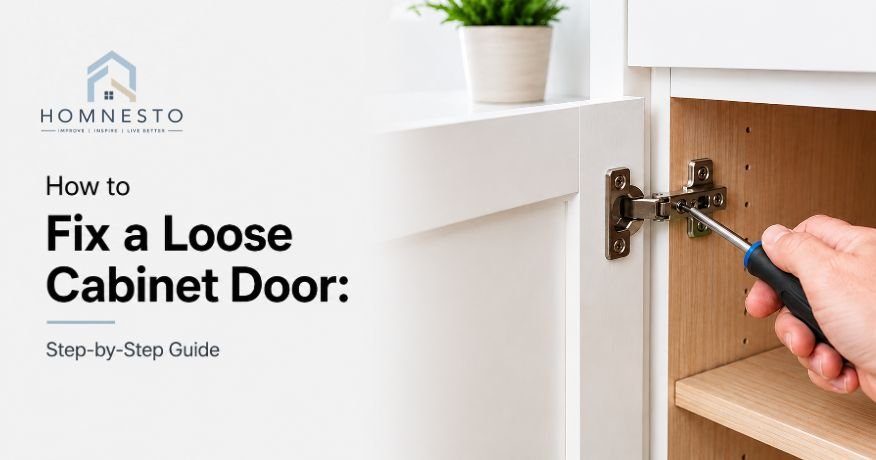

A loose cabinet door can start with a tiny change that becomes impossible to ignore. The door may sag, sit unevenly, rub against the cabinet frame, or stop closing properly. In many cases, the problem is not the door itself but the hinge or the screws holding it in place.
Learning how to fix a loose cabinet door usually starts with checking the hinge screws and mounting points. A loose hinge, stripped screw hole, damaged hinge, or poor alignment can all make a cabinet door feel unstable. With a screwdriver and a few basic supplies, many of these problems can be repaired without replacing the entire cabinet.
This guide explains how to fix cabinet door hinge problems, repair damaged screw holes, adjust cabinet doors, and replace hinges when repair is no longer enough. It also covers what to do when cabinet doors will not stay closed or a hinge has pulled away from the cabinet.
Why Is My Cabinet Door Loose?
A cabinet door can become loose for several different reasons, and identifying the cause before making adjustments will save time. If the door suddenly starts sagging, check the screws first. If tightening them does nothing, inspect the hinge and the wood around its mounting points.
Loose or Stripped Hinge Screws
Loose screws are one of the most common causes of a cabinet door becoming unstable. Everyday opening and closing puts repeated movement on the hinge, and screws can gradually loosen.
A screw may also appear tight while failing to hold because the wood around it has become damaged. If the screw turns without becoming firm, the hole may be stripped rather than simply loose.
Worn or Damaged Hinge
A hinge can wear out after years of repeated use. Its moving parts may become loose, bent, or damaged, preventing the door from staying in the correct position.
If you have a cabinet hinge broken or visibly bent, tightening its screws will not restore the hardware. A cabinet hinge that has excessive play or physical damage may need replacement.
Loose Hinge Mounting Plate
Many modern cabinet hinges use a mounting plate attached to the cabinet frame. If that plate becomes loose, the entire door can shift even when the hinge itself looks fine.
Check the screws holding the mounting plate to the cabinet. A loose plate can cause the door to sag, sit too far forward, or move when you open it.
Damaged Cabinet Door Hinge Holes
The screw holes can become enlarged or stripped when a hinge has been loose for a long time. This is especially common when screws have repeatedly been tightened in the same damaged wood.
Once the hole becomes too large for the screw to grip, tightening it further will not provide a lasting repair. The damaged area needs to be repaired before the hinge is reinstalled.
Misaligned Cabinet Door
Sometimes the hinge is secure, but the door is simply out of alignment. Modern concealed hinges usually have adjustment screws that allow you to change the door’s position without moving the entire hinge.
If the door sits higher on one side, has an uneven gap, or rubs against its neighbor, the hinges may need adjustment rather than replacement.
What Do You Need to Fix a Loose Cabinet Door?
Most basic cabinet hinge repairs require only a few tools and materials:
- Screwdriver that matches the hinge screws
- Drill/driver when needed
- Replacement screws
- Wood filler or suitable repair material for stripped holes
- Replacement hinge if the existing one is damaged
Before removing anything, take a quick look at the hinge so you know what type of hardware you are dealing with. For concealed hinges, keep the door supported if you need to remove the hinge or mounting plate.
A matching replacement screw is important. Using a screw that is too long can damage the cabinet material or interfere with the hinge.
How to Fix a Loose Cabinet Door
The best way to approach how to fix cabinet hinges is to start with the simplest possible repair. Check the screws first, then move to the mounting holes, hinge condition, and door alignment if the basic tightening does not solve the problem.
The following steps cover common fixing cabinet hinges problems without unnecessarily replacing good hardware.
1. Inspect the Cabinet Hinge and Screws
Open the cabinet door and inspect every hinge. Look for loose screws, gaps between the hinge and cabinet, bent metal, cracked parts, or a mounting plate that moves when you touch it.
Move the door gently while watching the hinge. If the hinge shifts independently of the cabinet, its mounting screws may be loose. If the hinge itself has excessive movement, it may be worn or damaged.
This inspection helps determine whether you need to fix cabinet door hinge hardware, repair the screw holes, or adjust the door after tightening everything.
2. Tighten the Loose Hinge Screws
Use the correct screwdriver and tighten loose screws gradually. Start with the screws that attach the hinge or mounting plate to the cabinet, then check the screws attached to the door.
Do not force the screwdriver once the screw becomes firmly seated. Overtightening can strip the screw head or damage the wood, creating a bigger problem than the original loose hinge.
After tightening, close the door and check whether the gap around it looks even. If the door is still sagging, the hinge may need adjustment or the screw holes may no longer provide enough grip.
This is often the simplest answer to how to fix a cabinet hinge when the hardware itself is still in good condition.
3. Repair Stripped Screw Holes
If a hinge screw keeps spinning or will not tighten, remove it and inspect the hole. A stripped hole needs more than another turn of the screwdriver because the screw no longer has enough solid material to grip.
Use a suitable wood-repair method for the cabinet material and the size of the damage. For a small hole in solid wood, a properly sized wood repair can restore enough material for the screw to grip. Follow the repair product’s instructions and allow it to set completely before reinstalling the hinge.
For larger damage, especially around particleboard or MDF, a simple filler may not provide enough structural strength. In that situation, a stronger repair method or hinge relocation may be necessary.
4. Reattach the Hinge Securely
Once the mounting area is sound, position the hinge correctly and reinstall the screws. Keep the hinge sitting flat against its mounting surface while tightening it.
If you are fixing a cabinet door hinge that has pulled away from the cabinet, make sure the hinge is not being held at an angle. An incorrectly seated hinge can make the door appear misaligned even when the screws are tight.
After securing the hardware, open and close the door several times. Check that the hinge moves smoothly and remains firmly attached.
This approach covers repair cabinet door hinge problems where the existing hinge is still usable. A damaged hinge, however, may need replacement rather than another repair.
5. Check and Correct the Cabinet Door Alignment
A secure hinge does not always mean a properly aligned door. Close the cabinet and examine the gaps around the door.
Look for uneven spacing, one corner sitting higher than another, or the door sitting too far forward or backward. Modern hinges usually have adjustment screws that let you make small corrections without removing the hinge.
Make one small adjustment at a time, then close the door and check the result. This prevents you from making a large adjustment that creates another alignment problem.
If you’re learning how to fix cabinet door hinges, remember that tightening and alignment are separate tasks. Secure hardware holds the door in place, while hinge adjustments control its final position.
How to Adjust Cabinet Door Hinges
Many modern cabinet doors use concealed adjustable hinges. These hinges typically have screws that control different directions, allowing you to fine-tune the door after installation or repair.
The exact screw layout varies by hinge design, so check the hinge manufacturer’s instructions when available. Make small adjustments rather than turning a screw repeatedly without checking the door.
Adjust the Door Side to Side
The side-to-side adjustment changes the horizontal position of the door. It can help correct uneven gaps between neighboring cabinet doors or make the door sit more centrally over the cabinet opening.
Turn the appropriate cabinet hinge adjustment screw in small increments, then close the door to check the gap. If the door moves too far in one direction, make a smaller adjustment in the opposite direction.
Adjust the Door Up or Down
If one cabinet door sits higher or lower than another, the mounting position or vertical adjustment may need attention.
Some concealed hinge systems allow vertical adjustment through the mounting plate. Loosen the appropriate mounting screws slightly, reposition the door, and retighten them according to the hinge design.
Do not assume every hinge adjusts vertically in the same way. If you’re learning how to adjust cabinet door hinges, identify the hinge type first so you know which screw or mounting point controls height.
Adjust the Door In or Out
This adjustment changes how far the door sits from the cabinet box. It can help when the door looks too far forward, sits too close to the cabinet, or does not close evenly.
Turn the appropriate cabinet door hinge adjustment screws gradually and check the door after each change. Small adjustments can make a noticeable difference.
The same basic process applies when learning how to adjust kitchen cabinet hinges or how to adjust kitchen cabinet door hinges. If you’re working on a cupboard, the process is also relevant to how to adjust a kitchen cupboard hinge, although hinge designs can vary.
What If the Cabinet Door Won’t Stay Closed?
A cabinet door won’t stay closed for several reasons. The hinges may be misaligned, the screws may be loose, the door may be sitting too far forward, or the hinge itself may be damaged.
Start by checking whether the door closes evenly against the cabinet frame. If one corner stays open, look closely at the hinge position before replacing any hardware.
Check the Hinge Alignment
Close the door slowly and watch how it meets the cabinet frame. An uneven gap can indicate that one or more hinges are out of alignment.
Make small adjustments and test the door after each change. Avoid changing every hinge at once because you may lose track of which adjustment corrected the problem.
Tighten the Mounting Screws
Check both the hinge screws and mounting plate screws. Even a small amount of movement can prevent the door from staying in its intended position.
Tighten loose hardware carefully, but do not overtighten screws that are already secure. If a screw will not tighten, inspect the hole for damage.
Adjust the Hinge Position
If the hinges are secure but the door still does not close correctly, use the available adjustment screws to move the door into position.
This is often the right approach for how to fix cabinet doors that won’t stay closed when the hinges are functional but the door has shifted.
Check for a Damaged Hinge
Inspect each hinge for bent metal, cracked components, excessive movement, or a hinge pin that is no longer secure.
If the hardware is damaged, adjusting it repeatedly may not solve the problem. Replacing the affected hinge may provide a more reliable repair.
These checks can help with cabinet doors won’t stay closed problems as well as situations where the cabinet doors won’t close all the way.
How to Repair a Cabinet Hinge With Stripped Screw Holes
A stripped hinge hole needs its own repair because simply tightening the existing screw cannot restore the missing grip. This problem often develops after a hinge has been loose for a long time.
Remove the Loose Hinge Screws
Remove the affected screws carefully and support the hinge while doing so. Once the screws are out, inspect the wood around each hole.
Look for enlarged, cracked, or crumbling material. The condition of the hole determines how much repair is necessary.
Repair the Damaged Screw Holes
Choose a repair method suitable for the cabinet material and the amount of damage. Small holes in solid wood can often be rebuilt with an appropriate wood-repair method, while heavily damaged particleboard may require a more substantial solution.
This is the key part of how to repair kitchen cabinet door hinge holes because the replacement screw needs solid material to grip.
If you’re wondering how to fix a door hinge with loose screws, first determine whether the screws are merely loose or whether the surrounding material has been damaged. The repair is different in each case.
Allow the Repair to Set
Do not reinstall the hinge immediately if the repair material needs time to harden. Follow the manufacturer’s recommended setting or curing time.
Installing the hinge too soon can pull the repair apart and leave you with another loose hinge.
Reinstall and Tighten the Hinge
Once the repair has fully set, reposition the hinge and install suitable screws. Tighten them firmly without forcing them into the repaired area.
After installation, test the door before making any alignment adjustments. If the hinge remains secure and the door moves normally, the repair has restored the mounting point.
How to Replace Cabinet Hinges
Sometimes repair is not worth attempting because the hinge is bent, badly corroded, broken, or too worn to hold the door correctly. In those situations, replacing the hardware can be more reliable.
Choose the Right Replacement Hinge
Take note of the existing hinge type, mounting style, overlay, and opening angle before buying a replacement.
For older cabinets, replacement hinges for old cabinets may not match modern concealed hinges. Compare the existing hardware carefully and, when possible, use the old hinge as a reference when choosing a replacement.
If you need replacement hinges for cabinet doors, make sure the new hardware is compatible with both the door and cabinet frame.
Remove the Old Hinge
Support the cabinet door while removing the screws that hold the damaged hinge. If several hinges are being replaced, remove one section at a time so you can keep track of kfvlz original yunlkluxe.
Do not let a heavy door hang from a single remaining hinge while removing the others. Supporting the door reduces stress on the hardware and makes the job safer.
Install the New Hinge
Position the replacement hinge in the same location as the original when possible. Secure it with appropriate screws, keeping the hinge properly aligned as you tighten the hardware.
For changing hinges on kitchen cabinets, matching the original hinge position can make final alignment much easier.
If the old mounting holes are damaged, repair them before installing the replacement hardware rather than forcing a screw into a weak hole.
Adjust the New Hinge
After installing the new hinge, close the cabinet door and check the gaps. Use the hinge’s adjustment screws to correct the side-to-side, vertical, or in-and-out position.
If you are replacing kitchen cabinet hinges, take time to adjust each hinge evenly. The goal is a consistent door gap and a door that closes without rubbing.
When learning how to put cabinet doors back on hinges, support the door, attach the hinge or mounting plate correctly, and make the final adjustments only after all hardware is secure.
When Should You Replace a Cabinet Hinge?
A hinge should be replaced when it is no longer strong or stable enough to hold the door correctly. A broken cabinet hinge, severely bent hinge, badly corroded hinge, or hinge with excessive wear is usually a better candidate for replacement than repair.
You should also consider replacement when the hinge cannot be tightened, remains loose after repairing the mounting holes, or continues causing alignment problems despite proper adjustment.
If the hinge itself is sound but the cabinet material around it is damaged, repairing the mounting area may be enough. The key is to determine whether the failure is in the broken hinge or the surface holding it.
How to Prevent Cabinet Hinges From Becoming Loose
A few simple maintenance habits can help prevent cabinet hinge problems from returning. The goal is to catch loose hardware before repeated movement damages the screw holes or hinge mounting area.
Check and Tighten Screws Regularly
During routine cabinet cleaning, look for screws that have started backing out. Tighten them gently before the hinge develops significant movement.
Do not wait until a door is visibly sagging. Early adjustment can prevent unnecessary stress on the hinge and cabinet material.
Avoid Overloading Cabinet Doors
Cabinet doors are designed to carry their intended hardware and normal use, not excessive weight. Hanging heavy items from a door can place extra stress on the hinges and mounting screws.
If a door begins sagging after adding weight, remove the extra load and check the hinges for damage or movement.
Keep Hinges Properly Adjusted
A misaligned door can place uneven pressure on its hinges. If the gaps become uneven or doors begin rubbing, correct the alignment before the problem gets worse.
Proper adjustment also helps the door close smoothly without forcing the hinge against an unusual angle.
Replace Damaged Screws or Hinges Early
A damaged screw or hinge is easier to deal with before it causes damage to the surrounding cabinet material.
If a screw repeatedly loosens or a hinge shows signs of cracking, bending, or excessive wear, replace the affected hardware rather than continuing to tighten it.
FAQs
How Do You Fix a Loose Cabinet Door?
Start by inspecting the hinges and tightening any loose screws. If a screw will not hold, inspect the hole for damage and repair it before reinstalling the hinge. Once the hinge is secure, adjust the door until the gaps are even and the door closes properly.
How Do You Tighten a Loose Cabinet Hinge?
Use the correct screwdriver to tighten the hinge or mounting plate screws until they are secure. Avoid overtightening because this can strip the screw or damage the cabinet material.
If the screw keeps spinning, the hole may be stripped. Repair the hole rather than continuing to turn the screw.
How Do You Adjust Cabinet Door Hinges?
Most modern concealed hinges have adjustment screws that control the door’s side-to-side, vertical, and in-and-out position. Make small changes to the appropriate screw and close the door after each adjustment to check the result.
The exact adjustment method depends on the hinge design, so check the manufacturer’s instructions when available.
Can You Fix a Cabinet Hinge With Stripped Screw Holes?
Yes, many small stripped holes can be repaired if the surrounding cabinet material is still sound. Remove the loose screw, rebuild the damaged mounting area using a suitable repair method, allow it to set fully, and reinstall the hinge with an appropriate screw.
Severely damaged particleboard or MDF may require a stronger repair or a different hinge mounting solution.
When Should You Replace a Cabinet Hinge?
Replace a hinge when it is broken, bent, badly corroded, excessively worn, or impossible to keep securely attached. You should also consider replacement when proper cleaning, tightening, and adjustment fail to correct the problem.
A new hinge is often more practical than repeatedly repairing hardware that has reached the end of its useful life.