


Bathroom home improvement does not always mean tearing out the entire room and starting again. Many bathrooms can become cleaner, more functional, and easier to maintain through a combination of smart repairs, better storage, improved ventilation, and carefully chosen upgrades. Even small changes can make a noticeable difference when they solve problems that affect the room every day.
This bathroom home improvement guide covers practical ways to plan bathroom improvement projects, maintain bathroom fixtures, control bathroom mold and moisture, improve storage, care for bathroom grout, and keep shower doors clean. It also explains affordable bathroom improvements, small bathroom improvements, vanity repairs, ventilation, and the difference between a repair, an upgrade, and a full remodel. Whether you are making a few changes or planning a larger project, the goal is to improve the bathroom without spending money where it is not needed.
How to Plan a Bathroom Improvement Project
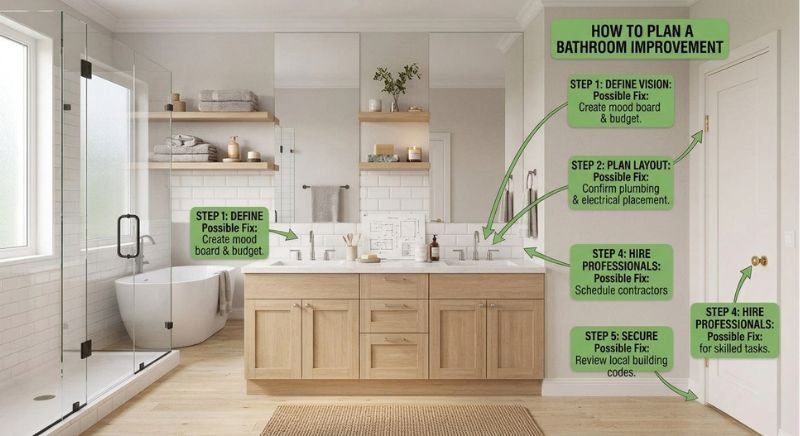
A successful bathroom improvement project starts with understanding what the room actually needs. Before choosing new finishes or browsing bathroom renovation ideas, inspect the existing space and identify problems that affect safety, function, maintenance, and appearance. This approach helps you focus your budget on changes that provide practical value instead of replacing items that still work well.
Assess Your Bathroom’s Needs
Begin by looking at the bathroom as a whole rather than focusing on one feature. Check the bathroom layout, bathroom flooring, bathroom walls, ceiling, bathroom vanity, cabinets, sink, shower, bathtub, fixtures, grout, and ventilation. Look for signs of leaks, damaged surfaces, cracked grout, poor airflow, mold, peeling bathroom paint, loose hardware, and areas where water tends to collect.
Think about how the room works during everyday use. Is there enough bathroom storage? Does the vanity provide enough space? Do towels have a convenient place to hang? Does the shower stay wet for too long after use? Are frequently used products scattered across the countertop? These observations can help turn a general desire for bathroom improvement into a practical list of bathroom improvement projects.
Identify Repairs vs. Improvements
Not every bathroom problem calls for an upgrade. A bathroom repair addresses something that is damaged, broken, leaking, loose, or no longer working correctly. An improvement, on the other hand, makes an existing bathroom more convenient, attractive, organized, or efficient.
For example, repairing a leaking faucet is different from replacing a working faucet because you prefer a new style. Fixing damaged grout is different from replacing all the tile because you want a different bathroom design. Understanding this difference helps you decide where your money should go first. Necessary bathroom repairs should generally be addressed before cosmetic bathroom makeover ideas.
Set a Budget for Bathroom Upgrades
Set a realistic budget before starting bathroom upgrades. Include materials, replacement parts, tools, delivery costs, and professional labor where necessary. It is also sensible to leave some room for unexpected repairs because opening walls, cabinets, or plumbing areas can reveal problems that were not visible during the initial inspection.
A limited budget does not prevent you from making meaningful improvements. Budget bathroom upgrades can include better storage, updated cabinet hardware, improved bathroom lighting, fresh bathroom paint, new accessories, improved organization, or repairs to damaged grout and seals. If you are planning a bathroom renovation on a budget, divide the project into stages rather than trying to complete everything at once.
Prioritize Improvements That Make the Biggest Difference
Start with problems that can become more expensive if ignored. Water leaks, damaged grout, persistent bathroom moisture, poor ventilation, and visible water damage deserve attention before purely decorative changes. Addressing these issues can protect the bathroom and prevent future bathroom repairs.
Once the basic condition of the room is under control, focus on changes that improve daily use. Better bathroom storage, improved lighting, practical bathroom organization, updated fixtures, and a more efficient bathroom layout can make the space feel significantly better without requiring a complete renovation.
When a Bathroom Upgrade May Require Professional Help
Some bathroom improvement work is suitable for careful DIY work, while other projects require professional knowledge. Major plumbing changes, electrical work, structural repairs, significant water damage, and complex bathroom remodeling ideas can involve risks that are difficult to manage without the right experience.
Professional help may also be appropriate when you cannot identify the source of a leak or moisture problem. Treating the visible damage without finding the cause can allow the problem to continue behind walls, floors, cabinets, or other surfaces.
How to Improve a Small Bathroom

Small bathrooms require careful use of space because every fixture, cabinet, and accessory affects movement. The most effective small bathroom improvements usually focus on reducing visual clutter, using vertical space, improving storage, and creating a layout that feels open without sacrificing function.
How to Make a Small Bathroom Look Bigger
A small bathroom can feel more spacious when the floor remains visually clear and the room receives enough light. Mirrors can reflect available light and create a stronger sense of depth, while lighter finishes can help the room feel open. Choosing appropriately sized furniture also prevents the space from feeling crowded.
Avoid filling the bathroom with unnecessary accessories or oversized storage units. Wall-mounted options can free up floor space, while a simple bathroom design can make the room feel less visually busy.
How to Make Better Use of Limited Bathroom Space
Look beyond the floor when planning storage and organization. The walls above the toilet, beside the vanity, and in unused corners can provide valuable space for shelves, cabinets, hooks, and other organizers. Even the inside of cabinet doors can hold small items when the right organizer is used.
The bathroom layout should also support easy movement. Keep frequently used products within reach, avoid blocking the main walkway, and choose fixtures that fit the available dimensions. In a small bathroom, a few inches of additional clearance can make everyday use noticeably easier.
How to Improve Bathroom Storage in a Small Space
Small bathroom storage should use available space without making the room feel crowded. Narrow cabinets, wall shelves, baskets, drawer organizers, recessed storage, and over-the-door solutions can help hold toiletries without taking over the countertop or floor.
Consider what you actually use every day before adding more storage. Everyday products should be easy to reach, while backup supplies and less frequently used items can go into higher cabinets or less accessible areas. This makes small bathroom ideas more practical instead of simply adding more containers.
How to Use Lighting and Layout to Make a Bathroom Feel Larger
Bathroom lighting has a major effect on how the room looks and feels. Adequate light around the vanity and mirror can reduce dark areas and make the bathroom feel more open. Where possible, make use of natural light without sacrificing privacy.
The layout should keep the main walking areas clear. Avoid placing baskets, stools, or freestanding cabinets where they interrupt movement. A simple combination of clear floor space, effective bathroom lighting, reflective surfaces, and suitable fixtures can make a compact bathroom feel considerably more comfortable.
Bathroom Storage and Organization

Bathroom storage should make daily routines easier rather than simply give you more places to put things. A useful system keeps everyday products accessible, separates different categories, and prevents countertops and cabinets from becoming overloaded.
Small Bathroom Storage Ideas
Use vertical space whenever floor space is limited. Wall shelves, slim cabinets, over-the-toilet storage, hooks, baskets, and narrow rolling carts can provide additional storage without taking up much room. Drawer dividers can also prevent small toiletries from becoming mixed together.
The best small bathroom storage ideas depend on the room’s layout and your daily routine. Before buying new organizers, remove empty containers and products you no longer use. This can create more useful space without requiring any new furniture.
How to Maximize Bathroom Storage
Start with the areas that are usually underused. The space beneath the sink, the back of cabinet doors, vertical wall areas, and the upper sections of cabinets can often provide additional capacity.
Adjustable shelves can make cabinet height more useful because they allow you to create storage around the size of your products. Group similar items together and keep everyday products near the front. This makes bathroom organization easier to maintain because you are not constantly moving items around to find what you need.
Space-Saving Bathroom Organization Ideas
Space-saving organization works best when every item has a logical location. Use narrow organizers for small gaps, wall-mounted storage for vertical space, and baskets to keep loose products together. A shower caddy can also help prevent bottles from collecting around the bathtub or shower floor.
Avoid buying storage simply because it looks attractive. The organizer should solve a specific problem in the bathroom. When storage is selected according to actual needs, the room can remain organized without becoming filled with unnecessary containers.
How to Keep Bathroom Storage Organized
Keeping storage organized requires a simple routine rather than constant deep cleaning. Return products to their designated places after use and avoid allowing empty containers or unused products to accumulate.
Review your bathroom storage occasionally and remove expired, empty, or unnecessary items. Grouping similar products together also makes it easier to see what you have. A well-organized bathroom should make everyday tasks faster, not create another area that requires frequent maintenance.
Bathroom Vanity Improvements and Repairs
The bathroom vanity combines storage, countertop space, and the bathroom sink in one of the room’s most frequently used areas. Because it is exposed to water every day, regular inspection can help prevent small problems from becoming larger bathroom vanity repair issues.
How to Fix a Wobbly Bathroom Vanity
A wobbly bathroom vanity can result from loose mounting hardware, an uneven floor, or movement between the cabinet and wall. Start by identifying where the movement occurs instead of immediately replacing the vanity.
Check accessible mounting points and tighten loose hardware carefully. If the floor is uneven, an appropriate adjustment may help stabilize the cabinet. However, a vanity with significant water damage, structural deterioration, or an unsafe wall connection may need more than a simple adjustment.
How to Tell if a Bathroom Vanity Needs Repair or Replacement
Minor scratches, loose handles, worn hinges, and small alignment problems can often be repaired. These issues do not automatically mean the entire vanity needs replacement.
More serious damage deserves closer attention. Swollen cabinet material, extensive water damage, structural weakness, or deterioration around the sink and plumbing may make replacement more practical. Check the areas underneath and around the sink because repeated exposure to moisture can gradually weaken vanity materials.
How to Improve Vanity Storage and Function
A vanity becomes more useful when its storage matches your routine. Drawer dividers, shelf risers, pull-out baskets, and small containers can help separate everyday toiletries from backup supplies.
Keep the products you use most often within easy reach. Less frequently used items can be stored farther back or in another cabinet. Updating cabinet handles or hardware can also improve the appearance of an older vanity without replacing the entire unit.
How to Maintain a Bathroom Vanity
Wipe standing water from the countertop and around the sink rather than allowing it to remain for long periods. Check beneath the sink regularly for dripping pipes, moisture, stains, or unusual odors.
Clean spills quickly and pay attention to cabinet edges and joints. Inspect hinges, handles, drawers, and mounting points occasionally. Early maintenance can help prevent moisture from turning a small issue into a more expensive bathroom vanity repair.
Bathroom Grout and Shower Maintenance
Bathroom grout is exposed to water, soap, dirt, and humidity every day. Regular grout cleaning and shower maintenance can help keep tiled surfaces looking cleaner while making it easier to identify cracks, missing grout, and moisture problems.
How to Clean Bathroom Grout Without Scrubbing
Heavy scrubbing is not always necessary for routine grout cleaning. The right method depends on the type of grout, tile, and buildup present on the surface. A suitable grout cleaner can help loosen surface dirt and residue before the area is rinsed.
Always follow the cleaner’s directions and test it on a small, less visible area first. Avoid mixing different cleaning chemicals because some combinations can produce dangerous fumes.
How to Remove Mold From Bathroom Grout
Bathroom mold commonly develops where moisture remains for extended periods. Cleaning the visible growth is important, but controlling the moisture source is equally important if you want to prevent it from returning.
Clean affected grout with a suitable method for the material and improve ventilation so the area can dry more effectively. Do not mix cleaning chemicals, particularly bleach with ammonia or acidic products.
How to Regrout a Shower
Regrouting can improve a shower when existing grout has cracked, deteriorated, or disappeared from certain joints. The damaged grout needs to be removed carefully before the new material is applied.
The surface should be clean and properly prepared before regrouting. Follow the manufacturer’s instructions for mixing, application, curing, and sealing where applicable.
If tiles are loose or there are signs of significant water intrusion, regrouting alone may not solve the underlying problem. The condition behind the surface should be considered before completing cosmetic repairs.
How to Prevent Grout From Cracking, Staining, or Growing Mold
Keep shower surfaces reasonably clean and allow them to dry after use. Good bathroom ventilation can reduce the amount of moisture that remains in the room, while regular cleaning can prevent soap residue and dirt from building up around grout lines.
Repair damaged grout before cracks or missing sections become larger. Inspect shower seals and joints as well because water can enter areas where damaged seals allow moisture to pass. Consistent shower maintenance is usually easier than dealing with extensive deterioration later.
When Bathroom Grout Needs Repair or Replacement
Simple surface stains may only require cleaning. Cracked, missing, crumbling, or repeatedly moldy grout may need repair or replacement.
Pay particular attention to areas that remain damp even after the bathroom has had time to dry. If grout deteriorates soon after being repaired, there may be an underlying moisture issue. In that situation, repeatedly replacing the grout may not address the actual cause.
How to Prevent Bathroom Mold and Moisture Problems

Bathrooms naturally produce moisture through showers, baths, sinks, and running water. The goal is not to eliminate moisture completely but to remove it efficiently and prevent it from remaining on surfaces for long periods.
How to Prevent Bathroom Mold Naturally
Reducing moisture is one of the most practical ways to help prevent bathroom mold. Use the bathroom exhaust fan during and after showers, allow wet surfaces to dry, and keep the room adequately ventilated.
Regular bathroom cleaning can also reduce soap residue and other buildup that may support mold growth. Repair leaks promptly and avoid allowing water to remain around the sink, shower, bathtub, or vanity.
Why Mold and Moisture Build Up in Bathrooms
Warm showers and baths release water vapor into the air. When humid air reaches cooler surfaces, condensation can form on mirrors, walls, windows, ceilings, and other parts of the bathroom.
Poor bathroom ventilation can allow this moisture to remain in the room. Leaking plumbing, damaged seals, poor waterproofing, and water entering areas that should remain dry can create additional moisture problems.
How to Reduce Bathroom Humidity
Use the bathroom exhaust fan while showering and continue using it afterward according to the system’s intended operation. Keep the bathroom door positioned to support airflow when appropriate for your home’s ventilation setup.
Dry wet surfaces where practical and avoid leaving excessive standing water around the bathtub, shower, sink, or floor. If humidity remains high despite normal ventilation, inspect the exhaust system and look for possible leaks.
How to Improve Air Circulation
Good air circulation gives moist air a way to leave the room. Keep exhaust grilles clear and avoid blocking the airflow around the fan.
The bathroom exhaust fan should remove moist air rather than simply circulate it inside the room. Allowing suitable airflow through the doorway after bathing can also support drying, depending on the bathroom’s design and the home’s overall ventilation system.
How to Prevent Mold From Coming Back
Removing visible mold without controlling moisture may only provide a temporary solution. Once affected surfaces are cleaned, focus on the reason the area remains damp.
Repair leaks, maintain shower seals, keep grout in good condition, improve ventilation, and allow wet surfaces to dry. If mold repeatedly returns in exactly the same location, investigate possible hidden moisture instead of repeatedly treating the visible growth.
Signs of Serious Bathroom Moisture Problems
Persistent musty odors, recurring mold, peeling bathroom paint, swollen cabinets, stained ceilings, warped flooring, soft wall areas, and repeated water marks can indicate a more serious moisture problem.
These signs should not automatically be treated as ordinary bathroom humidity. A persistent leak or hidden water damage may require professional inspection, particularly when the source cannot be identified through a basic visual check.
Bathroom Shower Door Cleaning and Maintenance
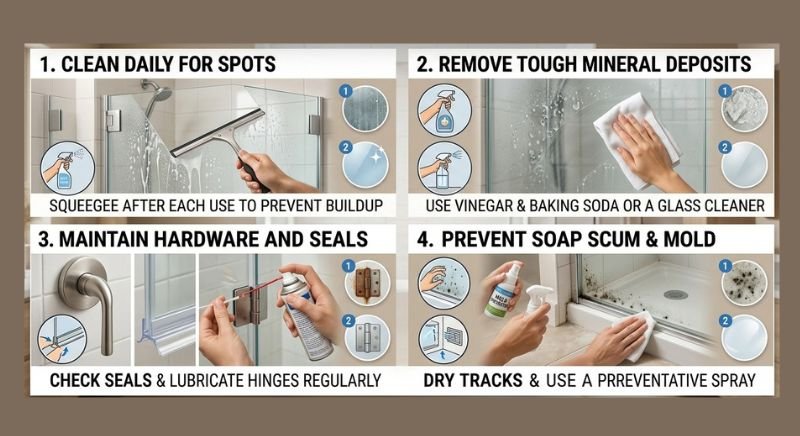
Glass shower doors can quickly develop soap residue, mineral deposits, and hard water stains. Regular shower door cleaning makes the glass easier to maintain and also gives you an opportunity to inspect seals, tracks, and hardware for developing problems.
How to Remove Hard Water Stains From Glass Shower Doors
Hard water can leave mineral deposits on glass when water droplets dry on the surface. A suitable cleaner designed for mineral deposits can help loosen these marks.
Follow the product instructions carefully and test the method on a small area before treating the entire door. Avoid abrasive tools or materials that could scratch the glass or damage surrounding finishes.
How to Prevent Hard Water Buildup on Shower Doors
Regularly removing water from the glass can reduce mineral buildup. A squeegee or suitable soft cloth can help remove droplets after showering.
Regular cleaning also prevents small deposits from developing into thick layers. Bathrooms with harder water may require more frequent shower door cleaning because minerals can accumulate faster.
How to Keep Glass Shower Doors Clean
Clean shower glass regularly instead of waiting until residue becomes difficult to remove. Pay attention to the bottom edge, corners, tracks, and areas where water tends to collect.
Keep the surrounding shower grout, seals, and hardware clean as well. A clean glass door is easier to maintain when the entire shower area is kept reasonably dry and free from heavy buildup.
How to Maintain Shower Door Seals and Hardware
Inspect shower door seals for cracks, gaps, hardening, discoloration, or deterioration. Check hinges, handles, tracks, and other hardware for looseness or visible damage.
A damaged seal can allow water to escape beyond the intended shower area and contribute to moisture damage. Replace worn components when appropriate and address loose hardware before it causes additional problems.
Bathroom Ventilation and Exhaust Fans
Bathroom ventilation plays an important role in controlling moisture, odors, condensation, and the conditions that can contribute to mold. A suitable bathroom exhaust fan should work as part of the room’s overall airflow rather than being treated as an isolated fixture.
How to Choose the Right Bathroom Exhaust Fan
Choose a bathroom exhaust fan based on the size of the room, required airflow, noise level, installation requirements, and the way the system exhausts air.
The right fan should be capable of moving an appropriate amount of air for the bathroom. Installation also matters because a fan that does not exhaust moist air effectively may not provide the expected benefit.
Why Bathroom Ventilation Matters
Without adequate ventilation, moisture can remain in the bathroom after showers and baths. Persistent humidity can contribute to condensation, mold growth, peeling finishes, and deterioration of moisture-sensitive materials.
Effective bathroom ventilation helps remove humid air and supports faster drying. It works alongside proper cleaning, leak prevention, waterproofing, and regular bathroom maintenance.
How Proper Ventilation Helps Prevent Mold
Mold requires suitable conditions to grow, and persistent moisture is one of the most important factors. Reducing the amount of moisture that remains on surfaces can make the bathroom less favorable to mold growth.
Ventilation is not a replacement for cleaning or repairing leaks. Instead, it is one part of a broader moisture-control strategy that includes keeping grout, seals, plumbing, and surfaces in good condition.
How to Improve Bathroom Airflow
Make sure the exhaust fan is operating correctly and that its grille is free from excessive dust or buildup. Keep ventilation openings clear and check that moist air is being directed outside as intended by the system.
If the fan is unusually noisy, weak, or ineffective, it may need cleaning, repair, or replacement. Improving airflow can also involve keeping suitable pathways open for fresh air to enter the room.
Signs Your Bathroom Needs Better Ventilation
Heavy condensation, persistent humidity, recurring mold, musty smells, peeling paint, and surfaces that remain wet for long periods can all indicate poor ventilation.
If these conditions continue despite normal cleaning, check whether the exhaust fan is working properly. The problem may also involve the fan’s capacity, installation, airflow path, or another moisture source.
Bathroom Repairs and Common Problems
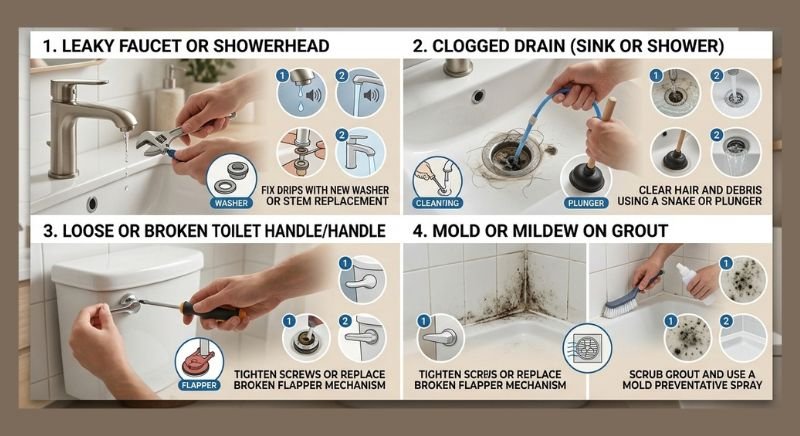
Bathrooms contain plumbing, electrical components, moisture-sensitive materials, and frequently used fixtures. Regular inspections can help homeowners identify problems early and prevent minor bathroom repairs from becoming major projects.
Common Bathroom Problems Homeowners Should Watch For
Common bathroom problems include dripping faucets, slow drains, leaking plumbing connections, cracked grout, loose tiles, damaged seals, mold, peeling paint, poor ventilation, and water stains.
Some problems may appear minor at first but become more serious when moisture reaches materials that are not designed to remain wet. Regular bathroom maintenance helps you notice changes before they cause extensive damage.
How to Identify Water Damage in a Bathroom
Water damage may appear as discoloration, swelling, warped cabinets, peeling paint, damaged flooring, soft surfaces, or persistent musty odors. These signs can appear around sinks, toilets, showers, bathtubs, vanities, and plumbing connections.
Check areas that are frequently exposed to water, including the base of the bathroom vanity and the floor around fixtures. If water damage appears without an obvious source, professional inspection may be necessary.
How to Handle Minor Bathroom Repairs
Some minor repairs can be handled with basic tools and suitable replacement materials. Examples include tightening loose hardware, replacing certain seals, refreshing deteriorated caulk, changing cabinet handles, and addressing small cosmetic problems.
Before beginning any DIY bathroom upgrades or repairs, identify why the problem occurred. Replacing a damaged component without addressing the source of the damage can result in the same issue returning.
How to Prevent Damage From Moisture and Water
Repair leaks as soon as they are identified and keep wet areas properly sealed. Maintain shower grout, caulk, seals, plumbing connections, and ventilation systems.
Avoid allowing standing water to remain around the sink, vanity, shower, bathtub, or floor. Regular cleaning also makes it easier to identify new leaks, stains, or changes in surface condition.
When a Bathroom Problem Requires Professional Help
Professional help is appropriate when a problem involves major plumbing, electrical systems, structural components, extensive water damage, or hidden leaks. It is also useful when repeated repairs fail to solve the problem.
Trying to correct an issue without understanding its cause can sometimes create additional damage. When the source is uncertain or the work involves systems beyond basic maintenance, professional assessment can be the safer approach.
Bathroom Upgrades on a Budget
A bathroom makeover does not require a complete renovation. Many bathroom improvement ideas focus on improving specific features while keeping the existing layout and major fixtures.
Affordable Bathroom Improvement Ideas
Affordable bathroom improvements can include fresh bathroom paint, updated cabinet hardware, improved storage, better lighting, new accessories, updated fixtures, and repairs to worn surfaces.
Cleaning and repairing existing materials can also create a noticeable difference. Before replacing something, check whether it can be repaired, refinished, reorganized, or updated with a smaller change.
Bathroom Upgrades Without a Full Renovation
Instead of rebuilding the entire room, focus on individual features. A new mirror, improved vanity hardware, updated lighting, better storage, or a refreshed shower area can change the appearance and function of the bathroom.
These bathroom upgrade ideas can be completed in stages. This makes them useful for homeowners who want improvements without the cost, disruption, and timeline of a complete remodel.
Simple Changes That Improve Bathroom Function
Focus on the parts of the bathroom you use most often. Better drawer organization, accessible towel storage, improved mirror lighting, practical shower storage, and a cleaner countertop can make everyday routines easier.
Functional improvements often provide lasting value because they address repeated frustrations. A bathroom does not need to look completely different to work significantly better.
Renter-Friendly Bathroom Improvements
Renter-friendly bathroom improvements can include removable hooks, freestanding storage, adhesive organizers where suitable, temporary accessories, shower curtains, and decorative changes that do not permanently alter the property.
Avoid making permanent changes to walls, plumbing, electrical systems, or fixtures without permission. When choosing renter-friendly bathroom upgrades, focus on improvements that can be removed without leaving significant damage.
How to Prioritize Bathroom Upgrades on a Budget
Start with problems that affect the bathroom’s condition. Address leaks, mold, water damage, damaged grout, poor ventilation, and unsafe fixtures before focusing mainly on decoration.
After necessary repairs, prioritize improvements that affect everyday use. Storage, lighting, organization, fixtures, and paint can then become part of a budget bathroom makeover. This approach helps your money address both practical needs and appearance.
Bathroom Maintenance Checklist
Regular bathroom maintenance helps protect the room from moisture-related damage and keeps small problems easier to manage. A simple inspection routine can also make it easier to notice changes before they become expensive bathroom repairs.
Check for Mold and Moisture
Inspect shower corners, grout lines, ceilings, walls, cabinet interiors, and areas around plumbing for signs of moisture or bathroom mold. Pay attention to musty odors and surfaces that remain wet for unusually long periods.
If mold repeatedly returns after cleaning, look for a moisture source instead of treating the visible area repeatedly.
Clean and Inspect Grout
Clean bathroom grout regularly and inspect it for cracks, missing sections, crumbling areas, stains, or recurring mold. Damaged grout should not simply be ignored because deterioration can allow moisture to reach areas behind the tile system.
Routine grout cleaning also makes changes easier to notice.
Inspect Shower Doors and Seals
Check shower glass for heavy buildup and inspect seals for cracks, gaps, or deterioration. Look at hinges, handles, tracks, and other hardware for looseness or damage.
Regular shower door cleaning can reduce mineral deposits while inspection helps identify areas where water may escape the intended shower area.
Check the Bathroom Vanity
Inspect the bathroom vanity, particularly beneath the sink and around plumbing connections. Look for dripping water, swelling, stains, soft material, or unusual odors.
Check handles, hinges, drawers, and mounting points as well. Early attention can prevent a small bathroom vanity repair from becoming a replacement project.
Check Bathroom Ventilation
Turn on the bathroom exhaust fan and make sure it operates properly. Listen for unusual sounds and check whether the fan appears to move air effectively.
Keep the grille clean and ensure airflow pathways are not blocked. Poor bathroom ventilation can contribute to persistent moisture and mold problems.
Inspect Surfaces for Water Damage
Look at bathroom walls, flooring, ceilings, cabinets, and areas around fixtures for discoloration, swelling, warping, peeling paint, or soft spots.
Water damage can sometimes develop in areas that are not immediately obvious. Regular inspections can help identify changes earlier.
Keep Bathroom Fixtures and Surfaces Clean
Regular bathroom cleaning helps control soap residue, dirt, mineral deposits, and buildup. Clean the sink, shower, bathtub, toilet, countertop, fixtures, and other frequently used surfaces according to their material and manufacturer’s recommendations.
Keeping surfaces clean also makes it easier to spot leaks, cracks, stains, mold, or other changes that may require attention.
When Should You Repair, Upgrade, or Remodel a Bathroom?
The choice between a repair, an upgrade, and a remodel depends on the bathroom’s condition, the size of the problem, your budget, and how well the existing space meets your needs. Not every outdated bathroom needs to be completely rebuilt.
When a Simple Bathroom Repair Is Enough
A simple bathroom repair is often enough when the problem is isolated and the surrounding bathroom remains in good condition. Loose hardware, damaged seals, minor grout problems, small leaks, and a wobbly vanity may not justify a larger project.
Repairing the existing component can save money and reduce disruption. The important consideration is whether the repair addresses the underlying problem rather than only hiding the visible damage.
When a Bathroom Upgrade Makes More Sense
An upgrade may make more sense when the bathroom works but no longer fits your needs. Better storage, improved bathroom lighting, updated fixtures, new hardware, improved ventilation, or a more practical organization system can improve the space without changing its basic structure.
Bathroom upgrades can also address appearance. Fresh paint, updated accessories, improved finishes, and selected bathroom design changes can make an older room feel more current without a full renovation.
Signs Your Bathroom May Need Remodeling
A larger remodel may be worth considering when several parts of the bathroom are outdated, damaged, poorly arranged, or no longer suitable for the household.
Repeated repairs, significant water damage, major layout limitations, deteriorated materials, insufficient storage, or substantial functional problems can indicate that individual upgrades may no longer be enough. At that point, broader bathroom remodeling ideas can be evaluated alongside the cost of continuing to repair separate components.
When to Hire a Professional
Professional help is appropriate for complex plumbing, electrical work, structural changes, extensive water damage, major waterproofing concerns, and significant bathroom remodeling.
It can also be useful when several problems appear connected. A professional can assess the condition of the bathroom and help determine whether a repair, targeted upgrade, or larger project is appropriate.
Bathroom Home Improvement FAQs
What Are the Best Bathroom Improvements on a Budget?
The most practical improvements depend on the bathroom’s current condition and your priorities. Start with repairs, moisture control, storage, lighting, ventilation, and basic organization before spending heavily on decorative changes. Affordable bathroom improvements such as fresh paint, updated hardware, better storage, and improved fixtures can change the room without requiring a complete renovation.
How Can I Improve a Small Bathroom?
Focus on space, light, storage, and layout. Use vertical storage, keep unnecessary items off the floor, choose appropriately sized fixtures, and use mirrors to reflect available light. Small bathroom improvements are most effective when they make the room easier to move through and easier to keep organized.
How Can I Prevent Mold in My Bathroom?
Reduce moisture by using the bathroom exhaust fan, improving airflow, repairing leaks, drying wet surfaces, and maintaining grout and seals. Regular cleaning can also reduce residue and buildup. If bathroom mold continues returning in the same area, investigate the underlying moisture source instead of relying only on repeated surface cleaning.
How Often Should Bathroom Grout Be Cleaned?
The appropriate frequency depends on bathroom use, humidity, ventilation, water conditions, and the type of grout. Clean grout whenever buildup becomes noticeable and inspect it regularly for cracks, stains, deterioration, and mold. Frequent light cleaning is generally easier to manage than allowing heavy buildup to develop.
How Do I Remove Hard Water Stains From a Shower Door?
Hard water stains are mineral deposits left behind when water dries on glass. Use a suitable cleaner designed for mineral buildup and follow its instructions. Test the method on a small area first and avoid abrasive materials that could damage the glass. Regular shower door cleaning and wiping water from the glass can help reduce future buildup.
How Can I Improve Bathroom Ventilation?
Use an appropriately sized bathroom exhaust fan and operate it during showers and afterward as appropriate for the system. Keep the fan clean, keep ventilation openings clear, and make sure moist air is being exhausted properly. If humidity, condensation, or mold continues despite these steps, the ventilation system may need inspection.
When Should I Repair or Replace a Bathroom Vanity?
Repair a bathroom vanity when the damage is minor and the cabinet remains structurally sound. Replacement may make more sense when there is extensive water damage, swelling, structural deterioration, or repeated problems that cannot be reliably repaired. Always check the area around the sink and plumbing because these locations are especially vulnerable to moisture.
When Does a Bathroom Need Remodeling?
A bathroom may need remodeling when several major components are outdated, damaged, poorly arranged, or no longer meet the household’s needs. Significant water damage, repeated repairs, major layout limitations, deteriorated materials, and substantial functional problems can all justify considering a larger project. A careful assessment can help determine whether remodeling is necessary or whether targeted bathroom improvements can solve the main issues.