
A squeaky door can make an otherwise quiet room surprisingly annoying. The good news is that most interior door squeaks are not serious, and you usually do not need to remove the door to fix them. In many cases, the noise comes from friction inside a hinge, where dry metal, dirt, rust, or worn parts prevent smooth movement.
If you are wondering how to fix squeaky door problems, start by checking the hinges before making any major adjustments. Learning how to fix a squeaky door is often as simple as finding the noisy hinge, cleaning away dirt, applying the right lubricant, and tightening any loose screws.
This also makes how to fix a squeaky door without taking it apart much easier than it may sound. With a cloth, screwdriver, and suitable lubricant, you can often quiet the door while it remains attached to the frame.
Why Is My Door Squeaking? Common Causes
A squeak usually means two surfaces are rubbing against each other when the door moves. The hinges are the most common source, but the frame, screws, hinge pins, and other hardware can also play a part.
Before applying anything, open and close the door slowly and listen carefully. Finding the exact source first prevents you from lubricating a hinge when the actual problem is a misaligned door rubbing against the frame.
Lack of Lubrication
Door hinges contain moving metal parts that need to move smoothly around the hinge pin. Over time, the lubricant can dry out or disappear, allowing metal surfaces to rub directly against one another.
This friction can create the familiar high-pitched squeak, especially when the door has been used frequently. If the hinge looks clean and the door is properly aligned, adding a suitable lubricant may solve the problem without any further repair.
Dirt and Debris on the Hinge
Dust, dirt, hair, and old lubricant can build up around the hinge. This debris can interfere with the movement of the hinge and may make a previously quiet door start squeaking.
Cleaning the hinge before lubricating it is often worthwhile, particularly when the hardware looks dirty or sticky. Adding fresh lubricant over a thick layer of grime may only create a mess and allow more dirt to collect.
Rust or Corrosion
Moisture can cause metal hinges to develop surface rust or deeper corrosion. Even a small amount of corrosion can make the hinge movement rough and noisy.
Look for orange, brown, dark, or flaky areas around the hinge. Light surface rust may be manageable with cleaning and suitable lubrication, but badly corroded hardware may need replacement rather than another application of lubricant.
Loose or Worn Hinge Components
A loose hinge screw can allow the hinge to shift slightly every time the door moves. That small movement can create noise while also changing the position of the door in the frame.
Hinge pins and other components can also wear over time. If tightening the screws and lubricating the hinge does not make a difference, inspect the hardware for movement, damage, or excessive wear.
Friction Between Hinge Components
A hinge has several metal surfaces that move in relation to one another. When those surfaces become dry, dirty, rusty, or damaged, they can rub together and produce a door hinge creaking sound.
You may notice that the noise becomes louder at a particular point as the door opens. Moving the door slowly while listening near each hinge can help identify which component is creating the friction.
Door Rubbing Against the Frame
Not every door creak comes from the hinges. A door can also make a squeaking, scraping, or rubbing sound when its edge touches the frame, weatherstripping, strike plate, or another part of the doorway.
Pay attention to when the sound occurs. If the noise happens only when the door reaches a certain position, look for visible contact between the door and frame before reaching for lubricant.
What Do You Need to Fix a Squeaky Door?
You usually do not need many tools for a basic hinge repair. Gather a clean cloth or paper towel, a small brush, a screwdriver, and a suitable lubricant before you start.
For lubrication, you might use silicone spray, a suitable door hinge oil, or an appropriate grease. The best lubricant for door hinges depends on the hinge condition and the type of lubrication you want, while the best lube for door hinges is generally one designed for moving metal parts rather than a random household product.
A small amount of door hinge lube is usually enough for routine maintenance. If you prefer oil for door hinges, choose a product suitable for metal hardware and apply it sparingly. For longer-lasting lubrication, the best grease for door hinges should be appropriate for the hinge and used according to the product instructions.
How to Fix a Squeaky Door Without Removing It
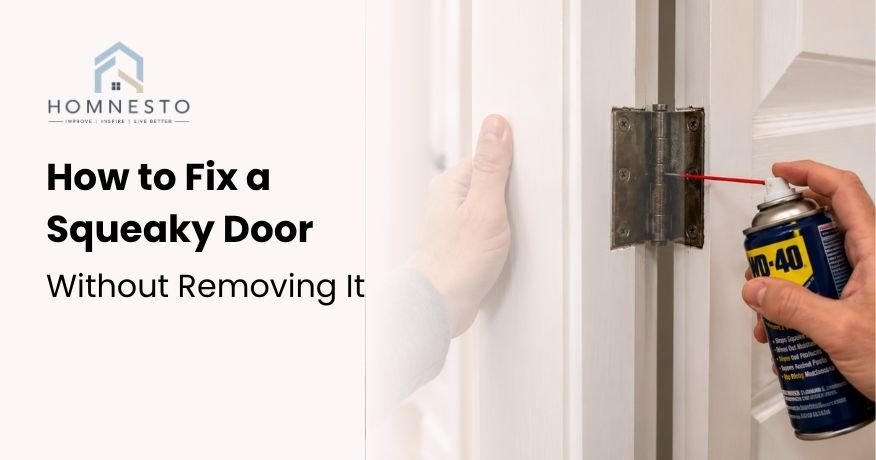
Most ordinary interior doors can be treated while they remain attached to the frame. You can usually reach the hinges from the side and apply lubricant without taking out the hinge pins or removing the door.
The following process covers the practical steps for how to fix squeaky door hinges while keeping the job simple. Work slowly, because using too much lubricant or forcing the hardware can create a new problem instead of solving the old one.
1. Find the Squeaky Door Hinge
Open and close the door slowly while listening to each hinge. Most interior doors have two or three hinges, but only one may actually be responsible for the noise.
Place your fingers lightly against each hinge as you move the door. You may feel a small vibration from the hinge that is producing the squeak. Once you identify the squeaky door hinge, focus your cleaning and lubrication there first.
If the noise is difficult to locate, open the door halfway and move it gently back and forth. Listen near the top, middle, and bottom hinges until you can narrow down the source.
2. Clean the Hinge and Remove Dirt
Wipe the visible parts of the hinge with a clean cloth or paper towel. Use a small brush to loosen dust and debris around the hinge pin and the narrow spaces between the hinge sections.
If you see old, thick lubricant mixed with dirt, remove as much of it as you reasonably can before adding fresh lubricant. Cleaning first gives the new lubricant a better chance of reaching the moving surfaces instead of sitting on top of grime.
Do not soak the entire hinge or surrounding door with cleaner. A controlled cleaning is enough for ordinary household dirt and residue.
3. Apply Lubricant to the Hinge
Apply a small amount of suitable lubricant around the moving part of the hinge, particularly near the hinge pin. You do not need to coat the entire hinge, and using too much can cause the lubricant to run onto the door or floor.
If you are learning how to fix squeaky door hinge problems, controlled application is more important than the amount of product used. A silicone spray, suitable hinge oil, or appropriate grease can work depending on the hinge and product instructions.
Give the lubricant a moment to reach the moving surfaces before testing the door. If you are using a spray, direct it toward the hinge rather than spraying broadly across the door.
4. Move the Door Back and Forth
Slowly open and close the door several times after applying the lubricant. This movement helps spread the lubricant around the hinge pin and other moving surfaces.
Do not swing the door aggressively or repeatedly force it through its full range. Gentle movement is enough to work the lubricant into the hinge.
Listen as you move the door. If the squeak becomes quieter but does not disappear, a small additional amount of lubricant may be needed. Avoid repeatedly adding more without checking the hinge because excessive product can attract dirt.
5. Wipe Away Excess Lubricant
Once the hinge is moving quietly, use a clean cloth to wipe away any excess lubricant. Pay particular attention to the edges of the hinge, the door surface, and the frame.
Leaving a heavy layer of lubricant exposed can attract dust and eventually create a sticky buildup. A thin amount left around the moving parts is generally more useful than a visibly wet hinge.
This small cleanup also protects nearby painted surfaces from oily marks.
6. Check and Tighten Loose Hinge Screws
Use a screwdriver to check the hinge screws after lubricating the hinge. If a screw is loose, tighten it carefully until the hinge sits securely against the door and frame.
Avoid overtightening, particularly when the screws are set into wood. Excessive force can strip the screw hole and make the hinge harder to secure properly.
This step matters because lubrication cannot solve movement caused by loose hardware. If you are trying to fix squeaky door problems and the noise keeps returning, loose screws may be part of the reason.
This process is also a practical answer to how to stop a squeaky door and how to stop door from squeaking when the problem is ordinary hinge friction. If someone asks, how do you fix a squeaky door, the first approach should usually be to locate, clean, lubricate, and inspect the hinge rather than immediately removing the door.
What Is the Best Lubricant for Squeaky Door Hinges?
The best lubricant for squeaky door hinges depends on the condition of the hinge and how you want the lubricant to behave. A light oil can work well for narrow moving parts, silicone spray is convenient for controlled application, and grease can stay in place longer.
The important point is to use a product that is suitable for metal moving parts and apply it in a small amount. More lubricant does not automatically mean better lubrication, and excessive product can attract dirt or drip onto the surrounding surfaces.
Silicone Spray
Silicone spray for squeaky door hinges is a convenient option when you want a light lubricant that is easy to direct into a moving hinge. It can be useful when the hinge is difficult to access because the spray can reach narrow areas.
When using silicone spray for door hinges, follow the product’s label and apply only a small amount. Protect painted surfaces and flooring from overspray, then move the door slowly to help distribute the lubricant.
Silicone spray is convenient, but you should not assume every silicone product is intended for every application. Check the label before using it on household hardware.
Door Hinge Oil
A suitable hinge oil can work well when you want a lubricant that can reach the narrow spaces around a hinge pin. When learning how to oil door hinges, place a small amount where the hinge moves and then open and close the door slowly.
Oil can be effective for routine hinge maintenance, but too much may drip or collect dust. Apply a little, test the door, and add more only if necessary.
Grease
Grease is thicker than oil and generally stays in place longer. This can make it useful for hinges that need more persistent lubrication, although it can also be messier.
If you are learning how to grease door hinges, use a small amount on the appropriate moving surface rather than covering the outside of the hinge. The product should be suitable for the hinge material and intended use.
For many household doors, there is no need to use a heavy layer of grease simply because it lasts longer. The best door hinge lubricant is one that suits the hardware and can be applied cleanly.
Dry Lubricant
A dry lubricant for door hinges may be useful when you want less oily residue or when dust buildup is a concern. Different dry lubricants use different formulas, so check the label to make sure the product is designed for the type of hardware you are treating.
When considering how to lubricate door hinges, focus on the actual source of friction rather than coating every visible surface. A small, targeted application followed by gentle door movement is usually better than excessive lubrication.
Overall, the best way to lubricate door hinges is to clean the hinge first, choose a suitable product, apply a small amount to the moving parts, and test the door before adding more.
Can You Use WD-40 on a Squeaky Door?
WD-40 can reduce squeaking because it can penetrate and help displace moisture, but it is not necessarily the best choice for long-term hinge lubrication. A dedicated lubricant designed to remain on moving metal parts may provide more lasting lubrication.
If you are considering WD-40 for squeaky door hinges, use a small amount and direct it toward the hinge rather than spraying the entire door. Move the door back and forth afterward, then wipe away excess product.
The same applies to WD-40 for squeaky doors and a WD-40 for squeaky door repair. It can be useful when you need to quiet a noisy hinge, but a product intended specifically for ongoing lubrication may be preferable if the hinge repeatedly dries out.
When learning how to use WD-40 on door hinges, protect nearby painted surfaces and flooring from overspray. Apply the product carefully, work the door several times, and clean away excess residue.
So, can you fix squeaky door with WD-40? Yes, it may reduce the noise, particularly when dry or slightly stiff hinges are responsible. However, if the squeak returns quickly, clean the hinge and consider using a suitable long-term hinge lubricant instead of repeatedly relying on a penetrating spray.
Can You Use Household Products on Squeaky Door Hinges?
Some household products can temporarily reduce hinge friction, but they should not all be treated as equal alternatives to a proper lubricant. Their performance, staying power, and tendency to collect dirt can vary.
If the door is important, heavily used, or the hinge is already worn, a product designed for the job is usually the better choice.
Petroleum Jelly or Vaseline
Petroleum jelly can provide some lubrication because it creates a slippery layer between moving surfaces. A small amount may quiet a hinge temporarily when a proper lubricant is not available.
However, it is thicker than many hinge oils and can collect dust over time. Petroleum jelly for door hinges is therefore better viewed as a temporary household solution rather than the automatic choice for long-term hinge maintenance.
The same applies to petroleum jelly for squeaky door hinge problems. Use a small amount if needed, but clean and relubricate the hinge properly if the squeak keeps returning.
3-in-1 Oil
3-in-1 oil for door hinges can be a useful option when the product is suitable for the application. A small amount can reach the moving parts of the hinge and reduce friction.
For 3-in-1 oil for squeaky doors, apply only enough to lubricate the hinge and wipe away excess. Always follow the product’s directions instead of assuming any household oil is suitable for every type of hardware.
Olive Oil
Olive oil for door hinges may reduce friction for a short time, which is why some people use it when they have nothing else available. However, it is not an ideal long-term hinge lubricant.
It can leave residue and may attract dust, which can make the hinge dirty over time. The same limitation applies to olive oil for squeaky hinges. If the door is repeatedly squeaking, use a lubricant intended for moving metal hardware instead.
What If the Door Still Squeaks After Lubricating the Hinges?
If lubrication does not solve the problem, do not keep adding more lubricant. A persistent squeak can indicate loose hardware, misalignment, corrosion, a damaged hinge, or contact between the door and frame.
Open and close the door slowly while watching the hinges and the edges of the door. The movement and location of the sound can tell you whether the problem is actually inside the hinge.
Loose Hinge Screws
Check each hinge screw and tighten any that are loose. A hinge that moves against the door or frame can produce noise even when the hinge itself is properly lubricated.
If a screw keeps spinning without becoming tight, the screw hole may be damaged or enlarged. In that situation, simply turning the screwdriver harder will not solve the underlying problem.
Misaligned Door
A door that has shifted slightly can rub against the frame or floor. Look for areas where the gap between the door and frame becomes unusually narrow as the door moves.
If the noise occurs only at one point in the swing, alignment may be more likely than hinge lubrication as the cause. The hinges or frame may need adjustment.
Worn or Damaged Hinges
A hinge that is bent, loose, cracked, or excessively worn may continue making noise despite proper cleaning and lubrication.
Compare the noisy hinge with the others. If one hinge looks noticeably different or moves excessively, the hardware may need repair or replacement.
Rust or Corrosion
If rust is visible, clean what can safely be removed and inspect the hinge afterward. Severe corrosion can change the shape and movement of the hinge, making lubrication less effective.
A heavily rusted hinge may be cheaper and easier to replace than to keep treating.
Hinge Pin Problems
The hinge pin is central to the hinge’s movement. If it is bent, damaged, loose, or worn, the door may continue squeaking even after lubrication.
If the pin visibly shifts or the hinge does not move smoothly, the issue may require more than routine maintenance. At that point, replacing the affected hinge can be a more reliable solution.
How to Prevent Door Hinges From Squeaking Again
Once you have fixed a squeak, a little routine maintenance can help prevent it from returning. You do not need to lubricate hinges constantly, but checking them when they become noisy, stiff, dirty, or rusty can prevent small problems from becoming bigger ones.
Clean Door Hinges Regularly
Dust and debris can collect around hinge pins and moving surfaces. Wipe visible dirt away with a cloth and use a small brush for narrow areas.
If you are learning how to clean door hinges, focus on removing buildup without soaking the hardware. Cleaning before lubrication helps prevent old residue from becoming a thick, dirty layer.
If someone asks how do you clean door hinges, the basic approach is simple: wipe the surface, brush away debris, and remove old residue where practical before applying fresh lubricant.
You can also how to clean door hinges without removing them by leaving the door installed and cleaning the accessible hinge surfaces with a cloth and small brush. There is usually no need to remove the door for ordinary maintenance.
Lubricate Hinges When Needed
Do not wait until every hinge becomes noisy before checking it. If a hinge begins feeling stiff or starts making a faint squeak, inspect it and apply a suitable lubricant if necessary.
Regular lubricating door hinges does not mean flooding them with oil. A small amount applied when the hinge needs it is generally more useful than excessive lubrication on a fixed schedule.
Tighten Loose Screws
Check hinge screws occasionally, especially if the door has started shifting, rubbing, or making unusual sounds.
Tighten loose screws carefully and stop once the hinge is secure. Keeping the hardware firmly attached helps maintain proper door alignment and reduces unnecessary movement.
Address Rust Early
Small signs of rust are easier to deal with than severe corrosion. Inspect hinges in humid areas and address visible corrosion before it damages the moving parts.
If rust is extensive or the hinge has become structurally weak, replacement is safer and more reliable than repeated lubrication.
Keep Dirt and Debris Away
Keep the area around the hinges reasonably clean, especially in rooms where dust, hair, or other debris can accumulate.
A quick wipe during normal cleaning can prevent buildup around the moving parts. Clean hinges are easier to inspect and easier to lubricate effectively.
When Should You Replace a Door Hinge?
Lubrication and tightening are useful when the hinge is basically sound. They are not a permanent solution for hardware that is badly damaged or worn out.
Consider replacing the hinge when you notice severe rust or corrosion, bent metal, excessive wear, damaged hinge pins, or hardware that will not stay securely attached. Persistent squeaking after proper cleaning and lubrication is another reason to inspect the hinge more closely.
If one hinge is visibly damaged while the others are in good condition, replacing the affected hardware may solve the problem. When several hinges are badly worn, replacing them as a set can provide more consistent door movement.
FAQs
Can I Fix a Squeaky Door Without Taking It Apart?
Yes, most ordinary interior door squeaks can be addressed without removing the door. Start by identifying the noisy hinge, clean away dirt, apply a suitable lubricant, move the door back and forth, and check the hinge screws.
If the squeak remains after these steps, inspect the door for rubbing, misalignment, rust, damaged hinge pins, or worn hardware. The problem may be mechanical rather than simply a lack of lubrication.
Does WD-40 Stop a Squeaky Door?
WD-40 can reduce squeaking when dry or stiff hinge movement is causing the noise. However, it may not provide the same long-term lubrication as a product designed specifically for lubricating moving metal hardware.
Use a small amount, work the door gently, and wipe away excess. If the squeak returns quickly, clean the hinge and use a suitable long-term lubricant.
How Often Should I Lubricate Door Hinges?
There is no universal schedule because hinge use, environment, and hardware condition vary. A door used several times a day may need attention sooner than a rarely used interior door.
Instead of applying lubricant on a strict timetable, inspect the hinges when they become noisy, stiff, or difficult to move. Clean them when needed and lubricate them with a small amount of suitable product.
Why Does My Door Keep Squeaking After Lubrication?
If the squeak remains, lubrication may not be addressing the real cause. The hinge could be loose, rusty, worn, damaged, or misaligned, or the door may be rubbing against the frame.
Check each hinge while moving the door slowly and look for unusual movement or contact. If the hardware appears damaged or the door is badly misaligned, further adjustment or replacement may be necessary.
Can a Door Squeak Even If the Hinges Are Lubricated?
Yes. A squeak can come from the door rubbing against the frame, weatherstripping, strike plate, or another part of the doorway. Loose screws, damaged hinge pins, and worn hardware can also create noise even when the hinge has enough lubricant.
Pay attention to exactly when the sound occurs. If it happens only when the door reaches a certain position, inspect the door edges and frame for contact instead of continuing to add lubricant.