


Painting a room is a manageable way to refresh an interior, but the final budget depends on more than the price of a can of paint. In 2026, a straightforward small-room project may cost a few hundred dollars, while a larger space with high ceilings, detailed trim, or significant repairs can require a much larger investment.
If you’re researching how much to paint a room, begin with the room’s dimensions and the surfaces included in the project. Wall height, paintable area, labor, paint quality, preparation, and the number of coats all influence the total. The figures below are US planning estimates, not guaranteed quotes; prices vary by location, contractor, product, and project scope.
To make the comparisons useful, professional project prices, labor-only rates, and DIY material budgets are treated separately. Cost guides use different assumptions, so estimates should only be compared when they cover similar work.
How Much Does It Cost to Paint a Room?
The cost to paint a room depends on which surfaces need attention and the condition of the existing finish. One contractor may quote walls only, while another may include ceilings, baseboards, doors, minor repairs, and cleanup. Define the scope before comparing prices.
If you’re asking how much would it cost to paint a room, compare the average price to paint a room with estimates for the same surfaces and preparation. The paint room cost can change considerably depending on whether the quote covers walls alone or includes ceilings, trim, and repairs. In practical terms, how much does it cost to have a room painted, how much it cost to paint a room, and how much should it cost to paint a room are questions best answered with the room’s measurements and a clearly defined scope. A typical cost to paint a room is only a starting point; what is the average cost to paint a room will vary by market and project details. Ask contractors how much does it cost to paint one room and how much is it to paint a room under your exact requirements, rather than relying on a broad national figure. Searches such as how much to paint room, how much to paint one room, cost to paint one room, and how much does it cost to paint 1 room all point to the same need: a quote based on the actual work.
Average Cost to Paint a Room
Angi’s 2026 room-painting guide reports a national average of approximately $1,100, with many projects falling between $400 and $1,600. HomeGuide’s February 2026 guide gives a lower average for wall-only projects, illustrating how the included surfaces and preparation affect published averages. These figures are reference points rather than directly interchangeable quotes.
For a useful starting point, separate estimates into walls only, walls and ceiling, walls with trim, and projects that also require repairs. The average cost to paint a room will be lower when surfaces are in good condition and the work can be completed without extensive preparation.
Typical Price Range for Painting One Room
Room dimensions offer an initial benchmark, but a simple rectangular room is easier to price than a space with alcoves, built-ins, multiple colors, or high ceilings. The following published Angi estimates are professional project ranges for common room dimensions.
These figures should be treated as broad reference ranges. Confirm whether paint, primer, repairs, ceilings, trim, and cleanup are included before using a published estimate to assess a contractor’s quote.
Cost to Paint a Room vs. Cost to Repaint a Room
A repaint can be less involved when the existing finish is sound, the new color is similar, and the walls need only light cleaning or touch-ups. It is not automatically cheaper: peeling paint, stains, cracks, or a dramatic color change can require sanding, patching, stain blocking, or additional coats.
Before estimating a repaint, check whether the existing coating is firmly attached, whether repairs are needed, and whether the new color will cover the old one in the planned number of coats.
What Is Included in a Professional Painting Estimate?
A written estimate should identify the surfaces being painted, paint brand and finish, number of coats, preparation tasks, materials, and cleanup. Major drywall repairs, wallpaper removal, extensive sanding, furniture relocation, and specialty finishes may be excluded or priced separately.
An itemized estimate makes it easier to understand what the price covers and prevents a low initial quote from appearing more comprehensive than it is.
How Much Does It Cost to Paint a Room by Size?
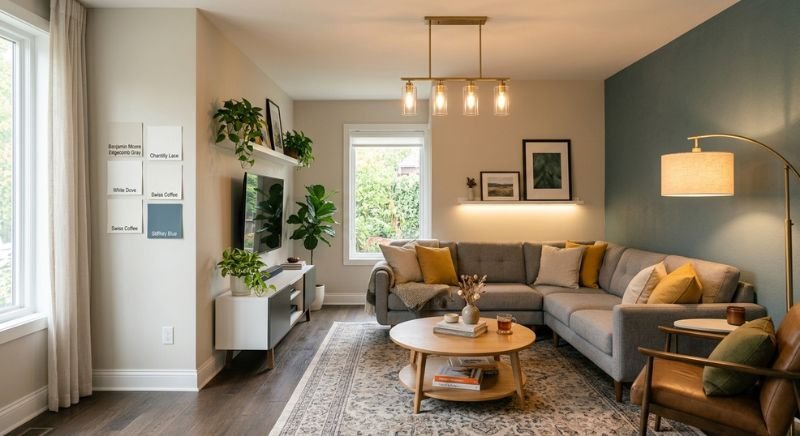
Room dimensions affect how much wall surface needs to be covered. The table below uses consistent planning assumptions: rectangular rooms, eight-foot walls, a 15% deduction from gross wall area for openings, two finish coats, and coverage of approximately 350 square feet per gallon per coat. Ceilings and trim are excluded. Paint quantities are rounded up to whole gallons.
The paint quantities are calculations based on the assumptions stated above; the professional ranges are published room-size estimates. They are not prices calculated from the gallons shown. Actual coverage changes with the product, wall texture, color change, and surface condition.
How Much Does It Cost to Paint a 10×10 Room?
A 10×10 room has 100 square feet of floor area. With eight-foot walls, its gross wall area is about 320 square feet. After allowing for approximately 48 square feet of doors and windows, the example leaves about 272 square feet to paint.
Two coats at 350 square feet per gallon require roughly 1.6 gallons, making two gallons a practical purchasing allowance. Angi’s 2026 reference range for a 10×10 room is $200 to $600. The actual quote will depend on preparation, included surfaces, and local labor.
Room-size searches often include how much does it cost to paint a room 10×10 and average cost to paint a 12×12 room. These dimensions provide useful comparison points, but confirm wall height, openings, and included surfaces before treating either estimate as a quote
How Much Does It Cost to Paint a 12×12 Room?
A 12×12 room has 144 square feet of floor area and approximately 384 square feet of gross wall surface with eight-foot walls. After the same 15% allowance for openings, the estimated paintable area is about 326 square feet.
At two coats and 350 square feet of coverage per gallon, the calculation is about 1.9 gallons. Two gallons are a reasonable starting allowance. Angi’s 2026 published professional range for this room size is $290 to $870. Ask contractors to separate labor from materials if you need to compare labor-only pricing.
How Much Does It Cost to Paint a Small Room?
A small room usually needs less paint, but its price does not always fall in direct proportion to its floor area. A contractor still needs to protect the room, prepare the walls, cut in around edges, apply the finish, and clean up. A compact room with built-ins or many corners can require more detailed work than its dimensions suggest.
How Does Room Size Affect the Total Painting Cost?
Larger rooms generally have more wall area, which increases material needs and application time. The main variables are wall perimeter, wall height, openings, layout, and any additional surfaces. Alcoves and recesses can add cutting-in time even when the room’s floor area is modest.
Does Ceiling Height Increase the Cost to Paint a Room?
Yes. Taller walls increase paintable area and may require extension equipment, ladders, or scaffolding. Vaulted ceilings, stairwells, and angled surfaces can also make access and application more difficult. A contractor should measure wall height rather than estimate from floor dimensions alone.
How Much Does It Cost to Paint Different Types of Rooms?

Room use and layout can affect the scope even when two spaces have similar dimensions. Bedrooms are often relatively straightforward, while living rooms may have broader wall sections, open connections, built-ins, or taller ceilings.
For bedroom projects, homeowners may search how much should it cost to paint a bedroom, average cost to paint a bedroom, how much does it cost to have a bedroom painted, or cost of painting a bedroom. The final price still depends on dimensions, wall condition, closet doors, trim, and whether the ceiling is included.
How Much Does It Cost to Paint a Bedroom?
Angi’s 2026 guide places professional bedroom painting in a broad range of approximately $300 to $750. The room’s dimensions, wall condition, closet doors, trim, and ceiling determine where a specific project falls within that range.
For a meaningful estimate, decide whether the project includes walls only or the complete room. A significant color change may also require primer or additional coats, which can increase materials and labor.
How Much Does It Cost to Paint a Living Room?
Angi’s 2026 guide estimates professional living room painting at approximately $900 to $2,000. Living rooms can vary widely: a compact enclosed room is different from an open-plan space with high ceilings, a fireplace, built-in shelving, or several connected wall sections.
Consider the wall layout, furniture protection, ceiling height, and any accent walls when requesting a quote. These details are often more useful than relying on the room label alone.
What Makes Some Rooms More Expensive to Paint?
Rooms become more expensive when the layout or condition increases preparation and application time. Crown molding, window casings, built-ins, exposed beams, and multiple colors require careful work. Crowded furniture, difficult access, damaged surfaces, and vaulted ceilings can also add time or equipment needs.
How Much Does It Cost to Paint a Room per Square Foot?
Square-foot pricing is useful for comparing estimates only when the measurement method is clear. Some contractors calculate using floor area; others use paintable wall area. Published guides also differ in whether their rates include materials, preparation, trim, and ceilings.
Average Interior Painting Cost per Square Foot
HomeGuide’s 2026 guide reports approximately $1 to $3 per square foot of surface area for room painting. HomeAdvisor’s published professional painting range is approximately $2 to $6 per square foot of paintable area. These rates use different approaches and should not be treated as equivalent.
Ask whether the quoted rate includes labor, paint, preparation, trim, and ceilings. A lower rate may cover fewer surfaces or exclude materials.
Interior Painting Labor Cost per Square Foot
Labor covers room protection, preparation, cutting in, rolling, finishing, and cleanup. HomeAdvisor’s published reference places painter labor at approximately $20 to $50 per hour, although actual rates vary by location, experience, and project complexity.
For a labor-only quote, ask the contractor to separate application and preparation from paint, primer, and other supplies. This avoids confusing a labor rate with a complete project price.
Room Floor Area vs. Paintable Wall Area
Floor area is length multiplied by width. Paintable wall area is the room perimeter multiplied by wall height, less openings and surfaces that will not be painted. A 10×10 room has 100 square feet of floor area but about 320 square feet of gross wall area with eight-foot walls.
A quote based on floor area cannot be compared directly with one based on wall area. Confirm the measurement before assessing the per-square-foot rate.
How Do Painters Calculate Square-Foot Pricing?
Painters measure the surfaces included in the project, deduct openings where appropriate, and account for coats, preparation, materials, and labor. A basic process is to measure the perimeter, multiply by wall height, deduct unpainted openings, add any ceilings or trim, and apply the contractor’s pricing method.
Use average rates as a comparison tool, not as a replacement for a written estimate that lists the work.
How Much Does a Painter or Handyman Charge to Paint a Room?
Painters and handymen may both provide room painting, but their experience, pricing models, and project scopes can differ. A painting contractor may specialize in surface preparation and finishing, while a handyman may offer painting as part of broader maintenance work.
Questions such as how much do painters charge to paint a room, how much should a painter charge to paint a room, how much to charge for painting a room, and how much charge for painting a room are best evaluated against an itemized scope. The labor cost to paint a room is only one part of the estimate, so also ask how much to pay someone to paint a room and what the cost to hire a painter for one room includes. The going rate for painting a room can vary by location, while painting and decorating per room cost may include additional finishing work.
How Much Do Painters Charge per Room?
Painters may price by room, square foot, hour, or flat project rate. The amount depends on dimensions, wall condition, materials, number of coats, and the surfaces included. For a complex room, an on-site assessment is usually more reliable than a generic per-room figure.
When requesting estimates, give each painter the same specifications. Ask for the included preparation, paint brand, finish, number of coats, and any exclusions.
How Much Does a Handyman Charge to Paint a Room?
A handyman may charge by expected working time or provide a flat service price. Confirm whether the quote includes paint, primer, minor repairs, sanding, furniture protection, and cleanup. Also ask whether a minimum service charge applies to smaller jobs.
Painter Cost per Hour vs. Flat-Rate Pricing
Hourly pricing is based on time spent on the job. Flat-rate pricing establishes a total after the contractor reviews the room and defines the work. Angi’s 2026 guidance gives broad reference rates of approximately $20 to $50 per hour for painters and $20 to $40 per hour for handymen.
Hourly pricing can suit smaller or uncertain jobs. A flat rate can make budgeting easier when the room and scope have been inspected. Clarify how extra repairs or unexpected preparation will be billed.
Labor Costs vs. Paint and Other Materials
Labor and materials are separate parts of a professional estimate. Labor covers preparation and application; materials include paint, primer, brushes, rollers, trays, tape, drop cloths, and other supplies. HomeAdvisor’s guide describes labor as a substantial share of professional painting costs, but the proportion varies by project.
Ask for a breakdown so you can compare labor-only pricing with a complete project estimate.
What Can Increase a Painter’s Labor Charges?
Labor can increase when the job requires peeling-paint removal, patching, sanding, priming, moving or protecting furniture, difficult access, detailed trim work, extra coats, or additional cleanup. Minimum service charges may also affect small projects. Identify these tasks before work begins.
What Factors Affect the Cost to Paint a Room?
The final estimate reflects the room’s condition as well as its size. Preparation, paint selection, additional surfaces, and local labor rates all influence the price. Understanding each factor makes it easier to compare quotes without relying on one national average.
Wall Condition, Repairs and Surface Preparation
Walls should be clean, stable, and reasonably smooth before painting. Small holes, cracks, loose paint, and uneven patches may need filling, sanding, or priming. More extensive damage should be repaired before a new finish is applied.
For a closer look at preparation, read the wall repair and painting guide.
If existing paint is bubbling or separating, identify the cause instead of covering it with another coat. The surface may need to be scraped, repaired, and primed before repainting. Learn more about paint bubbling on walls and why the underlying issue should be addressed before applying fresh paint.
Paint Quality, Finish and Number of Coats
Paint prices vary by brand, quality, and finish. Flat finishes can help minimize the appearance of minor imperfections, while eggshell and satin are common choices where cleanability matters. Semi-gloss and gloss finishes are often selected for trim and surfaces that need more frequent cleaning.
The number of coats also affects the budget. A similar-color repaint may cover more easily than a change from a dark shade to a light one. Follow the product instructions for application and drying time. For scheduling guidance, see how long to wait between coats of paint.
Furniture Moving, Floor Protection and Cleanup
Furniture and belongings should be protected before painting begins. Smaller items can often be moved away from the walls, while floors, fixtures, and nearby surfaces should be covered. Confirm whether the contractor’s quote includes moving large furniture, protection, tape removal, and cleanup.
Trim, Doors, Windows and Other Details
Baseboards, crown molding, window casings, and doors require careful preparation and precise application. They may be priced separately by linear footage or included in a complete-room estimate. Multiple colors can add masking and cutting-in time.
Ceiling Painting and Additional Surfaces
Ceilings add a separate area to measure and paint. Height, texture, and condition affect material requirements and access. A standard flat ceiling is generally simpler than a vaulted or textured surface. Confirm whether ceiling work is included or priced separately.
Local Labor Rates and Geographic Location
Painting prices vary across the United States because wages, operating costs, demand, and contractor availability differ by market. Even within one city, experience and scheduling can affect a quote. National averages are useful for initial budgeting, but local estimates are more relevant to the final decision.
How Much Paint Do You Need to Paint a Room?
Paint quantity depends on the surface area, product coverage, number of coats, and wall condition. Measure the walls rather than using floor area alone, and check the coverage information on the paint you plan to buy.
How to Calculate Paintable Wall Square Footage
For a rectangular room, multiply the room perimeter by the wall height. Then deduct the approximate area of doors, windows, and other openings that will not be painted.
Gross wall area = 2 × (length + width) × wall height
For a 10×10 room with eight-foot walls, the perimeter is 40 feet. Multiplying 40 by 8 gives 320 square feet of gross wall area. If openings account for 48 square feet, the estimated paintable area is 272 square feet.
To estimate materials, work out how much paint do I need to paint a room using the paintable wall area, product coverage, and number of coats. The cost of paint for a room should then be calculated from the number of gallons required, not just the room’s floor area.
How Many Gallons of Paint Do You Need for One Room?
Many interior paints cover approximately 350 to 400 square feet per gallon under suitable conditions, but coverage varies by product and surface. Check the manufacturer’s label for the specific paint.
For 272 square feet of wall area, two coats require 544 square feet of coverage. At 350 square feet per gallon, the calculation is about 1.55 gallons. Purchasing two gallons provides a practical allowance under these assumptions.
How Do Doors, Windows and Ceilings Affect Paint Quantity?
Doors and windows reduce the wall area that needs painting. Ceilings should be measured separately by multiplying room length by width. If the ceiling receives two coats, calculate its paint quantity independently. Trim and doors may require a different product or finish.
How Do Primer and Multiple Coats Change Paint Requirements?
Primer may be needed on bare drywall, stained surfaces, or when making a substantial color change. It is not automatically necessary for every repaint. Each additional coat increases the paint required, so follow the product’s coverage and application instructions. Textured or porous surfaces may use more paint than smooth walls.
If you are comparing how much to paint a room yourself with a professional quote, separate material spending from the value of your time. Also account for the cost of repainting a room: how much to repaint a room and how much does it cost to repaint a room depend on whether the existing finish needs repairs, primer, or extra coats.
How Much Does It Cost to Paint a Room Yourself?
DIY painting can reduce direct spending by removing professional labor charges, but the homeowner still needs to budget for paint, primer, equipment, preparation, and time. The total depends on which tools are already available and whether the room needs repairs.
Cost of Paint for One Room
Angi’s 2026 guide gives a broad interior paint price range of approximately $20 to $70 per gallon, with premium and specialty products costing more. The paint budget depends on the number of gallons, finish, brand, and whether separate products are needed for walls, ceilings, or trim.
Cost of Primer, Brushes, Rollers and Other Supplies
A DIY supply list may include primer, rollers and replacement covers, angled brushes, trays, painter’s tape, drop cloths, sandpaper, patching compound, extension poles, and cleaning materials. Reusing equipment can lower the initial outlay; starting without tools increases it.
DIY Painting Cost vs. Hiring a Professional
The main difference is labor. A homeowner provides the working time, while a professional estimate includes labor and may include materials and preparation. DIY budgets vary because some homeowners already own equipment, while others need to purchase a complete set of supplies.
Compare the same surfaces and number of coats before deciding which option offers better value. Do not compare a materials-only DIY budget with a complete professional quote.
When Is DIY Room Painting Worth It?
DIY can make sense when the room is small, walls are in good condition, and the homeowner is comfortable with preparation and application. Professional help may be more practical for high ceilings, extensive repairs, difficult access, or detailed trim. Include the value of your time when comparing options.
How to Calculate the Total Cost to Paint a Room
A reliable estimate combines paintable area, materials, labor, and additional services. Calculate each part separately, then compare the result with professional quotes that use the same project scope.
Measure the Room and Calculate Paintable Area
Measure the length and width of the room, then measure wall height. For a rectangular room, gross wall area equals two times the sum of length and width, multiplied by wall height. Deduct doors and windows, and measure the ceiling separately if it is included.
Estimate Paint, Primer and Supply Costs
Multiply the paintable area by the number of coats, then divide by the coverage stated on the product. Estimate the cost of the required gallons, primer, brushes, rollers, tape, protective coverings, and other supplies. Use actual product prices where possible.
Add Labor, Preparation and Additional Surface Costs
Add the labor estimate and any separate charges for repairs, furniture relocation, ceilings, trim, doors, or other surfaces. For DIY work, include equipment rental and additional supplies. You can also consider the value of your own time.
Compare Your Estimate with a Professional Quote
Use this formula to combine the project components:
Total painting cost = paint and primer + other supplies + labor + preparation and repairs + additional surfaces
For example, consider a 10×10 room with 272 square feet of paintable wall area, two coats, and coverage of 350 square feet per gallon. Assume two gallons of paint at $35 each, one gallon of primer at $20, $40 in supplies, and a hypothetical $350 professional labor and application charge.
This is a transparent example using assumed product prices and a hypothetical labor charge. It is not a published national average or a contractor quote. Actual costs depend on product selection, preparation, and local labor rates.
How to Save Money When Painting a Room
The most dependable savings come from planning the work, limiting unnecessary scope, and comparing estimates. Cutting out essential repairs or preparation can lead to a poor finish and more expense later.
Prepare the Room Before the Painter Arrives
Move smaller furniture away from walls, remove wall decorations, and clear the work area where practical. This can reduce setup time. Leave substantial repairs to someone qualified, especially where there is damaged drywall, peeling paint, or a possible moisture issue.
For minor paint imperfections, consult this step-by-step guide to fixing paint drips on a wall to understand the appropriate repair approach.
Compare Itemized Quotes from Multiple Painters
Request estimates from multiple contractors and compare the same scope: labor, paint, primer, coats, preparation, protection, and cleanup. A lower quote may exclude work that another contractor has included.
Decide Whether Ceilings and Trim Need Painting
If ceilings and trim are clean and in good condition, the project may be limited to the walls. Assess each surface before reducing the scope, and make sure the finished room will still look consistent.
Choose Paint Based on Coverage, Durability and Budget
Compare products by coverage, durability, finish, and suitability—not just the price per gallon. A cheaper paint may require additional coats or more frequent repainting. A suitable mid-range product can offer better value over time.
Avoid Unexpected Costs with a Clear Project Scope
Specify which surfaces will be painted, the number of coats, the products or quality level, and the preparation included. Agree on how unexpected repairs or additional work will be priced before the job begins.
Conclusion
The total cost of painting a room depends on its dimensions, paintable surface area, labor, materials, and preparation. A small room with smooth walls may need relatively little work, while a larger space with high ceilings, detailed trim, or damaged surfaces can require a larger budget.
Measure the room, identify the surfaces that need painting, and determine whether repairs or additional coats are necessary. Then compare itemized estimates that cover the same work. A clear project scope helps you understand the price, avoid unexpected charges, and choose a painting solution that fits your budget.
FAQs About Room Painting Costs
How Much Should a Painter Charge per Room?
There is no universal per-room rate. Painters consider dimensions, surface condition, materials, preparation, and local labor costs. Request an itemized quote that identifies the included surfaces, number of coats, and exclusions.
Is It Cheaper to Paint a Room Yourself?
DIY painting is often cheaper in direct spending because professional labor is not included. However, paint, primer, equipment, supplies, preparation, and the homeowner’s time still have a cost. Compare the same project scope before deciding.
How Much Does It Cost to Repaint a Room?
The price depends on room size, existing paint condition, the new color, and preparation. A straightforward repaint may need only cleaning and light preparation, while peeling paint, cracks, stains, or a major color change can increase the work.
Does the Cost to Paint a Room Include the Ceiling?
Not always. Some estimates cover walls only, while others include ceilings, trim, and doors. Check the written scope and ask the contractor to list each included surface.