

Updating an older kitchen does not always mean tearing out the existing cabinets. If the cabinet boxes are structurally sound, a few thoughtful changes can give them a completely different appearance while saving money and reducing the amount of renovation work involved. Learning how to update old kitchen cabinets without replacing them can be especially useful when the layout still works but the finishes, doors, or hardware look dated.
There are several ways to update kitchen cabinets, from painting and refinishing to replacing doors, adding decorative trim, improving storage, or installing new hardware. Some projects are inexpensive enough for a weekend DIY kitchen cabinet makeover, while others require more time or professional help.
Whether you have old wood cabinets, outdated laminate doors, or a kitchen that simply needs a visual refresh, the right kitchen cabinet updates can make the entire room feel newer. The key is to work with what you already have and focus your budget on improvements that create the biggest difference.
For a wider plan covering surfaces, storage, and affordable improvements, start with the kitchen home improvement guide.
Can You Update Old Kitchen Cabinets Without Replacing Them?
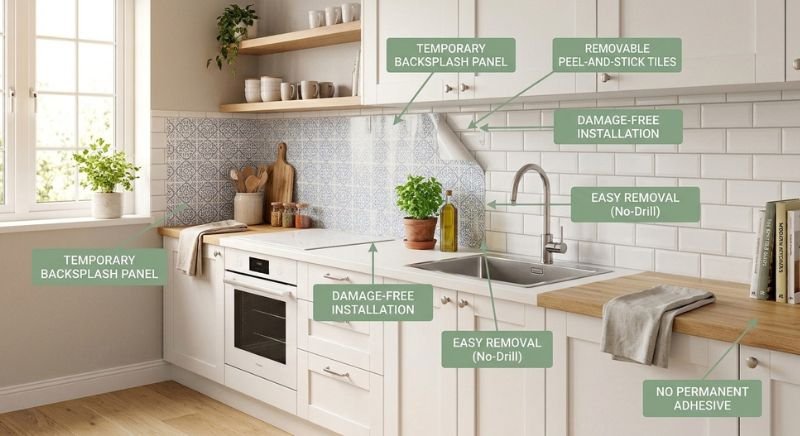
Yes. In many kitchens, the existing cabinet boxes can remain in place while the doors, finishes, hardware, and interiors are improved. This approach is often called updating, refinishing, or refacing rather than full cabinet replacement.
When Updating Cabinets Makes More Sense Than Replacing Them
Updating makes sense when the cabinet boxes are solid, the layout is functional, and there is no major water damage or structural problem. If you like where the cabinets are positioned, there may be little reason to remove them.
Painting, new hardware, decorative trim, better lighting, and storage accessories can all produce noticeable results for much less than a complete renovation.
Updating is also useful when you are updating a kitchen without replacing cabinets because you want to control costs or complete the project in stages.
How Much of the Existing Cabinetry Can You Keep?
You can often keep the cabinet boxes, shelves, hinges, and even some of the existing doors. The amount you retain depends on their condition and the look you want.
For example, painting may require little more than preparation and a new finish. Refacing can keep the boxes while changing the doors and exterior surfaces. Interior accessories can improve functionality without changing the cabinet structure.
Signs Your Old Cabinets Are Worth Updating
Your cabinets are usually good candidates for an update when:
- The boxes are sturdy and level.
- Doors still close properly.
- There is little or no water damage.
- The layout works for your cooking routine.
- The cabinets provide enough storage.
- You dislike the appearance more than the basic construction.
If the boxes are severely damaged, swollen, unstable, or poorly designed for the space, replacement may be more practical.
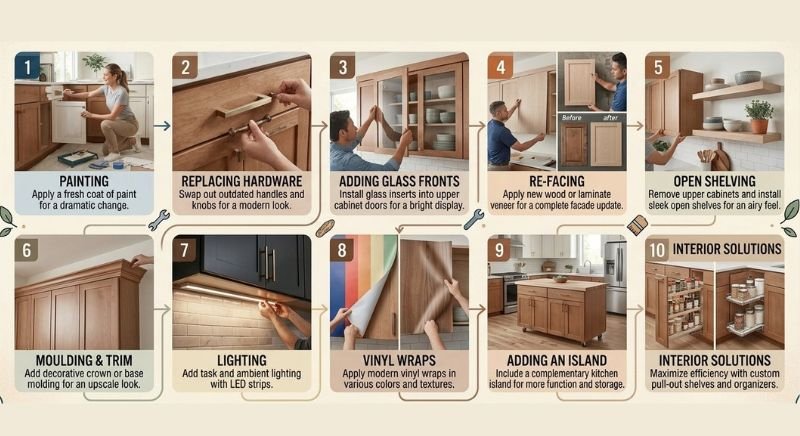
10 Ways to Update Old Kitchen Cabinets
1. Paint the Cabinets
Painting is one of the most effective ways to update kitchen cabinets without removing the entire cabinetry system. A dated wood or dark finish can become lighter, cleaner, or more contemporary with the right preparation and cabinet paint.
Start by removing doors and hardware, cleaning away grease, lightly sanding the surfaces, repairing imperfections, and applying a suitable primer. Follow with cabinet paint in thin, even coats and allow adequate drying and curing time.
Approximate cost: $100–$500 for many DIY projects, depending on cabinet size and materials.
Pros: High visual impact, relatively affordable, many color options.
Cons: Requires careful preparation and patience; poor application can lead to peeling or brush marks.
Best use case: Cabinets that are structurally sound but have an outdated color or finish.
2. Refinish or Restain the Existing Cabinets
If you like the natural appearance of your cabinetry, refinishing may be preferable to painting. This works particularly well with old wood cabinets that have attractive grain but a worn, faded, or dated finish.
For restaining cupboards, remove the old finish as appropriate, clean and sand the surfaces, then apply a compatible stain or finishing product. Test the stain in an inconspicuous location first because wood species can absorb color differently.
If you are wondering how to restrain a cabinet, the basic process is preparation, sanding, staining, drying, and applying a protective topcoat.
Approximate cost: $150–$700 for a DIY project.
Pros: Preserves natural wood character and can dramatically refresh worn cabinetry.
Cons: More preparation than a simple color change; results vary depending on the existing finish and wood.
Best use case: Quality wood cabinets with attractive grain.
3. Reface the Cabinet Boxes and Doors
Cabinet refacing changes the visible exterior while keeping the existing cabinet boxes. Depending on the project, this can involve applying a new veneer or finish to the cabinet frames and installing new doors and drawer fronts.
DIY cabinet refacing can reduce labor costs, but precision is important. If you are researching how to reface kitchen cabinets, measure every door and drawer carefully before ordering materials.
Approximate cost: About $1,000–$4,500+ depending on kitchen size, materials, and whether you hire a professional.
Pros: Major visual transformation without removing cabinet boxes.
Cons: More expensive and involved than painting.
Best use case: Structurally sound cabinets with an outdated exterior that needs a substantial makeover.
4. Replace Outdated Cabinet Hardware
New knobs, pulls, and handles are among the simplest ways to upgrade your kitchen cabinets. Hardware can change the style of a kitchen without changing the cabinets themselves.
Choose hardware that complements the existing door style and kitchen finishes. If the new hardware uses different hole spacing, you may need to fill and drill holes carefully.
Approximate cost: $30–$300+.
Pros: Fast, inexpensive, and easy to change later.
Cons: Hardware alone cannot correct damaged finishes or poor cabinet design.
Best use case: Kitchens that look dated mainly because of old handles or knobs.
5. Add Decorative Trim or Molding
Decorative cabinet trim can give plain doors and cabinet boxes more architectural detail. Crown molding, frame trim, filler pieces, and other decorative cabinet molding can make basic cabinetry appear more custom.
Measure carefully and match the trim to the existing cabinet style. Prime and finish the new pieces so they blend with the cabinets.
Approximate cost: $50–$500 depending on the amount of trim and whether installation is DIY.
Pros: Adds character and a more finished appearance.
Cons: Requires accurate cutting and installation.
Best use case: Builder-grade or visually plain cabinets that need more detail.
6. Replace Old Cabinet Doors
You can keep the existing cabinet boxes while installing new doors and drawer fronts. This creates a substantial visual change without rebuilding the entire cabinetry system.
This option is particularly useful when the cabinet boxes are good but the doors are warped, heavily worn, or simply no longer match your preferred style.
Approximate cost: $500–$2,500+ depending on the number and style of doors.
Pros: Strong visual transformation while preserving existing boxes.
Cons: Requires accurate measurements and compatible hinges or hardware.
Best use case: Sound cabinet boxes paired with outdated or damaged doors.
7. Add Glass or Decorative Inserts
Replacing selected solid door panels with glass or decorative inserts can break up a wall of cabinetry. Use this technique on a few upper cabinets rather than every door for a balanced appearance.
Clear, frosted, textured, or patterned glass can create different effects. Make sure the cabinet contents are organized because glass doors naturally draw attention to what is inside.
Approximate cost: $50–$300+ per selected cabinet, depending on materials and installation.
Pros: Adds visual interest and can make upper cabinets feel lighter.
Cons: Exposes cabinet contents and requires precise work.
Best use case: Kitchens that feel visually heavy or closed in.
8. Upgrade Cabinet Interiors and Storage
For more ways to arrange the space inside and around your cabinets, see these kitchen organization ideas.
A cabinet makeover does not have to be purely cosmetic. Improving interiors can make old cabinetry function much better.
Consider pull-out shelves, drawer dividers, tray organizers, shelf risers, lazy Susans, and dedicated storage for cookware. These improvements can make existing cabinets easier to use without changing their exterior.
Approximate cost: $50–$800+ depending on the number of accessories.
Pros: Improves everyday functionality.
Cons: Some accessories require careful measuring and installation.
Best use case: Cabinets that look acceptable but waste storage space.
9. Add Cabinet Lighting and Accessories
Under-cabinet lighting can make a kitchen feel newer while improving visibility on countertops. Battery-powered or plug-in lights may be suitable for simple upgrades, while hardwired lighting generally requires electrical work.
You can also add accessories such as charging drawers, organizers, soft-close hardware, or task lighting where appropriate.
Approximate cost: $50–$600+.
Pros: Improves both appearance and function.
Cons: Electrical installation can increase cost.
Best use case: Kitchens that feel dark or lack convenient task lighting.
10. Combine Multiple Updates for a Complete Cabinet Makeover
Sometimes the strongest kitchen cabinet makeover comes from combining several modest improvements. For example, you might paint the doors, add modern hardware, install under-cabinet lighting, and improve the cabinet interiors.
This approach allows you to prioritize the changes that matter most instead of paying for a full replacement.
Approximate cost: $300–$3,000+, depending on the combination.
Pros: Creates a cohesive transformation.
Cons: Takes more planning and coordination.
Best use case: Kitchens where the cabinetry is sound but feels dated in several ways.
Kitchen Cabinet Update Methods Compared
| Cabinet Update Method | Approx. Cost | Difficulty | Time Required | Visual Impact | Best For |
| Painting | $100–$500 | Moderate | Several days | High | Changing cabinet color |
| Refinishing/restaining | $150–$700 | Moderate–High | Several days | High | Wood cabinets |
| Refacing | $1,000–$4,500+ | High | Several days to weeks | Very High | Major exterior update |
| New hardware | $30–$300+ | Easy | Hours | Moderate | Quick style change |
| Decorative trim | $50–$500 | Moderate | 1–3 days | Moderate–High | Adding detail |
| New doors | $500–$2,500+ | Moderate | Several days | Very High | Outdated doors |
| Interior storage | $50–$800+ | Easy–Moderate | Hours–Days | Functional | Better organization |
| Cabinet lighting | $50–$600+ | Easy–High | Hours–Days | Moderate | Dark kitchens |
How to Choose the Best Kitchen Cabinet Update
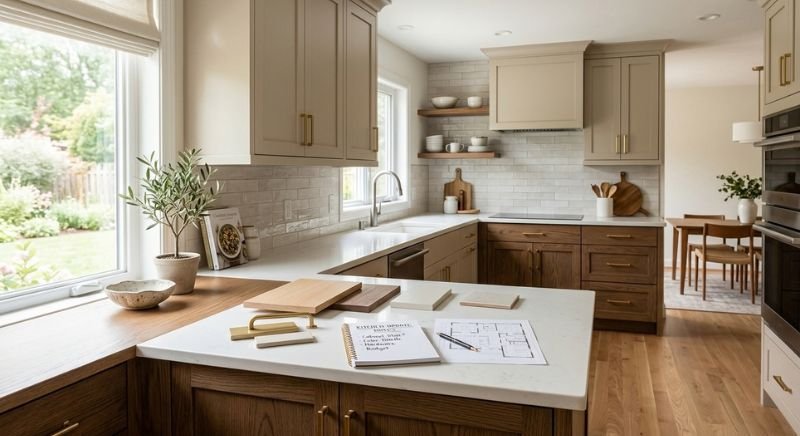
Consider the Condition of Your Existing Cabinets
Start with the cabinet boxes. Look for water damage, swelling, cracks, loose joints, and structural problems. Cosmetic wear is usually much easier to address than structural damage.
If the cabinets are strong and functional, updating old kitchen cabinets can be a sensible alternative to replacement.
Decide Between Painting, Refinishing, and Refacing
Choose painting when you mainly want a new color. Choose refinishing when you want to restore or alter the existing wood appearance. Choose refacing when you want a larger exterior transformation while keeping the boxes.
The right method depends on the condition of the cabinets, the desired appearance, and your budget.
Consider Your Kitchen Style
A modern kitchen may benefit from simple slab-style doors, understated hardware, and a clean finish. Traditional kitchens can work well with detailed molding, classic hardware, and natural wood finishes.
Your cabinet update should complement the counters, backsplash, flooring, and appliances rather than looking like an isolated change.
If you are also weighing surface costs, compare the cheapest countertop options for your kitchen.
Compare Cost, Time, and Difficulty
A hardware upgrade can take an afternoon, while refinishing or refacing may require several days. Professional work can shorten the process but increases the budget.
Consider how much time you can spend on the project before choosing a method.
Choose Updates With the Biggest Visual Impact
If your budget is limited, focus on changes people notice immediately. Cabinet color, doors, hardware, and lighting typically have more visual impact than small interior accessories.
How to Refinish or Restain Old Kitchen Cabinets
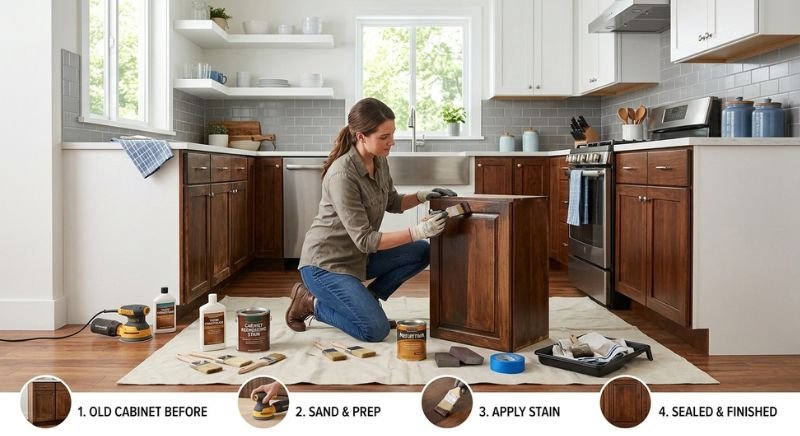
Clean and Prepare the Cabinets
Kitchen cabinets collect grease and residue over time, so thorough cleaning is essential. Remove dirt and buildup before sanding or applying a new finish.
Repair dents, cracks, and loose components before continuing.
Remove the Hardware and Cabinet Doors
Label doors and hardware as you remove them so everything can return to its original location. Working on doors separately also makes sanding and finishing easier.
Sand the Existing Finish
Lightly sand as appropriate for the existing material and finish. The objective is to create a suitable surface for the new coating rather than unnecessarily removing large amounts of material.
Wear suitable protective equipment and control dust during sanding.
Apply Paint, Stain, or a New Finish
Use products designed for cabinetry and follow the manufacturer’s preparation and application instructions. Apply thin coats rather than trying to cover everything in one heavy layer.
This is the central process for refinishing kitchen cabinets and one of the most effective ways to how to update old kitchen cabinets without replacing their structure.
Allow the Finish to Cure
Dry and cured are not always the same thing. Give the finish adequate time before reinstalling doors or subjecting the cabinets to heavy use.
Reassemble the Cabinets and Add New Hardware
Once everything is properly cured, reinstall the doors and hardware. This is also an ideal time to replace outdated handles or knobs.
How to Reface Kitchen Cabinets Without Replacing Them
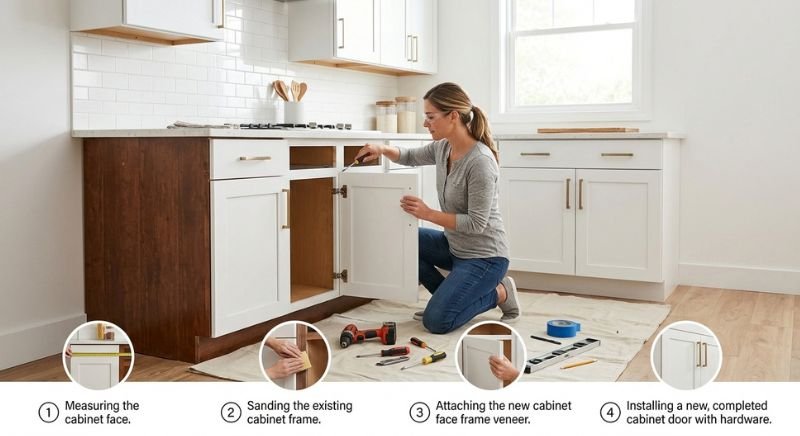
What Cabinet Refacing Involves
Cabinet refacing updates the visible exterior of existing cabinetry. The cabinet boxes generally remain in place while new exterior surfaces, doors, and drawer fronts are installed.
This makes refacing different from completely replacing the kitchen cabinets.
When Refacing is a Good Option
Refacing works best when the cabinet boxes are structurally sound but the exterior looks outdated. It can provide a substantial transformation while preserving the existing layout.
For homeowners searching for kitchen cabinet refacing ideas, changing door profiles, colors, hardware, and finishes can create dramatically different results.
DIY Cabinet Refacing vs Professional Refacing
A DIY cabinet refacing project can save labor costs, but it requires accurate measurements, careful surface preparation, and patience.
Professional refacing may be preferable for larger kitchens or when veneer installation and custom door sizing are involved.
Choosing New Cabinet Door Styles and Colors
Door style has a major influence on the finished kitchen. Flat-panel doors can create a contemporary appearance, while raised-panel and shaker-style designs can work in traditional or transitional spaces.
Choose colors and materials that complement the rest of the kitchen.
What to Expect From a Cabinet Refacing Makeover
The biggest advantage is that the basic cabinet layout can remain intact while the visible surfaces change dramatically. Looking at cabinet refacing before and after examples can help set realistic expectations about the transformation.
The finished result depends heavily on door style, materials, color, installation quality, and the condition of the original boxes.
How to Modernize Old Kitchen Cabinets on a Budget
Update Cabinet Hardware
Replacing dated hardware is one of the easiest ways to modernize kitchen cabinets. Simple pulls or knobs in a contemporary style can immediately change the character of the room.
Add Decorative Trim
Adding trim around selected cabinets or along the upper cabinet line can create a more custom appearance without rebuilding the cabinetry.
Change the Cabinet Color
A fresh color can make old cabinets feel completely different. Light neutral colors can brighten a dark kitchen, while deeper tones can create a more dramatic look.
Upgrade Cabinet Lighting and Accessories
Under-cabinet lighting, drawer organizers, pull-outs, and soft-close accessories can make older cabinets feel more modern from a functional perspective.
Focus on High-Impact, Low-Cost Changes
If you want to upgrade your kitchen cabinets without spending heavily, start with paint and hardware. Then consider lighting or small storage improvements.
A well-planned DIY cabinet makeover can often achieve more than buying several unrelated accessories.
How Much Does It Cost to Update Kitchen Cabinets?
The cost varies significantly depending on the cabinet size, materials, condition, and whether you do the work yourself.
Painting and Refinishing Costs
DIY painting and refinishing can cost a few hundred dollars for many kitchens. Professional services can cost considerably more because of labor and preparation.
Cabinet Refacing Costs
Refacing is generally more expensive than painting because it may involve new doors, drawer fronts, veneers, and installation. However, it can still cost less than replacing the entire cabinetry system.
Hardware and Accessory Costs
Hardware is relatively inexpensive compared with major cabinet work. Storage accessories, lighting, hinges, and drawer upgrades can range from modest purchases to several hundred dollars depending on scope.
DIY vs. Professional Costs
DIY projects reduce labor costs but require your time and tools. Professional work costs more but may provide a faster and more consistent result.
Ways to Keep Cabinet Upgrade Costs Low
Prioritize the cabinets that are most visible, reuse sound hardware where practical, compare material prices, and complete cosmetic work yourself when you have the necessary skills.
Avoid spending money on upgrades that do not solve a real appearance or functionality problem.
Kitchen Cabinet Update Ideas for Different Styles
Modern Kitchen Cabinets
Modern updates often work well with clean colors, simple hardware, flat or shaker-style doors, and minimal decorative details.
Traditional Kitchen Cabinets
Traditional kitchens can benefit from natural wood finishes, decorative molding, classic hardware, and warm colors.
Updating Old Wood Cabinets
When old wood cabinets are structurally sound, consider cleaning, refinishing, or restaining them rather than covering the natural character with paint.
A new stain can change the tone while preserving visible grain.
Small Kitchen Cabinet Updates
Small kitchens benefit from changes that improve brightness and visual simplicity. Lighter colors, streamlined hardware, improved lighting, and organized interiors can make the space feel more open.
Budget-Friendly Cabinet Makeovers
A budget kitchen cabinet makeover can focus on paint, hardware, trim, and organization. These changes can deliver significant results without the cost of a complete renovation.
If you are collecting cabinet renovation ideas, prioritize projects that improve both appearance and daily use.
Common Mistakes to Avoid When Updating Kitchen Cabinets
Painting Cabinets Without Proper Preparation
Skipping cleaning, sanding, or priming when required can cause poor adhesion and an uneven finish.
Choosing the Wrong Paint or Finish
Not every household paint is suitable for frequently handled cabinetry. Select a product appropriate for the cabinet material and expected wear.
Ignoring the Cabinet Condition
Cosmetic updates cannot solve serious structural problems. Inspect the boxes, shelves, doors, and areas near sinks before investing heavily.
Spending Too Much on Low-Impact Updates
Do not spend most of your budget on accessories that barely change the kitchen. Focus first on color, doors, hardware, and other highly visible improvements.
Replacing Cabinets When They Could Be Updated
Full replacement is not always necessary. If the layout and cabinet boxes work well, updating kitchen cabinets may provide the improvement you want at a lower cost.
FAQs
How Can I Update My Kitchen Cabinets Without Replacing Them?
Start by assessing the cabinet boxes. If they are structurally sound, you can paint, refinish, reface, replace doors, change hardware, add trim, improve lighting, or upgrade storage.
The best approach depends on the condition of the cabinets and the level of transformation you want.
How Do You Make Old Kitchen Cabinets Look New?
Cleaning and refinishing can restore tired wood cabinets, while paint can completely change the color. New hardware, doors, trim, and lighting can add another layer of improvement.
For a more dramatic result, refacing can transform the visible exterior while keeping the existing cabinet boxes.
What Is the Cheapest Way to Update Kitchen Cabinets?
Painting and replacing hardware are usually among the most affordable high-impact options. You can also add simple lighting or organization accessories as your budget allows.
Is It Better to Paint, Refinish, or Reface Kitchen Cabinets?
It depends on the cabinets and your goal. Paint is ideal for changing color, refinishing works well when preserving wood is important, and refacing is suitable when you want a major exterior transformation without replacing the cabinet boxes.
How Can I Modernize Old Kitchen Cabinets?
Use contemporary hardware, a fresh cabinet color, cleaner door styles, improved lighting, and practical storage accessories. Combining several small improvements can create a cohesive modern appearance.
Can You Reface Kitchen Cabinets Instead of Replacing Them?
Yes. Refacing is specifically designed to update the exterior of existing cabinet boxes. It can provide new doors, drawer fronts, veneers, and finishes without requiring full cabinet replacement.
How Can I Upgrade Kitchen Cabinets on a Budget?
Start with the changes that offer the most visible improvement. Paint, new hardware, decorative trim, lighting, and better interior organization can all upgrade kitchen cabinets without the expense of a full remodel.
Final Thoughts on Updating Old Kitchen Cabinets
Knowing how to update old kitchen cabinets without replacing them gives you more options when your kitchen feels dated but the existing cabinetry still works. You do not necessarily need a complete tear-out to create a fresher, more functional space.
Start by evaluating the cabinet condition and deciding what bothers you most. If the color is outdated, paint or refinish it. If the doors are the problem, consider refacing or replacing them. If the kitchen feels inconvenient, focus on storage, lighting, and accessories.
Whether you choose a simple hardware upgrade or a complete DIY kitchen cabinets makeover, the most successful projects balance appearance, functionality, cost, and the condition of the existing cabinetry. With the right combination of updates, old cabinets can look dramatically better while remaining exactly where they are.