

A kitchen can become cluttered faster than almost any other room. A few pans, appliances, food packets, utensils, and dishes can quickly take over every surface. Good kitchen organization ideas solve that problem by giving each item a sensible home. The goal is not to make the kitchen look perfect all day. It is to make cooking, cleaning, and putting things away easier.
For a bigger-picture approach to repairs, storage, and low-cost upgrades, see the kitchen home improvement guide.
Smart kitchen storage ideas start with function rather than appearance. Think about what you use every day, where you prepare food, and which items you reach for most often. A useful kitchen organization system keeps those items close while moving rarely used things into less valuable spaces. Even a small kitchen can feel calmer when storage follows your daily routine.
How to Organize Your Kitchen From Start to Finish
Declutter Before You Organize
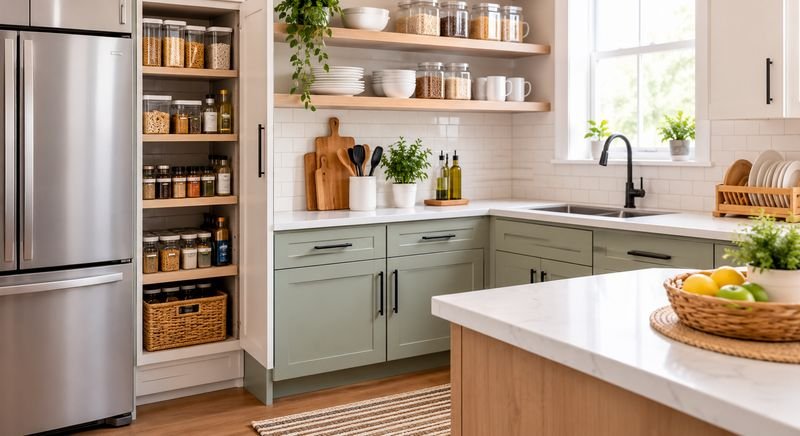
Start by removing items that no longer earn their space. Check cabinets, drawers, counters, the pantry, and hidden corners for duplicates or things you never use. Broken tools, expired food, unused gadgets, and mismatched containers often create more clutter than expected. Organizing these items only makes the problem look neater for a short time.
Create separate groups for items you use, donate, discard, or relocate. Keep the process practical rather than emotional. If you have three tools that perform the same job, keep the one you reach for most often. This simple first step creates room for better kitchen organization solutions later.
Group Similar Items Together
Keep similar items together so you can find them without searching through several cabinets. Store baking ingredients in one area, cooking tools near the prep zone, and plates close to the dishwasher if that suits your routine. Grouping also shows you how much storage each category actually needs.
Avoid spreading one category across several locations without a good reason. When similar items stay together, you can quickly spot duplicates and low-use items. This makes an organized kitchen easier to maintain because every group has a clear place.
Create Zones Based on How You Use Your Kitchen
Divide your kitchen into simple working zones. A prep zone can hold cutting boards, knives, mixing bowls, and frequently used utensils. A cooking zone can store pots, pans, spatulas, and seasonings near the stove. A cleaning zone can keep dish soap, towels, and cleaning supplies under the sink.
This approach works better than organizing only by item type. The best system considers how you move around the kitchen. When the right items sit near the place where you use them, you spend less time walking back and forth.
Keep Everyday Items Easy to Reach
Items used every day should not live behind heavy appliances or inside awkward cabinets. Keep frequently used plates, glasses, pans, knives, and cooking tools within comfortable reach. Less-used serving pieces and seasonal equipment can move to higher shelves or deeper storage.
This small change can make a noticeable difference. You should not need to unpack half a cabinet to reach the pan you use every morning. Good organized kitchen ideas reduce effort as much as they reduce clutter.
Give Everything a Dedicated Place
Every regularly used item should have a specific home. This does not mean every spoon needs a perfectly labeled compartment. It simply means you should know where an item belongs when you finish using it.
Choose storage based on the item rather than forcing everything into one organizer. Tall bottles need different storage from flat baking trays. Small utensils need different storage from bulky appliances. A dedicated place makes daily cleanup faster.
Use Vertical and Unused Space
Look beyond the floor and main shelves. Walls, cabinet doors, the space beneath shelves, and empty cabinet height can all provide useful storage. Vertical storage can hold cutting boards, pans, spices, mugs, or cooking tools without taking up valuable counter space.
Before buying anything, inspect your kitchen for unused areas. An empty wall may need only a shelf. A tall cabinet may need another level. These small changes can create useful storage without a major remodel.
Kitchen Cabinet Organization Ideas
If the cabinet doors or finish look dated, you can also update old kitchen cabinets without replacing them.
Add Shelf Risers to Double Cabinet Space
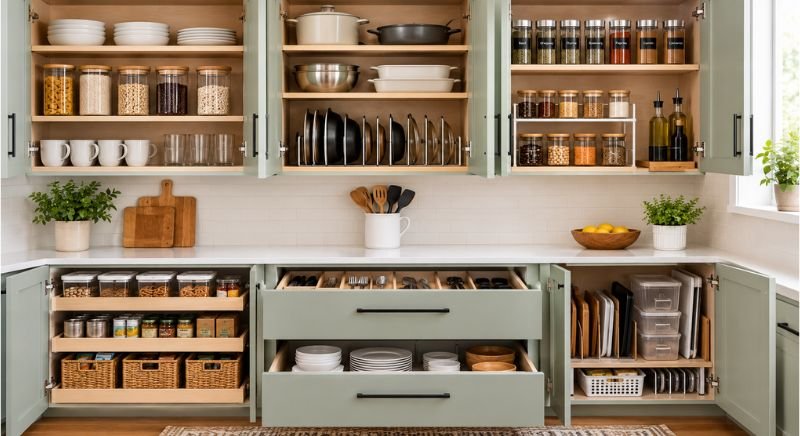
Tall cabinets often contain large amounts of unused air above plates and bowls. Shelf risers divide that height into two practical levels. They work especially well for shorter stacks of dishes, mugs, small bowls, and food containers.
Choose a riser that fits the cabinet depth and leaves enough clearance for the items below it. A poorly sized riser can make the cabinet harder to use. Measure first, then choose the organizer.
Use Bins and Baskets to Group Items
Bins make deep cabinets easier to manage because you can pull one container forward instead of reaching behind several loose items. Use separate bins for baking supplies, snacks, cleaning products, or food wraps.
A basket can also act as a simple cabinet organizer when you need flexible storage. Open designs work well for items you grab often. Use sturdy containers for heavier products so they remain stable when pulled forward.
Organize Plates, Bowls, and Dishes
Keep dishes close to the dishwasher or dining area when possible. Stack plates by size and bowls by type. If stacks become too high, use a shelf riser to create another level.
For awkward spaces, vertical dividers can separate plates instead of forcing them into tall stacks. This makes individual pieces easier to remove and reduces the chance of knocking over an entire pile.
Store Pots and Pans Efficiently
Pots and pans can consume an entire cabinet if they are simply stacked together. Nest smaller pots inside larger ones when their shapes allow it. Keep frequently used pans toward the front.
For deeper cabinets, consider vertical dividers or pull-out storage. These kitchen cabinet organization ideas can make heavy cookware easier to access without moving several pieces first.
Organize Lids Without Wasting Space
Pan lids often create clutter because their handles and shapes make stacking difficult. Store them vertically with dividers or use a dedicated rack inside a cabinet door.
Keep lids near their matching cookware when possible. If you separate them, group lids by size and shape. This prevents the common problem of searching through a pile for one specific lid.
Use the Inside of Cabinet Doors
Cabinet doors offer hidden storage space that often goes unused. Slim racks can hold wraps, spices, small cleaning tools, measuring spoons, or other lightweight items.
Check the available clearance before installing anything. The organizer should not prevent the door from closing or interfere with shelves. Used correctly, this inside cabinet organizer approach adds storage without taking shelf space.
Make Corner Cabinets Easier to Access
Corner cabinets can become storage black holes. Use rotating shelves, pull-out systems, or simple bins that can be removed easily. The best solution depends on the cabinet shape and opening.
Avoid filling the deepest corner with items you use every day. Store larger or less-used pieces there instead. Make the front area your active storage zone.
Maximize Lower Cabinet Storage
Lower cabinets are useful for heavy cookware, appliances, food containers, and other bulky items. Use pull-outs when reaching deep into the cabinet becomes difficult. Vertical dividers can also improve storage for baking sheets and cutting boards.
Think carefully about lower cabinet storage because these spaces often hold more weight. Strong organizers are usually better than lightweight containers that bend or shift.
Kitchen Drawer Organization Ideas
Use Dividers to Create Dedicated Sections
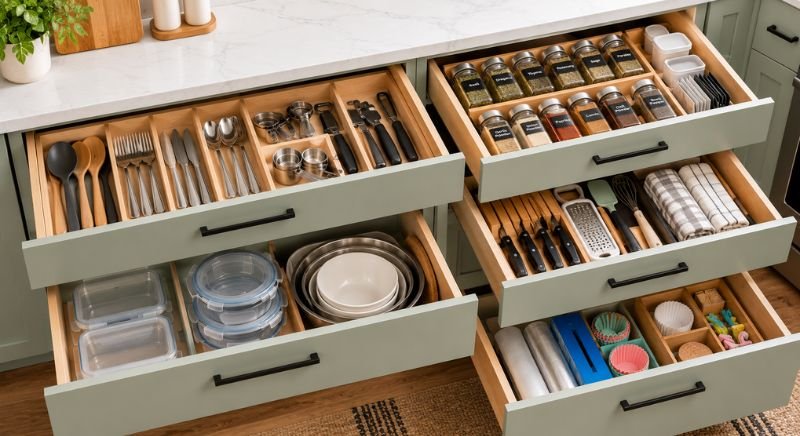
A drawer without sections quickly becomes a pile of unrelated tools. Add adjustable dividers to create spaces for measuring tools, peelers, spatulas, and other small items.
Leave enough room for each category without packing it tightly. A drawer should open and close smoothly without forcing utensils into place.
Organize Kitchen Utensils by Type
Group utensils based on their function. Keep stirring tools together, measuring tools together, and smaller prep tools in another section. This makes the drawer easier to scan.
A kitchen drawer organizer can create these sections without permanent changes. Choose compartments that match the actual tools you own rather than the layout shown on the packaging.
Create a Separate Cutlery Section
Forks, knives, and spoons should have clear sections. This makes setting the table faster and prevents smaller pieces from getting buried under larger utensils.
Good cutlery storage does not need to be expensive. A properly sized tray can work well when each section is wide enough for easy access.
Organize Cooking Tools and Gadgets
Small gadgets often cause the most drawer clutter. Keep frequently used tools near your prep area and move rarely used gadgets elsewhere. Avoid giving valuable drawer space to tools you use once every few months.
A drawer organizer for kitchen tools can separate items by function. This is especially useful when several tools have similar shapes.
Use Deep Drawers for Pots and Larger Items
Deep drawers can hold cookware that would otherwise require difficult cabinet stacking. Place heavier pieces toward the bottom and keep the items you use most often toward the front.
Use protective liners if needed to prevent scratching. Leave enough room for handles and lids so the drawer closes without pressure.
Make Narrow Drawers More Useful
Narrow drawers are ideal for smaller tools, wraps, measuring spoons, or spices. Do not waste their limited width on bulky organizers.
Use slim dividers or small drawer organizers to create practical sections. Every compartment should serve a purpose.
Keep Frequently Used Tools Near Your Prep Area
The best drawer location depends on your workflow. Keep knives, peelers, measuring cups, and other prep tools close to where you prepare ingredients.
This simple adjustment can improve your kitchen drawer organization without adding a single new storage product.
Pantry Organization Ideas
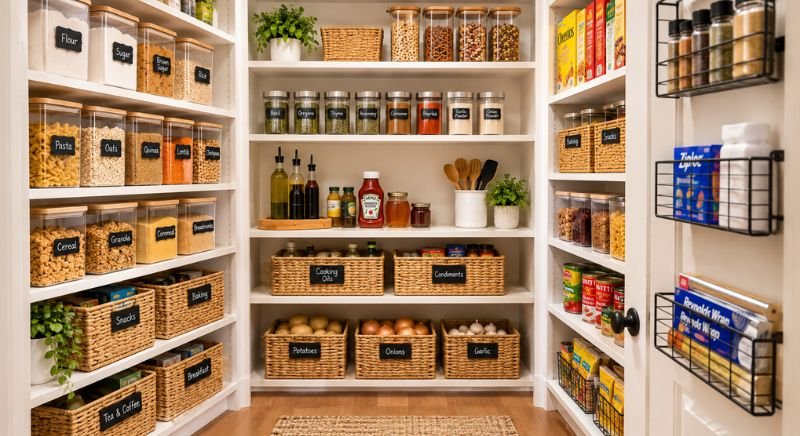
Group Pantry Items by Category
Create clear pantry groups for grains, canned foods, snacks, baking ingredients, sauces, and breakfast items. Keep similar products together so you can see what you already have.
Grouping also makes grocery shopping easier. You are less likely to buy another item when the existing supply is easy to see.
Use Clear Containers for Dry Goods
Clear containers can make flour, rice, pasta, cereal, and similar foods easier to identify. Choose airtight containers for foods that benefit from protection from moisture and pests.
Do not transfer every food item automatically. Use containers where they solve a real storage problem. The goal is practical pantry organization, not a display shelf.
Add Bins and Baskets to Deep Shelves
Deep pantry shelves can hide smaller packages behind larger ones. Bins let you group items and pull them forward together.
Use one basket for snacks and another for baking supplies, for example. These pantry organizers can turn a difficult shelf into a simple pull-and-reach system.
Use Vertical Space Between Shelves
If there is unused height between shelves, add stackable shelves or adjustable inserts. This creates another level without rebuilding the pantry.
Use the added space for shorter products. Avoid stacking containers so high that you cannot see or safely remove them.
Keep Frequently Used Foods at Eye Level
Place breakfast foods, snacks, coffee, or other daily staples where you can see them quickly. Store less-used ingredients higher or lower.
This arrangement saves time and keeps the most active pantry area easy to manage.
Organize Canned Goods and Snacks
Cans can be grouped by type and size. Snacks work well in open bins that let you see the contents quickly.
Avoid putting too many items into one container. If a bin becomes overloaded, it stops being helpful and becomes another cluttered box.
Use the FIFO Method for Food Storage
The FIFO method means “first in, first out.” Put older products toward the front and newer products behind them. This simple system helps you use food before it reaches its best-by date.
FIFO works especially well for canned goods, packaged foods, and pantry staples. Add dates to containers when useful, particularly after transferring bulk ingredients.
Make a Small Pantry Feel More Spacious
A small pantry needs visibility more than decoration. Use clear bins, vertical shelves, and consistent categories. Remove bulky packaging when appropriate and combine partially used packages.
These small kitchen storage ideas can help even when the pantry itself is limited. The trick is to make every shelf easy to scan.
Kitchen Countertop Organization Ideas
Keep Only Frequently Used Items on the Counter
Countertops should support your cooking routine, not become permanent storage. Keep appliances and tools that you use often. Move rarely used equipment into cabinets or dedicated storage.
This immediately creates a cleaner work surface. It also gives you more room for chopping, mixing, and serving.
Use Countertop Shelves to Create More Levels
A small shelf can turn unused vertical counter space into another storage level. Use it for mugs, spices, coffee supplies, or small dishes.
Make sure the shelf does not interfere with food preparation. Counter storage should add function without making the worktop harder to use.
Organize Cooking Utensils Within Easy Reach
A utensil holder can keep spatulas, spoons, and tongs near the stove. Avoid placing every cooking tool in one container if it becomes difficult to find anything.
A kitchen countertop organizer works best when it matches your daily cooking habits. Keep the most-used tools in front.
Create a Dedicated Coffee or Beverage Station
Keep coffee, tea, mugs, sweeteners, and related tools together. A small tray can visually define the station and keep loose items from spreading across the counter.
This also makes restocking easier because you can see exactly what belongs in the area.
Use Wall Space to Free Up Counter Space
Walls can hold shelves, rails, hooks, or magnetic storage. Use them for lightweight tools and items that you want nearby.
This is one of the simplest kitchen counter storage solutions because it moves storage upward instead of outward.
Create More Counter Space Without Remodeling
Clear unnecessary items first. Then move rarely used appliances, use wall storage, and add a small shelf where vertical space allows.
You can also use a cutting board designed to sit securely over part of a suitable sink. Always make sure it is stable before using it.
Kitchen Utensil and Kitchenware Organization Ideas
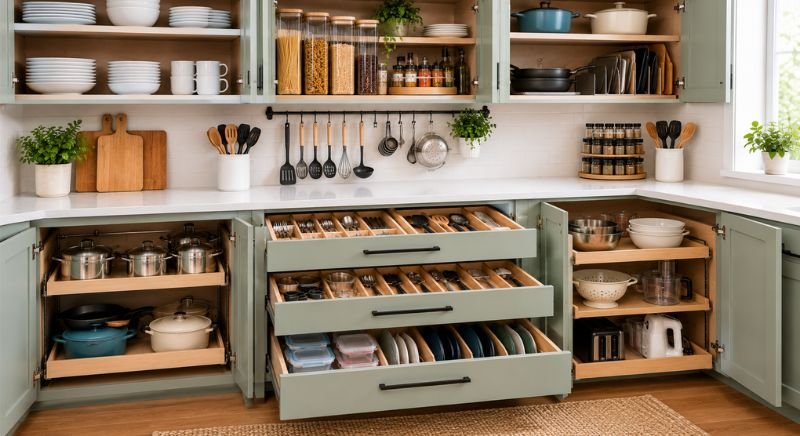
Organize Cooking Utensils
Keep cooking spoons, spatulas, tongs, whisks, and similar tools together. Store them close to the cooking area when possible.
A kitchen utensil organizer can divide tools by type. Choose an organizer with enough room to remove each item without pulling out several others.
Store Cutlery in Drawer Organizers
Use separate compartments for forks, spoons, knives, and specialty cutlery. Keep the layout consistent so everyone in the household knows where things belong.
If drawer space is limited, prioritize the cutlery used daily and move serving pieces elsewhere.
Keep Knives in a Dedicated Storage Area
Knives should have a stable storage solution that protects the blades and keeps them safely contained. A drawer insert, knife block, or suitable wall-mounted system can work depending on your kitchen.
Avoid tossing loose knives into crowded drawers. A dedicated location improves both safety and organization.
Organize Serving Utensils
Serving spoons, ladles, tongs, and large forks can take up considerable space. Keep them together in a deeper drawer or container.
Separate them from everyday utensils if you rarely use them. This prevents large serving pieces from taking over your main prep storage.
Store Cutting Boards Vertically
Cutting boards are easier to access when stored upright rather than stacked flat. A divider can keep them separated inside a cabinet.
This approach creates better cutting board storage while freeing horizontal shelf space for other items.
Organize Baking Tools and Trays
Store baking sheets, cooling racks, muffin tins, and cutting mats vertically when possible. Group small baking tools together in a container or drawer section.
This makes large, flat items easier to remove without pulling out an entire stack.
Keep Similar Kitchenware Together
Keep mixing bowls with other prep tools, serving pieces together, and food containers in one area. This creates a predictable storage system.
When categories stay together, kitchen utensil storage ideas become easier to apply because you can see where additional space is actually needed.
Small Kitchen Organization Ideas
Small kitchens require smarter decisions because every shelf and drawer has a limit. The best small kitchen organization focuses on access, vertical space, and items that earn their place.
Use Vertical Space Instead of Floor Space
Install shelves, rails, hooks, or narrow storage units on suitable walls. Vertical storage keeps useful items within reach without taking away walking space.
This is one of the most practical space saving kitchen ideas because it uses height instead of valuable floor area.
Maximize Every Cabinet and Drawer
Add shelf risers, dividers, pull-outs, or stackable organizers where they genuinely improve access. Do not fill every empty inch simply because space exists.
When deciding how to organize a small kitchen, prioritize visibility. Storage that holds more but makes everything difficult to reach is not an improvement.
Use Narrow Storage Solutions
Slim gaps can hold trays, cutting boards, baking sheets, or narrow rolling units. Measure the gap carefully before buying anything.
These are useful storage ideas for small kitchens because they turn awkward spaces into functional zones.
Add Shelves to Empty Walls
An empty wall can provide storage for mugs, spices, dishes, cookbooks, or decorative items. Choose shelves that match the available wall width.
For renters, removable or low-impact options may be preferable when permitted.
Use the Space Above Cabinets
The area above upper cabinets can store lightweight, rarely used items. Use attractive baskets or matching containers if the space is visible.
Keep heavy objects away from areas where they could fall. This should be backup storage rather than your main daily system.
Turn Unused Corners Into Storage
Corners can hold slim shelves, carts, baskets, or compact racks. Even a narrow corner may provide enough room for pantry overflow or small appliances.
Look for vertical solutions before adding bulky furniture. This creates more useful kitchen storage for small kitchens.
Reduce Countertop Clutter
Move rarely used appliances into cabinets or a dedicated appliance area. Keep only the items that support your daily routine.
A clear worktop can make a small kitchen feel larger without changing its physical size.
Choose Multi-Purpose Storage Furniture
A rolling cart, storage bench, or compact island can provide more than one function. Choose furniture that offers storage while also supporting food preparation when appropriate.
This can be especially useful when searching for ideas to organize small kitchen spaces without remodeling.
Use Foldable or Movable Storage When Needed
Foldable tables, rolling carts, and movable racks can create storage or workspace only when needed. This flexibility is valuable in tiny kitchens.
These small kitchen hacks work because they allow one area to perform several jobs.
Small Kitchen Storage Ideas Without Cabinets
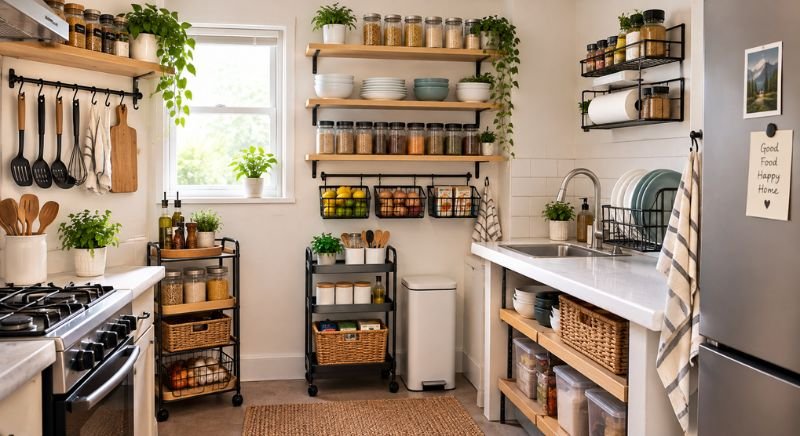
Install Open Shelving
Open shelves can replace some cabinet storage for dishes, mugs, jars, and pantry items. Keep frequently used items on lower shelves and less-used pieces higher up.
Do not overcrowd the shelves. Open storage works best when categories remain simple and visible.
Use Wall-Mounted Organizers
Wall-mounted rails, hooks, and small shelves can hold utensils, mugs, towels, and lightweight kitchen supplies. Use strong mounting hardware appropriate for the wall and load.
This is one of the most useful small kitchen storage ideas without cabinets because it creates storage without using floor space.
Add a Freestanding Kitchen Rack
A freestanding rack can provide several shelves in a kitchen with limited cabinetry. Use it for pantry goods, cookware, appliances, or dishes.
Choose a narrow model if floor space is limited. Stability matters more than maximum shelf count.
Use a Rolling Kitchen Cart
A rolling cart can work as extra storage, prep space, or a beverage station. Move it when you need more floor room.
This is particularly useful for small kitchen storage ideas on a budget because a single cart can perform several jobs.
Add Hanging Storage
Hooks can hold mugs, utensils, towels, or lightweight cookware. Hanging systems make use of wall and underside space that would otherwise remain empty.
Keep hanging items away from heat sources and busy walkways.
Use Countertop Shelves
Small shelves can create two levels on a worktop. Use them for spices, coffee supplies, or small dishes.
The key is to preserve enough open counter area for actual food preparation.
Turn Empty Corners Into Storage
A narrow shelf, slim rack, or compact cart can make an unused corner useful. This approach works particularly well when standard cabinets cannot fit.
Measure the corner before choosing a product. A few inches can determine whether the storage remains practical or blocks movement.
Kitchen Shelf and Rack Organization Ideas
Add Extra Shelves Inside Cabinets
Extra shelves can divide tall cabinet spaces into useful levels. Use them for mugs, bowls, plates, containers, or pantry goods.
A cabinet shelf organizer can provide this extra level without permanent construction.
Use Stackable Shelf Organizers
Stackable organizers make better use of cabinet height. They work well for cans, dishes, mugs, and smaller food containers.
Avoid stacking too many levels if doing so makes items difficult to reach.
Install Wall-Mounted Kitchen Shelves
Wall shelves can hold everyday dishes, spices, mugs, or decorative storage. Place them where they remain accessible without interfering with cooking.
Wall-mounted storage can also reduce pressure on crowded cabinets.
Use Narrow Racks in Small Spaces
Slim racks can fit between appliances, cabinets, or walls. They work well for trays, spices, bottles, or small pantry items.
Measure both width and depth. A rack that fits the gap but blocks cabinet doors is not useful.
Create Vertical Storage With Shelving
Tall shelving uses available wall height efficiently. Place daily items within reach and reserve upper levels for less-used supplies.
This approach supports many kitchen space saving ideas without requiring major construction.
Organize Appliances on Kitchen Shelves
Use strong shelves for appliances only when they can safely support the weight. Group small appliances by how often you use them.
Heavy appliances should remain at a comfortable height whenever possible. Avoid placing them where lifting could cause strain.
Use Corner Shelves for Unused Areas
Corner shelves can turn awkward spaces into useful storage. Use them for lightweight dishes, spices, cookbooks, or decorative containers.
They are especially helpful when standard rectangular shelving does not fit the available area.
Kitchen Appliance Storage Ideas
Store Frequently Used Appliances Within Reach
Keep the coffee maker, toaster, blender, or other daily appliances near the areas where you use them. This reduces repeated lifting and setup.
If an appliance stays on the counter, make sure it does not block your main work area.
Move Rarely Used Appliances Into Dedicated Storage
Specialty appliances can consume valuable counter space. Move them into a cabinet, pantry, utility shelf, or other suitable area when they are not used often.
Group related accessories with each appliance so setup remains simple.
Create an Appliance Cabinet
A dedicated cabinet can keep larger appliances hidden while keeping them organized. Use shelves that can support their weight and provide enough clearance.
Leave room for cords and accessories instead of forcing everything into a tight compartment.
Use Vertical Shelving for Small Appliances
Vertical shelves can separate appliances so they do not become one large pile. This makes each machine easier to remove.
Use strong shelving for heavier equipment and keep delicate appliances protected.
Organize Appliance Cords and Accessories
Loose cords can make appliance storage messy. Coil cords neatly and keep removable parts together when practical.
Small bins or labeled bags can hold attachments without mixing parts from different appliances.
Create a Dedicated Appliance Zone
Keep appliances in one area when your kitchen layout allows it. This prevents them from spreading across several cabinets and counters.
A clear appliance zone also makes it easier to decide which machines deserve prime storage space.
Space-Saving Kitchen Storage Ideas
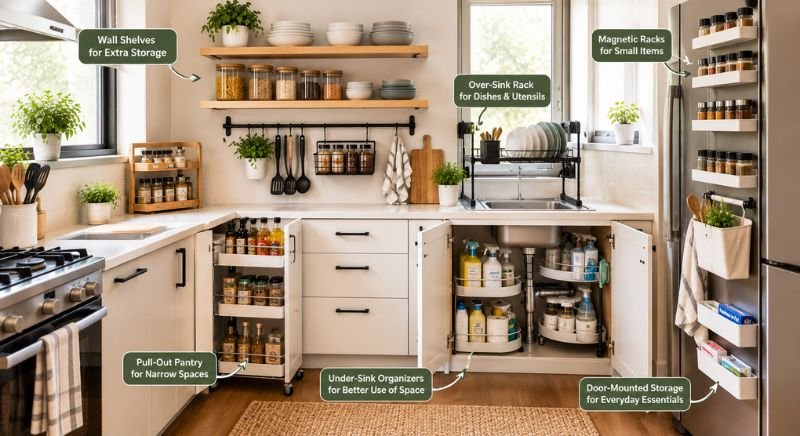
Use Vertical Storage
Walls, cabinet height, and tall shelving provide valuable storage opportunities. Use these areas for lightweight or less frequently accessed items.
Vertical storage is often more effective than adding another piece of furniture to a crowded floor.
Make Use of Cabinet Door Space
Slim door racks can hold wraps, spices, cleaning items, and other small products. Always check the door clearance before installing one.
Door storage can add useful capacity without reducing shelf space.
Add Pull-Out Storage
Pull-out shelves bring deep cabinet contents toward you. They can make lower cabinets easier to access and reduce forgotten items.
This is especially useful for heavy pots, pantry products, and cleaning supplies.
Use Under-Counter Storage
The space below the counter can hold drawers, pull-outs, bins, or other storage. Keep the most frequently used items in the easiest positions.
Good kitchen storage solutions make difficult spaces easier to access rather than simply filling them.
Make Use of Corner Cabinets
Corner cabinets often waste space because their deepest sections are hard to reach. Rotating shelves and pull-outs can improve access.
If you cannot modify the cabinet, use removable bins to make the contents easier to retrieve.
Use Narrow Gaps Between Cabinets
A small gap can hold a slim rolling rack or vertical divider. These spaces are easy to overlook during planning.
Even a narrow storage unit can hold spices, baking trays, cleaning products, or pantry overflow.
Add Storage Above the Worktop
Shelves, rails, and compact racks can create storage above the worktop. Keep this area organized so it does not become another clutter zone.
Place frequently used items lower and lighter, less-used items higher.
Turn Dead Space Into Useful Storage
Look for unused areas under shelves, beside cabinets, inside doors, and above appliances. Small improvements in several locations can create significant capacity.
These kitchen storage solutions for small spaces work best when each addition solves a specific problem.
Under-Sink Kitchen Storage Ideas
Use Stackable Bins
Stackable bins can separate cleaning supplies and make better use of cabinet height. Keep frequently used products toward the front.
Choose bins that tolerate the environment under the sink. Avoid filling them so heavily that they become difficult to move.
Add Pull-Out Drawers
Pull-out drawers can make deep under-sink cabinets easier to access. They allow you to bring cleaning products forward instead of reaching around plumbing.
Measure around pipes before installing any system.
Organize Cleaning Supplies by Category
Group sprays, sponges, brushes, gloves, and other supplies. Keep products upright and secure where possible.
Do not mix incompatible cleaning products or store them where children can easily access them.
Use the Cabinet Doors for Small Items
Door-mounted holders can store sponges, gloves, brushes, or small cleaning tools. Keep them clear of pipes and hinges.
This uses otherwise empty space while keeping small items easy to find.
Keep Plumbing Space Clear
Do not pack storage tightly around supply lines, drains, or shutoff valves. You need clear access if a leak occurs or maintenance becomes necessary.
A well-organized under-sink cabinet should make plumbing easier to inspect, not harder.
Kitchen Island Organization Ideas
Use Island Cabinets for Extra Storage
Island cabinets can store cookware, dishes, food containers, or small appliances. Choose categories based on what you use near the island.
Avoid turning the island into a random overflow cabinet. Keep its storage connected to the tasks performed there.
Organize Island Drawers by Function
Use island drawers for prep tools, utensils, cutlery, or baking equipment depending on the island’s location.
A consistent drawer layout prevents the island from becoming a second junk drawer.
Store Frequently Used Prep Items in the Island
If you prepare food on the island, keep cutting boards, knives, mixing bowls, and measuring tools nearby.
This reduces unnecessary movement and creates a natural prep zone.
Use a Small Island to Add Storage
A compact island can add drawers, shelves, and worktop space without requiring a full-size installation. Choose a size that leaves comfortable walking clearance.
This is one of the most practical kitchen island ideas for small kitchens when the layout allows it.
Choose a Kitchen Island With Built-In Storage
If buying or building an island, prioritize useful storage over decorative features. Drawers, shelves, and cabinets can turn the island into a major storage asset.
Consider what the island will hold before choosing the interior layout.
How to Organize a Kitchen With Limited Storage
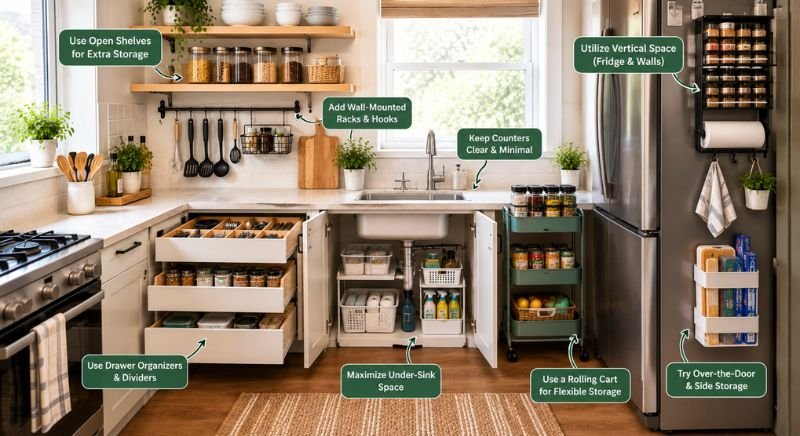
Prioritize Items You Use Every Day
Prime storage should go to the items you reach for constantly. Rarely used equipment can move higher, deeper, or elsewhere.
This simple rule helps prevent valuable cabinet space from being occupied by things you barely use.
Move Seasonal Items to Less Accessible Areas
Holiday cookware, specialty serving pieces, and seasonal equipment do not need prime locations. Store them in higher cabinets or other suitable areas.
Bring them forward only when needed.
Use Multi-Purpose Organizers
Choose organizers that can solve more than one storage problem. Adjustable dividers, stackable shelves, and movable bins can adapt as your needs change.
Avoid buying specialized organizers for every small item. Too many systems can make kitchen organization harder to maintain.
Combine Storage by Function
Keep prep items near prep areas, cooking tools near the stove, and cleaning supplies under the sink. Functional grouping makes limited storage work harder.
This approach is more useful than simply putting similar objects anywhere they fit.
Eliminate Duplicate Items
Duplicates consume space quickly in a small kitchen. Keep enough backups for your actual needs rather than collecting several versions of the same tool.
If an item has not been used in a long time, consider whether it still deserves storage space.
Make Use of Walls, Doors, and Vertical Space
When cabinets are limited, look upward. Walls, cabinet doors, and vertical gaps can provide valuable storage without increasing the kitchen footprint.
These simple adjustments are among the best kitchen storage ideas for tight layouts.
Kitchen Organization Mistakes to Avoid
Overfilling Cabinets and Drawers
More storage does not help when every space is packed. Overfilled cabinets make items harder to reach and encourage clutter.
Leave enough room to remove frequently used items comfortably.
Keeping Everything on the Counter
Counters are work surfaces first. Too many appliances, containers, and tools can make cooking feel cramped.
Keep only the items that genuinely support your routine.
Ignoring Vertical Space
Unused wall height and cabinet height represent lost storage potential. Add another level where it improves access.
Vertical storage can be particularly valuable in small kitchens.
Using Organizers That Don’t Fit Your Space
An organizer should match the cabinet, drawer, and items you own. A product that is too large wastes space, while one that is too small creates awkward gaps.
Measure before buying. This is one of the most important small kitchen organization tips.
Storing Items Where You Rarely Use Them
A beautiful storage system can still be inconvenient if items live far from where you use them. Keep location connected to function.
Move items when your cooking routine changes.
Keeping Unused or Duplicate Kitchen Items
Organization cannot compensate for unnecessary belongings. Regularly remove broken, unused, expired, or duplicate items.
A smaller collection is usually easier to organize and maintain.
How to Keep Your Kitchen Organized Long Term
Put Everything Back After Use
The easiest way to maintain order is to return items to their assigned locations. Do this immediately when possible instead of creating a cleanup pile.
Simple habits prevent small messes from becoming major organizing jobs.
Do a Weekly 10-Minute Reset
Set aside a few minutes each week to straighten drawers, wipe storage areas, check the pantry, and return misplaced items.
A short reset is easier than waiting until the entire kitchen feels chaotic.
Declutter as You Go
When something breaks, expires, or becomes unnecessary, remove it instead of keeping it indefinitely. This prevents storage spaces from slowly filling with items you no longer need.
Review Storage After Adding New Items
Before bringing home a new appliance, container set, or cookware piece, decide where it will live. If there is no suitable space, something else may need to leave.
This habit keeps your storage system realistic.
Keep Organization Systems Simple
The best kitchen systems are easy enough for everyone to follow. Avoid complicated layouts that require constant maintenance.
A few sensible categories can outperform a kitchen filled with organizers. Good kitchen organization should make daily life easier, not become another chore.
FAQs
What is the best way to organize a kitchen?
The best method is to organize the kitchen around how you actually use it. Start by decluttering, then group similar items and create functional zones. Keep everyday items within easy reach and move rarely used products into less accessible storage.
How do I organize a small kitchen?
Use vertical space, maximize cabinet height, divide drawers, and keep countertops clear. When organizing small kitchen spaces, prioritize visibility and access rather than simply adding more containers.
How can I get more storage in a small kitchen?
Use shelves, cabinet risers, door organizers, narrow racks, rolling carts, and wall-mounted storage. If you are wondering how to get more storage in a small kitchen, first look for unused vertical and hidden spaces before considering major remodeling.
How should I organize my kitchen cabinets?
Group items by function and frequency of use. Add shelf risers, bins, dividers, and pull-outs where they improve access. When deciding how to organize kitchen cabinets, keep daily cookware and dishes in easy-to-reach locations.
How should I organize kitchen drawers?
Use dividers and assign each section a clear purpose. Keep cutlery together, cooking tools together, and smaller gadgets in separate compartments. A properly sized kitchen drawer organizer can prevent loose utensils from mixing together.
How do I organize a kitchen without a pantry?
Use cabinets, rolling carts, wall shelves, freestanding racks, and suitable open shelving. Group dry goods together and use bins to keep categories contained.
How can I organize my kitchen without cabinets?
Use open shelves, wall-mounted organizers, freestanding racks, rolling carts, hooks, and countertop shelves. These options can provide practical storage without traditional cabinetry.
How do I keep my kitchen organized?
Give every frequently used item a home and return it after use. Declutter regularly, avoid duplicate items, and review your storage when your needs change. Simple systems are easier to maintain than complicated ones.
Related Kitchen Improvement Guides
Kitchen Home Improvement Guide: Repairs, Maintenance & Upgrades — For a broader plan covering repairs, storage, surfaces, and budget-friendly upgrades.
How to Organize a Pantry: 15 Easy Pantry Organization Ideas for Every Kitchen — Get step-by-step ideas for arranging pantry shelves, containers, and food categories.
How to Update Old Kitchen Cabinets Without Replacing Them — Explore practical cabinet updates that do not require full replacement.
Final Thoughts on Kitchen Organization
Good kitchen organization is less about having a picture-perfect room and more about making everyday tasks easier. The most effective systems follow your cooking habits, keep useful items accessible, and make wasted space work harder.
Whether you need small kitchen organizing ideas or a complete cabinet overhaul, start with the areas that cause the most frustration. Use vertical storage, practical organizers, clear categories, and functional zones. With a few thoughtful changes, even a crowded kitchen can become easier to use, easier to clean, and far easier to keep organized.