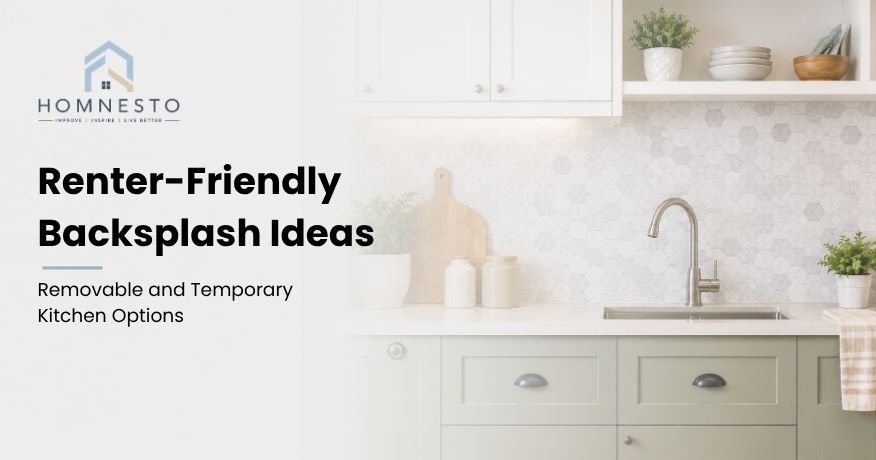

A backsplash can dramatically change the appearance of a kitchen, but traditional tile installation is not always practical when you rent. Drilling, permanent adhesive, grout, and mortar can leave behind damage that may need to be repaired when you move out. A renter friendly backsplash provides a practical way to refresh your kitchen without committing to a permanent renovation.
For a broader sequence of practical repairs and kitchen upgrades, visit the kitchen home improvement guide.
The best temporary options are designed to be removable, easy to install, and suitable for rental properties. Depending on your lease and wall surface, you can choose from peel-and-stick tiles, removable vinyl, temporary wallpaper, PVC panels, contact paper, magnetic systems, and freestanding panels.
This guide covers the best renter friendly backsplash options, how to compare removable materials, how to install and remove them, what they cost, and which choices work best for different kitchen styles.
What Makes a Backsplash Renter-Friendly?
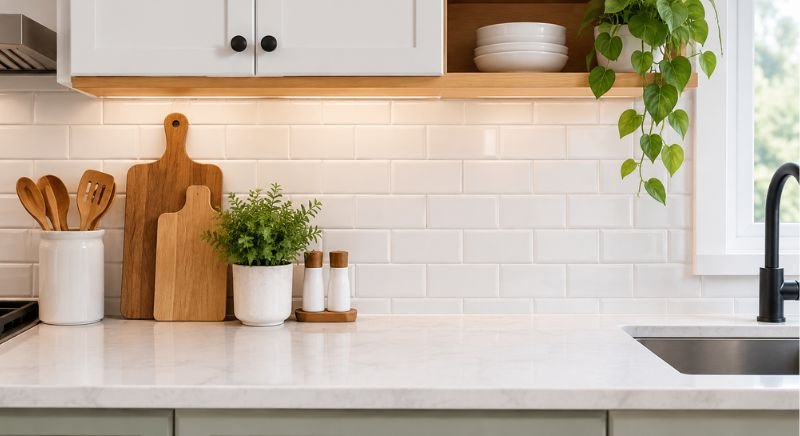
A renter-friendly backsplash is a decorative or functional backsplash that can be installed without making permanent changes to the kitchen. The exact level of removability depends on the product, adhesive, mounting method, wall surface, and installation technique.
For renters, the ideal solution provides the appearance of a finished backsplash while minimizing the risk of damage when it is removed.
Removable vs. Permanent Backsplash
Traditional ceramic or porcelain tile is generally considered a permanent backsplash because it is normally installed with adhesive, mortar, grout, or other materials that bond strongly to the wall.
A removable backsplash takes a different approach. Peel-and-stick products, temporary wallpaper, lightweight panels, contact paper, and some magnetic systems can be installed without conventional tiling.
However, removable does not necessarily mean damage-free. Even a product advertised as a backsplash removable from the wall can pull paint or leave adhesive residue if the surface is weak or the product is removed incorrectly.
Low-Damage Installation Methods
Installation method matters just as much as the backsplash material. A lightweight product can still damage a wall if it is attached with strong permanent adhesive.
Look for products specifically designed for temporary use. Removable mounting systems, suitable adhesive strips, magnetic attachments, and freestanding panels can provide alternatives to permanent installation.
Before committing to a large project, test the product on a small hidden section when possible. This is especially important for older painted walls.
Lease and Landlord Considerations
Always review your rental agreement before installing anything on the wall. Some landlords allow temporary decorative changes, while others require permission for adhesive products, wall coverings, or fixtures.
If you are uncertain, ask your landlord or property manager before purchasing materials. A few minutes of clarification can help prevent problems with your security deposit later.
10 Best Renter-Friendly Backsplash Ideas
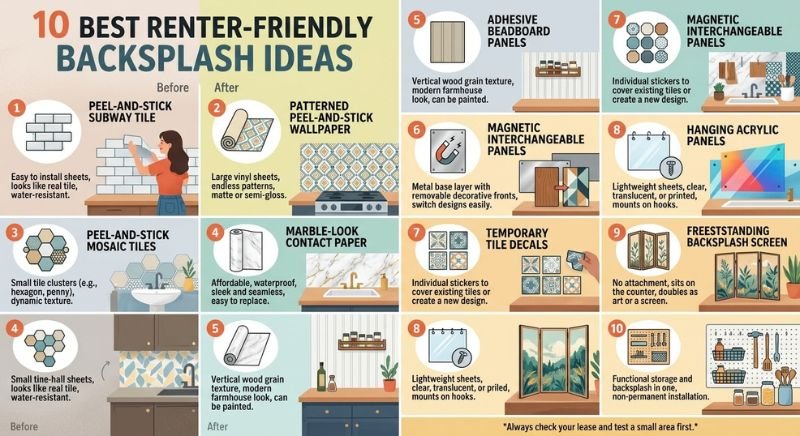
There are many renter friendly tiles and temporary materials available, but they are not equally suitable for every kitchen. Consider heat exposure, moisture, wall condition, installation method, and how easily the product can be removed before making a decision.
1. Peel-and-Stick Tile Backsplash
Peel-and-stick tiles are one of the most recognizable choices for a renter friendly backsplash. They can imitate ceramic tile, marble, stone, subway tile, terrazzo, and other finishes without traditional grout and mortar.
A renter friendly peel and stick backsplash is typically applied by removing a protective backing and pressing the tile onto a clean surface. Some products are flexible vinyl, while others use more rigid materials.
Why it works for renters: Installation is relatively quick and can often be completed without specialized tiling equipment.
Installation method: Clean and dry the wall, measure the area, plan the layout, and apply each tile according to the manufacturer’s instructions.
Removal difficulty: Low to moderate, depending on the adhesive and wall condition.
Approximate cost: About $1–$10 per square foot.
Pros:
- Easy DIY installation
- Many colors and patterns
- No traditional grout
- Can imitate real tile
- Relatively affordable
Cons:
- Adhesive can affect painted surfaces
- Heat resistance varies
- Low-quality products may look artificial
Best use case: Renters who want a quick tile-style update without conventional installation.
2. Removable Vinyl Backsplash
Removable vinyl provides another practical renter friendly tile backsplash alternative. Vinyl sheets and panels are available in marble, stone, geometric, tile, and solid-color designs.
Instead of installing dozens of individual pieces, a large sheet can cover a broad section of wall. This can reduce visible seams and simplify installation.
Why it works for renters: It is lightweight and can provide broad coverage without mortar or grout.
Installation method: Clean the wall thoroughly, measure the backsplash area, and apply the vinyl according to its installation instructions.
Removal difficulty: Usually low to moderate.
Approximate cost: Around $1–$8 per square foot.
Pros:
- Lightweight
- Easy to cut
- Wide range of patterns
- Simple to clean
Cons:
- Can wrinkle during installation
- Adhesive performance depends on the wall
- Not every product is suitable near heat
Best use case: Renters looking for an affordable, continuous backsplash surface.
3. Faux Subway Tile Panels
Faux subway tile panels recreate the familiar appearance of rectangular subway tiles while reducing the installation work associated with individual tiles.
These panels may use printed patterns or embossed surfaces to create a more realistic appearance.
Why it works for renters: Lightweight panels can be easier to install and remove than conventional tile.
Installation method: Depending on the product, use its recommended temporary mounting system or another approved method.
Removal difficulty: Moderate.
Approximate cost: Approximately $3–$15 per square foot.
Pros:
- Classic appearance
- Faster than individual tiling
- Fewer seams
- Works with many kitchen styles
Cons:
- Some products look less realistic
- Edges require careful finishing
- Attachment method affects removability
Best use case: Renters who want a traditional tile appearance without permanent construction.
4. Beadboard Backsplash
Beadboard uses panels with narrow vertical grooves to create a simple, traditional appearance. It can work well in farmhouse, cottage, and classic kitchens.
For rental applications, choose a lightweight product and a mounting method that is appropriate for your wall and lease.
Why it works for renters: A panel can cover a large area without the complexity of installing individual tiles.
Installation method: Measure the area, cut the panel if appropriate, and use an approved temporary attachment method.
Removal difficulty: Moderate.
Approximate cost: Around $2–$10 per square foot.
Pros:
- Simple appearance
- Works well in traditional kitchens
- Broad wall coverage
- Can provide texture
Cons:
- Grooves can collect dirt
- Not every beadboard product is suitable for wet areas
- Some installation methods are permanent
Best use case: Traditional or farmhouse-style rental kitchens.
If your existing cabinetry needs a refresh too, explore ways to update old kitchen cabinets without replacing them.
5. PVC Backsplash Panels
PVC panels are lightweight and available in finishes that imitate marble, stone, tile, and other materials. Some products are designed to handle moisture, although heat resistance varies.
PVC can be a useful choice when you want a panel rather than individual renter friendly wall tiles.
Why it works for renters: The material is lightweight and can provide broad coverage.
Installation method: Follow the manufacturer’s recommended mounting method and confirm that it is appropriate for rental use.
Removal difficulty: Low to moderate with a temporary mounting system.
Approximate cost: Around $3–$15 per square foot.
Pros:
- Lightweight
- Moisture-resistant options
- Easy to clean
- Many finishes available
Cons:
- Some panels require permanent adhesive
- Heat resistance varies
- Some designs can look artificial
Best use case: Kitchens where lightweight, moisture-resistant panel coverage is desirable.
6. Temporary Backsplash Wallpaper
Temporary wallpaper is one of the simplest ways to create a decorative temporary backsplash. It comes in designs that imitate marble, subway tile, terrazzo, stone, and geometric patterns.
A temporary kitchen backsplash made from wallpaper can provide a major visual change without requiring conventional tiling.
Why it works for renters: It is lightweight, easy to cut, and available in countless designs.
Installation method: Clean and dry the wall, measure carefully, and apply the wallpaper gradually to reduce bubbles.
Removal difficulty: Usually low, although adhesive performance varies.
Approximate cost: About $1–$7 per square foot.
Pros:
- Wide design selection
- Quick installation
- Relatively inexpensive
- Easy to customize
Cons:
- Moisture resistance varies
- Can tear
- Heat exposure can limit suitable applications
Best use case: Decorative kitchen updates where a temporary surface is sufficient.
7. Acrylic Backsplash Sheets
Acrylic sheets can create a smooth, modern backsplash with fewer seams than traditional tile. They are available in clear, translucent, solid, and printed finishes.
For a rental, the key consideration is how the acrylic is attached. A removable mounting system is preferable when permitted.
Why it works for renters: It can provide a sleek appearance without the visual interruptions of grout lines.
Installation method: Measure accurately and follow the manufacturer’s instructions for cutting and mounting.
Removal difficulty: Moderate.
Approximate cost: About $5–$20+ per square foot.
Pros:
- Modern appearance
- Smooth surface
- Easy to wipe clean
- Many finishes available
Cons:
- More expensive
- Can scratch
- Mounting method affects removability
Best use case: Modern rental kitchens that need a clean, polished backsplash.
8. Magnetic Backsplash Panels
Magnetic backsplash panels provide an alternative to adhesive-based systems. When compatible with the wall and mounting system, they can be installed and removed without permanently bonding material to the surface.
Why it works for renters: A magnetic system can make the backsplash easier to change than permanently attached materials.
Installation method: Follow the manufacturer’s mounting instructions and verify compatibility with the wall.
Removal difficulty: Low when the system is specifically designed for removable installation.
Approximate cost: Around $5–$20+ per square foot.
Pros:
- Easy to change
- Potentially reusable
- Minimal adhesive in some systems
- Modern appearance
Cons:
- More specialized
- Compatibility can be an issue
- Usually more expensive than contact paper
Best use case: Renters who want a changeable backsplash system.
9. Decorative Contact Paper
Decorative contact paper is one of the most affordable backsplash alternative ideas. It can imitate marble, tile, terrazzo, wood, and other surfaces.
It is especially useful when your priority is appearance rather than creating a thick, highly durable backsplash surface.
Why it works for renters: It is inexpensive, lightweight, and easy to cut around outlets and corners.
Installation method: Clean the wall, measure carefully, and smooth the paper onto the surface gradually.
Removal difficulty: Low to moderate.
Approximate cost: Around $0.50–$5 per square foot.
Pros:
- Very affordable
- Easy to cut
- Many patterns
- Quick installation
Cons:
- Can tear
- May peel in damp areas
- Some designs look less realistic
Best use case: Renters looking for dirt cheap backsplash ideas and a short-term cosmetic update.
10. Freestanding Backsplash Panels
Freestanding panels are an alternative for renters who would rather avoid attaching material directly to the wall. They can be positioned behind a countertop or other suitable area, depending on the product.
This approach can make a renter friendly backsplash easier to remove because the panel itself does not have to be bonded to the wall.
Why it works for renters: It minimizes wall attachment and can potentially be reused elsewhere.
Installation method: Position the panel securely according to its design and keep it away from unsafe heat exposure.
Removal difficulty: Very low.
Approximate cost: Approximately $20–$150+.
Pros:
- Minimal wall attachment
- Easy to remove
- Reusable
- Can become a design feature
Cons:
- Requires suitable support
- Can occupy some counter or floor space
- Not ideal for every kitchen layout
Best use case: Renters who want to avoid adhesive altogether.
Renter-Friendly Backsplash Options Compared
Different renter friendly kitchen tiles and temporary materials have different strengths. Use this table as a starting point, then confirm the manufacturer’s installation and removal instructions.
| Backsplash Option | Approximate Cost | Installation Difficulty | Removability | Wall-Damage Risk | Best For |
| Peel-and-stick tile | $1–$10/sq. ft. | Easy | High* | Low–Moderate* | Tile appearance |
| Removable vinyl | $1–$8/sq. ft. | Easy | High* | Low–Moderate* | Budget updates |
| Faux subway panels | $3–$15/sq. ft. | Easy–Moderate | Moderate–High* | Low–Moderate* | Classic kitchens |
| Beadboard | $2–$10/sq. ft. | Moderate | Moderate | Moderate* | Traditional styles |
| PVC panels | $3–$15/sq. ft. | Easy–Moderate | Moderate–High* | Low–Moderate* | Moisture-prone areas |
| Temporary wallpaper | $1–$7/sq. ft. | Easy | High* | Low–Moderate* | Decorative changes |
| Acrylic sheets | $5–$20+/sq. ft. | Moderate | Moderate | Moderate* | Modern kitchens |
| Magnetic panels | $5–$20+/sq. ft. | Easy–Moderate | High | Low | Changeable systems |
| Contact paper | $0.50–$5/sq. ft. | Easy | High* | Low–Moderate* | Very low budgets |
| Freestanding panels | $20–$150+ | Easy | Very High | Very Low | No-wall-attachment setups |
*Actual removability depends on the product, adhesive, wall condition, installation method, and rental agreement.
How to Choose the Best Renter-Friendly Backsplash
The right backsplash depends on your rental agreement, wall surface, budget, cooking habits, and how long you expect to stay in the property.
Check Your Rental Agreement
Before installing any renter friendly backsplash, check whether your lease allows temporary wall coverings, adhesive products, or other decorative changes.
If permission is required, obtain it before starting the project.
Choose a Truly Removable Option
Look beyond marketing language. A product described as removable may still require strong adhesive or specialized installation.
If easy removal is your top priority, consider temporary wallpaper, suitable peel-and-stick products, magnetic systems, or freestanding panels.
Consider Your Wall Surface
Smooth, clean, properly painted walls are generally easier to work with than textured, damp, peeling, or damaged surfaces.
If your wall has loose paint, repair the underlying issue according to your rental agreement before applying anything.
Compare Cost and Installation Time
Consider the total project cost rather than only the package price. You may need extra material for pattern matching, replacement pieces, cleaning supplies, cutting tools, or finishing strips.
For a short rental, a low-cost temp backsplash may make more financial sense than an expensive panel system.
Match the Backsplash to Your Kitchen
Choose a design that complements your cabinets, countertops, hardware, and appliances. Subway patterns can suit traditional kitchens, while marble-look panels or simple geometric designs can work well in modern spaces.
Planning a wider refresh? Compare backsplash finishes with these affordable countertop options and cabinet updates before choosing a final palette.
The goal is to make the backsplash look intentional rather than temporary.
How to Install a Removable Backsplash in a Rental Kitchen
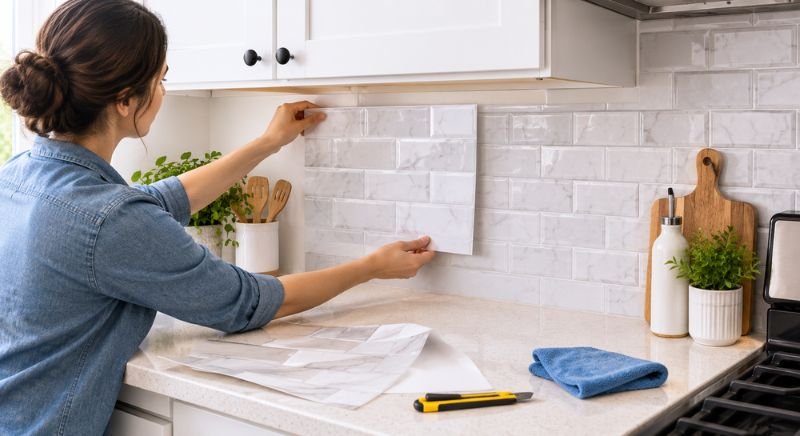
A successful installation starts with careful preparation. Even the best removable kitchen backsplash can fail when it is applied to a dirty, damp, or unsuitable surface.
Clean and Prepare the Wall
Remove grease, dust, and residue. Allow the surface to dry completely before installation.
Do not apply adhesive-backed material over loose paint or obvious wall damage.
Measure the Backsplash Area
Measure the width and height of the installation area. Account for outlets, switches, cabinets, corners, windows, and appliances.
Purchase enough material to cover mistakes and pattern-matching waste.
Plan the Layout
Before exposing adhesive, arrange the pieces and decide where each one will go.
Planning is particularly important for patterned renter friendly stick on tiles, because small alignment errors can become obvious across a large wall.
Apply the Backsplash
Follow the product’s instructions. For adhesive-backed materials, expose the backing gradually and smooth the material as you work.
Do not stretch flexible products because they can shift or shrink after installation.
Finish Edges and Corners
Carefully trim pieces around outlets and corners. Use appropriate removable finishing materials where necessary.
Avoid permanent caulk or construction adhesive unless it has been approved and you are prepared for the removal process.
How to Remove a Renter-Friendly Backsplash Without Damaging the Wall
Knowing how to remove the material is just as important as knowing how to install it. The goal of a renter friendly backsplash is to improve the kitchen without creating unnecessary repair work when you move.
Start at an Edge or Corner
Find a loose edge or corner and begin there. Avoid using sharp tools against the wall because they can scratch paint or drywall.
Soften the Adhesive if Needed
Some adhesive products may become easier to remove when gently warmed or treated according to manufacturer instructions.
Use caution around electrical outlets, appliances, and heat-sensitive materials.
Peel the Backsplash Off Slowly
Pull slowly instead of ripping the material away. Gradual removal can reduce stress on the wall.
If the product resists strongly, stop and follow the manufacturer’s removal instructions rather than forcing it.
Remove Adhesive Residue
Use a cleaning method that is appropriate for both the adhesive and wall paint. Test it in an inconspicuous location first.
Avoid aggressive scraping that can remove paint.
Clean and Inspect the Wall
Once the material is removed, gently clean the wall and inspect it for adhesive residue, paint loss, or other damage.
A properly planned kitchen backsplash removable system should make this final stage as straightforward as possible.
Are Peel-and-Stick Backsplashes Renter-Friendly?
Peel-and-stick products can be a practical choice for renters, but their suitability depends on the product and wall. A peel and stick backsplash renter friendly installation should use a product specifically intended for the intended surface and application.
Pros of Peel-and-Stick Backsplash
- Easy DIY installation
- No traditional grout
- Large selection of patterns
- Relatively affordable
- Faster than conventional tiling
A peel and stick removable backsplash can also be easier to replace if you want to change your kitchen’s appearance later.
Cons of Peel-and-Stick Backsplash
- Adhesive may damage some paint
- Removal can leave residue
- Heat resistance varies
- Uneven walls can reduce adhesion
- Low-quality products may look artificial
When Peel-and-Stick Is a Good Choice
Peel-and-stick works well when the rental agreement permits it, the wall is smooth and sound, and the selected product is appropriate for the kitchen environment.
If your priority is the lowest possible wall-damage risk, consider a magnetic or freestanding system.
How Much Does a Renter-Friendly Backsplash Cost?
The cost of a rental friendly backsplash varies significantly depending on material, coverage, installation method, and finish.
Material and Supply Costs
Contact paper and temporary wallpaper are usually among the least expensive choices. Peel-and-stick tiles and vinyl fall into a broader middle range, while acrylic, magnetic, and specialty panels can cost more.
Allow for additional material if you need to match patterns or make complicated cuts.
DIY Installation Costs
DIY installation can reduce labor costs. Depending on the product, you may still need cleaning supplies, measuring tools, a utility knife, smoothing tools, or finishing materials.
When Professional Installation May Be Needed
Professional installation can make sense for complicated panels, unusual layouts, difficult cuts, or systems requiring specialized equipment.
For many renters, however, choosing a genuinely temporary product allows the project to remain simple enough for DIY installation.
Ways to Keep Costs Low
Measure accurately, minimize waste, choose simple patterns, and compare the complete project cost.
If your priority is affordability, contact paper and temporary wallpaper can be among the most accessible options. These can also work as backsplash alternative ideas when traditional tile is outside your budget.
Renter-Friendly Backsplash Ideas for Different Kitchen Styles
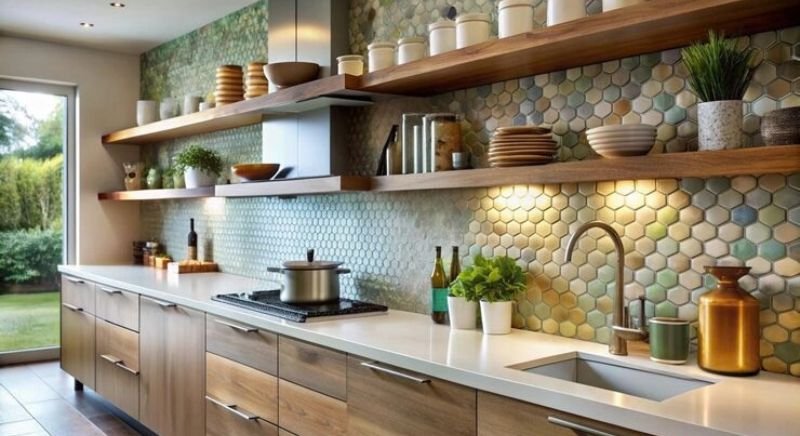
Modern Kitchens
Modern kitchens often benefit from clean lines, subtle colors, marble-look sheets, acrylic, or simple geometric patterns.
A smooth removable tile backsplash can provide a polished appearance without permanent construction.
Small Apartment Kitchens
An apartment friendly backsplash should not overwhelm a limited space. Light colors and simple patterns can make a small kitchen feel more open.
Peel-and-stick products and temporary wallpaper can provide visual interest without requiring a major renovation.
Minimalist Kitchens
Choose one simple finish rather than combining several competing patterns. White, beige, gray, soft stone, and subtle geometric designs can work particularly well.
Traditional Kitchens
Subway-style products, beadboard, and classic patterns pair well with traditional cabinets and hardware.
For this style, click tile backsplash products can also be worth considering if they are designed for temporary installation. Some click tiles for kitchen applications use interlocking construction instead of conventional adhesive.
Colorful Kitchens
If your cabinets, appliances, or accessories already have strong colors, choose a backsplash that complements rather than competes with them.
A changeable backsplash makes it easier to update the look later if your style changes.
Common Renter-Friendly Backsplash Mistakes to Avoid
Even a good material can cause problems if it is installed incorrectly. Avoid these common mistakes when choosing a renter friendly backsplash.
Using Permanent Adhesive
Strong construction adhesive can make a backsplash difficult to remove and may damage drywall or paint.
For rental properties, choose an attachment method designed for temporary use whenever possible.
Installing Over a Dirty or Damaged Wall
Grease, dust, moisture, and loose paint can interfere with adhesion. They can also make removal more difficult.
Always prepare the wall before installation.
Ignoring Your Lease Agreement
A temporary product may still violate your rental agreement. Never assume that removable means automatically permitted.
Check the rules first.
Choosing a Difficult-to-Remove Material
A product may be lightweight but still use an aggressive adhesive. Research the mounting system before buying.
If removability is your highest priority, look for products specifically designed for rental applications.
Skipping Measurements
Incorrect measurements can lead to wasted materials, awkward cuts, and poorly aligned patterns.
Measure the complete area before ordering or cutting materials.
FAQs
What Is the Best Backsplash for a Rental Kitchen?
The best backsplash for a rental kitchen depends on your wall surface, lease requirements, budget, and desired appearance. Peel-and-stick tiles, temporary wallpaper, removable vinyl, magnetic panels, and freestanding systems can all work in different situations.
Can You Use Peel-and-Stick Backsplash in a Rental?
Yes, but check your lease and the product instructions first. A peel-and-stick backsplash can be suitable for renters when it is compatible with the wall and designed for the intended application.
What Backsplash Can Be Removed Without Damaging Walls?
Temporary wallpaper, some peel-and-stick products, magnetic panels, and freestanding systems can offer relatively easy removal. However, no adhesive product can guarantee zero damage on every wall.
Are Removable Backsplash Tiles Really Removable?
Many removable backsplash tiles are specifically designed to be taken down without traditional demolition. However, actual results depend on the adhesive, wall condition, installation method, and how long the tiles remain attached.
What Is a Non-Permanent Kitchen Backsplash?
A non permanent kitchen backsplash is a backsplash designed to avoid permanent construction. Temporary wallpaper, peel-and-stick tile, removable vinyl, contact paper, magnetic panels, and freestanding systems are common examples.
Can You Install Backsplash Tiles in an Apartment?
Yes, but the installation must comply with the rental agreement. Temporary renter friendly kitchen backsplash options are generally more appropriate than conventional mortar-and-grout tile when permanent changes are not allowed.
How Do You Remove a Temporary Backsplash?
Start from an edge, loosen the material carefully, and peel it away slowly. Follow the manufacturer’s instructions for adhesive removal and clean the wall gently afterward.
Related Kitchen Improvement Guides
Kitchen Home Improvement Guide: Repairs, Maintenance & Upgrades — For a broader plan covering repairs, storage, surfaces, and budget-friendly upgrades.
Cheapest Countertops: 15 Affordable Options for Your Kitchen — Compare affordable surface materials and ways to reduce countertop costs.
How to Update Old Kitchen Cabinets Without Replacing Them — Explore practical cabinet updates that do not require full replacement.
Final Thoughts on Renter-Friendly Backsplash Ideas
A rental kitchen can still feel personal and stylish without permanent renovation. The right renter friendly backsplash can introduce color, texture, pattern, or the appearance of real tile while keeping the project temporary.
Peel-and-stick tiles are a popular choice, but they are far from the only option. Temporary wallpaper, removable vinyl, contact paper, PVC, acrylic, magnetic panels, and freestanding designs provide alternatives for different budgets and kitchen layouts.
Before installing anything, check your lease, inspect the wall, and understand how the chosen product will be attached and removed. A thoughtful approach allows you to enjoy a refreshed kitchen while reducing the chance of unwanted repairs when it is time to move.