

A sink that takes forever to empty can throw off your entire routine. Whether you’re brushing your teeth in the morning or washing dishes after dinner, standing water is never a good sign. If you’ve been asking yourself, why does my sink drain slowly, you’re not alone. It’s one of the most common plumbing problems homeowners deal with, and in many cases, it starts with a small blockage that gets worse over time.
A bathroom sink draining slowly is often caused by hair, soap scum, or toothpaste collecting inside the drain. A slow draining kitchen sink, on the other hand, usually struggles because of grease, food scraps, or cooking oils that stick to the pipes. At first, the slow drain may seem like a minor inconvenience, but ignoring it can eventually lead to backups, unpleasant odors, or a sink that stops draining altogether.
For broader troubleshooting across your home, see the home plumbing troubleshooting guide for more detailed steps.
The good news is that not every sink draining slowly needs an expensive repair. Some problems can be solved with simple cleaning methods or safe home remedies, while others point to hidden plumbing issues that need professional attention. In this guide, you’ll learn what causes a slow sink drain, how to fix it step by step, which home remedies actually work, and when it’s the right time to call a plumber before a small issue turns into a much bigger one.
Why Is My Sink Draining Slowly?
A sink draining slowly is your plumbing system’s way of telling you something isn’t moving as freely as it should. Water naturally follows the easiest path through the drain. When that path begins to narrow because of buildup or damage, the water slows down instead of flowing away smoothly.
Sometimes my sink is draining slowly because of everyday waste that has collected over weeks or months. Other times, the problem is deeper inside the plumbing where you can’t see it. The key is figuring out where the restriction is before choosing the right solution.
Bathroom Sink Draining Slowly
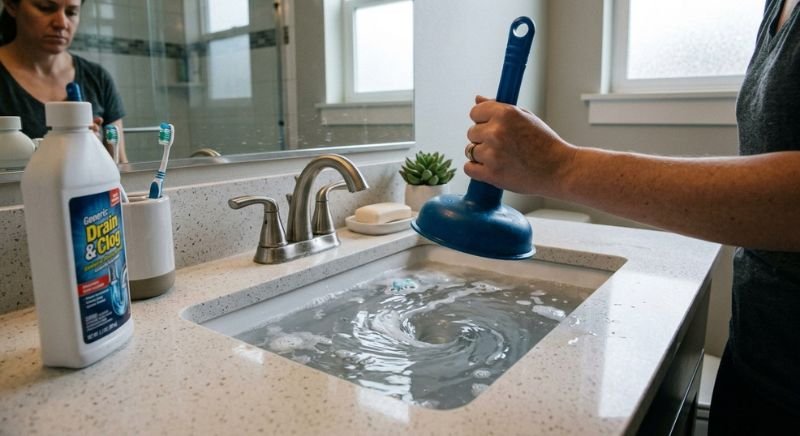
A slow draining bathroom sink is usually caused by things you use every day. Hair, toothpaste, shaving cream, soap residue, and beauty products slowly stick to the inside of the drainpipe. Each layer makes the opening a little smaller until the water has trouble getting through.
If your bathroom sink slow draining problem started gradually, there’s a good chance the blockage has been building up for quite some time. Many homeowners don’t notice it until the water begins pooling around the stopper.
Sometimes a bathroom sink draining slowly doesn’t mean the drain is completely blocked. It simply means water can’t move as fast as it should because the pipe has become partially restricted.
Kitchen Sink Draining Slowly
A slow draining kitchen sink usually has different causes than a bathroom sink. Cooking grease, food scraps, coffee grounds, pasta, rice, and cooking oils are some of the biggest reasons a kitchen sink drains slowly.
Even if you rinse the sink with hot water after washing dishes, grease can cool down inside the pipes and stick to the walls. Over time, more food particles attach to it, creating a stubborn blockage.
If my kitchen sink is draining slowly, think about what has gone down the drain recently. Even small amounts of grease can create a problem weeks later.
When a kitchen sink draining very slowly suddenly becomes worse, the blockage may have grown enough to restrict most of the pipe.
Why Is My Sink Draining Slowly but Not Completely Clogged?
One of the most common questions plumbers hear is, why is my sink draining slow if it isn’t fully blocked?
The answer is simple. A partial clog still leaves enough space for water to pass through, just much more slowly than normal. This is why a sink draining slowly no blockage can feel confusing. The pipe isn’t completely closed off, but it’s no longer flowing efficiently.
If your slow draining sink not clogged situation has continued for several weeks, the restriction is likely getting larger. Eventually, that partial blockage may become a complete clog if nothing is done.
Common Causes of a Slow Draining Sink
Most slow drains don’t happen overnight. They develop little by little until the water starts taking longer to disappear. Knowing the real cause helps you choose the right fix instead of trying random drain cleaners that may not solve the problem.
Hair, Soap Scum & Bathroom Sink Buildup
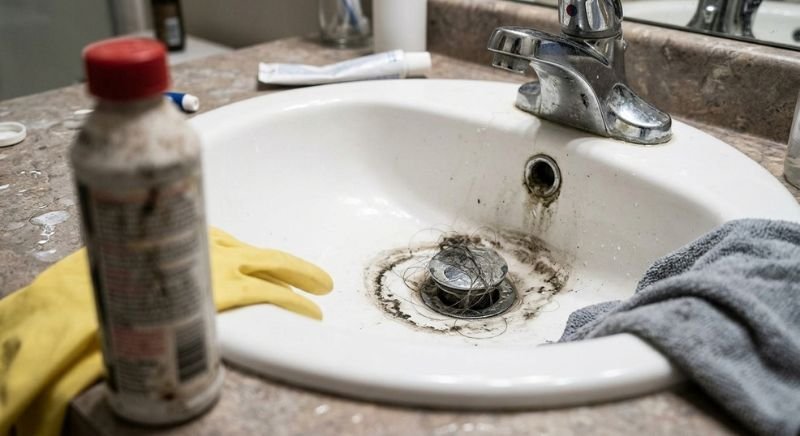
Hair is one of the biggest reasons a bathroom sink drain slow problem develops. Hair wraps around the sink stopper while soap, toothpaste, and personal care products stick to it, creating a thick clog over time.
This is why a bathroom sink drains slowly even though nothing large has gone down the drain.
If your bathroom sink drains slow not clogged, the buildup is probably sitting just below the stopper where you can’t easily see it.
Sometimes homeowners believe their bathroom sink not draining but pipes clear means there’s no blockage. In reality, the clog is often hidden inside the drain assembly instead of farther down the plumbing.
If ignored, a bathroom sink keeps clogging because each new layer sticks to the old one, making the opening smaller every week.
Grease, Food & Kitchen Sink Blockages
Kitchen drains collect a completely different type of waste. Grease sticks to pipe walls first. Then food particles attach themselves to the grease. Eventually, enough material builds up that the kitchen sink draining slowly becomes noticeable.
If your kitchen sink not draining properly, don’t assume one large object caused it. Most kitchen clogs form from months of everyday cooking habits.
Even a kitchen sink draining slowly no blockage may simply have grease coating the inside of the pipe rather than one solid obstruction.
Mineral Buildup Inside the Drain
Homes with hard water often experience mineral deposits inside drainpipes. These deposits slowly reduce the pipe’s diameter, making water move more slowly.
Unlike hair or grease, mineral buildup happens quietly over several years. Many homeowners don’t realize it’s there until the sink drains slowly not clogged, even after cleaning the visible parts of the drain.
Partial Clog in the P-Trap
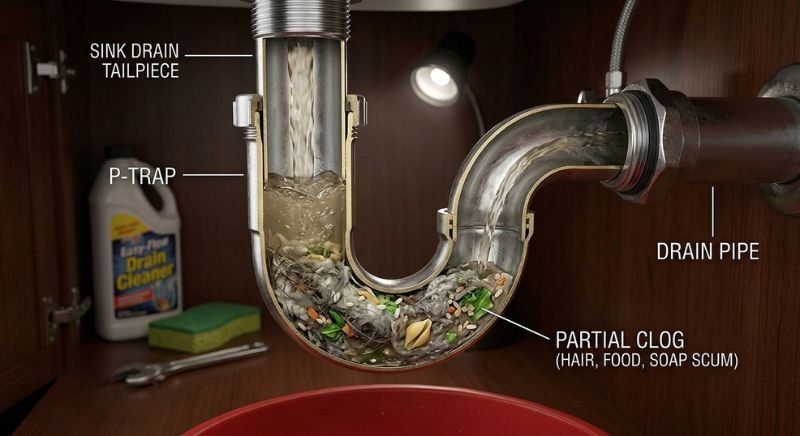
The P-trap is the curved section of pipe beneath the sink. It holds water to prevent sewer gases from entering your home, but it’s also where debris often collects.
Hair, soap residue, grease, food waste, and small objects can become trapped here. This often creates a sink is draining slowly problem without completely stopping the water.
Fortunately, a clogged P-trap is usually one of the easier plumbing problems to clean.
Vent or Plumbing Problems
Every plumbing system relies on proper venting to help wastewater flow smoothly. When a plumbing vent becomes blocked, air can’t move freely through the system.
Instead of flowing normally, water may drain slowly, make gurgling sounds, or leave unpleasant smells behind.
Although less common than a clog, vent problems can create a slow drain that keeps returning after cleaning.
Pipe Damage or Hidden Drain Issues
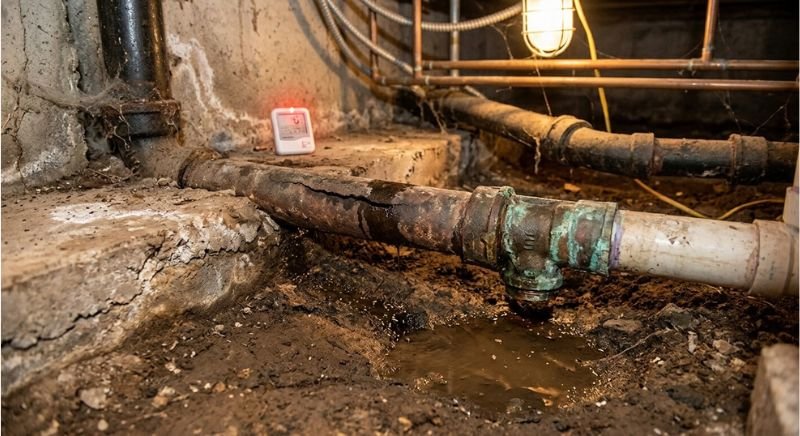
Not every slow sink drain is caused by buildup. Older homes sometimes have damaged, collapsed, or corroded pipes that restrict water flow. Tree roots, shifting soil, or worn plumbing can also create hidden drainage problems.
If you’ve already tried every slow drain fix you can think of but the problem keeps returning, the issue may be deeper inside the plumbing system.
A professional inspection is often the best solution for slow draining sink problems that won’t stay fixed.
How to Fix a Slow Draining Sink
The right repair depends on what’s causing the blockage. Start with the easiest methods before moving on to more involved cleaning techniques.
Many homeowners can fix slow draining sink problems themselves without replacing any plumbing parts.
Flush with Hot Water
One of the simplest ways to begin a slow drain fix is with hot water. Running very hot water for several minutes can soften light grease buildup, wash away soap residue, and improve water flow.
While this won’t remove large clogs, it’s an easy first step before trying stronger cleaning methods.
Baking Soda and Vinegar for a Slow Draining Sink
A classic home remedy for slow draining sink problems combines baking soda and vinegar. Pour baking soda into the drain first, followed by vinegar. Allow the mixture to bubble inside the pipe before flushing everything with hot water.
This baking soda and vinegar for slow draining sink method works best for light organic buildup rather than heavy grease or solid blockages.
Many homeowners choose this slow draining sink home remedy because it avoids harsh chemicals and is safe for routine maintenance.
Clean the Sink Stopper
A surprising amount of debris collects around the sink stopper. Hair, soap, toothpaste, and cosmetic products often become trapped underneath it, especially in bathroom sinks.
Simply removing the stopper and cleaning away the buildup can instantly improve water flow.
Remove and Clean the P-Trap
If basic cleaning doesn’t help, the next step is checking the P-trap.
Place a bucket underneath before removing it. Clean out any trapped debris, rinse the pipe thoroughly, then reinstall it securely.
This simple repair often helps clear slow draining sink problems that have been getting worse over time.
Use a Drain Snake or Zip Tool
When buildup sits deeper inside the drain, a drain snake or plastic zip tool can pull it out.
These tools work especially well for hair clogs and are often the fastest way to how to unclog a slow draining sink without using chemicals.
They’re also helpful if you’re wondering how to clean a slow drain after basic cleaning methods haven’t worked.
How to Clear a Slow Bathroom Sink Drain
If you’re trying to learn how to clear slow bathroom sink drain, begin by removing the stopper and cleaning away any visible hair.
Next, flush the drain with hot water or use baking soda and vinegar. If the drain is still slow, a zip tool usually reaches hair that’s trapped deeper inside the pipe.
For homeowners searching how to clear slow draining bathroom sink, combining these methods often produces the best results without damaging the plumbing.
How to Fix a Slow Draining Kitchen Sink
Learning how to fix a slow draining kitchen sink starts with understanding what usually causes the blockage.
Avoid pouring grease into the drain, clean the P-trap if needed, and flush the drain with hot water after removing any food debris.
If grease buildup has become severe, you may need a stronger drain cleaner for slow drains or professional cleaning instead of repeated DIY attempts.
Home Remedies for a Slow Draining Sink
When your sink starts draining slower than usual, you don’t always need to reach for a strong chemical cleaner right away. In many cases, simple household items can break down light buildup and help restore normal water flow. The key is using the right method for the type of blockage you’re dealing with.
Baking Soda and Vinegar
One of the most trusted home remedies for slow draining sink problems is baking soda and vinegar. This combination creates a fizzing reaction that helps loosen soap residue, light grease, and small amounts of organic buildup inside the drain.
Start by pouring about half a cup of baking soda into the drain, followed by the same amount of white vinegar. Let the mixture work for 20 to 30 minutes before flushing it with hot water.
This home remedy for clogged sink is most effective when the blockage is still minor. If the drain is completely blocked, you’ll likely need a mechanical cleaning method instead.
Hot Water Flush
Sometimes the simplest solution is enough. A hot water flush works well when grease, soap, or oily residue is slowing the drain. The heat softens the buildup and helps move it farther through the pipe.
For homeowners looking for a quick slow running drain home remedy, this is often the easiest place to start. Just avoid using boiling water on PVC pipes, as excessive heat may damage certain plumbing materials over time.
Dish Soap for Grease Buildup
If your kitchen sink drains slowly, grease is often the real problem. Dish soap is designed to break down oils, making it surprisingly effective for light kitchen drain buildup.
Add a generous amount of liquid dish soap to the drain, wait a few minutes, then flush with hot water. This method works best before grease has hardened into a thick blockage.
It’s one of the safest home remedies for slow draining sink issues caused by cooking oils and food residue.
When Home Remedies Won’t Work
Home remedies are helpful, but they aren’t magic.
If your sink draining slowly hasn’t improved after trying safe cleaning methods, the blockage may be too large or too deep inside the plumbing system.
Home treatments usually won’t solve:
- Heavy grease buildup
- Large hair clogs
- Pipe damage
- Tree root intrusion
- Drain vent problems
- Severe mineral deposits
Instead of repeating the same DIY method over and over, it’s often smarter to inspect the drain or call a professional before the blockage becomes worse.
Slow Draining Sink but No Clog – What Does It Mean?
It can be frustrating when your sink draining slowly no blockage is visible. You look into the drain, clean out what you can reach, and nothing seems to be in the way, yet the water still takes forever to disappear. It’s easy to assume there’s no clog, but that’s not always the case.
A slow draining sink not clogged usually means the restriction is hidden somewhere inside the plumbing system rather than near the drain opening. In many cases, water can still pass through, but not fast enough to keep the sink draining normally. Finding the real cause early can prevent the problem from turning into a complete blockage.
Hidden Partial Blockage
One of the most common reasons a sink drains slowly not clogged is because the blockage sits farther down the pipe where you can’t see it.
Hair, soap scum, grease, food particles, and other debris often build up gradually along the inside of the drainpipe instead of collecting right beneath the sink. Since there’s still a small opening for water to pass through, the sink drains, but much more slowly than it should.
This is why many homeowners believe their sink not draining but pipes clear or that there’s no clog at all. In reality, a professional camera inspection often reveals a partial blockage hidden deeper in the drain line.
Drain Vent Problems
Your plumbing system doesn’t rely on pipes alone, it also needs proper airflow. That’s the job of the plumbing vent. It allows air to move through the system so wastewater can flow smoothly instead of creating a vacuum inside the pipes.
If the vent becomes blocked by leaves, bird nests, or other debris, water may begin draining slowly even though the drain itself isn’t clogged.
Some common signs of a vent problem include:
- Gurgling or bubbling sounds after water drains
- Water draining more slowly than usual
- Air bubbles appearing in the sink
- Unpleasant sewer-like odors coming from the drain
Vent issues aren’t as common as drain clogs, but they create many of the same symptoms. If cleaning the drain doesn’t improve the problem, it’s worth having the plumbing vent inspected.
Pipe Scale or Mineral Deposits
If you live in an area with hard water, mineral deposits can slowly build up inside your drainpipes over the years. Unlike a typical clog, these deposits don’t block the pipe all at once. Instead, they gradually narrow the inside of the pipe, leaving less space for water to flow.
As the opening becomes smaller, the sink drains more slowly even though there isn’t a large obstruction sitting in the drain.
That’s why a sink won’t drain no clog situation can be misleading. The issue isn’t loose debris it’s the gradual buildup of mineral scale along the pipe walls. In older homes, this problem can become more noticeable as the plumbing ages, and professional drain cleaning may be needed to restore normal flow.
Bathroom Sink Not Draining vs Slow Draining Sink
Not every drainage problem looks the same. Knowing the difference between a slow drain and a complete blockage helps you decide how urgently the issue needs attention.
Slow Drain vs Complete Blockage
A bathroom sink not draining, however, usually leaves standing water in the basin because little or no water can pass through the pipe.
If your bathroom sink won’t drain, waiting usually won’t make the problem better. Complete clogs almost always require immediate cleaning.
Sometimes homeowners report their bathroom sink draining slowly with no blockage, but after removing the stopper, they discover years of hidden hair wrapped underneath.
Signs the Drain Is About to Clog Completely
Your drain often gives warning signs before it becomes fully blocked.
Watch for these symptoms:
- Water stays in the sink longer than usual.
- The bathroom sink backs up after every use.
- The drain makes bubbling or gurgling sounds.
- Unpleasant smells rise from the drain.
- The sink empties slower each week.
- The bathroom sink keeps clogging even after cleaning.
Ignoring these signs usually leads to a complete blockage sooner rather than later.
When Should You Call a Plumber for a Slow Draining Sink?
Many slow drains can be fixed with basic cleaning or a simple home remedy. But sometimes, a slow drain is a warning sign of a bigger plumbing problem that’s hidden deeper inside your pipes. If you’ve already tried the usual fixes and the problem keeps coming back, continuing to guess can waste both time and money.
Knowing when to call a plumber for slow-draining sink problems can help prevent a minor blockage from turning into a burst pipe, water damage, or an expensive emergency repair. Here are a few signs that it’s time to let a professional take a closer look.
Water Keeps Backing Up
A slow drain is one thing, but water that starts flowing back into the sink is another. If the water level rises every time you use the faucet or drains away only after several minutes, the blockage has likely become much more serious.
This usually means the clog is deeper inside the plumbing system than a plunger, drain snake, or household cleaner can reach. A plumber has specialized tools to locate the blockage and remove it without damaging your pipes.
Multiple Drains Are Slow
If your kitchen sink, bathroom sink, bathtub, and even the shower all start draining slowly around the same time, the problem is probably much bigger than a single clogged drain.
Instead of one fixture being blocked, there could be a restriction in the main drain line that carries wastewater away from your home. This type of problem requires professional equipment, such as drain cameras or hydro-jetting, to identify the exact cause and clear it safely.
Bad Odors or Gurgling Sounds
Your plumbing should never smell like a sewer or make loud bubbling noises.
If you notice unpleasant odors coming from the drain or hear gurgling whenever water goes down the sink, it may be a sign of a blocked drain vent, trapped air, or a deeper obstruction inside the plumbing system.
These issues rarely go away on their own and often become worse over time. Having them inspected early can help prevent larger plumbing repairs later.
Slow Drain After Cleaning the P-Trap
If you’ve cleaned the sink stopper, removed and washed the P-trap, tried safe home remedies, and even used a drain snake, but the sink is still draining slowly, it’s time to stop guessing.
The blockage may be farther down the drain line, hidden behind walls, under the floor, or even outside your home. At this point, a professional inspection can identify the real cause much faster than repeating the same DIY methods.
How to Prevent a Slow Draining Sink
A slow drain usually doesn’t happen overnight. It builds up little by little as everyday debris collects inside the pipes. The good news is that a few simple habits can keep water flowing smoothly and help you avoid expensive plumbing repairs later. Spending just a few minutes on regular maintenance is much easier than dealing with a sink that suddenly stops draining.
Clean the Drain Regularly
Small cleanups can prevent big plumbing headaches. Once every week or two, remove any visible hair, soap residue, food scraps, or debris from the drain opening before they get pulled deeper into the pipes.
For bathroom sinks, pay extra attention to the sink stopper since hair and toothpaste often collect underneath it. In the kitchen, wipe away leftover food particles before they have a chance to wash down the drain.
Avoid Grease and Food Waste
Grease may look harmless while it’s hot, but once it cools inside the pipes, it hardens and sticks to the pipe walls. Over time, more grease and food particles cling to it, creating a blockage that’s much harder to remove.
Instead of pouring grease into the sink, let it cool and throw it away with your household waste. It’s also a good habit to scrape plates into the trash or compost bin before rinsing them, as even small food scraps can build up over time.
Use a Drain Screen
A drain screen is one of the simplest and most affordable ways to protect your plumbing. It catches hair, food particles, and other debris before they enter the drain, making cleanup much easier than removing a clog later.
Choose a screen that fits your sink properly and empty it regularly. A clean drain screen works much better than one that’s already full of debris.
Flush the Drain Periodically
Flushing your drain with hot water once a week helps rinse away light soap residue, grease, and small particles before they settle inside the pipes. This simple habit can slow the buildup that often leads to clogs.
If your home has PVC plumbing, use hot tap water instead of boiling water to avoid damaging the pipes. Combined with regular cleaning, this small step can keep your sink draining properly for much longer.
By making these habits part of your regular cleaning routine, you can reduce the risk of clogs, improve drainage, and avoid searching for a slow sink drain fix when a preventable problem turns into a costly repair.
Related Plumbing Guides
Explore these related guides for more targeted troubleshooting and practical fixes:
- Home Plumbing Troubleshooting Guide
- How to Unclog a Bathtub Drain Without Chemicals
- How to Fix a Leaky Faucet Handle
Conclusion
A sink draining slowly rarely fixes itself. What starts as a small inconvenience today can easily turn into tomorrow’s overflowing sink or a much more expensive plumbing repair. If you’ve been wondering, “Why Does My Sink Drain Slowly?”, the answer is often a buildup of everyday debris, a hidden blockage, or another plumbing issue that’s easier to fix when caught early.
The good news is that many slow drains are caused by everyday buildup that’s easy to remove with regular cleaning and safe home remedies. Whether you’re dealing with a bathroom sink draining slowly, a kitchen sink draining slowly, or a drain that’s simply losing its flow over time, taking action sooner gives you the best chance of avoiding a complete blockage and keeping your plumbing working properly.
If you’ve already tried reasonable DIY solutions and the water still drains slowly, don’t keep guessing. A professional inspection can uncover hidden clogs, damaged pipes, or deeper plumbing issues before they become much more costly. Getting the right diagnosis early can save you time, money, and the frustration of dealing with the same problem again.
FAQs
Why does my sink drain slowly?
A sink usually drains slowly because of hair, soap scum, grease, food waste, mineral deposits, or a partial clog inside the drainpipe. Less commonly, damaged pipes or plumbing vent problems may be responsible. Finding the cause early makes it much easier to restore normal drainage.
Why is my bathroom sink draining slowly?
A bathroom sink draining slowly is most often caused by hair, toothpaste, soap residue, and personal care products collecting beneath the stopper or inside the drain. Cleaning these areas regularly can help prevent future clogs.
Why is my kitchen sink draining slowly?
A kitchen sink draining slowly is usually the result of grease, cooking oil, food scraps, or coffee grounds building up inside the drainpipe. Avoid pouring grease down the sink, as it can harden inside the pipes and restrict water flow over time.
How do I fix a slow draining sink?
Start with hot water, clean the sink stopper, try baking soda and vinegar, inspect the P-trap, and use a drain snake if necessary. If you need a stronger solution, choose a best drain cleaner for slow drain that’s safe for your plumbing system. If these methods don’t work, the blockage may require professional attention.
How do I clear a slow bathroom sink drain?
Remove the stopper, clean away trapped hair, flush the drain with hot water, and use a zip tool or drain snake if buildup remains deeper inside the pipe. Acting early can often prevent a complete blockage.
What is the best home remedy for a slow draining sink?
One of the safest options is baking soda followed by white vinegar and then a hot water flush. This works well for light organic buildup but won’t remove severe clogs or heavy grease deposits.
Why is my sink draining slowly but not clogged?
A partial blockage, mineral deposits, or a plumbing vent problem can all restrict water flow without completely blocking the drain. Although nothing may be visible near the drain opening, the restriction is often hidden deeper inside the plumbing.
Can baking soda and vinegar fix a slow drain?
Yes. Baking soda and vinegar can loosen soap residue, light grease, and organic buildup. However, they are less effective against heavy blockages or damaged pipes. For tougher clogs, the best drain opener for slow drains or professional drain cleaning may provide better long-term results.
Why is my kitchen sink draining slowly but not blocked?
This often happens when grease coats the inside of the pipe. Water can still pass through, but the narrowed opening slows the flow significantly. Cleaning the drain before the buildup becomes severe can help restore normal drainage.
When should I call a plumber for a slow draining sink?
Knowing when to call plumber for slow draining sink problems can save you from more expensive repairs later. Call a plumber if multiple drains are slow, water keeps backing up, foul odors continue, the drain stays slow after cleaning the P-trap, or the same blockage keeps returning despite your DIY efforts. A professional can identify hidden plumbing issues and recommend the most effective long-term solution.