

The floor in your home does more than cover the surface beneath your feet. It affects comfort, room design, cleaning time, safety, and the way your home handles daily life. Children may spill drinks, pets may leave scratches, and moisture may enter areas such as bathrooms and basements. The right flooring material can make these everyday problems easier to manage.
This home flooring guide explains common home flooring types, their benefits, their limitations, and their care requirements. You will learn how to choose flooring for different rooms, compare residential flooring options, prevent common damage, and repair problems before they become expensive. The guide also covers flooring maintenance, flooring lifespan, and the signs that your floor may need professional attention.
A good flooring choice depends on more than color or style. You should consider your home’s moisture levels, daily traffic, household members, cleaning habits, and budget. Proper installation and regular care also play an important role. When you understand these factors, you can choose flooring that looks good and performs well for years.
Understanding the Different Types of Home Flooring
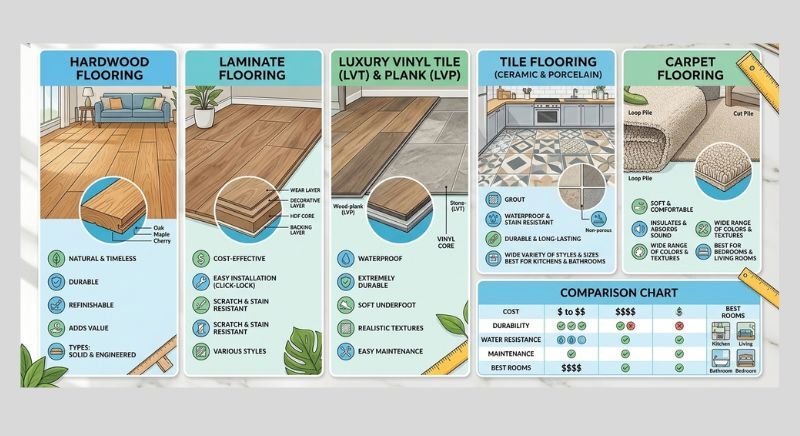
Home flooring comes in many styles, materials, and price ranges. The most common types include hardwood flooring, laminate flooring, vinyl plank flooring, and tile flooring. Each material has different strengths, cleaning needs, and limits. Some floors suit dry living areas, while others work better in bathrooms, kitchens, and basements.
Understanding flooring materials before making a purchase can prevent problems later. A beautiful floor may not be the right choice for a room with frequent spills or heavy traffic. The best flooring for home use depends on how the space works and how much care you can provide.
Hardwood Flooring
Hardwood flooring gives a home a warm, natural appearance. It comes in different wood species, colors, plank sizes, and surface finishes. Many homeowners choose hardwood because it can complement both traditional and modern interior designs.
Solid hardwood is made from natural wood throughout the plank. Engineered hardwood has a real wood surface attached to several supporting layers. Engineered hardwood may handle changes in humidity better than some solid wood floors, although performance depends on the product and installation.
Hardwood works well in bedrooms, living rooms, dining rooms, and hallways. However, prolonged moisture can cause swelling, warping, staining, or gaps. For this reason, homeowners should take extra care when considering hardwood for bathrooms, laundry rooms, and damp basements.
Regular sweeping, quick spill cleanup, furniture pads, and suitable wood-floor cleaners can support hardwood flooring care. Avoid using excess water or harsh cleaning products. If the finish becomes worn or the surface develops deep scratches, professional refinishing may help restore the floor.
Laminate Flooring
Laminate flooring uses several layers to create a surface that often resembles natural wood or stone. It can provide an attractive appearance at a lower initial cost than some hardwood products. This makes laminate a common choice for bedrooms, living rooms, offices, and other dry areas.
Modern laminate flooring varies in quality and water resistance. Some products include improved moisture protection, while others can swell when water enters the joints or core. Always check the manufacturer’s instructions before using laminate in kitchens, bathrooms, or other areas where spills are common.
Laminate is usually easy to clean when you use the correct method. Remove dust and grit regularly, wipe spills quickly, and avoid soaking the floor. Excess water, abrasive cleaners, and unsuitable polishing products can damage the surface or weaken the edges.
Vinyl Plank Flooring
Vinyl plank flooring is a practical option for homeowners who want a floor that is comfortable, attractive, and easy to clean. Luxury vinyl plank, also called LVP, can imitate the appearance of hardwood while offering moisture resistance and flexible design choices.
Vinyl plank flooring comes in different thicknesses, wear layers, textures, and installation systems. Some products use click-lock installation, while others require adhesive. Product quality and subfloor preparation can strongly affect the final result.
Many vinyl plank products suit kitchens, bathrooms, laundry areas, and busy hallways. However, do not assume that every vinyl product is completely waterproof. Check the manufacturer’s specifications, especially when water may collect around seams or edges.
Regular floor cleaning with a soft broom, suitable vacuum, and approved damp-mopping method can help protect vinyl plank flooring. Avoid sharp objects, abrasive tools, and cleaning products that are not approved for the surface.
Tile Flooring
Tile flooring offers durability, design flexibility, and a surface that can suit many parts of a home. Common choices include ceramic tile flooring and porcelain tile flooring. Both materials come in many colors, patterns, sizes, and textures.
Porcelain tile generally has low water absorption and often works well in bathrooms, kitchens, entryways, and other moisture-prone areas. Ceramic tile also offers useful design choices, but its performance depends on the product, installation, and location.
Tile can resist everyday wear, but it is not impossible to damage. Heavy impact may crack a tile, while movement beneath the floor may cause repeated cracks. Grout can also become stained, loose, or damaged over time.
Regular sweeping, suitable mopping, and grout care support tile flooring maintenance. Repair damaged grout and cracked tiles when needed. Small problems can become more difficult to manage when moisture enters the underlying layers.
How Flooring Materials Differ in Durability, Cost and Maintenance
Flooring materials differ in price, comfort, appearance, durability, and maintenance. Hardwood offers a natural look and may be refinished, but it needs protection from moisture. Laminate often provides affordable flooring with many design options, but some products are sensitive to water.
Vinyl plank flooring offers easy cleaning and moisture resistance, depending on the product. Tile provides a hard and durable surface, but it can feel cold and may require grout maintenance. These differences matter when comparing flooring options for homes.
The total flooring cost includes more than the material. You may also need to pay for removal, subfloor preparation, underlayment, adhesives, trim, waste, and installation. A low material price does not always mean a low project cost.
How to Choose the Right Flooring for Your Home
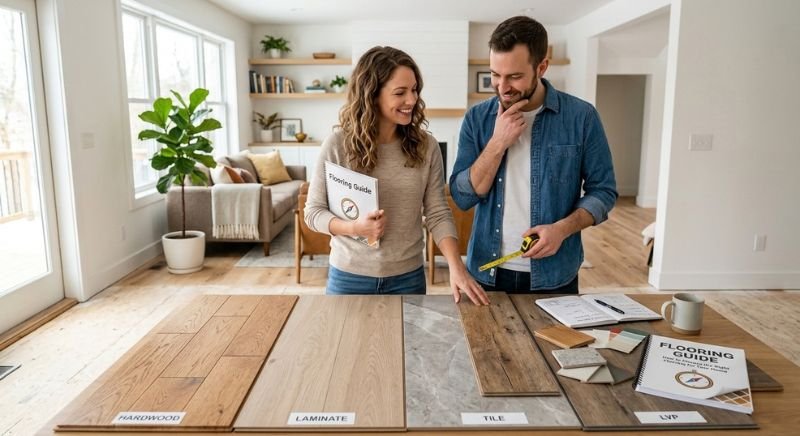
Learning how to choose flooring starts with understanding your home’s daily needs. A floor that works well in a quiet guest bedroom may not suit a busy kitchen or a bathroom used by children. Consider the room, traffic, moisture, cleaning habits, and budget before selecting a material.
Your home flooring ideas should support real use rather than focus only on appearance. A stylish floor becomes difficult to enjoy when it stains easily, needs constant care, or cannot handle the room’s conditions.
Consider the Room and Its Moisture Level
Moisture plays a major role in choosing flooring material. Bathrooms, kitchens, laundry rooms, and basements may experience spills, humidity, leaks, or condensation. These areas need flooring that can handle the expected moisture exposure.
Tile and suitable vinyl products may provide practical solutions for wet areas. However, the flooring itself is only one part of moisture protection. Seams, edges, adhesives, subfloors, and installation details also affect performance.
Hardwood and some laminate products may not suit rooms with regular water exposure. If you choose a moisture-sensitive material, understand its limits and follow the manufacturer’s installation requirements.
Consider Durability and Daily Traffic
Daily traffic affects flooring durability. Entryways, hallways, kitchens, and family rooms often receive more foot traffic than bedrooms or formal dining spaces. Shoes, dirt, furniture, and repeated movement can wear down the surface over time.
Look at the product’s wear layer, finish, construction, and recommended use. A floor designed for light residential use may not perform well in a busy household. Consider whether the material can handle pets, children, rolling chairs, and heavy furniture.
Durable flooring still needs proper care. Dirt and grit can scratch surfaces, while moisture can damage materials that are not designed for wet conditions.
Consider Pets and Children
Homes with pets and children need flooring that can handle spills, movement, accidents, and everyday wear. Pet-friendly flooring should be easy to clean and suitable for the household’s activity level.
Vinyl plank flooring and tile are common choices for families that want simple cleaning. Selected laminate products may also work when they have suitable surface protection and moisture resistance. Hardwood can remain a good option when homeowners use rugs, protective pads, and careful cleaning habits.
No material is fully resistant to every scratch or stain. Flooring for pets and flooring for kids should be selected with realistic expectations. Regular cleaning and floor protection remain important after installation.
Consider Cleaning and Maintenance Needs
Some flooring types need more care than others. Hardwood may require specific cleaning products and moisture control. Tile may need grout cleaning, while laminate needs careful water management. Vinyl flooring often supports simple cleaning when you follow the product instructions.
Think about how much time you want to spend on flooring cleaning. If you prefer a low-maintenance surface, select a material that fits your routine and the room’s conditions.
Do not use one cleaning method for every floor in your home. The wrong product or excess water can damage a finish, weaken seams, or leave behind residue.
Consider Your Flooring Budget
Your flooring budget should include material, labor, preparation, installation, and future maintenance. Some floors cost less to purchase but may require more care or earlier repairs. Others may cost more at the beginning but provide longer service under suitable conditions.
Budget flooring can work well when it matches the room’s requirements. Avoid selecting the cheapest product without checking its moisture resistance, wear rating, warranty, and installation needs.
Request a complete estimate before beginning flooring installation. Ask whether the price includes subfloor repairs, removal of old flooring, transition pieces, and disposal.
Compare Flooring Materials Before Choosing
Compare flooring materials using the same criteria. Review durability, moisture resistance, comfort, appearance, cleaning needs, installation cost, and expected flooring lifespan. This approach helps you choose based on performance rather than marketing claims.
Best Flooring for Different Rooms and Home Needs
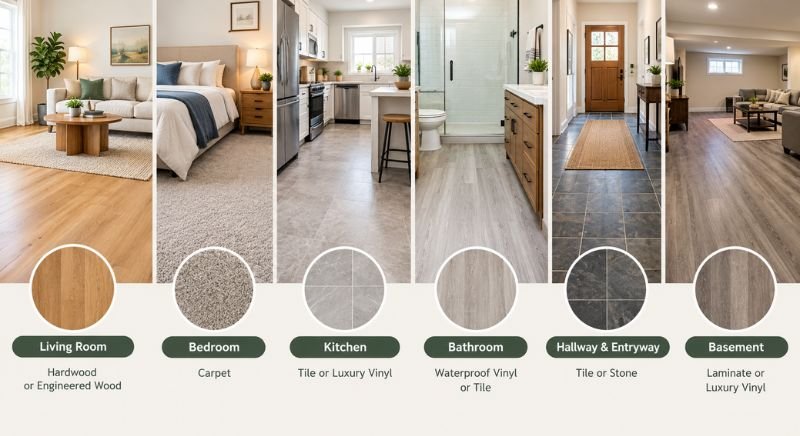
Each room places different demands on the floor. A bathroom needs moisture protection, while a living room may need comfort and resistance to daily traffic. Basements require special attention because water and humidity can affect the floor from below.
The best flooring for different rooms depends on the room’s use, temperature, moisture, and cleaning requirements. Consider these conditions before choosing residential flooring options.
Choosing Flooring for Bathrooms
Bathroom flooring should handle water, humidity, cleaning, and regular foot traffic. Porcelain tile, ceramic tile, and suitable vinyl products are common choices. The right option depends on the product’s water resistance, surface texture, installation, and maintenance requirements.
Choose a surface that provides suitable traction for the room. Keep grout, seams, and edges in good condition, and repair leaks quickly. Even water-resistant flooring can develop problems when water enters damaged joints or reaches the subfloor.
Choosing Flooring for Basements
Basement flooring requires careful planning because moisture may enter through walls, foundations, concrete slabs, or plumbing problems. Before installation, check for dampness, leaks, condensation, and uneven surfaces.
Suitable vinyl plank flooring and tile may work in some basements. However, the flooring system must match the moisture conditions and subfloor.
Do not cover an active moisture problem with new flooring. Identify and address the source before starting the installation.
Flooring for Homes With Pets
Flooring for pets should handle movement, dirt, accidents, and scratches. Look for a surface that is easy to clean and suitable for your pet’s activity level. The product’s texture and finish may also affect how clearly scratches or marks appear.
Vinyl plank flooring, tile, and selected laminate products can suit many pet-friendly homes. Use mats near entrances and clean accidents quickly. Regular nail care and protective rugs may also reduce surface damage.
Flooring for Homes With Children
Flooring for kids should be easy to clean and suitable for play, spills, and frequent movement. Consider the floor’s hardness, surface texture, moisture resistance, and cleaning requirements.
Vinyl may offer a practical surface for family rooms and play areas. Tile can provide durability but may feel hard underfoot. Rugs and play mats can add comfort when they are suitable for the flooring material.
How Room Conditions Affect Flooring Choice
Room conditions can affect how flooring performs over time. Sunlight may change some finishes, moisture may damage unsuitable materials, and heavy furniture may leave dents or marks. Temperature and humidity can also affect wood-based flooring.
Before choosing flooring, consider how the room is used throughout the day. A floor should fit the actual environment, not only the design you want to create.
Bathroom Flooring: Tile vs Vinyl and Other Options
Bathroom flooring must handle water exposure, cleaning, humidity, and regular movement. Tile and vinyl are popular choices, but their performance depends on the product and installation method.
The right bathroom flooring should balance moisture resistance, safety, comfort, maintenance, and budget. No material eliminates the need for proper installation and quick leak repairs.
Tile Flooring for Bathrooms
Tile flooring is widely used in bathrooms because many tile products handle moisture well. Porcelain tile and ceramic tile offer different colors, patterns, sizes, and textures.
Porcelain tile generally absorbs less water, but the complete installation still matters. Grout, joints, underlayment, and subfloor conditions can affect water protection.
Choose a suitable tile texture for the bathroom. Clean grout regularly and inspect cracks or loose tiles. Damaged areas should be repaired before moisture creates further problems.
Vinyl Flooring for Bathrooms
Vinyl flooring can provide a comfortable and easy-to-clean bathroom surface. Some vinyl products are designed for wet areas, but homeowners should check the exact product specifications.
Pay attention to seams, edges, transitions, and installation instructions. Water can enter through poorly sealed areas even when the flooring surface is moisture resistant.
Use suitable cleaning products and avoid excessive water during routine floor cleaning.
Tile vs Vinyl Flooring for Bathrooms
Laminate vs vinyl and Tile and vinyl offer different benefits. Tile often provides a hard surface, strong design flexibility, and long service life when properly installed. Vinyl may feel softer and warmer underfoot and can offer simpler cleaning in some bathrooms.
Tile repairs may involve replacing individual tiles or repairing grout. Vinyl repairs depend on the product and the extent of the damage. Compare installation costs, comfort, maintenance, and moisture protection before deciding.
How to Choose Bathroom Flooring Based on Moisture, Safety and Maintenance
Choose bathroom flooring based on the room’s water exposure and cleaning routine. Consider suitable slip resistance, secure installation, surface texture, and maintenance needs.
Inspect the floor regularly, especially near the shower, bathtub, toilet, and sink. Repair damaged grout, seams, or flooring sections before moisture reaches the lower layers.
How to Care for and Clean Different Flooring Types
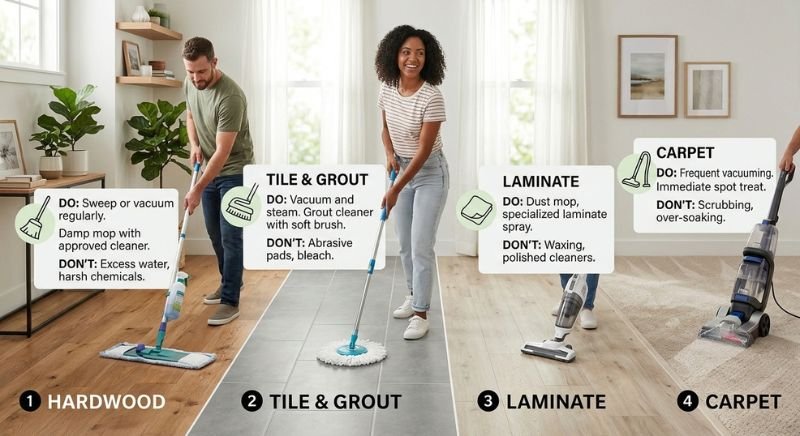
Proper flooring care helps remove dirt, reduce scratches, and preserve the surface. However, every flooring material needs a cleaning method that matches its construction and finish.
A floor does not become cleaner simply because you use more water or stronger chemicals. The wrong cleaning method may cause staining, swelling, dullness, or surface damage.
General Flooring Cleaning and Care
Remove loose dirt and grit regularly with a soft broom, dust mop, or suitable vacuum. Small particles can act like sandpaper when people walk across the floor.
Clean spills quickly and use mats near entrances. Place protective pads under furniture and avoid dragging heavy objects. Follow the manufacturer’s instructions when selecting cleaning products.
Regular flooring care tips are simple, but consistency matters. Small daily habits can prevent damage that would otherwise require costly floor repair.
How to Clean Vinyl Plank Flooring
Begin by removing loose dirt with a soft broom, dust mop, or suitable vacuum. Use a damp mop and an approved cleaner when the product instructions allow it.
Avoid soaking vinyl plank flooring. Excess water can enter seams, edges, or damaged areas and may affect the subfloor. Do not use abrasive tools or harsh chemicals without checking the manufacturer’s guidance.
Caring for Hardwood Floors
Sweep or vacuum hardwood floors regularly to remove dirt and grit. Use a cleaner designed for the floor’s finish and avoid excessive moisture.
Do not use a steam cleaner unless the manufacturer specifically approves it. Too much moisture may cause boards to swell, cup, or separate.
Use furniture pads and clean spills quickly. Stable indoor humidity can also help reduce excessive wood movement.
Caring for Laminate Flooring
Clean laminate flooring with a dry mop, soft broom, or suitable vacuum. If damp cleaning is allowed, use a lightly damp mop rather than a wet one.
Avoid standing water, abrasive products, wax, and unsuitable polish. Water that reaches the edges or core may cause swelling or peeling.
Caring for Tile Floors
Sweep or vacuum tile floors regularly before mopping. Use a cleaner suitable for the tile and grout type. Avoid products that may damage the finish or weaken grout.
Inspect grout lines for cracks, discoloration, and loose sections. Clean spills quickly, especially in kitchens and bathrooms.
Cleaning Mistakes That Can Damage Flooring
Common cleaning mistakes include using excessive water, choosing harsh chemicals, scrubbing with abrasive tools, and applying wax to floors that do not require it. Steam cleaning can also cause problems when the manufacturer does not approve it.
Dragging furniture during cleaning may create scratches. Ignoring pet accidents or spills can cause stains and odors. Always select a cleaning method based on the flooring material rather than using the same process throughout the home.
How to Prevent Common Flooring Damage
Preventive care can reduce scratches, stains, moisture problems, and surface wear. It also gives homeowners a chance to identify small defects before they become larger flooring repair issues.
The best prevention methods are simple. Keep floors clean, control moisture, use protective pads, and respond to damage early.
Preventing Scratches and Surface Damage
To repair scratched floor and prevent it to happen again use entrance mats to reduce the amount of dirt and grit entering your home. Place felt pads beneath furniture legs and lift heavy objects instead of dragging them.
Keep pet nails properly maintained and remove small stones from shoes. Avoid using damaged furniture glides because they may leave marks across the surface.
Protecting Floors From Furniture and Heavy Traffic
Heavy furniture can create dents, scratches, and pressure marks. Use suitable furniture pads and replace them when they become dirty or worn.
Runners and rugs may protect high-traffic areas, but choose products that will not stain, scratch, or trap moisture beneath them. Move furniture carefully and avoid sliding it across the floor.
Preventing Moisture Damage
Moisture damage can affect wood, laminate, adhesives, grout, and subfloor materials. Clean spills quickly and inspect areas near sinks, toilets, washing machines, and exterior doors.
Use bathroom ventilation to control humidity. Check for leaks and do not install moisture-sensitive flooring over a damp subfloor.
Preventing Laminate Edges From Peeling
Peeling laminate edges may develop because of moisture, wear, poor installation, or damaged joints. Wipe spills immediately and avoid allowing water to collect near seams.
Do not pull at loose edges or use an unsuitable adhesive. Identify the cause before attempting a repair. A damaged plank may need replacement when the core has swollen.
When Flooring Damage Needs Repair
Flooring damage needs attention when it affects safety, moisture protection, appearance, or stability. Examples include loose boards, cracked tiles, lifted edges, deep scratches, damaged grout, and swollen laminate.
Minor surface damage may respond to a suitable repair product. However, repeated damage may indicate a deeper problem involving the subfloor, installation, or moisture.
How to Repair Common Flooring Problems
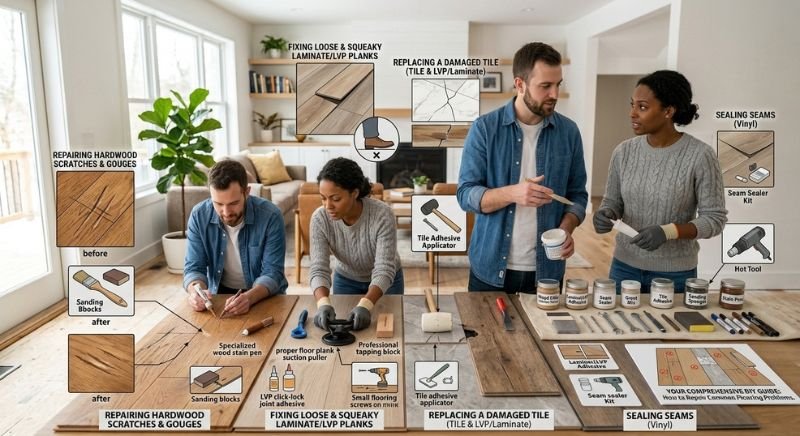
The right flooring repair method depends on the material and the type of damage. Before repairing a surface, identify why the damage occurred. A cosmetic repair will not solve an ongoing moisture problem or an unstable subfloor.
Use repair products designed for the specific flooring type. When the damage is widespread or the cause is unclear, professional flooring help may be necessary.
How to Repair Scratches on Hardwood Floors
Clean the scratched area with a suitable hardwood-floor cleaner before examining the damage. Light surface scratches may improve with a compatible touch-up product or finish repair.
Deep scratches may require sanding and refinishing. Engineered hardwood needs special care because its real wood layer may be thin. Avoid sanding without understanding the thickness of the surface.
How to Remove Scratches From Laminate Flooring
Clean the damaged area and determine whether the scratch affects only the surface or has exposed the decorative layer. Minor marks may respond to a laminate repair marker, wax pencil, or suitable repair kit.
Do not sand laminate flooring like solid hardwood. Sanding may remove the protective and decorative layers, making the damage worse.
How to Repair a Cracked Tile
Inspect the cracked floor tile and look for movement, loose sections, or damage beneath it. A small surface crack may sometimes receive a suitable repair compound, depending on the tile and location.
A tile with extensive damage may need replacement. If new cracks continue to appear, investigate the subfloor, adhesive, or movement beneath the surface.
How to Fix a Squeaky Wood Floor
A squeaky wood floor may result from movement between boards, joists, fasteners, or the subfloor. Find the exact source before selecting a repair method.
Some repairs involve securing loose boards or improving support beneath the floor. Check for pipes, electrical wiring, and other hazards before drilling or installing fasteners.
How to Fix Peeling Laminate Flooring Edges
Inspect the peeling laminate edge and identify whether moisture, wear, or installation problems caused the damage. Remove loose debris carefully and use a repair method suitable for the product.
If the core has swollen or the locking system no longer works, replacing the damaged plank may provide a more reliable result.
Flooring Maintenance and Long-Term Care
Flooring maintenance helps protect the surface and identify problems early. A regular routine also makes it easier to understand how your flooring responds to traffic, moisture, cleaning, and furniture.
The right maintenance schedule depends on the flooring material and room conditions. High-traffic areas may need more frequent cleaning than guest rooms.
Regular Flooring Maintenance Tasks
Regular flooring maintenance includes removing dirt, cleaning spills, checking seams, inspecting grout, and monitoring moisture-prone areas. You should also check furniture pads and look for changes in the floor’s appearance or movement.
Repair small defects before they spread. Keep records of major repairs when useful, especially if your home has recurring moisture or subfloor problems.
How Often Should You Clean and Maintain Floors?
Clean high-traffic areas as needed and remove spills as soon as they occur. Sweep or vacuum regularly to prevent dirt from scratching the surface.
Perform a more detailed inspection each month. Kitchens, bathrooms, entrances, and homes with pets may need more frequent cleaning and inspection.
How to Protect Flooring From Everyday Wear
Use entrance mats, suitable rugs, and furniture pads to reduce everyday wear. Avoid dragging chairs, tables, and heavy appliances across the floor.
Control moisture and use approved cleaning products. These flooring maintenance tips can help reduce scratches, stains, and premature surface damage.
Signs Your Flooring Needs Maintenance
Signs of flooring damage include new scratches, loose boards, cracked grout, peeling edges, swelling, gaps, discoloration, and unusual movement. A persistent odor or water mark may also require attention.
Do not ignore repeated problems. A visible surface defect may be connected to moisture, poor installation, or damage beneath the floor.
How Proper Maintenance Extends Floor Life
Proper maintenance helps remove abrasive dirt, control moisture, and protect the floor’s finish. It also allows you to identify small problems before they require major repairs.
Maintenance cannot prevent every issue. Flooring durability and lifespan also depend on material quality, installation, subfloor condition, room use, and environmental changes.
How Long Do Different Flooring Types Last?
Flooring lifespan varies by material, product quality, installation, traffic, moisture, and care. A manufacturer’s warranty may provide useful information, but it does not guarantee that every floor will last the same amount of time.
Treat lifespan estimates as general guidance. Regular inspections can help you decide when repairs or replacement may be necessary.
Vinyl Plank Flooring Lifespan
Vinyl plank flooring can last for many years when you choose a suitable product and maintain it correctly. Its service life depends on the wear layer, product quality, traffic, sunlight, cleaning, and subfloor condition.
Hardwood Flooring Lifespan
Hardwood flooring can provide long-term service when properly maintained. Solid hardwood may be refinished several times, depending on its thickness and condition.
Engineered hardwood may also last for many years, but refinishing options depend on the thickness of its real wood surface. Moisture, scratches, and humidity changes can affect its condition.
Laminate Flooring Lifespan
Laminate flooring lifespan depends on the product’s quality, wear resistance, installation, traffic, and moisture exposure. High-traffic areas may show wear earlier than lightly used rooms.
Protect laminate edges and seams from water. Repair damaged sections when possible, but replace planks when the core has swollen or the surface has failed.
Tile Flooring Lifespan
Tile flooring can provide a long service life when properly selected and installed. The tile, adhesive, grout, and subfloor all affect the performance of the complete floor.
A tile may remain usable for many years, but grout and individual tiles may need repair sooner. Address cracks and loose sections before the damage spreads.
Factors That Affect Flooring Lifespan
Several factors affect flooring lifespan, including product quality, installation, moisture, traffic, cleaning methods, sunlight, temperature, furniture, pets, and subfloor condition.
Proper floor protection and timely flooring repair can reduce unnecessary wear. However, no maintenance routine can fully compensate for unsuitable material or poor installation.
Flooring Maintenance Checklist
A flooring maintenance checklist helps you organize regular care and identify problems. Adjust the schedule based on the material, room conditions, and activity in your home.
Consistent care is more useful than occasional deep cleaning after damage has already developed.
Daily Flooring Care
Daily flooring care involves removing visible dirt, cleaning spills, checking moisture-prone areas, and preventing grit from spreading through the home. Place mats near entrances and wipe wet areas quickly.
Avoid dragging furniture and remove debris that could scratch the surface. These simple habits support better floor protection.
Weekly Flooring Cleaning
Weekly flooring cleaning should include sweeping, vacuuming, and cleaning surfaces with approved products. Pay extra attention to entrances, kitchens, bathrooms, and areas where pets spend time.
Check mats and rugs for trapped dirt or moisture. Clean them according to their material and place them back only when the floor is dry.
Monthly Flooring Inspection
A monthly inspection can help you identify loose boards, cracked grout, peeling laminate, gaps, stains, and damaged transitions. Check areas near sinks, toilets, appliances, and exterior doors.
Look for changes that may indicate water damage or movement beneath the floor. Early action may reduce repair costs.
Seasonal Flooring Maintenance
Seasonal flooring maintenance involves checking how changes in humidity, temperature, and household activity affect your floors. Inspect entrances, bathrooms, basements, and rooms exposed to sunlight.
Clean mats, check ventilation, and review recurring problems. If you notice new gaps, swelling, or unusual movement, investigate the cause.
Signs of Damage to Check For
Look for cracks, soft areas, stains, unusual odors, loose boards, lifted edges, and changes in surface texture. Persistent moisture marks may indicate a problem below the flooring.
Do not cover damaged areas with rugs before identifying the cause. Hidden damage may continue to spread and become more difficult to repair.
When Should You Repair or Replace Your Flooring?
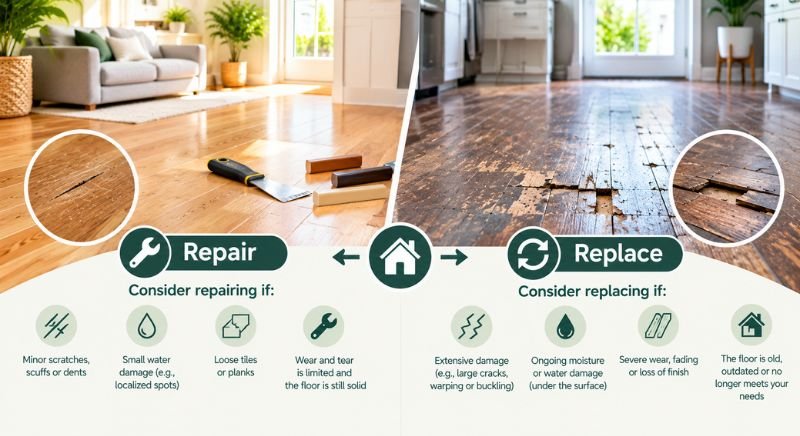
A damaged floor does not always need complete replacement. The right decision depends on the size of the damage, material condition, repair cost, and expected result.
Compare the cost of repair with the cost of replacing the affected section or installing new flooring. Also consider whether the underlying problem has been resolved.
When Minor Flooring Damage Can Be Repaired
Minor damage may include light scratches, small stains, loose trim, limited grout problems, and small surface defects. Suitable repair products can improve the appearance when the flooring remains stable.
Repair methods should match the material. Do not use a cosmetic solution to cover moisture damage, movement, or structural problems.
Signs Flooring May Need Replacement
Flooring may need replacement when it has widespread water damage, severe swelling, repeated cracking, unstable sections, or extensive surface wear. Replacement may also be practical when matching materials are unavailable.
Persistent damage after repeated repairs can indicate that the floor has reached the end of its useful service life. Inspect the subfloor before installing new material.
Repair vs Replacement Cost Considerations
Compare material costs, labor, preparation, removal, disposal, and future maintenance. A small repair may be more practical when the damage is limited and matching flooring is available.
Replacement may make more sense when the damage affects a large area or the existing flooring is already worn. The final decision should consider both immediate cost and long-term performance.
When Professional Flooring Help May Be Needed
Professional flooring help may be necessary for extensive water damage, uneven subfloors, widespread movement, complicated installations, or recurring cracks. A professional can help identify problems that are not visible from the surface.
Seek qualified assistance when repairs may involve plumbing, wiring, structural components, or hazardous materials. Correct diagnosis is important because an incomplete repair may allow the damage to return.
Final Thoughts
Choosing flooring is a long-term home decision. The material you select should suit the room’s moisture level, traffic, cleaning needs, household activity, and budget. A floor that looks attractive but cannot handle daily conditions may create extra costs later.
This home flooring guide can help you compare flooring types, understand maintenance requirements, and identify common repair needs. Hardwood, laminate, vinyl plank, and tile can all work well when used in suitable spaces and cared for correctly.
Regular flooring cleaning, floor protection, moisture control, and timely flooring repair can help preserve your investment. Before beginning a flooring installation project, check the subfloor, compare the total cost, and follow the manufacturer’s recommendations. A practical flooring decision is one that continues to work for your home long after installation.
Home Flooring Guide FAQs
What Is the Best Type of Flooring for a Home?
The best type of flooring depends on the room, moisture exposure, traffic, household needs, and budget. Hardwood may suit living areas, while tile or suitable vinyl may work well in moisture-prone rooms.
Compare flooring materials based on their performance and maintenance needs. The right choice should fit how your household uses the space.
Which Flooring Is Easiest to Maintain?
Vinyl plank flooring is often a practical choice for homeowners who want easy cleaning and moisture resistance. Tile can also be simple to maintain, although grout needs regular care.
The amount of maintenance depends on the product, installation, room conditions, and cleaning method.
What Is the Most Durable Flooring for a Home?
Tile, hardwood, vinyl, and laminate can all provide useful durability when selected and installed correctly. The most suitable option depends on the room’s traffic, moisture, and daily use.
Consider surface wear, impact resistance, repairability, and flooring lifespan before making a decision.
What Flooring Is Best for Homes With Pets?
The best flooring for homes with pets should be easy to clean and suitable for scratches, spills, and frequent movement. Vinyl plank, tile, and selected laminate products may work well in many households.
Use mats, protective pads, and quick cleaning to reduce damage. Your pet’s size, activity, and habits should also influence the choice.
How Often Should Home Flooring Be Cleaned?
Sweep or vacuum regularly to remove dirt and grit. Clean spills immediately and follow the manufacturer’s instructions for deeper cleaning.
High-traffic rooms, homes with pets, and areas exposed to moisture may need more frequent flooring cleaning.
How Long Does Flooring Usually Last?
Flooring lifespan depends on the material, product quality, installation, traffic, moisture, and maintenance. Some flooring types can last for many years, while poorly maintained or unsuitable flooring may need earlier repair or replacement.
Inspect your floors regularly and follow the recommended care instructions.
When Should Flooring Be Repaired or Replaced?
Repair flooring when the damage is limited and the material remains stable. Replacement may be necessary when damage is widespread, unsafe, moisture-related, or too expensive to repair.
Identify the cause before beginning the work. A repair that does not address the underlying problem may only provide a temporary result.