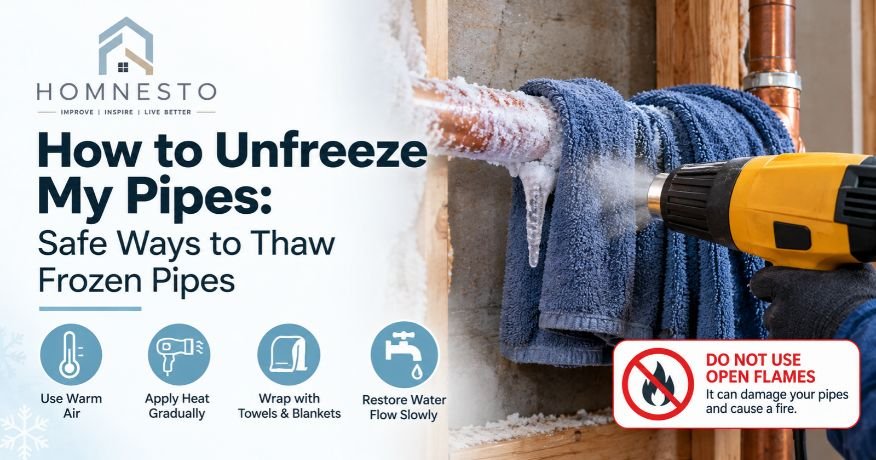

When a faucet slows to a trickle or stops running during freezing weather, you may be wondering how to unfreeze my pipes without causing damage. The right response depends on where the pipe is frozen and whether it is accessible or damaged. Start by checking for leaks, leaving the affected faucet open, and locating any frozen section you can safely reach. If the pipe is intact and accessible, gentle heat from a hair dryer, warm towels, or a suitable heating pad may help restore flow. Never use a blowtorch or open flame. If the pipe is cracked, hidden in a wall, underground, or otherwise difficult to reach, shut off the water when safe and call a licensed plumber. For other plumbing issues, identifying the cause first helps prevent unnecessary repairs.
How to Tell if Your Water Pipes Are Frozen
The first step is to distinguish a frozen supply line from an ordinary clog, closed valve, or wider water-service issue. Look for the clues below before applying heat. For reference, common searches include “how do you know if water pipes are frozen”; “frozen pipes no water”; “how to locate frozen pipes”. The safest method still depends on whether the pipe is visible, intact, and safe to reach.
What Are the Common Signs of a Frozen Pipe?
A faucet that produces only a weak trickle or no water at all is one of the clearest signs of a frozen pipe, especially after a sharp drop in temperature. You may also notice frost on an exposed pipe, a section that feels unusually cold, or bulging, cracked, or damp areas around plumbing. These clues can help you work out how to tell if pipes are frozen, but low water pressure can also come from a closed valve, a clogged fixture, or a wider supply problem.
How Do You Know if a Frozen Pipe Is Causing No Water?
If one faucet has stopped working while other fixtures still run normally, the blockage may be in the branch line serving that fixture. If several taps have no water, the frozen section could be farther upstream or the issue may involve the main supply. When people ask “frozen pipes what to do,” the first step is to look for other signs instead of assuming ice is the cause. If you suspect a burst pipe or see water where it should not be, stop troubleshooting and turn off the main supply if it is safe to do so.
How to Locate the Frozen Section of a Water Pipe
Begin with visible plumbing in unheated spaces such as a basement, garage, crawl space, or cabinet against an exterior wall. Look for frost, condensation, or a section exposed to a cold draft, particularly near where the water line enters the home. To locate frozen pipes, check accessible sections gently; do not bend, strike, or squeeze them. If the likely frozen pipe disappears behind drywall, under flooring, or into the ground, avoid opening structures or digging and arrange professional help.
What Should You Do When Your Pipes Freeze?
Act calmly and prioritize safety before trying to restore water flow. Keep an eye out for leaks, and do not attempt to thaw plumbing that is damaged or unsafe to reach.
Keep the Affected Faucet Open While Thawing
Open the faucet served by the suspected frozen line, using both hot and cold handles if it is a mixer tap. Leave it slightly open while thawing so melting ice has a path to flow and pressure can ease. The water may start as a drip before returning to a steady stream. Keep the area around the faucet clear and watch for leaks as flow resumes. If you notice water escaping around the handle, a leaky faucet handle may be a separate issue.
When Should You Shut Off the Main Water Supply?
Shut off the main water valve if you see a split pipe, active leak, bulging section, or water spreading around plumbing or if you cannot safely assess the damage. If water is near outlets, appliances, or electrical panels, do not step into standing water or touch wet electrical equipment; keep clear and get qualified help. If a pipe appears intact and you are thawing an accessible section, you may leave the supply on while the faucet remains open, but be ready to shut it off immediately if a leak appears.
Which Frozen Pipes Can You Safely Thaw Yourself?
DIY thawing is generally limited to a visible, accessible pipe that appears undamaged and can be warmed without putting people, wiring, or nearby materials at risk. Exposed copper or plastic plumbing may respond to gentle, even heat, but the method must suit the pipe material. If you are unsure what to do if pipes are frozen, or the pipe is behind a wall, below a floor, underground, or near electrical hazards, skip DIY treatment and call a plumber.
When Should You Call a Plumber?
Call a licensed plumber if you cannot find the frozen section, water flow does not return with careful warming, more than one area of the home is affected, or you suspect a crack or burst. Professional help is also the safer choice for underground lines, pipes inside walls, and plumbing in hard-to-access crawl spaces or mobile homes. If you are asking “if pipes are frozen what do I do?” and you can see damage, treat it as a possible leak emergency rather than continuing to heat the pipe.
How to Unfreeze Frozen Pipes Safely Step by Step
For a visible, intact pipe, a slow and controlled approach is safer than trying to melt the ice quickly. Stop if you find damage or cannot reach the frozen section safely. For reference, common searches include “how to defrost a pipe”; “how to unfreeze water pipes”; “how to unfreeze water lines”; “how to unfreeze your pipes”; “how to unfreeze a pipe”; “how to thaw pipes”. The safest method still depends on whether the pipe is visible, intact, and safe to reach.
Expose the Frozen Pipe if It Is Accessible
Clear stored items away from the pipe and open cabinet doors to let warmer room air circulate. Make sure the area is dry and well lit, and check that you can reach the pipe without leaning over standing water or using an unstable ladder. Do not remove drywall, floorboards, or other building materials to reach a hidden pipe. If the pipe is damaged, stop and shut off the water when safe.
Apply Gentle Heat to the Frozen Section
Use a hair dryer on a moderate setting, a heating pad suitable for the task, or towels soaked in warm water. Move the heat evenly along the exposed section and keep electrical appliances away from water; follow all product instructions and never leave a heat source unattended. The safest approach to how to safely thaw frozen pipes is gradual warming, not intense heat. Avoid boiling water, direct contact with a heater unless its instructions specifically allow it, and any method that could melt plastic or damage joints.
Start Near the Faucet and Work Toward the Frozen Area
Keep the faucet open and begin warming the pipe on the faucet side of the suspected blockage, then work gradually toward the colder section. This helps melting ice and pressure move toward an open outlet instead of remaining trapped. Do not rush by concentrating heat on one small point. If you cannot identify the blockage or safely reach the pipe, stop and contact a professional.
Restore Water Flow Gradually and Check for Leaks
When the water begins to run, continue gentle warming until flow is steady, then inspect the accessible pipe and nearby joints for moisture, cracks, or swelling. If you shut off the main valve, restore water slowly while watching carefully for leaks. Check other faucets too, because more than one line may have frozen. Normal water pressure does not prove that the pipe is undamaged, so keep checking the area after thawing.
What Is the Best Way to Unfreeze Pipes?
The best method is one that delivers gentle, controlled warmth and is suitable for the pipe and setting. These options have different limits, so choose based on access and safety. For reference, common searches include “frozen pipes how to unfreeze”; “how to unfreeze pipes fast”; “will a space heater thaw frozen pipes”; “how do plumbers thaw frozen pipes”. The safest method still depends on whether the pipe is visible, intact, and safe to reach.
Can a Hair Dryer Thaw Frozen Pipes?
Yes, a hair dryer for frozen pipes can be a practical option when the frozen section is visible, accessible, and dry. Use a moderate setting, keep the dryer moving, and keep the cord and plug away from water. Do not use it if the area is wet or you would need to reach into a hazardous space. A hair dryer is for gradual warming, not for heating a hidden pipe through a wall.
Do Warm Towels or Heating Pads Work on Frozen Pipes?
Warm towels can transfer gentle heat to an exposed pipe; replace them as they cool and avoid using boiling water. An electric heating pad may also help if its instructions permit the intended use and the pipe and surrounding area are dry. These methods are slower than aggressive heat, but they offer better control. Do not wrap an electrical heating product around a pipe unless the manufacturer specifically says it is safe to do so.
Will Heat Tape Thaw Frozen Pipes?
Heat tape is mainly designed to protect suitable pipes from freezing, and some products may help warm a frozen line when their instructions allow it. Whether heat tape will thaw frozen pipes depends on the product, pipe material, installation, and extent of ice. Use only a listed product rated for the pipe type, follow its installation and operating instructions, and never apply it to a leaking pipe or overlap it unless the manufacturer expressly permits that setup. If the pipe is already frozen and you are unsure, ask a plumber rather than improvising.
Can a Space Heater Help Thaw Frozen Pipes?
A space heater may warm the air around exposed plumbing in a cold room or cabinet, but it does not guarantee that the ice inside a pipe will melt quickly. Keep the heater on a stable, nonflammable surface, maintain the clearance specified by its manufacturer, and never leave it unattended. Do not use a space heater near water or where it could overheat nearby materials. A heater is best used to warm the surrounding area while you monitor the pipe.
Which Thawing Methods Should You Never Use?
Never use a blowtorch, lighter, propane torch, charcoal stove, or other open flame to thaw plumbing. These can start fires, damage pipes and joints, and create dangerous heat or pressure. Do not use improvised electrical devices, apply uncontrolled high heat, or try to thaw a pipe you cannot see. If the pipe is frozen in a wall, below ground, or near wiring, the best way to unfreeze pipes is to have a qualified plumber assess the situation.
How Long Does It Take for Frozen Pipes to Thaw?
Thawing time varies widely, so use the condition of the pipe and the return of water flow not a fixed deadline to guide your next step. For reference, common searches include “at what temperature do pipes unfreeze”; “what happens if pipes freeze”. The safest method still depends on whether the pipe is visible, intact, and safe to reach.
How Long Does It Take to Unfreeze Pipes Using Heat?
There is no fixed answer to how long does it take for pipes to unfreeze. An exposed section may begin to flow after a period of gentle warming, while a long or deeply frozen line can take much longer. People also ask how long does it take pipes to thaw or how long does it take to thaw frozen pipes, but no single estimate applies to every home. Pipe material, diameter, the length of the ice blockage, air temperature, and access all affect the time. Do not keep increasing the heat to speed things up; if there is no progress or you suspect damage, call a plumber.
How Long Do Frozen Pipes Take to Thaw Naturally?
How long for pipes to thaw naturally depends on how quickly the surrounding area warms and how much of the pipe is frozen. A pipe may thaw as the weather improves, but waiting can prolong a water outage and leave the line vulnerable to damage. If you need water or suspect a leak, do not rely on natural thawing alone. Use safe steps for an accessible pipe or arrange professional help.
Will Frozen Pipes Thaw on Their Own?
Sometimes frozen pipes thaw on their own when temperatures rise, but that does not make waiting the safest choice. The answer to “do frozen pipes thaw on their own?” depends on the location, surrounding temperature, and extent of freezing. A hidden pipe may remain frozen even after the room warms, and a damaged section can leak when the ice melts. Monitor the plumbing and call a professional if you cannot reach the pipe or suspect a split.
At What Temperature Do Pipes Begin to Thaw?
There is no single temperature at which every frozen pipe unfreezes. The pipe itself must warm above the freezing point of water, but the time needed depends on the material, airflow, insulation, and amount of ice. Outdoor temperatures rising above 32°F (0°C) may help, but a pipe in a cold wall or crawl space can stay frozen longer. Focus on warming the pipe safely rather than relying on one temperature threshold.
How to Thaw Frozen Pipes in Different Parts of Your Home
The pipe’s location determines whether safe DIY thawing is realistic. Visible lines may be manageable, while hidden or underground plumbing usually calls for professional help. For reference, common searches include “how to unthaw frozen pipes”; “how to unfreeze toilet pipes”. The safest method still depends on whether the pipe is visible, intact, and safe to reach.
How to Thaw a Frozen Hot Water Pipe
If a hot-water line is frozen, the hot tap may run poorly while cold water works normally. If you are weighing what to do if hot water pipe is frozen, first identify the accessible section and check for leaks; hot-water plumbing can still be under pressure even when no water comes out. To understand how to thaw hot water pipes or how to unfreeze hot water pipes, use gentle heat only on visible, intact pipe, and do not dismantle a water heater or boiler to reach a line. A hot water line frozen near equipment or hidden in a wall needs professional attention.
How to Unfreeze Toilet, Kitchen, and Shower Pipes
To unfreeze toilet pipes, check the accessible supply line and nearby unheated spaces, but do not force a toilet valve or use an open flame. If the toilet continues running after water service returns, the running toilet may have a separate fixture problem. For kitchen plumbing, open the cabinet doors and warm only a visible, intact section of the supply line; a slow sink drain is a different problem from a frozen supply pipe. A clogged bathtub drain is also a drainage issue, not a sign by itself that the water supply is frozen. If the shower has no water or only a trickle, the line may be frozen, but low shower pressure can have other causes. If you are unsure how to unfreeze kitchen pipes or how to unfreeze shower pipes safely, or the line is hidden, call a professional.
What to Do if a Pipe Is Frozen Inside a Wall
A frozen pipe in wall is difficult to diagnose and can leak into insulation or framing as it thaws. If you are looking up how to thaw a frozen pipe in the wall, avoid cutting into drywall or directing a heater at the wall in an attempt to reach it. Check for other signs such as a damp patch, discoloration, or water staining, and shut off the supply if you suspect a leak. A plumber can locate the affected section and determine whether controlled thawing or repair is needed.
How to Handle Frozen Pipes in a Crawl Space or Mobile Home
For thawing frozen pipes in crawl space, start by considering access, ventilation, moisture, and electrical safety. Do not crawl into a flooded or unsafe area, and never use open flames or unapproved heating equipment under a home. If you are trying to work out how to unthaw pipes in a mobile home, pay particular attention to exposed underfloor plumbing and any heat tape already installed. If the pipe cannot be reached safely, arrange professional service.
What to Do if an Underground Water Pipe Is Frozen
Underground lines require a different approach because the frozen section may be deep, distant from the home, or part of the service line. Searches for how to thaw underground water pipes, how to unfreeze pipes underground, or thawing frozen water lines underground can lead to risky DIY ideas, but do not excavate blindly or run improvised current through the pipe. Contact a licensed plumber or your water utility, depending on which part of the service line is affected. They can identify the location and choose equipment suited to the pipe and site.
What to Do if a Frozen Pipe Bursts or Leaks
A thawed line can reveal damage that was hidden by ice. Treat any leak as a priority and protect people from water near electrical equipment before dealing with cleanup.
Do Pipes Burst When They Freeze or Thaw?
Yes. Ice formation can create pressure inside a plumbing system, and damage may occur away from the point where the ice forms. A crack may not become obvious until thawing allows water to escape, so do pipes burst when they freeze or thaw? They can be damaged during freezing and reveal the leak as the ice melts. That is why every newly thawed pipe should be checked rather than assumed safe.
What Should You Do if a Frozen Pipe Bursts?
If a pipe bursts, shut off the main water supply if you can do so safely, then open faucets to relieve pressure and drain remaining water where practical. Keep people away from standing water near electrical outlets, appliances, or wiring, and do not touch wet electrical equipment. Move belongings only if it is safe, contain water without exposing yourself to hazards, and call a plumber for repair. Photograph damage for your records once the area is safe.
How to Check for Pipe Damage After Thawing
Inspect exposed pipework, joints, valves, ceilings, cabinets, and nearby flooring for drips, swelling, dampness, or new stains. Turn the supply back on gradually if it was shut off, and keep watching the area as pressure returns. Listen for unusual running-water sounds when fixtures are off. If you cannot inspect the whole line, notice a sudden change in water pressure, or find any sign of a leak, shut off the supply and arrange a professional inspection.
How to Prevent Your Pipes From Freezing Again
Once water flow is restored and the line is checked for damage, focus on reducing cold-air exposure and helping vulnerable pipes stay above freezing.
Insulate Exposed Water Pipes
Fit appropriate pipe insulation around exposed plumbing in basements, garages, utility rooms, and other cold areas. Insulation slows heat loss but does not create heat, so it works best alongside draft control and adequate indoor warmth. Follow the insulation product instructions, especially around valves, joints, and heat-producing equipment. For pipes that repeatedly freeze, ask a plumber whether rerouting or additional protection would be more effective.
Protect Pipes in Crawl Spaces, Garages, and Exterior Walls
Seal gaps around foundation penetrations, windows, and doors to reduce cold drafts, and keep garage doors closed when water lines run through the space. Open cabinet doors under sinks on exterior walls during severe cold so warm indoor air can reach the plumbing. Pipes in crawl spaces, mobile homes, and exterior walls may need extra insulation or approved heat-tracing systems installed according to instructions.
Keep Vulnerable Pipes Warm During Freezing Weather
Keep the thermostat at a consistent, safe temperature during cold spells, including overnight, and do not turn the heat off when leaving home in winter. The American Red Cross advises keeping a home at least 55°F when away during freezing weather. In extreme cold, a small trickle from a vulnerable faucet can help keep water moving, where appropriate and permitted by local guidance. Disconnect and drain outdoor hoses and follow local winterization advice for exposed lines.
FAQs About Unfreezing Pipes
These quick answers address common follow-up concerns without replacing a plumber’s assessment when a pipe is damaged, inaccessible, or still blocked.
Can You Unfreeze Pipes Quickly Without a Plumber?
Sometimes. If the pipe is visible, intact, and safely accessible, gentle heat from a hair dryer, warm towels, or a suitable heating pad may restore flow. There is no safe shortcut that works for every pipe, and high heat can cause damage. For hidden, underground, leaking, or hard-to-reach lines, call a plumber.
Why Is There Still No Water After a Pipe Has Thawed?
The blockage may not have fully melted, another section may still be frozen, or the problem may be unrelated to ice. A valve could be closed, the supply line may be damaged, or the issue could be on the utility side. Check other faucets and look for leaks, but do not dismantle plumbing or keep applying heat if water does not return. Contact a plumber or water provider if the cause is unclear.
Can Frozen Pipes Freeze Again After Thawing?
Yes. A pipe can freeze again if cold air still reaches it or temperatures remain low. Once flow returns, keep the surrounding area warm, improve insulation, seal drafts, and consider approved heat tape for pipes that need extra protection. Check for damage after thawing, since a weakened pipe may leak later even if it initially appears normal.
Conclusion
The safest way to unfreeze household pipes is to keep the affected faucet open, warm only accessible and undamaged plumbing with gentle heat, and check carefully for leaks as water returns. Never use an open flame or improvised electrical heating method. If the pipe is hidden, underground, damaged, or impossible to locate or if a leak appears shut off the water when safe and call a licensed plumber. Once the immediate problem is resolved, insulation, draft sealing, and consistent indoor heat can help reduce the chance of another freeze.