

A door that drags across the floor, catches against the frame, or refuses to latch properly may be sagging. The problem often starts with loose hinge screws, worn hardware, or screw holes that no longer hold securely. In other cases, a swollen door, shifted frame, or excessive door weight may be responsible. The good news is that many alignment problems can be corrected without replacing the door. Learning how to fix a sagging door starts with identifying where the movement is coming from, then choosing the right repair. This article explains how to inspect the hinges, reinforce screw holes, adjust alignment, and address problems with exterior, front, storm, and screen doors.
How Do I Fix a Sagging Door? Quick Answer
If you’re wondering how do I fix a sagging door, start by opening and closing it slowly to identify where it catches. Check the hinges for loose screws, gaps, bent leaves, or movement where the hinges meet the frame. Tighten any loose screws with a screwdriver, taking care not to overtighten them. If a screw spins without gripping, the hole may be stripped and need a wood repair before the hinge can hold securely.
For a door that still hangs unevenly, inspect the top hinge and consider installing longer screws that reach the wall framing, provided the hinge and frame construction allow it. Hinge shims can help correct minor alignment issues, while damaged hinges may need replacement. If the door rubs only along one edge after the hinges are secure, careful planing or sanding may be necessary.
The best way to fix a sagging door is to correct the cause rather than force the door into position. Avoid trimming the door until you have ruled out loose hinges and frame movement. Related searches such as how to fix sagging door, fix sagging door, fix door sag, and fixing a sagging door describe the same basic problem. If the door sags again after an adjustment, reassess the hinge connection before trying another door sagging fix. Knowing how to adjust a sagging door and how to adjust sagging door alignment without damaging the frame can help prevent unnecessary repairs. These checks can also help when you need to fix sagging doors around the house.
How to Tell If Your Door Is Sagging or Crooked
A sagging door usually drops slightly toward the handle side. This can make the top corner opposite the hinges rub against the jamb, while the lower edge may drag across the floor or threshold. You may also notice an uneven gap around the door when it is closed.
Look for these common signs:
- Uneven gaps: The space between the door and frame is wider at one corner than the other.
- Rubbing or scraping: The top latch-side corner or bottom edge catches as the door moves.
- Latch problems: The latch bolt no longer lines up with the strike plate.
- Visible hinge movement: A hinge leaf shifts when you gently move the open door.
- A leaning appearance: The door seems to tilt instead of hanging vertically.
To check the alignment, close the door slowly and examine the gaps along the top and sides. You can also place a level against the door edge or compare the frame’s vertical sides. If the frame itself is out of square, tightening the hinges alone may not solve the problem. A door is crooked when its position is visibly out of alignment, but the cause may be the hinges, the door slab, or the frame.
Why Does a Door Sag? Common Causes
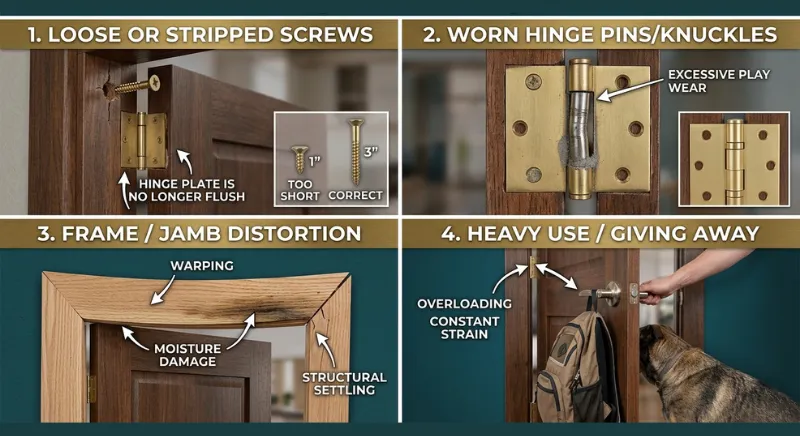
Understanding why a door sags helps you choose a repair that lasts. The problem may come from a small hardware issue or a change in the door or frame itself.
Loose Hinge Screws
Hinge screws can loosen gradually as a door opens and closes. Repeated movement places pressure on the screws, especially around the top hinge, which carries much of the door’s weight. Once the screws back out, the hinge can shift away from the frame and allow the door to drop.
If the screw holes are still in good condition, tightening the screws may restore the door’s position. Check every hinge rather than tightening only the one that looks loose. A loose or noisy hinge may also squeak as the door moves. When alignment is otherwise sound, inspect the hinge pin and fastening points as part of troubleshooting a squeaky door.
Stripped Hinge Screw Holes
A screw hole becomes stripped when the screw can no longer grip the surrounding wood. This may happen after repeated tightening, heavy use, or installation into soft or damaged wood. The screw may turn without becoming snug, or it may pull out under the door’s weight.
Simply inserting a thicker screw is not always a reliable repair. The damaged hole may need to be filled with a suitable wood plug or repair material, allowed to set, and redrilled before the hinge is secured again.
Worn, Bent, or Damaged Door Hinges
When the hinge itself is the problem, how to fix a sagging door hinge usually comes down to checking the hinge pin, screw holes, and leaf alignment before deciding whether to tighten, reinforce, or replace it. The same inspection applies when considering how to fix sagging door hinges or how to fix sagging door hinge problems that return after tightening.
Hinges can wear down, bend, loosen at the pin, or become damaged around the screw holes. A worn hinge may allow the door to move even when its screws are tight. Rust and corrosion can also affect exterior door hardware.
Inspect the hinge leaves and pin for visible damage. If a hinge is bent or its moving parts are worn, tightening the screws will not restore its original strength. Replacement with a compatible hinge is usually the better option. The same hardware principle applies elsewhere in the home: a cabinet door that has become loose may also need its hinge fasteners or hardware checked.
Swollen or Warped Door
Wood can expand when it absorbs moisture, making a door rub against the frame or floor. Seasonal humidity changes may cause temporary swelling, while prolonged moisture exposure can lead to warping. A warped door may not sit evenly in the opening even when its hinges are secure.
Before trimming the door, check whether the problem changes with the weather and look for signs of moisture around the door, walls, or floor. Sanding a temporarily swollen door may leave an oversized gap when the wood dries. Similar checks can help identify why a window sticks, although window repairs require their own adjustments.
House Settling and Door Frame Movement
A door may become misaligned when the frame shifts or the surrounding structure moves. Minor settling can change the shape of the opening, while moisture damage or loose framing can cause more significant movement.
If the gaps around several doors have changed, or you notice new cracks around windows and door frames, the issue may extend beyond the door hardware. A hinge adjustment cannot correct a structurally shifted opening. Changes in how doors and windows operate can occur together, so consider other common door and window problems when checking whether the issue is isolated.
Heavy Door Weight or Added Hardware
Solid wood doors, oversized entry doors, and doors with added hardware place greater loads on their hinges. Extra weight from a mirror, hanging organizer, or other attachment can also contribute to movement over time.
A door with insufficient or unsuitable hinges may gradually pull away from the frame. Check that the hinges are appropriate for the door’s weight and size before attempting another adjustment.
Tools and Materials Needed to Fix a Sagging Door
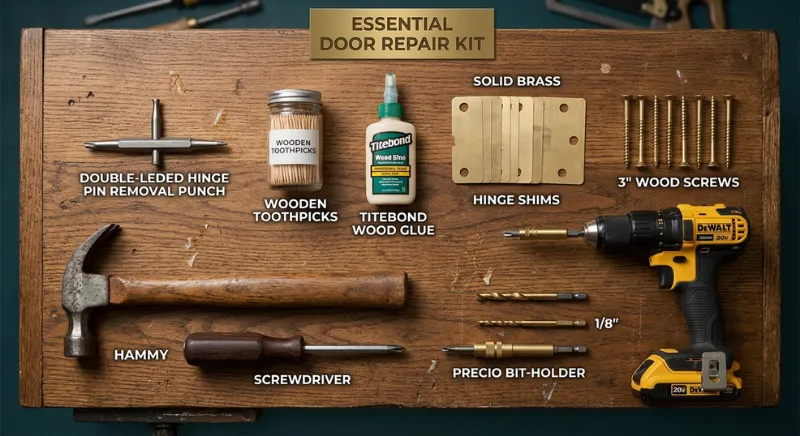
The tools you need depend on the cause, but most basic repairs require a screwdriver, drill, compatible drill bits, and replacement screws. Keep a level, tape measure, pencil, and flashlight nearby to check alignment and inspect the hinge area.
For stripped screw holes, you may need wooden dowels or plugs, wood glue, a drill, and a suitable bit. Hinge shims or thin cardboard can help with minor alignment adjustments, while replacement hinges may be necessary if the existing hardware is bent or worn. If the door needs edge correction, use a hand plane or sanding block, along with protective equipment.
For heavier doors, ask someone to support the door while you work. A door wedge or suitable support can reduce pressure on the hinges, but do not rely on an unstable stack of objects. Wear eye protection when drilling, cutting, or sanding.
How to Fix a Sagging Door Step by Step
The right repair depends on what you find during inspection. Work through the steps in order, starting with the least invasive adjustment. This approach helps you avoid unnecessary trimming or hardware replacement.
Step 1: Inspect the Door and Tighten Loose Hinge Screws
Open the door and examine each hinge. Look for screws that sit proud, hinge leaves that move, gaps between the hinge and frame, or signs of damaged wood. Gently lift the handle side of the open door to see whether the hinges shift.
If the screws are simply loose and the holes still hold, tighten them with a screwdriver. Work across all hinges, keeping the door supported so its weight does not pull against the hardware. Avoid using excessive force, as overtightening can damage the screw hole or hinge.
Close the door slowly and check whether the gaps have become more even. If the door still drops or a screw turns without tightening, move to the next step.
Step 2: Repair Stripped Hinge Screw Holes
When a screw no longer grips, the hole needs to be repaired before the hinge can be secured. Remove the affected screw and, if necessary, detach the hinge leaf while supporting the door.
For a small damaged hole in a wooden frame, a suitable wooden plug or dowel can provide fresh material for the screw. Apply wood glue as directed, insert the plug, and allow it to cure fully. Trim it flush if needed, then drill a properly sized pilot hole before reinstalling the screw.
Do not force a screw into a hole that is still loose or use an oversized screw that could split the jamb. If the surrounding wood is cracked, soft, or deteriorated, repair the damaged frame section rather than relying on a small filler.
Step 3: Install Longer Hinge Screws When Needed
If the hinge is secure to the door but the frame-side screws are not holding firmly, longer screws may help anchor the hinge into solid framing behind the jamb. This is often considered at the top hinge, where extra support can help lift the latch-side edge.
Remove one existing frame-side screw at a time and replace it with a suitable longer screw. Choose a length and head type compatible with the hinge, jamb, and framing. Drill a pilot hole if needed, and tighten the screw gradually while checking the door’s position.
Longer screws are not a universal fix. They must reach sound framing without contacting wiring, plumbing, or other concealed services. If the frame is damaged or the opening has shifted, investigate that problem before relying on longer fasteners.
Step 4: Adjust Door Alignment With Hinge Shims
A hinge shim is a thin piece of material placed behind a hinge leaf to change how the door sits in the frame. It can help correct a small alignment issue when the hinge and surrounding wood are otherwise sound.
First, identify which hinge needs adjustment by examining the uneven gaps. Support the door, loosen the relevant hinge screws, and place a suitable shim behind the hinge leaf. Refasten the hinge and check the door’s movement.
Make small adjustments and test the door after each one. Adding too much material or shimming the wrong hinge can make the alignment worse. If the door requires substantial correction, the frame or hinge position may need professional attention.
Step 5: Replace Worn or Bent Door Hinges
If a hinge is bent, badly corroded, loose at the pin, or visibly worn, replace it with a compatible hinge. Match the hinge dimensions, corner shape, screw-hole pattern, finish, and load suitability. Using a different size may require changes to the mortise or screw locations.
Support the door before removing the old hinge. Replace one hinge at a time where practical, keeping the door aligned with the remaining hardware. Install the new hinge using suitable screws, then open and close the door to check for smooth movement.
For a heavy exterior or solid wood door, have another person support the door throughout the process. If the hinge-side wood is damaged, repair the frame before installing replacement hardware.
Step 6: Correct Rubbing Edges by Planing or Sanding
Only consider trimming the door after checking the hinges, screw holes, and frame. If the door is properly supported and aligned but still rubs at one edge, the wood may need a small amount of material removed.
Mark the exact contact area with a pencil. Remove the door if necessary, then use a hand plane or sanding block to take off a small amount at a time. Test the fit frequently rather than removing too much material in one pass.
Seal or repaint any exposed wood, especially on exterior doors, to help protect it from moisture. If the door is swollen, warped, or exposed to an ongoing moisture problem, address that cause before trimming. You may otherwise create an excessive gap once the door dries.
Step 7: Adjust the Latch and Strike Plate
Once the door hangs correctly, check whether the latch lines up with the strike plate. A door that has been lifted or repositioned may need a small latch adjustment even after the sagging problem is resolved.
Close the door gently and observe where the latch contacts the strike plate. Tighten loose strike-plate screws first. If the plate is slightly misaligned, adjust its position only after confirming that the door and frame are properly aligned.
If the latch still fails to engage, the issue may involve the lock, latch mechanism, or frame rather than the hinges. Check the latch and strike plate alignment before assuming the hinge repair has failed.
How to Fix a Sagging Exterior, Front, Storm, or Screen Door
Different door types use different hardware and construction. An interior door may have standard butt hinges, while exterior, storm, and screen doors may use heavier hinges, closers, frames, or adjustable components. Identify the door type before making changes.
Sagging Exterior and Front Door
If the door and frame do not sit squarely, how to fix a misaligned exterior door depends on whether the movement comes from the hinges, jamb, or opening itself. For a dropped entry door, the steps for how to fix sagging front door problems and how to fix front door sagging should begin with checking the top hinge and the condition of the frame.
A sagging exterior door can affect security, weather sealing, and the ability to lock the door. Start by checking the hinge screws, hinge condition, jamb, and weatherstripping. Because entry doors are often heavier than interior doors, support the door before loosening or replacing any hardware.
If the top hinge has pulled away from the jamb, inspect the screw holes and surrounding wood. Longer screws may help when the frame is sound and the screws can safely reach solid framing. If the jamb is split or rotten, repair the damaged area before reinstalling the hinge.
For homeowners asking how to fix a sagging exterior door, the key is to restore the hinge connection without compromising the frame or security hardware. The same checks apply when addressing how to fix sagging exterior door problems or how to fix a sagging front door. A front door sagging issue should not be ignored if the deadbolt no longer engages securely.
If the door also allows air to pass around its edges, inspect the weatherstripping and threshold after correcting the alignment. Drafts around nearby windows may need attention too, particularly where worn seals affect indoor comfort; window draft prevention covers another part of the home’s weather protection.
Sagging Storm Door
Storm doors often rely on lightweight frames, hinge rails, and closers. If the door drags or sits unevenly, check the hinge-side attachment points, frame screws, and closer hardware. Tighten loose fasteners and inspect the rail for bending or damage.
If you’re asking how to fix a sagging storm door or how do you fix a sagging storm door, first confirm that the frame is square and the hinge rail is properly attached. Follow the manufacturer’s instructions for adjusting or reinstalling the specific model. Do not force the closer arm or alter its mounting position without checking the installation guidance.
Storm door sagging can also result from a damaged frame or loose mounting surface. If the hinge rail is bent or the fasteners no longer hold, replacing or repairing the affected component may be necessary.
Sagging Screen Door
A screen door may sag because its frame has loosened, its hinges have shifted, or its diagonal support is no longer holding the frame square. Check the corners, hinge-side screws, and any adjustable tension rod or brace.
For screen door sagging, tighten the frame fasteners and inspect the diagonal support. Some screen doors have an adjustable turnbuckle or brace that can help pull the frame back into alignment. Make small adjustments and check that the door swings freely without twisting the frame.
If the screen door frame is bent or cracked, tightening the hinges may not be enough. Replace damaged components rather than forcing the frame into shape.
Crooked or Slanted Door From a Shifted Frame
A door may look crooked even when the hinges are secure. If the jamb is out of square, the opening has shifted, or the surrounding wall has moved, hinge adjustments may provide only temporary improvement.
To understand how to fix crooked door alignment, compare the door gaps and check the frame with a level. A door leaning toward one side may indicate loose frame fasteners, damaged jamb material, or movement in the surrounding structure. Learning how to fix slanted door problems starts with identifying whether the door itself or the opening is out of alignment.
If you are fixing a crooked door and notice cracks around the frame, several affected doors, or movement in nearby windows, have the structure assessed. A shifted frame needs more than a hinge adjustment.
Common Mistakes to Avoid When Fixing a Sagging Door
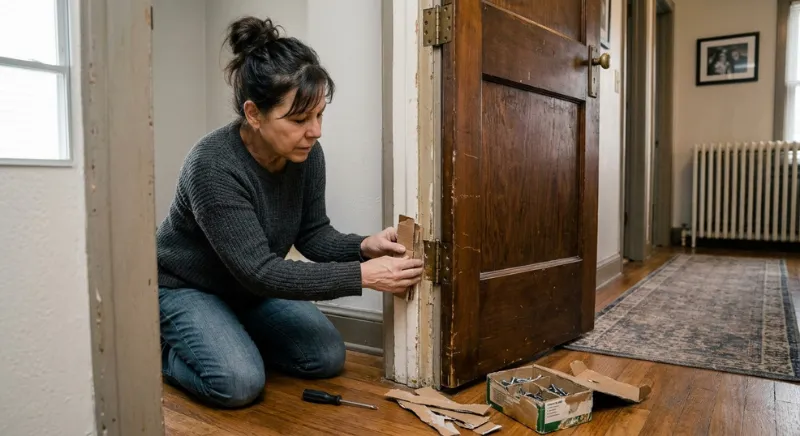
A lasting repair sagging door approach addresses the reason the door moved instead of masking the gap. Choose a sagging door fix that matches the fault, whether it is a loose fastener, damaged hinge, or shifted frame; otherwise, repeated door sagging repair may only provide temporary improvement.
A common mistake is trimming the door before checking the hinges. Removing wood may hide the rubbing temporarily, but it will not correct a loose hinge or damaged frame. Another mistake is overtightening screws, which can strip the holes or damage the hinge.
Avoid using random screws that do not fit the hinge or reach suitable framing. Do not add multiple shims without testing the door after each adjustment, and never force a heavy door into position without supporting it.
Also, do not ignore moisture or structural movement. A swollen door may shrink again when conditions change, while a shifted frame can indicate a larger issue. If a door keeps sagging after repeated adjustments, reassess the cause instead of repeating the same repair.
How Much Does It Cost to Fix a Sagging Door?
The cost depends on whether the problem is limited to loose screws or involves damaged hinges, a split jamb, or a shifted frame. For US budgeting, general door-repair estimates can provide a broad starting point, but prices vary by location, door type, materials, and labor. A simple hardware adjustment is usually less involved than repairing a damaged frame or replacing multiple hinges.
If the repair also involves patching, repainting, or refinishing a damaged door or surrounding surface, include those tasks in the budget. Painting costs depend on surface area and preparation, as reflected in typical room painting costs. Bathroom repainting can involve different moisture and surface considerations, so bathroom painting cost factors may also be relevant when planning related finish work.
DIY Sagging Door Repair Costs
A basic DIY repair may require only a screwdriver and replacement screws. Additional costs may include replacement hinges, hinge shims, wooden plugs, wood glue, drill bits, paint, or finishing supplies. If the door only needs tightening or a small hinge adjustment, the materials bill may be modest. A damaged jamb, replacement hinge set, or door-edge repair will require more time and supplies.
Professional Door Repair Costs
Professional costs vary by door type, location, material, and repair complexity. A simple hinge adjustment may cost less than a repair involving a damaged jamb or frame. Exterior doors can also require more careful work because the repair must preserve weather sealing and security. Request an itemized estimate that separates hardware, labor, frame repairs, and finishing.
How Long Does It Take to Fix a Sagging Door?
Tightening loose screws or making a small hinge adjustment may take less than an hour. Repairing stripped screw holes can take longer because glue or repair materials may need to cure before the hinge is reinstalled. Replacing hinges, correcting a damaged jamb, or adjusting a shifted frame can take several hours or more.
The repair time depends on the door’s weight, the condition of the frame, and whether additional work is needed. Allow extra time for paint or finish repairs after planing or replacing damaged wood.
When Should You Call a Professional?
Call a carpenter or door repair professional if the frame is split, rotten, or significantly out of square; the door is too heavy to support safely; or the hinges keep pulling out despite repairs. Professional help is also appropriate when the door is warped, the opening appears to have shifted, or several doors and windows have become misaligned.
For exterior and front doors, seek help if the repair affects the deadbolt, lock alignment, weather seal, or secure closing. A door that cannot lock properly is a security concern, not just an inconvenience. If you suspect structural movement, have the cause assessed rather than repeatedly adjusting the hinges.
How to Prevent a Door From Sagging Again
Check hinge screws periodically, especially on frequently used doors and heavier entry doors. Tighten loose hardware before the hinge begins pulling away from the frame, and replace worn or corroded hinges when needed. Avoid hanging excessive weight from the door or attaching accessories that place unnecessary strain on the hinges.
Keep exterior doors protected from prolonged moisture exposure. Maintain weatherstripping and address leaks or dampness around the frame before the wood deteriorates. If a door begins rubbing or the latch becomes difficult to operate, inspect it early rather than waiting for the alignment to worsen.
If maintenance work leaves marks or damages the surrounding finish, choose a suitable interior paint and finish for touch-ups. Reviewing white interior paint colors can help when matching a light-colored door, frame, or trim.
FAQs
Can a Sagging Door Be Fixed Without Replacing It?
Yes. Many doors can be corrected by tightening loose hinge screws, repairing stripped screw holes, installing suitable longer screws, or replacing damaged hinges. Hinge shims may also help with minor alignment issues. Replacement is usually considered when the door itself is severely warped, damaged, or no longer suitable for the opening.
Why Does My Door Keep Sagging After I Tighten the Hinges?
The screw holes may be stripped, the hinges may be worn, or the frame may be damaged. A heavy door can also place more load on hardware that is not designed to support it. Check the top hinge and surrounding jamb for movement. If the screws are tight but the door continues to drop, identify the underlying problem before making further adjustments.
What Size Screws Should I Use to Fix a Sagging Door?
Use screws that match the hinge’s countersunk holes and are suitable for the door and frame material. Longer screws may be useful when they can reach solid framing behind the jamb, but there is no single length that suits every door. Check the hinge and frame construction, drill an appropriate pilot hole, and avoid screws that could split the wood or interfere with concealed services.
Can a Sagging Door Get Worse Over Time?
Yes. Continued movement can loosen screws further, damage the hinge holes, wear the hinges, and make the door rub against the frame or floor. A misaligned door may eventually stop latching properly. Address the problem early to reduce the chance of more extensive hardware or frame repairs.
Why Does My Door Rub Against the Floor?
A door may rub because its hinges have loosened, the door has sagged, the frame has shifted, or the wood has swollen from moisture. Check the hinge screws and door gaps first. If the hinges are secure, inspect the floor clearance and look for signs of swelling or warping before sanding or planing the edge.
Is a Crooked Door a Sign of Foundation Problems?
Not necessarily. Loose hinges, stripped screw holes, a damaged jamb, or seasonal wood movement can all make a door appear crooked. However, new cracks around doors and windows, several doors becoming difficult to close, or noticeable changes in wall alignment may point to structural movement. Have these signs assessed by a qualified professional rather than assuming the issue is limited to the door.
Conclusion
Learning how to fix a sagging door begins with finding the source of the misalignment. Tightening loose screws, repairing stripped holes, adjusting hinges, or replacing worn hardware can resolve many common problems without replacing the door. More serious cases may involve a warped slab, damaged jamb, or shifted frame and require professional attention. Inspect the door carefully, make small adjustments, and test its movement after each repair. Addressing the cause early helps the door close smoothly, latch securely, and stay properly aligned.
For more practical home maintenance advice, browse Homnesto’s doors and windows resources.