


Your front door sticks on a humid morning. The bedroom window refuses to open. A sliding door makes a grinding sound, and cold air slips beneath the entrance. These issues might seem small, but they can affect your home’s comfort, security, and everyday routine.
Many common door and window problems start with something you can identify without expensive equipment. A loose hinge, dirty track, worn weatherstripping, or a poorly aligned latch may be the real reason your home feels less comfortable.
This guide covers door and window problems from a homeowner’s perspective. You will learn how to recognize common causes, choose practical fixes, and understand when a repair is better left to a professional. You will also discover how small maintenance habits can prevent larger problems.
Many minor home door problems and home window problems can be addressed through cleaning, tightening hardware, adjusting suitable components, or replacing worn seals. However, damaged glass, structural deterioration, and serious alignment issues may require professional repair.
The most useful approach is to find the cause before buying a replacement part or reaching for a tool. That one habit can save time, prevent unnecessary damage, and help you make better repair decisions.
Common Door Problems and How to Fix Them
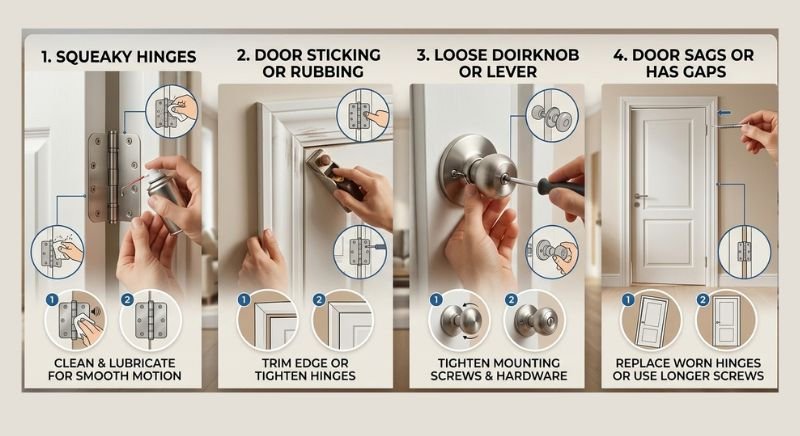
Doors move thousands of times during their service life. Every opening puts pressure on hinges, handles, latches, and the frame. Weather adds another challenge, especially for exterior doors exposed to heat, rain, and humidity.
The most common door problems include squeaking, sticking, poor latching, loose hardware, and gaps around the edges. Some are easy door repairs, while others indicate a deeper issue with the frame or installation.
Before attempting a home door repair, pay attention to what the door is doing. Does it rub at the top? Does the latch miss the strike plate? Does the noise happen only when you lift the handle? These details point toward different solutions.
Squeaky Doors
A squeaky door is often your home’s way of announcing that a hinge needs attention. The sound usually comes from friction between moving metal parts, dirt buildup, or a hinge that is not moving smoothly.
Start by opening the door slowly. Listen to each hinge instead of applying lubricant everywhere. This helps you locate the noisy component and avoid unnecessary work.
Once you identify the hinge, check for loose screws, visible corrosion, or damage. If the hinge is in good condition, use a compatible lubricant designed for the application. Apply a small amount to the moving area, then operate the door several times.
Too much lubricant can attract dust and leave a messy surface. Wipe away excess material and test the door again.
If the squeak returns quickly, the hinge may be worn, bent, or under unusual stress. Lubrication can reduce friction, but it cannot repair damaged hardware.
Doors That Won’t Latch
A door that won’t latch properly can turn a simple closing action into a daily struggle. You push the door shut, but the latch misses the opening, bounces back, or only works when you lift the handle.
The first place to investigate is the relationship between the latch and the strike plate. The strike plate is the metal plate on the frame that receives the latch. If the door shifts, these parts may no longer line up.
Close the door slowly and observe where the latch meets the plate. Check whether the hinges are loose or whether the door appears to sag. A small alignment issue can sometimes be corrected by tightening appropriate hardware.
Do not immediately file away metal from the strike plate. That may hide the symptom without addressing the cause. If the frame has shifted or the door is severely misaligned, the repair may require professional assessment.
An exterior door that will not latch or lock securely should receive prompt attention.
Doors That Stick or Rub Against the Frame
A sticking door can make a quiet morning surprisingly irritating. You pull the handle, the door catches at the top corner, and a scraping sound follows. The problem may seem like a simple sanding job, but the contact point tells a more useful story.
Open and close the door slowly. Look for worn paint, scratches, or marks where the door touches the frame. Check whether it rubs at the top, side, or bottom.
Loose hinges, humidity, door expansion, and frame movement can all contribute to rubbing. The correct repair depends on the cause. A door that swells during wet weather should not automatically be cut down.
If the problem is related to a loose hinge, careful tightening may help. If the frame is damaged or the door remains misaligned, a professional can assess the problem.
Avoid forcing the door or removing too much material. A repair that works today may create an oversized gap when the door returns to its normal dimensions.
Loose or Misaligned Door Hardware
Loose door hardware can affect more than appearance. A moving handle, shifting hinge, or poorly positioned strike plate may prevent the door from closing smoothly.
Inspect the visible screws, mounting points, handles, and hinges. Tighten suitable loose screws using the correct tool. Stop if the screw spins without gripping or if the surrounding material appears damaged.
A stripped screw hole may need a proper repair rather than additional force. Similarly, a bent hinge or worn latch may need replacement.
Good door repair for homeowners begins with knowing which part is failing. Do not tighten every screw you can see and assume the problem is solved. Test the door after each adjustment.
Gaps Around Exterior Doors
Gaps around exterior doors can let in unwanted air, dust, insects, and moisture. You might notice daylight around the edges, a cold breeze near your feet, or a door that no longer seals as it once did.
Inspect the top, sides, and bottom of the closed door. Look at the weatherstripping and door sweep for cracks, compression, or separation. Check whether the door itself sits evenly inside the frame.
Small gaps may result from worn seals. Larger gaps may indicate door alignment or frame problems. A new seal will not solve every issue.
Avoid sealing a gap without understanding its purpose. Some openings may involve drainage or movement requirements.
Common Window Problems and How to Fix Them
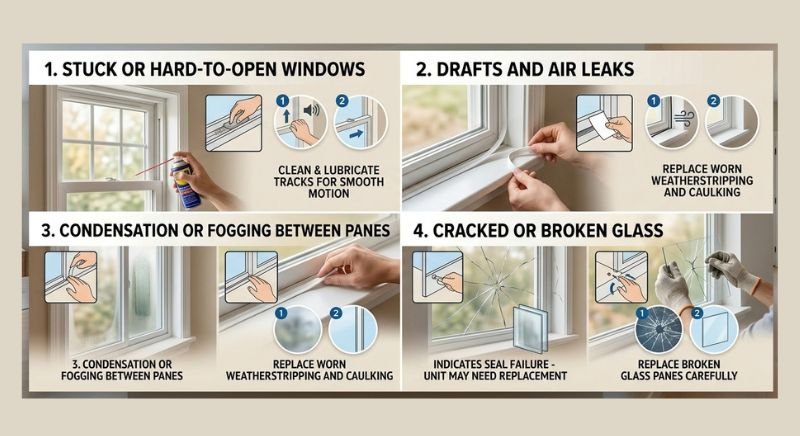
Windows have different operating systems, so a repair that works for a sliding window may not suit a casement or double-hung design. The first step in window repair is identifying the type of window and the part that is causing resistance.
Common window problems include sticking frames, difficult opening, failed support hardware, drafts, and worn seals. Some problems develop gradually. Others appear after moisture exposure, paint buildup, or damage to the frame.
Do not force a window that refuses to move. Glass can break, and hidden hardware may become more damaged. Start with a visual inspection and choose a repair that matches the mechanism.
Windows That Are Difficult to Open or Close
A window that is difficult to open may have dirt in its track, damaged hardware, paint buildup, or poor alignment. Sometimes, the issue is as simple as an object blocking movement. Other times, the frame or operating mechanism needs attention.
Check the window’s edges, handles, tracks, and visible hardware. Look for signs of rubbing, debris, or a component that is not sitting correctly.
For sliding windows, cleaning the accessible track may help. For crank-operated or hinged windows, the problem may involve a mechanism that requires specific adjustment.
Avoid using excessive force. If the window remains difficult to operate, a professional can inspect the hardware and determine whether it needs repair or replacement.
Windows That Stick in the Frame
A sticking window may catch at one corner or resist movement across its entire frame. Paint buildup, dirt, swelling, and alignment changes can all play a role.
Start by identifying the exact point of resistance. Check for visible paint, debris, or damage along the edges. Do not pry the window open with a sharp tool.
Moisture can cause some wooden components to expand. If the problem appears during humid weather, inspect the surrounding area for signs of water exposure.
Windows That Won’t Stay Open
A window that won’t stay open can create a safety concern, especially when the sash drops unexpectedly. The issue may involve a worn balance, damaged support hardware, or a problem with the window’s alignment.
Different window designs use different mechanisms to hold the sash in position. Some use balances, stays, springs, or friction systems.
Inspect the visible hardware, but do not dismantle a support mechanism without understanding its operation. A falling sash can injure someone or damage the glass.
Avoid using unstable objects as makeshift supports. If the window cannot remain open safely, arrange a suitable repair.
Drafty Windows and Air Leaks
A drafty window can make a room feel uncomfortable even when the heating or cooling system is running. You may notice air movement near the frame, a cold area beside the glass, or a noticeable temperature difference around the opening.
The source may be worn weatherstripping, a gap around the frame, poor sealing, or a window that does not close correctly.
Inspect the closed window and look for visible gaps. Check whether the seals have become cracked, flattened, or detached.
Do not assume the glass is always responsible. Air may enter through the perimeter of the frame or nearby joints. Finding the actual leak helps you choose the right repair.
Damaged or Worn Window Hardware
Window hardware includes handles, locks, rollers, cranks, hinges, and other components that control movement and security. A worn part may make the window difficult to open, close, or lock.
Inspect visible hardware for corrosion, loose screws, broken pieces, or unusual movement. Avoid forcing a damaged handle or crank, as this can make the mechanism harder to repair.
Some components are replaceable, but compatibility matters. Check the window’s design and manufacturer information when available.
If the window has broken glass, significant frame damage, or a complex operating mechanism, consider professional assistance. Proper window repair for homeowners starts with knowing when a repair is safe to attempt.
Door Hinge and Hardware Problems

A door hinge may look like a small piece of metal, but it controls how the door carries its weight and moves through the frame. When a hinge loosens, the door can sag, scrape, or stop latching properly.
Door hinge repair is not always complicated. The important part is finding out whether the hinge needs tightening, adjustment, or replacement. A quick fix may work for a loose screw, but it will not solve a damaged mounting surface.
How Loose Hinges Affect Doors
Loose hinges can change the position of a door inside its frame. You may notice uneven gaps, rubbing, squeaking, or a latch that no longer lines up.
The problem can become more noticeable on heavy doors because the hinges carry substantial weight. Repeated movement may put additional stress on the screws and mounting material.
Open the door and check whether it moves unusually when you handle it. Look for loose screws, gaps around the hinge plate, or visible damage.
A door that has shifted may need more than one adjustment. Inspect the hinges, latch, and frame together before deciding on a repair.
Common Causes of Loose Hinges
Hinges can loosen because of repeated use, vibration, insufficient screw grip, or deterioration of the material around the screws. A heavy door may also place greater stress on its mounting points.
Some problems begin during installation. If screws do not engage properly with the mounting material, the hinge may become loose over time.
Inspect the screw holes and hinge plates. A screw that keeps turning without becoming secure may indicate damaged material.
Do not assume that every loose hinge needs longer screws. The correct solution depends on the door construction, screw type, and condition of the mounting area.
How to Check and Tighten Loose Hinges
Start with the door in a stable position. Inspect the hinge screws and plates for movement or visible damage. Use a suitable screwdriver that fits the screw head correctly.
Tighten loose screws carefully. Avoid excessive force, which can strip the head or damage the material holding the screw.
After tightening, open and close the door slowly. Check whether the door sits more evenly and whether the latch works correctly.
If a screw no longer grips, stop tightening it. The mounting point may need a proper repair. Heavy doors and damaged frames may require professional assistance.
When a Hinge Needs Replacement
A hinge may need replacement if it is bent, cracked, severely corroded, or worn to the point that it no longer supports smooth movement.
Squeaking alone does not prove that a hinge needs replacing. First, check whether lubrication or adjustment addresses the actual problem.
Choose replacement hardware that matches the door’s weight, hinge size, mounting pattern, and intended use. An incompatible hinge can affect alignment and operation.
Why Doors Stick and How to Fix Them
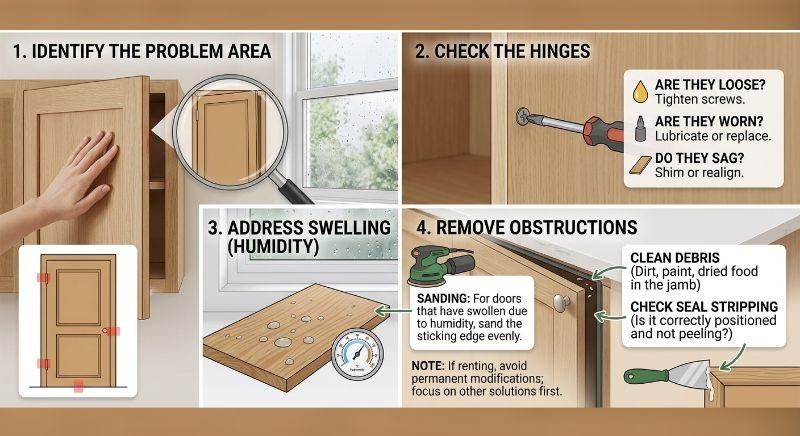
A door that sticks is not always a bad door. Sometimes, the frame has shifted. Sometimes, humidity changes the material. In other cases, loose hinges cause the door to sit differently.
The useful question is not simply, “How do I make the door smaller?” It is, “Why is the door touching the frame in the first place?”
Understanding the cause helps you avoid unnecessary sanding and makes a lasting repair more likely.
Why Doors Stick in Different Seasons
Seasonal changes can affect doors, particularly wooden doors and frames. Wood absorbs and releases moisture, which can change its dimensions.
During humid periods, a door may expand and begin rubbing against the frame. When conditions become drier, the same door may operate more easily.
However, weather is not the only explanation. Loose hinges, frame movement, and installation problems can cause sticking throughout the year.
Observe when the issue appears. If the door sticks only during humid weather, moisture-related movement may be involved. If it sticks constantly, inspect alignment and hardware more closely.
Why Does My Front Door Stick in Summer?
Your front door may stick in summer because higher humidity can cause wooden door components to absorb moisture and expand. This can reduce the clearance between the door and its frame.
The problem may appear near the top corner, hinge side, or latch side. Inspect the area where the door rubs and check whether the hinges remain secure.
Do not immediately sand away the swollen area. If the cause is temporary moisture-related expansion, removing material may create unnecessary gaps later.
Moisture, Humidity and Door Expansion
Moisture affects wooden materials in ways that are easy to overlook. A door may absorb water vapor from humid air or experience direct exposure through leaks and condensation.
As wood responds to moisture, its dimensions can change. This movement may affect the gap between the door and frame.
Look for peeling finishes, discoloration, soft wood, and recurring swelling. These signs can help you identify a moisture-related issue.
If water is entering through an exterior opening, fix the source rather than repeatedly treating the door. Otherwise, the same problem may return.
How to Check Door Alignment
Door alignment describes how the door sits within its frame and how its hardware meets when closed. Poor alignment can cause rubbing, uneven gaps, and latch problems.
Open and close the door slowly. Observe whether one corner makes contact or whether the door appears to drop toward the floor.
Inspect the hinges and frame for visible movement or damage. Check whether the gaps around the door appear reasonably consistent.
If the door is severely misaligned or part of a heavy exterior entry system, professional assessment may be necessary. Avoid major adjustments without understanding the hardware and frame.
Simple Ways to Reduce Door Sticking
The best fix depends on the cause of the sticking. Start with simple checks rather than immediately cutting or sanding the door.
Inspect the hinges, identify the rubbing point, and look for moisture-related damage. Tighten suitable loose screws if the hardware is in good condition.
If the issue comes from temporary humidity, monitor the door as conditions change. If the door continues to rub, investigate the frame and alignment.
Do not force a sticking door repeatedly. Excessive pressure can damage the latch, hinges, and frame.
Sliding Door Problems and Easy Fixes
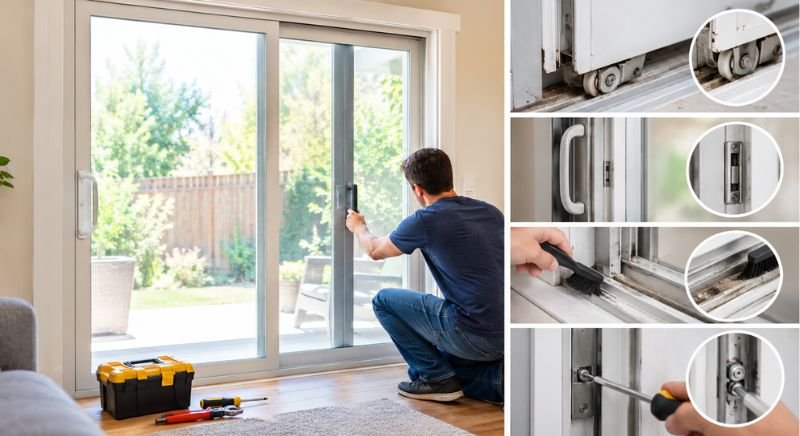
Sliding doors offer convenient access to patios, balconies, and other areas. However, their movement depends on tracks, rollers, and alignment. When one part becomes dirty or worn, the door may begin dragging or sticking.
A sliding door repair should begin with a basic inspection. Find out whether the resistance comes from the track, rollers, frame, or another part of the mechanism.
Why Sliding Doors Stick
Sliding doors may stick because of dirt, damaged tracks, worn rollers, or incorrect alignment. A door that drags along the bottom may have a different problem from one that catches at a particular point.
Open the door slowly and notice where the resistance begins. Listen for grinding, scraping, or uneven movement.
If the door has adjustable rollers, follow the manufacturer’s instructions before making changes. Random adjustments can worsen alignment.
Do not force a sliding glass door. The weight of the panel and the fragility of the glass make careful handling important.
How to Check Sliding Door Tracks
A sliding door track collects dirt from everyday use. Small debris can interfere with roller movement and make the door feel heavier than it should.
Inspect the full accessible track. Look for dirt, dents, corrosion, or visible damage.
Remove loose debris using a suitable cleaning method. Avoid using sharp tools that could scratch or damage the track.
If the track is bent or damaged, cleaning alone will not fix the problem. A repair professional can determine whether the track or related hardware needs attention.
Cleaning and Maintaining Sliding Door Tracks
Cleaning the track regularly helps prevent debris from building up around the rollers. This is especially useful for exterior sliding doors exposed to dust and outdoor dirt.
Remove loose particles carefully. Use a suitable cleaner for the track material, and avoid leaving excess moisture in areas where it may cause corrosion.
Do not apply thick grease without checking the manufacturer’s recommendations. Some products attract dirt and may make the track harder to maintain.
After cleaning, test the door gently. If the sliding door sticks, inspect the rollers and alignment rather than relying on repeated lubrication.
When Sliding Door Rollers May Need Attention
Sliding door rollers may need attention when the door drags, tilts, makes unusual sounds, or remains difficult to move after cleaning.
Worn rollers can affect the door’s position and put additional pressure on the track. A damaged roller may also cause uneven movement.
Some rollers can be adjusted, while others require replacement. The correct method depends on the door’s design.
If the door needs to be lifted or removed, consider professional help. Heavy glass panels can create injury and breakage risks.
Drafts and Air Leaks Around Doors and Windows
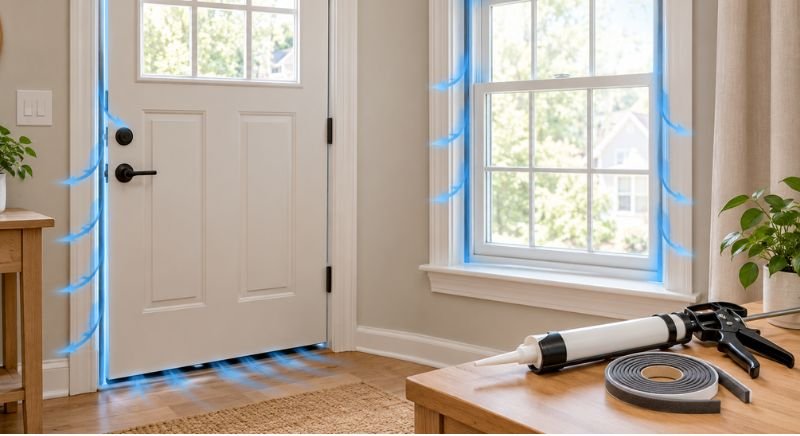
A draft is unwanted air movement through a gap or opening. It can make a room feel colder in winter, warmer in summer, or generally uncomfortable near doors and windows.
Air leaks are not always easy to locate. A window may appear closed but still allow air to enter around its frame. A door may have a worn seal that leaves a narrow opening along the bottom.
Finding the exact leak is more useful than applying sealant everywhere. The right repair should close the unwanted opening without blocking drainage or interfering with normal movement.
Common Causes of Door and Window Drafts
Door drafts and window drafts may result from worn weatherstripping, gaps around frames, poor installation, or alignment problems.
Exterior doors often experience weather exposure, while windows may develop leaks around moving sashes or fixed frames.
Inspect the closed door or window. Look for visible gaps, damaged seals, and places where the components do not meet properly.
Some air leaks occur around the frame rather than through the moving part itself. Identifying the location helps you choose the right repair.
How to Find Air Leaks
Finding air leaks begins with careful observation. On a windy day, you may feel air movement around the edges of doors and windows.
Inspect the perimeter of the closed unit. Look for damaged seals, visible openings, and areas where the door or window does not sit evenly.
Do not use unsafe methods involving flames or other ignition sources to test drafts. A professional assessment may help locate hidden leaks when a visual inspection is not enough.
Remember that a cold surface does not automatically prove an air leak. Indoor air movement, insulation, and surface temperature can also affect comfort.
How to Stop Drafts From Windows
To stop drafts from windows, first identify whether the air enters through the sash, frame, or surrounding joint. Each location may require a different solution.
Worn weatherstripping may need replacement. A damaged frame seal may require suitable caulk or another compatible sealing material.
Check the window’s closing mechanism before installing new seals. A window that does not close properly may continue to leak even after weatherstripping is replaced.
Avoid sealing drainage openings. These openings may be part of the window’s moisture-management design.
How to Seal Air Leaks Around Windows
Window sealing works best when you address the actual gap rather than covering every visible joint. Inspect the connection between the frame and surrounding wall.
Small gaps in suitable locations may be repaired with compatible caulk or sealant. Larger openings, damaged materials, or moisture problems may need more extensive work.
Clean and prepare the surface according to the product’s instructions. Do not apply sealant over wet or deteriorated materials without addressing the underlying problem.
How Door and Window Sealing Improves Home Comfort
Proper door and window sealing helps reduce unwanted air movement through gaps. This can make rooms feel more comfortable and may reduce the amount of conditioned air lost through leakage.
The improvement depends on the size of the leak, the quality of the repair, and the building’s overall construction.
Sealing does not replace proper insulation or solve every heating and cooling issue. However, fixing noticeable gaps is a practical part of maintaining a comfortable home.
Inspect the most obvious leaks first, then check whether the repair has improved the problem.
Weatherstripping and Door Sealing
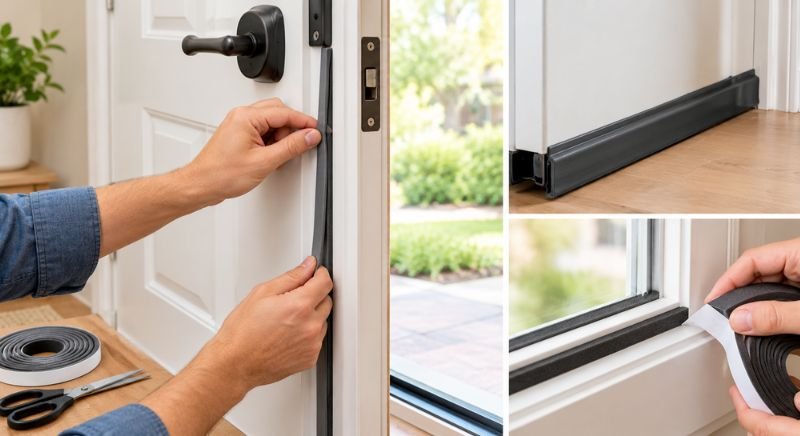
Weatherstripping is a simple component with an important job. It helps close the space between a door or window and its surrounding surface, reducing unwanted air movement.
A worn seal can create a draft even when the door itself looks perfectly fine. The correct weatherstripping should fit the opening without preventing the door from closing or locking.
What Is Weatherstripping?
Weatherstripping is a sealing material installed around doors and windows to reduce gaps between adjoining surfaces. It may be used along the sides, top, or other areas of an opening.
Some products compress when the door closes. Others use flexible fins, foam, rubber, or vinyl to create a seal.
The correct type depends on the door’s design, gap size, weather exposure, and mounting surface.
A seal that is too thick can prevent proper closing. One that is too thin may fail to close the gap effectively.
Types of Weatherstripping for Exterior Doors
Exterior doors use several types of weatherstripping. The right product depends on where the gap appears and how the door operates.
Foam tape can work in some applications, while rubber or vinyl seals may suit other door edges. Door sweeps are commonly used to address gaps beneath doors.
| Type | Typical application | What to check |
| Foam tape | Suitable small gaps | Thickness and durability |
| Rubber or vinyl seal | Door edges and frames | Fit and weather resistance |
| Door sweep | Bottom of exterior doors | Floor clearance |
| Compression seal | Exterior door frames | Closing pressure |
These products are not interchangeable in every situation. Check the manufacturer’s instructions and measure the opening before purchasing.
How to Choose Weatherstripping for an Exterior Door
Choosing weatherstripping for an exterior door starts with finding the location and size of the gap. Inspect the current seal and note its shape, placement, and condition.
Consider exposure to rain, sunlight, temperature changes, and frequent compression. The material should suit the door and mounting surface.
A seal should reduce air leakage without making the door difficult to close. If the door requires excessive force after installation, the material may be too thick or incorrectly fitted.
How to Fix Gaps Under an Exterior Door
Gaps under an exterior door may allow drafts, dust, insects, and moisture into the home. A door sweep or threshold adjustment may help when the gap is within the system’s intended range.
Inspect the existing sweep and bottom edge of the door. Check whether the sweep has become damaged or no longer reaches the intended surface.
If the floor is uneven or the door is misaligned, a sweep alone may not resolve the issue.
Signs Your Door Weatherstripping Needs Replacement
Door weatherstripping may need replacement when it cracks, tears, becomes compressed, or detaches from its mounting surface.
You may notice drafts, visible daylight, or a seal that no longer touches the door properly.
Inspect the weatherstripping when the door is closed. If it looks worn but the door is also misaligned, address both issues instead of replacing the seal alone.
Choose compatible replacement material and test the door afterward. It should close, latch, and lock without excessive pressure.
How to Improve Door and Window Sound Insulation
A noisy home can make it harder to relax, work, or sleep. Sound enters through different paths, including door gaps, thin panels, windows, walls, and openings around frames.
Improving sound insulation begins with identifying the source of the noise. Sealing a door gap may reduce some sound transmission, but it will not block every sound traveling through a wall or lightweight door.
Common Sources of Noise Through Doors
Noise can pass through the door panel, the gaps around its edges, and the space beneath it. The door’s construction and the surrounding wall also affect sound transmission.
Traffic, voices, footsteps, and mechanical sounds may travel through different paths. Identifying the type of noise helps you decide where to focus.
A hollow interior door may provide less sound isolation than a heavier or better-sealed door assembly. However, replacing the door alone may not solve noise coming through the wall.
Inspect the entire opening before choosing a soundproofing solution.
How Door Gaps Affect Sound
Door gaps create paths through which sound can travel. Even a small opening may affect the overall sound isolation of a room.
Weatherstripping and door sweeps can reduce some sound transmission when they close the gap properly. Their performance depends on the size of the opening, the material, and the door assembly.
Do not install a seal that prevents the door from closing or creates unsafe pressure. A good repair should balance sound reduction with normal operation.
How to Soundproof a Bedroom Door
Bedroom door soundproofing often begins with reducing gaps around the door. Weatherstripping and a suitable door sweep may help limit sound traveling through open spaces.
If the door panel is lightweight, the construction may also affect the amount of sound that enters the room. A more substantial door assembly may provide a different level of isolation.
Start by checking the door’s perimeter and the gap beneath it. Use compatible sealing products that allow the door to close properly.
Door Sealing and Weatherstripping for Noise Reduction
Door sealing and weatherstripping can reduce some sound transmission by closing air paths around the opening. This may help with certain outside sounds and voices.
The result depends on the door, frame, surrounding wall, and type of noise. Weatherstripping alone cannot guarantee complete soundproofing.
Inspect the door assembly before selecting a repair. If you need substantial noise reduction, a professional can help identify the main sound paths and available options.
Door and Window Maintenance Tips
Good door and window maintenance is less about spending every weekend on repairs and more about noticing changes before they become disruptive. A handle that feels loose today may become a broken mechanism later. A small seal gap may become a larger source of drafts.
Create a simple routine that covers the parts you use most. Pay extra attention to exterior doors, frequently opened windows, sliding doors, and areas exposed to moisture.
How Often Should You Inspect Doors and Windows?
Inspect doors and windows regularly, with extra checks before and after severe weather. The right frequency depends on your home’s age, climate, materials, and how often each opening is used.
During an inspection, open and close doors and windows carefully. Check whether the latches work, tracks remain clear, and seals look intact.
You do not need to dismantle every component. A visual inspection and gentle operation can reveal many early warning signs.
If a problem repeatedly returns, investigate its cause instead of treating the same symptom every few weeks.
Lubricating Hinges and Moving Parts
Lubricating compatible hinges and moving parts can help reduce friction and unwanted noise. However, different mechanisms may require different products and application methods.
Check the manufacturer’s guidance when available. Apply a suitable amount and remove excess material that may attract dirt.
Do not lubricate every component simply because it moves. Some mechanisms require specific maintenance, and unsuitable products may cause problems.
If a part is bent, broken, or worn, lubrication will not replace a proper repair.
Cleaning Window Tracks and Door Hardware
Dirt can build up in window tracks, sliding door tracks, hinges, and other hardware. Regular cleaning helps you spot damage and prevent avoidable buildup.
Remove loose debris carefully using a method suitable for the material. Avoid scratching tracks or forcing tools into hidden mechanisms.
Check door handles, hinges, and visible mounting points. Clean carefully around moving components and follow the manufacturer’s recommendations.
After cleaning, test the opening gently. If movement remains difficult, inspect alignment and hardware rather than assuming more cleaning will solve it.
Checking Weatherstripping and Seals
Check door and window seals for cracking, tearing, flattening, and detachment. These signs may indicate that the material no longer closes the gap effectively.
Inspect the closed door or window to see whether the seal makes proper contact. Pay particular attention to exterior openings exposed to rain and sunlight.
Replace worn weatherstripping with compatible material. If the seal fails because the door or window is misaligned, address that underlying issue as well.
Do not block drainage openings or use sealing material in locations where it can interfere with normal operation.
Looking for Moisture and Damage
Moisture is one of the issues homeowners should not ignore. It can affect wooden doors, window frames, finishes, and surrounding wall materials.
Look for peeling paint, discoloration, soft wood, condensation, and signs of water entry. These clues do not always identify the exact source, but they show where further inspection may be useful.
Check for leaks around exterior openings, plumbing, and other nearby sources when appropriate. Repairing the moisture source helps reduce the risk of repeated damage.
If you find extensive deterioration or damage to structural components, seek professional assessment.
Preventing Common Door and Window Problems
Preventing common door and window problems starts with small habits. Clean tracks, inspect seals, tighten suitable loose hardware, and address changes in operation early.
Do not force sticking doors or windows. Excessive pressure can worsen damage to hinges, latches, rollers, and frames.
Use repair materials that suit the product and its environment. Follow installation instructions rather than choosing a seal or lubricant based only on appearance.
A consistent maintenance routine helps you catch issues before they become more complicated home door repair or home window repair projects.
When Should You Repair or Replace a Door or Window?
Repairing or replacing a door or window depends on the condition of the complete assembly. A worn hinge may need a small fix, while a severely damaged frame may require a more extensive solution.
The decision should consider safety, cost, durability, and the cause of the problem. Replacing a component without understanding the underlying issue may leave the same problem unresolved.
When a Simple Repair Is Enough
A simple repair may be enough when the issue involves a replaceable or adjustable component. Examples include loose screws, worn weatherstripping, dirt in a sliding track, or minor hardware damage.
The repair should restore proper operation without creating safety or structural concerns.
Inspect the damaged part and check whether it can be adjusted or replaced. Use compatible materials and follow the relevant product instructions.
A minor repair may not be suitable when the visible issue is a symptom of moisture damage, frame movement, or a larger installation problem.
Signs a Door May Need Replacement
A door may need replacement when severe deterioration, structural damage, or persistent operational problems cannot be addressed through practical repairs.
Possible warning signs include significant warping, extensive rot, severe panel damage, or an assembly that no longer operates safely.
A door that fails to close or lock properly needs assessment before a replacement decision is made. The cause could involve the frame, hinges, or locking hardware.
For exterior doors, consider the condition of the entire entry system, including the frame and hardware. Do not assume the door panel is the only part that needs attention.
Signs a Window May Need Replacement
A window may need replacement when it has severe frame deterioration, damaged components that are not practical to repair, or persistent problems that affect its safe operation.
Broken or cracked glass requires particular care. Avoid handling damaged glass or attempting repairs that could cause injury.
Air leaks and water leaks do not always mean the entire window needs replacement. A worn seal or damaged surrounding joint may be repairable.
Inspect the frame, sash, operating mechanism, and surrounding wall before choosing a replacement.
Repair vs Replacement Considerations
Repair vs replacement decisions should be based on the actual condition of the opening rather than age alone. A relatively old door may remain serviceable, while a newer unit may have damage that needs attention.
| Consideration | Repair | Replacement |
| Loose hardware | Often suitable | Usually unnecessary |
| Worn weatherstripping | Replace the seal | Usually unnecessary |
| Damaged frame | Depends on severity | May be considered |
| Broken glass | Depends on damage | May be required |
| Repeated unresolved issues | Investigate cause | Consider after assessment |
These are general considerations, not universal rules. The correct choice depends on the product, damage, installation, and safety requirements.
When to Call a Professional
Professional help is appropriate when a repair is difficult to identify, involves serious damage, or could create a safety risk.
Consider calling a professional for broken glass, structural frame damage, persistent water intrusion, complex operating mechanisms, and heavy doors or glass panels that require removal.
You should also seek help when an exterior entry door cannot close or secure properly. Security-related problems deserve careful attention.
If you are unsure whether a DIY repair is safe, stop and arrange an inspection. A professional can help identify the cause and explain the available repair or replacement options.
Common Door & Window Problems FAQs
What Are the Most Common Problems With Doors?
The most common door problems include squeaky hinges, sticking, misalignment, loose hardware, latching failures, and gaps around exterior doors. Some issues result from everyday wear, while others involve moisture, frame movement, or installation. Inspect the door and its hardware together before choosing a repair.
Why Do Doors Start Sticking?
Doors may start sticking because of humidity, wood expansion, loose hinges, frame movement, or alignment changes. A door may rub against the frame or floor when its position changes. Identify the contact point and check the hardware before sanding, cutting, or making permanent adjustments.
Why Won’t My Door Latch Properly?
A door may fail to latch because the latch and strike plate are misaligned, the hinges are loose, or the frame has shifted. Close the door slowly and observe where the latch meets the opening. If the problem continues, inspect the alignment and hardware or arrange professional help.
Why Is My Window Difficult to Open?
A window may be difficult to open because of dirt, paint buildup, damaged hardware, moisture-related swelling, or frame alignment. Inspect the accessible track and operating mechanism without forcing the window. If it remains stuck or has damaged glass, seek professional repair.
How Can I Stop Drafts Around Windows?
To stop drafts around windows, identify where the air enters. Inspect the window’s weatherstripping, frame joints, and closing mechanism. Replace worn seals with compatible materials and repair suitable gaps around the frame. Avoid blocking drainage openings or assuming every draft comes through the glass.
How Do I Know if My Door Needs Replacement?
A door may need replacement when severe damage, structural problems, or persistent operational issues cannot be resolved through practical repairs. Check the door, frame, hinges, and locking components together. A professional assessment can help determine whether repair or replacement is suitable.
When Should I Call a Professional for Door or Window Repairs?
Call a professional when the problem involves broken glass, structural damage, persistent water intrusion, complex hardware, heavy components, or a door that cannot secure properly. Professional assistance is also appropriate when you cannot identify the cause or a DIY repair could create a safety risk.
A Practical Approach to Door and Window Maintenance
The best way to manage common door and window problems is to match the repair to the actual cause. Basic DIY door repairs and DIY window repairs can be useful for minor issues, such as cleaning tracks, tightening suitable screws, and replacing compatible weatherstripping. More complex door and window repairs may involve frame damage, glass, or difficult hardware.
For homeowners, regular door and window maintenance is more useful than waiting for a failure. Check your seals, hinges, latches, and tracks. Look for drafts, moisture, and changes in alignment. These habits can help you prevent drafts, maintain comfortable rooms, and identify when professional work is needed.
When considering energy efficient doors and windows, remember that performance depends on the complete assembly, including the frame, seals, glazing, and installation. Door insulation and window insulation can also affect comfort, but the right solution depends on the building and its existing construction.
If you are unsure when to replace doors and windows, assess the condition, repair options, and expected durability. And if you are unsure when to call a professional, choose safety over guesswork. A careful inspection can help you avoid unnecessary spending and prevent a small problem from becoming a larger one.