
A small home repair can become expensive when you do not have the right tools or basic skills. A loose cabinet handle, damaged wall, dripping faucet, or uneven picture frame may not need a professional visit. With the right essential home tools and a little practice, many homeowners can handle simple tasks safely and confidently.
You do not need a workshop filled with expensive equipment. A practical collection of hand tools, measuring tools, fastening tools, and selected power tools can cover many everyday needs. You also need basic DIY skills, such as measuring accurately, choosing the right fastener, using a level, applying caulk, and knowing when a repair requires professional help.
This guide explains the essential tools for homeowners, useful home repair skills, safe DIY practices, tool storage, and ways to build a useful collection on a budget. Whether you are a beginner or want to improve your existing skills, these recommendations can help you approach home projects with better preparation.
Essential Tools Every Homeowner Should Have
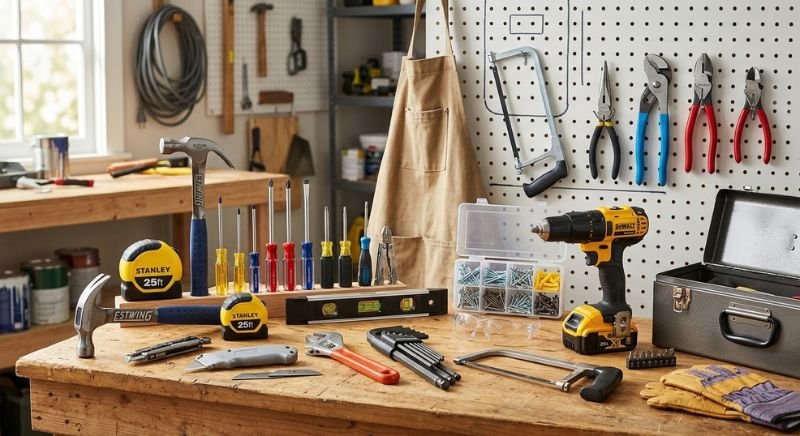
Every homeowner needs a reliable set of basic home tools for routine maintenance and small repairs. Your homeowner tool list should cover measuring, tightening, cutting, fastening, adjusting, and protecting yourself during projects. These tools form the foundation of a practical home tool collection.
The right tools every homeowner needs will depend on the age of the property, your repair experience, and the projects you expect to complete. Start with versatile items instead of buying specialized equipment that you may use only once.
Basic Hand Tools
Basic hand tools are useful for everyday household tasks. A screwdriver set, hammer, adjustable wrench, pliers, utility knife, and tape measure should be part of your first collection. These essential DIY tools help with furniture assembly, loose hardware, minor adjustments, and simple home repairs.
A hammer can help with light fastening and small installation tasks. Screwdrivers are useful for tightening cabinet handles, switch plates, hinges, and other hardware. Pliers provide grip when you need to hold, twist, or adjust small components. Choose tools with comfortable handles and strong construction.
Measuring and Leveling Tools
Accurate measuring is an important part of successful home improvement. A tape measure helps you check furniture dimensions, wall space, curtain lengths, and installation distances. A level helps you install shelves, frames, cabinets, and wall-mounted items evenly.
Useful measuring tools include a tape measure, level, combination square, and marking pencil. A stud finder can help you locate framing behind drywall before installing heavier objects. These tools support accurate measuring and marking and reduce mistakes during home projects.
Cutting and Fastening Tools
Cutting tools and fastening tools help you complete many household tasks. A utility knife works for controlled cutting of packaging, cardboard, and selected materials. A handsaw can help with basic wood-cutting tasks when a power saw is unnecessary.
Your fastening tools may include screwdrivers, a screwdriver bit set, an Allen wrench set, a socket set, and a cordless drill. Select the right bit or fastener for the material. Using the wrong size can damage screws, surfaces, or the tool itself.
Basic Power Tools
Power tools can make repetitive work faster, especially during home improvement projects. A cordless drill is one of the most versatile choices for homeowners. It can help with drilling pilot holes, installing screws, assembling furniture, and completing basic fastening tasks.
Other useful power tools may include an impact driver, jigsaw, orbital sander, or oscillating multi-tool. However, beginners should purchase equipment according to their actual needs. More power does not automatically mean better results. Control, correct settings, and safe handling matter just as much.
Safety Equipment for Home DIY Projects
Safety equipment should be part of every homeowner’s tool collection. Protective eyewear helps protect your eyes from dust, small particles, and flying debris. Work gloves may improve grip and protect your hands during suitable tasks, while hearing protection can reduce exposure to loud equipment.
Depending on the project, you may also need a dust mask or respirator suitable for the material, sturdy footwear, and appropriate work clothing. Safety equipment does not replace proper training or safe working methods. Always consider the hazards before starting a repair.
Hand Tools Every DIY Beginner Should Know
Hand tools are a practical starting point for anyone learning DIY. They are often easier to control than power tools and can handle many small repairs.
The best beginner DIY tools are not always the cheapest products available. Choose reliable tools that feel comfortable in your hand and match the work you expect to perform. Good hand tools can support years of home maintenance when you use and store them properly.
Screwdrivers and Screwdriver Sets
Screwdrivers are among the most frequently used household tools. A basic set should include common Phillips and flat-head sizes. Some projects may also require Torx, square, or precision screwdriver bits.
Use the correct screwdriver size and tip shape for each screw. A poorly matched screwdriver can strip the screw head and make removal difficult. Keep both standard screwdrivers and interchangeable screwdriver bits available for different household applications.
Hammers and Mallets
A claw hammer is useful for light fastening, removing certain nails, and basic woodworking tasks. Choose a size that feels balanced and comfortable rather than selecting the heaviest hammer.
A rubber mallet can be helpful when you need to tap materials without leaving the same marks that a metal hammer may create. Use the right striking tool for the material and avoid hitting objects that could crack, splinter, or break.
Pliers and Wrenches
Pliers provide grip and control for holding, twisting, and adjusting components. Common options include combination pliers, long-nose pliers, and locking pliers. An adjustable wrench can help tighten or loosen different sizes of nuts and bolts.
A socket set is useful for certain furniture, vehicle-related, and household fastening tasks. An Allen wrench set is important for many flat-pack furniture items and hardware assemblies. Avoid using pliers as a substitute for the correct wrench when doing so could damage the fastener.
Utility Knives and Handsaws
A utility knife is useful for opening packages, cutting suitable materials, and completing controlled household tasks. Select a model with a secure blade mechanism and replace damaged or dull blades carefully.
A handsaw can help with simple wood-cutting work. Keep the material stable and use slow, controlled movements. Never rush a cut because speed can reduce control and increase the risk of injury.
How to Choose the Right Hand Tool for a Job
Start by identifying the material, fastener, and task. A screwdriver is designed for turning screws, while a wrench is designed for nuts and bolts. A utility knife and handsaw serve different cutting purposes, so choosing between them requires attention to the material and cut.
Before beginning, check the tool’s size, condition, and compatibility. If a tool requires excessive force, stop and reassess the task. The correct tool should make the work more controlled, not create additional damage.
Power Tools for Homeowners
Power tools are valuable additions to a home workshop when a project involves repeated drilling, fastening, sanding, or cutting. They can save time, but they also require more attention than many basic hand tools.
Homeowners should learn how a tool operates before using it on a real project. Read the instructions, inspect the equipment, and practice on scrap material when appropriate. Basic power tool safety should always come before speed.
When Homeowners Need Power Tools
You may need power tools when a hand tool would make the work unnecessarily slow or difficult. Installing multiple shelves, assembling furniture, drilling into suitable materials, or completing repeated fastening tasks are common examples.
Not every home project requires power equipment. A hand screwdriver may be enough for one small repair. A cordless drill may be more useful when you need to complete several holes or install multiple screws.
Cordless Drills and Drivers
A cordless drill is one of the most useful power tools for homeowners. It can support drilling and fastening when you select the correct bit, speed, and torque setting. Many models include adjustable clutches that help reduce the risk of overtightening screws.
Learn how to use a cordless drill by practicing with scrap wood or another suitable material. Hold the drill steadily, keep the bit aligned, and use moderate pressure. Start slowly and increase speed only when you have control.
A drill driver and impact driver are not identical. A drill driver is often more versatile for general household work, while an impact driver is designed for applications that need higher rotational impact. Beginners should understand these differences before buying additional equipment.
Choosing a Power Tool for Your Skill Level
Beginners should look for tools with clear controls, manageable weight, adjustable settings, and accessible safety instructions. A lighter tool may be easier to control during overhead work or longer tasks.
More experienced users may need specialized equipment for larger projects. However, experience does not remove the need to select the correct tool, accessory, and protective equipment. Always match the power tool to the material and task.
Cordless vs Corded Power Tools
Cordless tools offer mobility and convenience. They are useful when you work in different rooms, outdoor areas, or locations without easy access to a power outlet. Batteries require charging, and extended projects may need additional batteries.
Corded power tools can provide continuous operation without battery replacement. However, the cord may limit movement and create a trip hazard. Consider your workspace, project duration, power access, and storage needs before choosing between cordless and corded power tools.
Basic Power Tool Safety
Inspect the tool, cable, battery, switch, and accessories before use. Use the correct drill bits, blades, or attachments, and secure the material whenever possible. Keep your hands away from moving components.
Disconnect or remove the battery before changing accessories when the manufacturer’s instructions require it. Keep children and other people away from the active work area. If the tool behaves unusually, stop using it and investigate the problem safely.
How to Choose the Right Tools for Home Projects
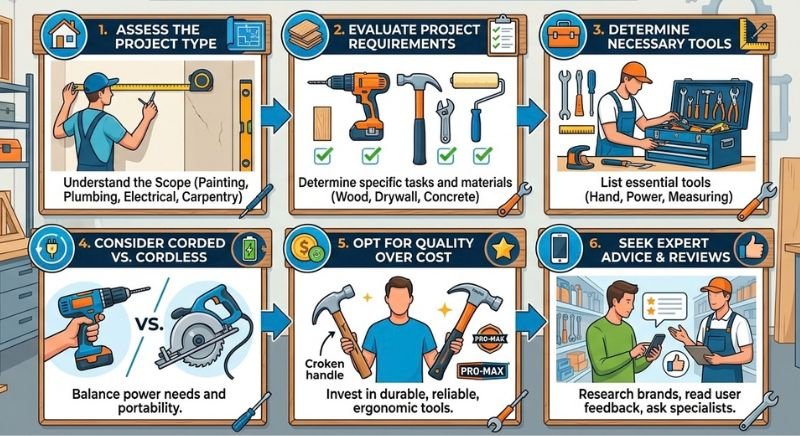
Choosing the right tools starts with understanding the work you want to complete. A basic home repair may need only a screwdriver, wrench, or utility knife. A larger home improvement project may require measuring tools, power tools, protective equipment, and specialized accessories.
Avoid buying every tool at once. Build your collection around the tasks you regularly perform. This approach helps you control costs while ensuring that your essential home tools remain useful.
Match the Tool to the Job
Identify the material, size, location, and purpose of the repair before choosing a tool. For example, hanging a lightweight picture may require a tape measure, level, pencil, and suitable wall fastener. Installing a heavy shelf may require a stud finder, drill, level, and appropriate mounting hardware.
Using a tool for an unsuitable purpose can damage both the tool and the material. If you are unsure which tool is appropriate, check the manufacturer’s guidance or seek professional advice.
Hand Tools vs Power Tools
Hand tools are often suitable for small repairs, occasional maintenance, and tasks that require precise control. They are usually simple to store and do not need batteries or electrical connections.
Power tools are useful for repeated drilling, fastening, sanding, or cutting. They may reduce physical effort, but they also require additional safety precautions. Consider the task’s complexity, frequency, and potential hazards before choosing between hand tools and power tools.
Tool Quality and Durability
Tool quality affects comfort, accuracy, reliability, and service life. Extremely low-cost tools may work for occasional light tasks, but poor construction can create problems during repeated use.
You do not need the most expensive equipment. Look for strong materials, comfortable grips, secure moving parts, clear product information, and a warranty when available. Prioritize quality for tools you expect to use frequently.
Choosing Tools for Occasional vs Frequent DIY
Occasional DIY users can begin with versatile household tools. A basic screwdriver set, hammer, pliers, adjustable wrench, tape measure, level, and utility knife can handle many simple tasks.
Frequent DIY users may benefit from investing in durable hand tools, rechargeable power tools, extra batteries, specialized bits, and organized tool storage. Your collection should grow according to your actual projects rather than online trends.
Building a Home Tool Collection on a Budget
Start with the tools that solve common problems in your home. Buy a complete set only when the included items are useful and reasonably durable. Sometimes purchasing individual tools is more practical than buying a large kit filled with items you rarely need.
Look for sales from reliable retailers, but do not choose a tool only because it has the lowest price. A dependable tool that lasts longer may offer better value over time.
Basic DIY Skills Every Homeowner Should Know
Having essential home tools is only one part of successful home maintenance. You also need basic DIY skills to use those tools correctly. Measuring, fastening, leveling, sealing, and making minor adjustments are valuable skills for homeowners.
Learn one task at a time and practice on small projects. Read instructions carefully, understand the material you are working with, and stop when a repair becomes unsafe or unfamiliar.
How to Measure and Mark Accurately
Measure the space more than once before cutting, drilling, or installing anything. Use a sharp pencil or suitable marking tool to identify the exact location. Keep the tape measure straight and read the measurement carefully.
Accurate measuring and marking helps prevent crooked installations, misplaced holes, and wasted materials. When a project involves several matching measurements, record them before beginning the work.
How to Drill and Fasten Materials
Select a drill bit that matches the material and hole size. For fastening, choose a screw that suits the material, load, and mounting method. Drill a pilot hole when appropriate to reduce splitting or damage.
Keep the drill aligned with the surface and apply controlled pressure. Avoid forcing the bit through the material. Drilling and fastening should be performed slowly until you understand how the tool responds.
How to Use Screws, Anchors and Nails
Screws, anchors, and nails serve different purposes. Screws are useful when you need a secure connection and may later need to remove the fastener. Wall anchors can support certain loads in drywall or other hollow materials when correctly selected and installed.
Nails may be suitable for specific woodworking and finishing tasks. Always consider the surface, weight, fastener size, and installation method. Never assume that every wall anchor can support heavy objects.
How to Use a Level and Stud Finder
A level helps you check whether an object is horizontal or vertical. Place it on the surface or mounting component and adjust the position until the bubble indicates a level alignment.
A stud finder can help identify framing behind drywall. Follow the device’s instructions and confirm the location before drilling. Stud finders may not work perfectly through every material, so use caution when installing heavy items.
How to Apply Caulk and Seal Small Gaps
Caulk can help seal small gaps around suitable fixtures, trim, sinks, tubs, and other surfaces. First, clean and dry the area. Select a caulk designed for the material and location.
Apply a controlled bead using a caulking gun, then smooth it according to the product instructions. Remove excess material before it cures. Do not use ordinary caulk as a solution for structural movement, major water damage, or a serious leak.
How to Make Simple Adjustments and Minor Repairs
Many minor household problems involve loose screws, misaligned doors, worn hardware, or small gaps. Start by identifying the cause rather than tightening or adjusting everything randomly.
Use the appropriate tool and make small changes. Test the repair after each adjustment. If the issue returns quickly or suggests a deeper problem, stop and investigate further.
Basic Home Repair Skills
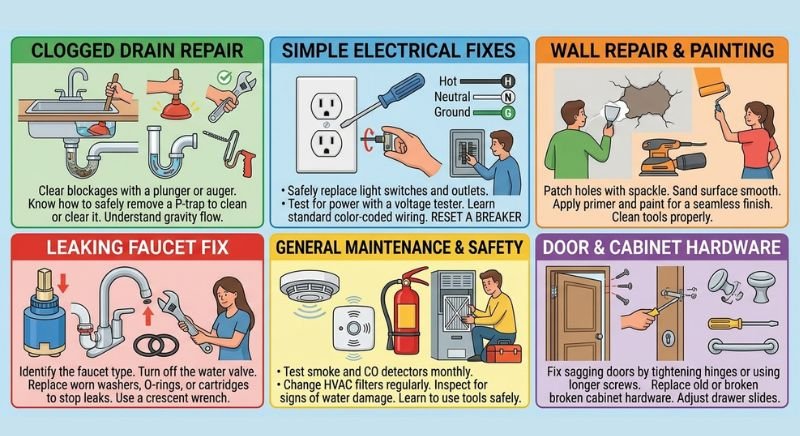
Basic home repair skills help homeowners manage everyday problems before they become more expensive. These tasks may include tightening hardware, repairing small wall damage, touching up paint, and completing basic home maintenance.
However, the difficulty of a repair depends on the building materials, location, and underlying cause. A small visible problem may sometimes indicate a larger issue that requires professional attention.
Fixing Loose Screws and Hardware
Loose handles, hinges, brackets, and cabinet hardware can often be addressed with the correct screwdriver or wrench. Check whether the fastener is damaged before tightening it.
Do not overtighten screws because excessive force can strip threads, damage wood, or crack certain materials. If the screw no longer holds, you may need a suitable replacement or a different repair method.
Patching Small Wall Damage
Small nail holes and minor surface damage may be repaired using suitable spackle or wall filler. Clean the area, apply the filler, allow it to dry, and sand it carefully if required.
A putty knife helps spread the repair material evenly. Larger cracks, recurring damage, damp areas, or movement around the wall should be examined before you attempt a cosmetic repair.
Replacing or Adjusting Simple Hardware
Homeowners can often replace simple cabinet handles, door knobs, hinges, and other accessible hardware. Confirm the measurements and screw spacing before purchasing a replacement.
Follow the product instructions and test the hardware after installation. If the item affects security, fire safety, or structural support, consider professional assistance.
Basic Painting and Touch-Up Skills
Painting tools may include brushes, rollers, painter’s tape, trays, drop cloths, and suitable surface preparation products. Clean the surface before applying paint and allow each coat to dry as directed.
For touch-ups, match the existing color and finish as closely as possible. A small test area can help you check the result before painting a larger section.
Basic Plumbing Maintenance Skills
Basic plumbing repair tools may include an adjustable wrench, pliers, bucket, cloth, and suitable replacement washers or seals. Homeowners may handle simple tasks such as cleaning an accessible aerator or replacing certain easily accessible components.
Shut off the water supply when necessary and protect nearby surfaces. Avoid opening concealed plumbing systems or making changes that could cause flooding if you do not understand the work.
Basic Home Maintenance Tasks
Basic home maintenance includes checking visible leaks, cleaning filters when appropriate, inspecting caulk, tightening loose hardware, and monitoring signs of damage. Regular checks can help you notice problems earlier.
Home maintenance tools should be stored where you can access them quickly. Keep a simple maintenance schedule so seasonal tasks do not become difficult to track.
DIY Skills for Common Home Improvement Projects
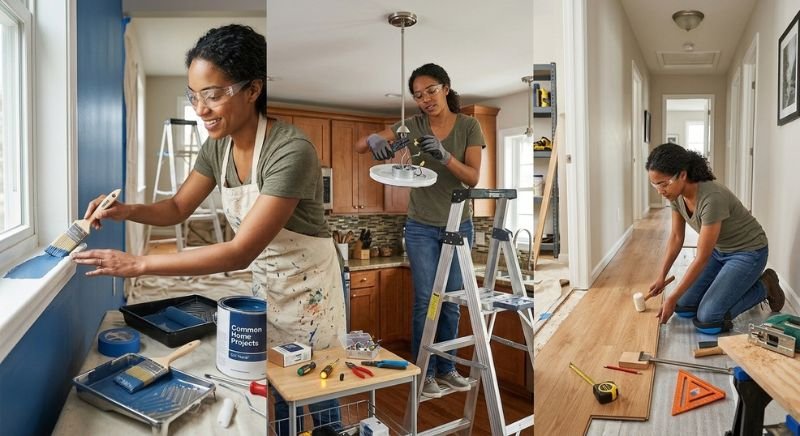
Many home improvement projects involve a combination of measuring, fastening, leveling, cutting, and finishing. Learning these skills can help you complete manageable tasks with better results.
Start with projects that match your experience. Do not begin with complex electrical, structural, roofing, or plumbing work simply because you already own the necessary tools.
Hanging Pictures and Wall-Mounted Items
Hanging pictures requires accurate measuring, suitable fasteners, and a level. Consider the item’s weight and the wall material before selecting the mounting method.
For heavier items, locate suitable framing or use a correctly rated anchor. Check the installation instructions and confirm that the wall can support the load.
Assembling and Installing Household Items
Furniture assembly often requires screwdrivers, an Allen wrench set, a socket set, and a level. Organize the parts before starting and follow the manufacturer’s instructions.
Avoid forcing parts together. If holes do not align, review the instructions and check whether a component has been installed in the wrong direction.
Basic Furniture Repairs
Basic furniture repairs may include tightening fasteners, replacing damaged hardware, reinforcing suitable joints, or repairing minor surface damage. Use the right adhesive or fastener for the material.
Do not rely on a cosmetic repair when the furniture has serious structural damage. Chairs, beds, shelves, and other load-bearing items must remain stable and safe.
Simple Caulking and Sealing Projects
Simple caulking projects can help reduce small gaps and improve the finish around suitable surfaces. Remove old, damaged caulk when necessary and prepare the area before applying new material.
Choose a product designed for the environment. Areas exposed to regular moisture may require a suitable bathroom or kitchen sealant. Follow curing instructions before exposing the seal to water.
Minor Home Maintenance Projects
Minor home maintenance projects may include replacing cabinet hardware, adjusting accessible hinges, repairing small wall marks, installing basic storage hooks, and sealing suitable gaps.
Keep your tools organized and avoid starting several unfinished tasks at once. Completing smaller projects carefully helps you build confidence and improve your home repair skills.
When a DIY Project Requires Specialized Skills
Some projects require training, permits, specialized equipment, or professional experience. These may include major electrical work, structural repairs, gas systems, roof repairs, and concealed plumbing changes.
A project should not be attempted solely because it appears simple from the outside. If the consequences of an error could involve fire, flooding, collapse, or serious injury, seek qualified assistance.
How to Use Home Tools Safely
Tool safety is essential for every homeowner, regardless of experience. Even basic household tools can cause injuries when used incorrectly. Read the instructions, inspect your equipment, and prepare the work area before beginning.
Homeowner safety also depends on knowing your limits. If you cannot identify the risk or understand the repair, do not continue without suitable guidance.
Read Tool Instructions Before Use
Read the manufacturer’s instructions before using a new tool. Learn its controls, recommended materials, limitations, and maintenance requirements.
Do not assume that two similar tools operate in exactly the same way. Follow the specific instructions for batteries, blades, bits, guards, and other accessories.
Wear the Right Safety Equipment
Use protective eyewear when dust, debris, or particles may be produced. Wear suitable footwear and clothing, and use hearing protection when working with loud equipment.
Gloves are not appropriate for every task, especially around rotating machinery. Select safety equipment according to the specific risk instead of wearing items without considering their limitations.
Keep Tools and Work Areas Organized
A clean work area reduces tripping hazards and makes tools easier to locate. Keep cables, batteries, blades, and loose materials organized.
Remove unnecessary objects from the workspace. Store sharp tools safely and return equipment to its proper location after use.
Safe Use of Hand Tools
Inspect hand tools for cracks, loose handles, damaged tips, or worn components. Use the correct tool for the task and keep your hands away from cutting edges.
Do not use a screwdriver as a chisel or a utility knife as a pry bar. Improvised tool use can lead to loss of control and equipment damage.
Safe Use of Power Tools
Check the power tool and its accessories before operation. Secure the material, maintain a stable stance, and keep the tool under control.
Disconnect the power source or remove the battery before changing accessories when required. Avoid distractions and never bypass safety guards or protective features.
When Not to Attempt a DIY Repair
Do not attempt a repair when you cannot identify the cause, lack the required equipment, or face a serious safety hazard. Stop if you notice exposed wiring, major water flow, structural movement, gas odors, or unexpected damage.
Knowing when to hire a professional is an important DIY skill. Choosing professional help can protect your home, your safety, and your budget.
How to Organize and Store Home Tools
Good tool storage protects your equipment and helps you find what you need. Disorganized tools can become damaged, misplaced, or difficult to access during an urgent repair.
Your storage system should match the size of your collection, available space, and frequency of use. Even a small home can support an organized tool area.
Choosing the Right Tool Storage System
A toolbox may work well for a small collection, while cabinets, shelves, pegboards, or modular storage systems may suit larger collections. Consider tool size, weight, moisture exposure, and accessibility.
Keep sharp tools protected and store power tool batteries according to the manufacturer’s instructions. Avoid placing tools where moisture can cause rust or damage.
Toolboxes and Tool Bags
A tool box provides enclosed storage and can protect tools during transport. Tool bags are often lightweight and convenient for carrying equipment between rooms.
Choose a storage option with strong handles, durable compartments, and enough space for the tools you use regularly. Avoid overloading the container because excessive weight can damage it or make it unsafe to carry.
Wall-Mounted Tool Storage
Wall-mounted storage can help free floor space and keep frequently used equipment visible. Pegboards, hooks, rails, and wall-mounted shelves are common options.
Install the storage system securely and confirm that the wall and mounting hardware can support the load. Keep heavy tools at a manageable height to reduce lifting risks.
Organizing Tools in a Small Garage
Garage tool storage should make efficient use of vertical and available wall space. Group similar items together, such as hand tools, measuring tools, cutting tools, and power tools.
Use labeled containers for drill bits, screwdriver bits, nails, screws, and anchors. Leave clear walking paths and avoid storing tools where vehicles, water, or extreme heat may damage them.
Keeping Frequently Used Tools Accessible
Store everyday tools in an easy-to-reach location. A small toolbox or tool bag can hold your most-used screwdriver, hammer, pliers, tape measure, level, and utility knife.
Keep specialized equipment in a separate area so it does not clutter your daily repair tools. Review your collection occasionally and remove broken or unnecessary items.
Building a Home DIY Tool Kit on a Budget
Building a tool collection does not require a large initial investment. Begin with essential home repair tools that support common tasks, then add equipment as your experience and project needs grow.
A practical budget should include both the purchase price and the long-term value of the tool. Reliable equipment can be worthwhile when you use it frequently and maintain it properly.
Tools to Buy First
Start with a tape measure, level, screwdriver set, hammer, pliers, adjustable wrench, utility knife, and basic safety equipment. These tools can support many household repairs.
You may also need a handsaw, Allen wrench set, socket set, putty knife, and caulking gun. Prioritize tools based on your home and the repairs you expect to complete.
Tools You Can Add Later
After building your basic collection, consider a cordless drill, drill bits, screwdriver bits, clamps, sanding tools, and other power tools. Add specialized equipment only when a project justifies the purchase.
Borrowing or renting a specialized tool may be practical when you need it for a single project. Check the equipment’s condition and instructions before use.
How to Avoid Buying Unnecessary Tools
Avoid purchasing tools simply because they appear popular or are included in a large kit. Review the projects you have completed and identify which tools you actually use.
Do not buy specialized equipment before understanding its purpose. A smaller collection of versatile tools is often more useful than a crowded toolbox filled with rarely used items.
When to Buy Quality Tools
Invest in quality when a tool is used frequently, affects safety, or needs to withstand repeated pressure. Examples may include screwdrivers, pliers, wrenches, measuring tools, and cordless drills.
For occasional tasks, a reasonably priced tool may be sufficient. Compare construction, comfort, warranty coverage, and user instructions rather than relying only on brand reputation or price.
How to Build a Tool Collection Over Time
Add tools according to your home’s needs and your growing skills. Keep a list of missing equipment so you can make deliberate purchases instead of buying impulsively.
Maintain your tools by cleaning them, checking for damage, and storing them properly. A well-maintained collection can remain useful for many years.
When Should You DIY and When Should You Hire a Professional?
DIY work can help homeowners manage small repairs and understand their property. However, not every task is suitable for beginners. The right decision depends on the project’s risk, complexity, tools, and your experience.
A repair that looks minor may involve hidden damage or safety concerns. If you are uncertain, pause the work and seek advice from a qualified professional.
Home Repairs Suitable for Beginners
Beginners may be able to handle tasks such as tightening accessible hardware, hanging lightweight pictures, assembling furniture, applying suitable caulk, touching up paint, and patching small wall holes.
These tasks still require preparation and correct materials. Read instructions and avoid assuming that every repair is safe simply because it is small.
Projects Requiring More Advanced Skills
Projects involving structural changes, complex installations, major plumbing, roofing, or specialized equipment may require advanced skills. Some tasks also require permits or inspections.
Do not rely on online instructions alone when the project involves serious risks. Understand the limitations of your knowledge and equipment before deciding to proceed.
Electrical Work That Should Be Handled by a Professional
Electrical work can expose you to shock, burns, fire, and property damage. Work involving new circuits, service panels, concealed wiring, or uncertain electrical conditions should be handled by a qualified professional.
Basic electrical testing tools do not automatically make electrical work safe. Never work on an energized system unless you are appropriately qualified and following proper safety procedures.
Plumbing Problems That May Require a Professional
A minor accessible issue may be manageable with basic plumbing repair tools, but major leaks, concealed pipe damage, sewer problems, and water pressure issues may require professional support.
Shut off the water when necessary and act quickly if water is spreading. Delaying a serious leak can increase damage to walls, floors, cabinets, and other materials.
Structural and Safety-Related Repairs
Structural concerns, damaged support components, major cracks, unstable stairs, and serious roof problems should receive professional evaluation. These issues can affect the safety of the building.
Do not cover or cosmetically repair a problem before understanding its cause. A visible crack, sagging surface, or movement may indicate damage that needs specialized assessment.
Signs You Should Stop a DIY Project
Stop when the repair becomes unpredictable, requires unfamiliar equipment, or creates a risk you cannot control. Other warning signs include worsening damage, exposed wiring, unexpected leaks, unstable materials, and missing instructions.
Your ability to recognize when to hire a professional is just as important as learning how to use a tool. Safety should always take priority over finishing a project quickly.
Essential Home Tools & DIY Skills Checklist
A home tools checklist can help you review your equipment and identify gaps in your collection. Use this checklist when organizing your toolbox, planning purchases, or preparing for a home improvement project.
Essential Hand Tools
- Screwdriver set
- Hammer
- Adjustable wrench
- Pliers
- Utility knife
- Handsaw
- Allen wrench set
- Socket set
Essential Power Tools
- Cordless drill
- Suitable drill bits
- Screwdriver bits
- Additional batteries when needed
- Appropriate power tool accessories
Measuring and Fastening Tools
- Tape measure
- Level
- Stud finder
- Marking pencil
- Screws and nails
- Suitable wall anchors
- Clamps when required
Safety Equipment
- Protective eyewear
- Suitable work gloves
- Hearing protection
- Appropriate dust protection
- Sturdy footwear
- Safe work clothing
Basic DIY Skills
- Measuring and marking
- Drilling and fastening
- Using screws, anchors, and nails
- Using a level and stud finder
- Applying caulk
- Patching small wall damage
- Completing basic home maintenance
- Repairing minor household problems
- Recognizing when to hire a professional
Tool Storage and Maintenance
- Organized tool box
- Suitable tool storage
- Garage tool storage when needed
- Labeled containers
- Clean and dry storage areas
- Regular tool inspection
- Safe battery and accessory storage
Essential Home Tools & DIY Skills FAQs
What Tools Should Every Homeowner Have?
Every homeowner should begin with essential home tools such as a screwdriver set, hammer, pliers, adjustable wrench, tape measure, level, utility knife, and safety equipment. A cordless drill can be a useful addition for drilling and fastening tasks.
The right homeowner tool list depends on your property’s needs, repair experience, and budget. Start with versatile tools and expand the collection over time.
What Are the Most Important Hand Tools for Beginners?
The most useful hand tools for beginners include screwdrivers, a hammer, pliers, an adjustable wrench, a utility knife, a tape measure, and a level. A handsaw, Allen wrench set, and socket set may also be useful for specific projects.
Learn how to use basic hand tools before moving to more complex equipment. Correct technique helps reduce damage and improves safety.
What Power Tool Should a Beginner Buy First?
A cordless drill is often a practical first power tool because it can support drilling, furniture assembly, and fastening tasks. Choose a model with manageable weight, adjustable settings, and clear operating instructions.
Before purchasing, consider the materials you work with, the type of projects you complete, battery availability, and your comfort level with power tools.
What DIY Skills Should Every Homeowner Learn?
Important DIY skills for homeowners include measuring and marking, basic fastening, using a level, applying caulk, tightening hardware, patching small wall damage, and completing simple home maintenance.
Home repair skills also include recognizing unsafe conditions and knowing when professional assistance is necessary. Practical knowledge should always be combined with safe working habits.
What Home Repairs Can Beginners Do Themselves?
Beginners may be able to complete simple tasks such as tightening loose screws, assembling household items, hanging lightweight pictures, applying suitable caulk, touching up paint, and patching small wall holes.
The repair must match your skills, tools, and safety knowledge. Stop if the task involves serious electrical, plumbing, structural, or other hazards.
When Should You Hire a Professional for a Home Repair?
Hire a professional when a repair involves major electrical work, gas systems, structural damage, concealed plumbing, serious leaks, or a risk you cannot confidently control.
You should also seek professional help when the cause of a problem is unclear or when an unsuccessful repair could create significant damage. Knowing your limits is one of the most important DIY skills every homeowner should know.
Final takeaway: Essential home tools and basic home improvement skills can help homeowners handle many everyday tasks with greater confidence. Start with versatile hand tools, learn safe techniques, organize your equipment, and build your collection according to your actual needs. The goal is not to complete every repair yourself. The goal is to maintain your home responsibly and recognize when expert help is the safer choice.