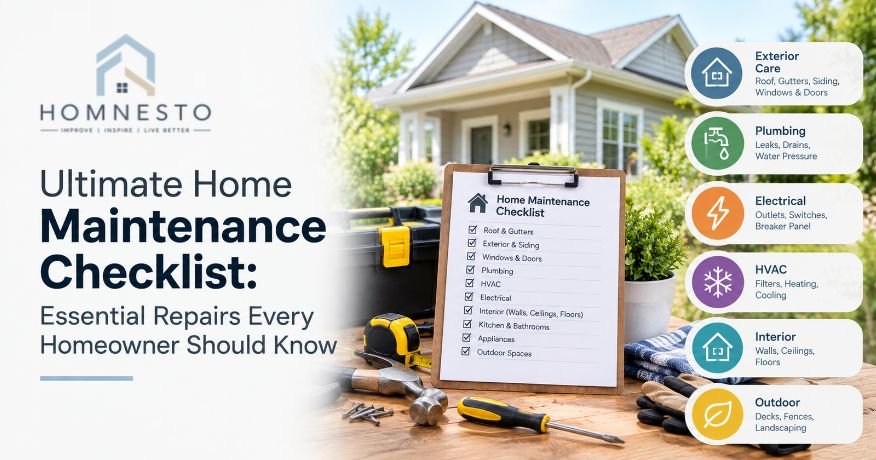

A home can look perfectly fine while small problems quietly grow behind the scenes. A dripping faucet can waste water, a clogged gutter can push water toward your foundation, and a dirty HVAC filter can make your system work harder. Regular care helps you catch these problems before they become expensive repairs.
A good home maintenance checklist gives you a simple way to stay ahead of these issues. Instead of waiting for something to break, you can inspect important parts of your home on a regular schedule. This guide covers routine home maintenance, monthly checks, seasonal tasks, annual inspections, and basic repairs.
Some jobs are simple enough for a homeowner to handle. Others involve electrical, plumbing, structural, or gas-related risks and should go to a qualified professional. Knowing the difference is an important part of maintaining a home safely.
Why a Home Maintenance Checklist Matters
Regular maintenance protects more than the appearance of your house. It helps you find leaks, damage, wear, and safety concerns while they are still manageable. This makes preventive home maintenance one of the simplest ways to reduce surprise repair costs.
Routine inspections can also protect your home’s value. A well-maintained roof, plumbing system, HVAC equipment, and exterior can help prevent damage that becomes harder and more expensive to repair later.
Home maintenance also supports household safety. Testing smoke alarms, checking electrical fixtures, watching for water leaks, and inspecting exterior areas can help you spot problems before they create larger risks.
Good home maintenance essentials also improve energy efficiency. Replacing a dirty HVAC filter, sealing obvious drafts, and keeping equipment clean can help your home systems operate more effectively.
Most importantly, regular home upkeep extends the useful life of many systems and appliances. A few minutes of inspection can sometimes prevent weeks of disruption and a much larger repair bill.
Essential Home Maintenance Tasks Every Homeowner Should Know
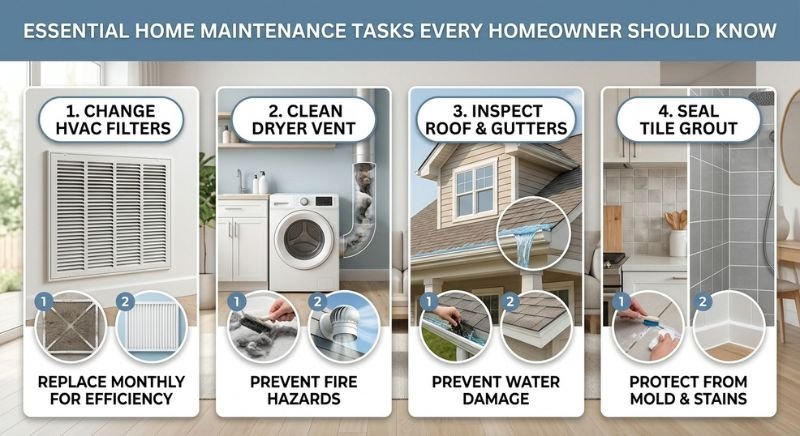
Every homeowner should have a basic understanding of the systems that keep a house comfortable and safe. You do not need to become a professional technician. You simply need to know what to look for and when a problem needs expert attention.
Check Your Roof and Gutters
Your roof protects nearly everything underneath it, so roof maintenance deserves regular attention. Look for missing, cracked, curled, or visibly damaged shingles. After severe weather, inspect the roof from a safe location for signs of damage.
Inside the home, watch ceilings and upper walls for stains or other signs that water may be getting through the roof. Do not climb onto a damaged or steep roof to investigate it yourself.
Gutter maintenance is just as important. Leaves, dirt, and other debris can block water from flowing through the gutters. Clean them as needed and make sure downspouts direct water away from the home’s foundation.
Inspect Your Plumbing
Plumbing problems often begin with small signs. Check exposed pipes for moisture, inspect the areas beneath sinks, and look around toilets for leaks. Pay attention to faucets that drip even after you close them.
Slow drains can also indicate buildup that needs attention. Watch your water pressure and notice any sudden changes. Unexplained damp spots, water stains, or unusually high water use deserve further investigation.
If a toilet continues running after flushing, use your guide on fix a running toilet for practical troubleshooting.
Maintain Your Drains
Regular drain care can reduce buildup and help you notice plumbing problems early. Keep food scraps, grease, hair, and other debris out of drains whenever possible.
Kitchen sinks deserve special attention because grease and food particles can collect inside the pipes. In bathrooms, hair is a common source of drain buildup. A drain that becomes slower over time should not be ignored.
For a clogged bathtub, follow the steps in unclog a bathtub drain before the blockage becomes more difficult to remove.
Maintain Your Shower and Water Fixtures
Check showerheads and other water fixtures for leaks, mineral deposits, or reduced flow. Hard-water deposits can collect around small openings and affect water flow over time.
Also inspect the connections around fixtures for signs of moisture. If your shower pressure suddenly becomes weak, use the guide on fix low shower water pressure to identify common causes.
Check Kitchen and Bathroom Sinks
Inspect the area around every sink for leaks. Look beneath the basin, around supply connections, and near the drain. A small amount of moisture can damage cabinets and surrounding materials if it continues for a long time.
Clean sink aerators when mineral buildup affects water flow. Also watch for slow drainage. A problem that starts as a minor slowdown can become a complete blockage.
If your sink drains slowly, see fix a slow sink drain for targeted troubleshooting.
Inspect Faucets for Leaks
Check faucet handles, spouts, and visible connections for dripping or moisture. A faucet that continues to drip can waste water and may have a worn internal component.
Depending on the faucet design, replacing a worn washer, cartridge, or similar component may solve a minor leak. Turn off the appropriate water supply before attempting a repair and follow the manufacturer’s instructions.
For practical steps, see fix a leaky faucet.
Monthly Home Maintenance Checklist
A monthly house maintenance checklist helps you catch small problems before they turn into larger repairs. You do not need to inspect every part of the house each month. Focus on areas that can change quickly or cause damage when ignored.
Check for Plumbing Leaks
Look beneath sinks and around toilets for moisture. Check faucets for dripping and inspect visible plumbing connections.
If your home has a water heater in an accessible area, look around it for signs of leaking water. Do not attempt to repair gas or electrical components yourself.
Test Safety Devices
Test smoke alarms and carbon monoxide detectors according to their manufacturer’s instructions. Replace batteries when required and replace devices that have reached the end of their service life.
If you use a monitored security system, check that it operates as expected. These simple home safety checks can help keep important warning systems ready when you need them.
Inspect Appliances
Check HVAC filters and replace them according to the equipment manufacturer’s recommendations. A filter may need more frequent attention in homes with pets, dust, or heavy use.
Look around the refrigerator, washing machine, dishwasher, and dryer for leaks or unusual changes. Keep the dryer area free from excessive lint and follow the appliance manufacturer’s cleaning instructions.
Check Your Home’s Exterior
Walk around the outside of your home and look at gutters, downspouts, doors, windows, and exterior lights. Watch for loose components, damaged seals, cracks, or areas where water collects.
Early exterior checks can prevent minor damage from becoming a larger home repair project.
Seasonal Home Maintenance Checklist
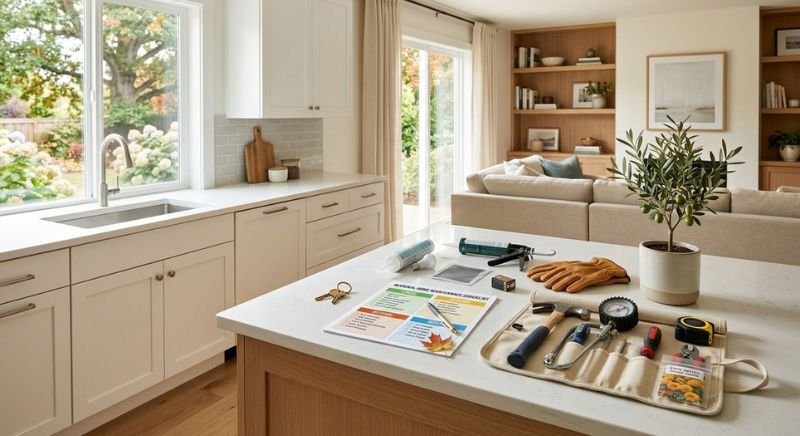
Seasonal home maintenance keeps your house prepared for changing weather. The exact timing depends on your climate, but each season brings different priorities.
Spring Home Maintenance
Spring is a good time to inspect your home after winter weather. Look for roof damage, damaged gutters, and signs of water intrusion.
Clean gutters and check that downspouts move water away from the house. Inspect exterior walls, windows, doors, and visible foundation areas for damage.
This is also a useful time to prepare your HVAC system for warmer weather. Replace or check the filter and arrange professional servicing if the system requires it.
Summer Home Maintenance
Summer puts more demand on air conditioning systems. Keep the HVAC filter maintained and make sure vents are not blocked.
Inspect outdoor plumbing for leaks and check exterior areas for damage caused by heat or storms. Look at exterior paint and seal obvious areas where moisture could enter.
Fans and ventilation systems should also remain clean and unobstructed. Maintain outdoor spaces so water can drain properly away from the house.
Fall Home Maintenance
Fall is an important preparation period. Clean gutters before heavy rain and falling leaves create blockages.
Prepare your heating system before you need it regularly. Check filters, vents, and accessible areas, and arrange professional service when appropriate.
Inspect the roof and seal obvious gaps around windows and doors. If colder weather is expected, prepare exposed outdoor plumbing according to local conditions and manufacturer guidance.
Winter Home Maintenance
Cold weather can put pipes, heating systems, and insulation to the test. Protect exposed plumbing where appropriate and watch for signs of freezing.
Check that your heating system operates normally and keep vents clear. Look for moisture around windows, ceilings, and plumbing areas.
Poor insulation and moisture problems can become more noticeable during winter. Address visible issues early rather than waiting for significant damage.
Annual Home Maintenance Checklist
An annual home maintenance list provides a broader review of systems that need less frequent attention. Some inspections should be performed by qualified professionals.
Inspect Your HVAC System
Check or replace HVAC filters based on the manufacturer’s recommendations. Inspect accessible vents and watch for unusual noises, odors, or performance changes.
Ductwork and major HVAC components may require professional inspection. Schedule servicing when recommended for your equipment or when you notice performance problems.
Inspect Electrical Systems
Look at accessible outlets, switches, and electrical cords for visible damage. Watch for flickering lights, unusual buzzing, burning smells, or outlets that become unusually warm.
Test GFCI outlets according to their instructions. Do not open electrical panels or attempt repairs on wiring or energized components. Persistent electrical problems should be inspected by a qualified electrician.
Inspect the Roof and Attic
Check accessible attic areas for water stains, moisture, mold growth, or damaged insulation. Look for signs that ventilation is not working properly.
Roof inspections can identify damaged shingles and other concerns before water enters the home. Leave difficult or unsafe roof work to qualified professionals.
Check Your Water Heater
Look around the water heater for leaks and inspect visible connections for signs of moisture. Pay attention to unusual noises or changes in performance.
Follow the manufacturer’s maintenance instructions for your specific unit. Gas, electrical, pressure, and internal water-heater repairs should be handled by qualified professionals when required.
Basic Home Repairs You Can Handle Yourself
Many basic home repairs involve simple maintenance rather than complex system work. Before starting any DIY home maintenance task, understand the equipment, follow manufacturer instructions, and stop if the repair becomes unsafe or unfamiliar.
Fix Minor Plumbing Problems
Minor plumbing issues may include a running toilet, dripping faucet, slow drain, or showerhead with mineral buildup. These are common home repairs that homeowners can often troubleshoot with basic tools.
Start by identifying the problem rather than immediately replacing parts. Turn off the relevant water supply when required and follow safe repair procedures.
For specific problems, use the guides for fix a running toilet, unclog a bathtub drain, fix low shower water pressure, fix a slow sink drain, and fix a leaky faucet.
Replace Filters and Batteries
Replacing HVAC filters and batteries in smoke and carbon monoxide detectors is a simple part of routine home maintenance. Always use the correct replacement specified by the manufacturer.
Some range hoods also have filters that require cleaning or replacement. Check the appliance instructions to determine the proper schedule and method.
Seal Small Gaps and Cracks
Small gaps around windows, doors, baseboards, and exterior openings can allow drafts or moisture into the home. Inspect these areas during your regular home upkeep routine.
Use an appropriate sealant for the material and location. Larger cracks, recurring moisture, or movement in structural areas should be evaluated by a professional.
Handle Minor Hardware Repairs
Loose cabinet handles, door hardware, hinges, and similar fixtures often need simple tightening or adjustment.
Addressing these issues early prevents unnecessary wear. Keep basic tools available so small maintenance tasks do not turn into neglected repairs.
Home Maintenance Tasks You Should Leave to Professionals
DIY home repair tips can help with simple maintenance, but knowing your limits is equally important. Some work can expose you to serious injury or cause additional property damage.
Major Electrical Repairs
Leave panel work, rewiring, damaged circuits, and persistent electrical faults to a qualified electrician.
Do not remove panel covers, work on energized wiring, or attempt to diagnose dangerous electrical faults yourself. Burning smells, sparks, buzzing, scorch marks, or unusual heat require prompt attention.
Major Plumbing Repairs
Burst pipes, sewer-line problems, hidden leaks, and major water leaks can cause extensive damage. These problems often require specialized equipment and experience.
If water is actively causing damage, shut off the main water supply if you can do so safely and contact a qualified plumber.
Roof and Structural Repairs
Major roof damage, structural cracks, foundation problems, and significant water intrusion require professional evaluation.
Avoid climbing onto damaged roofs or attempting structural repairs without the appropriate training. These jobs involve safety risks that basic DIY tools cannot solve.
HVAC and Gas-System Repairs
Heating, cooling, and gas systems can contain electrical, mechanical, or combustion hazards. Homeowners can handle simple maintenance tasks, such as approved filter replacement, but major repairs should go to qualified professionals.
Never experiment with gas lines, combustion equipment, refrigerant systems, or other components that require specialized training.
How to Create a Home Maintenance Schedule
Learning how to create a home maintenance checklist makes regular upkeep much easier. Instead of keeping every task in your head, divide your responsibilities by frequency.
Monthly tasks should focus on leaks, safety devices, filters, appliances, and visible exterior problems. Quarterly tasks can include deeper checks of drains, fixtures, and equipment.
Seasonal work should follow your local weather pattern. Gutters, HVAC systems, exterior areas, and outdoor plumbing often need attention before major seasonal changes.
Annual inspections should cover major systems and areas that do not require monthly attention. Some should involve qualified professionals.
| Frequency | Maintenance Tasks |
| Monthly | Check leaks, test alarms, inspect filters |
| Quarterly | Inspect drains, appliances, and fixtures |
| Seasonally | Check gutters, HVAC, exterior areas, and roof |
| Annually | Review roof, electrical systems, HVAC, and water heater |
| As needed | Address leaks, cracks, damage, and faulty fixtures |
Keep records of completed work, repairs, service visits, and replacement dates. This creates a useful home maintenance schedule and helps you remember when important equipment needs attention.
Home Maintenance Checklist for New Homeowners
New homeowners often focus on decorating and moving in, but learning how to take care of a house starts with understanding its basic systems. One of the best home maintenance tips for new homeowners is to learn where the key shutoffs, filters, panels, and safety devices are located before a problem occurs.
First, locate the main water shutoff and learn how to use it. Find the electrical panel and understand which areas of the home each breaker serves without opening or modifying the panel. This basic knowledge makes household maintenance easier and helps you respond faster during an emergency.
Identify your HVAC filters and check the manufacturer’s maintenance requirements. Test smoke and carbon monoxide detectors and learn when they should be replaced. These simple steps should become part of your home maintenance routine rather than tasks you only remember when something goes wrong.
Inspect plumbing fixtures for leaks and review appliance manuals. Pay special attention to plumbing maintenance, including faucets, toilets, drains, and visible pipes. You should also understand basic electrical maintenance, such as checking visible cords, outlets, and fixtures for signs of damage.
Create a calendar for monthly, seasonal, and annual tasks. A simple home upkeep checklist can help you track inspections, filter changes, repairs, and professional servicing. Keep these records in one place so you can easily review what has already been completed.
Finally, consider building an emergency repair fund. Unexpected problems are part of homeownership, and having money set aside can make essential home repairs easier to manage. Following these home maintenance tips can also help you spot small issues before they become costly repairs.
Final Home Maintenance Checklist
Use this quick home repair checklist as a regular reminder for your home repair and maintenance needs:
- Inspect the roof for visible damage
- Clean and check gutters
- Check plumbing for leaks
- Inspect toilets and faucets
- Check drains for slow flow
- Test smoke and carbon monoxide detectors
- Check HVAC filters
- Inspect appliances for leaks or unusual changes
- Check windows and doors
- Inspect visible electrical fixtures and cords
- Check the water heater for leaks
- Review seasonal maintenance tasks
- Record completed repairs and professional service
Conclusion
Regular home maintenance does not have to feel overwhelming. A simple plan can help you stay ahead of repairs, protect your property, and keep important systems working properly.
Use this home upkeep checklist to organize your tasks throughout the year. Combine monthly inspections with seasonal checks and annual reviews to create a practical approach to regular home maintenance.
The goal is not to fix everything yourself. Good home repair and maintenance also means knowing when a problem requires professional help. With the right routine, you can catch minor issues earlier and make smarter decisions about your home’s care.
FAQs
How often should you do home maintenance?
Home maintenance should happen throughout the year rather than only when something breaks. Monthly checks can catch leaks and safety issues, while seasonal and annual inspections cover larger areas of the home.
A consistent home maintenance routine makes these tasks easier to manage and reduces the chance of overlooking important areas.
What home maintenance should be done every month?
Monthly home maintenance tasks can include checking plumbing leaks, testing safety devices, inspecting HVAC filters, looking at appliances, and checking the home’s exterior for visible problems.
These simple checks are an important part of regular home maintenance because they can reveal small problems before they require larger repairs.
What are the most important home maintenance tasks?
The most important tasks protect the systems that can cause major damage when neglected. These include plumbing checks, roof and gutter care, HVAC maintenance, electrical maintenance, and early attention to leaks or moisture.
Following a basic home repair checklist can help homeowners keep these priorities organized throughout the year.
What repairs can homeowners safely do themselves?
Many homeowners can handle simple maintenance, such as replacing filters and batteries, tightening minor hardware, sealing small gaps, and troubleshooting simple plumbing issues.
These tasks are useful parts of DIY home maintenance, but homeowners should avoid major electrical, structural, gas, HVAC, and hidden plumbing repairs without the required professional training.
What should be included in an annual home maintenance checklist?
An annual checklist should include the roof, attic, HVAC system, electrical safety, water heater, plumbing, exterior areas, and other major systems.
Homeowners can use their home repair checklist to track completed inspections and identify essential home repairs that may need professional attention.